
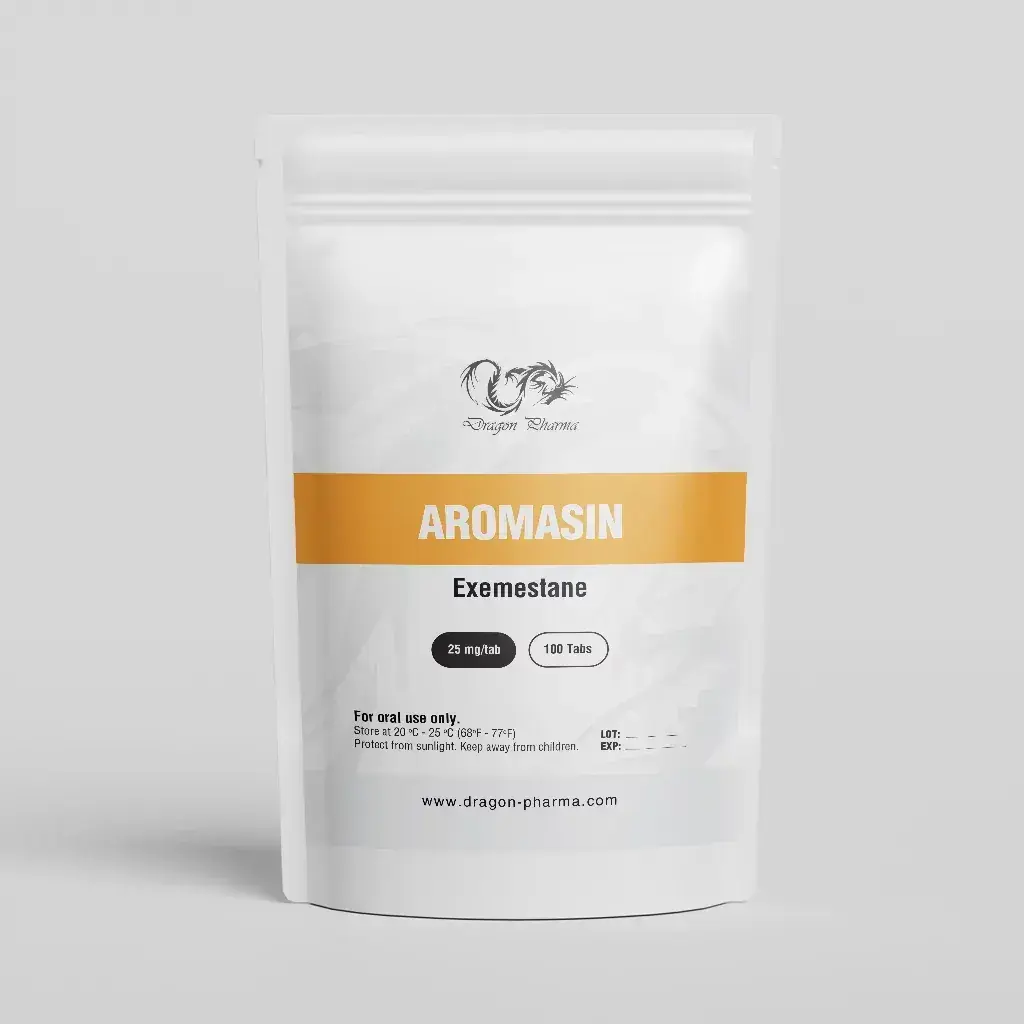
Aromasin 25 mg is an oral exemestane tablet manufactured by Dragon Pharma and dosed at 25 mg per tablet in a 100-tablet package.
Aromasin 25 mg contains exemestane, a steroidal aromatase inhibitor. Exemestane is structurally related to the natural substrate androstenedione and acts as an irreversible, mechanism-based inhibitor of the aromatase enzyme, which converts androgens to estrogens. Unlike reversible non-steroidal inhibitors such as anastrozole and letrozole, exemestane binds aromatase irreversibly, meaning enzyme activity can only be restored through synthesis of new aromatase protein.
In medical practice, exemestane is FDA-approved for adjuvant treatment of postmenopausal women with estrogen-receptor positive early breast cancer and for advanced breast cancer in postmenopausal women whose disease has progressed following tamoxifen therapy. The recommended medical dose is one 25 mg tablet once daily after a meal.
In non-medical bodybuilding contexts, Aromasin is commonly referenced as an aromatase inhibitor for managing estrogenic side effects of anabolic steroid cycles, including gynecomastia and water retention. A forum analysis of aromatase inhibitor use in steroid users reported a mean exemestane dose that is substantially lower than the oncology label dose. However, exemestane is a prescription medication and its use for bodybuilding purposes is not approved by the FDA and is considered illegal.
Exemestane is a third-generation steroidal aromatase inhibitor characterized by irreversible enzyme inactivation, a half-life of approximately 24–27 hours, and metabolism primarily via CYP3A4.
Exemestane is a steroidal aromatase inhibitor that is structurally related to androstenedione, the natural substrate of the aromatase enzyme. It acts as a mechanism-based inhibitor, binding irreversibly to the aromatase enzyme and permanently inactivating it. This is in contrast to non-steroidal inhibitors such as anastrozole and letrozole, which bind reversibly.
The pharmacokinetics of exemestane are well characterized. Following oral administration, exemestane is absorbed and extensively metabolized, with less than 10% of the drug remaining unchanged in plasma. Metabolism occurs primarily via CYP3A4, and the drug is excreted in roughly equal amounts in urine and feces. The mean terminal elimination half-life is approximately 24–27 hours. Time to steady-state is approximately 7 days.
Exemestane is 90% bound to plasma proteins, and food increases absorption by approximately 40%. The drug is metabolized by CYP3A4, and concomitant use with strong CYP3A4 inducers such as rifampicin decreases exemestane exposure, requiring a dose increase to 50 mg daily in medical settings.
Exemestane is distinguished by its steroidal structure and irreversible mechanism of aromatase inhibition. This means enzyme activity only returns as new aromatase protein is synthesized, potentially resulting in a more gradual recovery of estrogen levels compared to reversible inhibitors.
Dragon Pharma offers multiple ancillary compounds discussed in bodybuilding contexts. Exemestane's irreversible aromatase inhibitor mechanism contrasts with Arimidex (anastrozole), which is a non-steroidal reversible inhibitor. It is also distinct from selective estrogen receptor modulators such as Nolvadex (tamoxifen), which block estrogen receptors rather than inhibiting estrogen production. Femara (letrozole) is another non-steroidal aromatase inhibitor with a longer half-life and reversible binding.
The distinction between Aromasin and these compounds is primarily one of mechanism: exemestane irreversibly inactivates aromatase, while anastrozole and letrozole reversibly inhibit it, and tamoxifen blocks estrogen receptors without affecting estrogen levels.
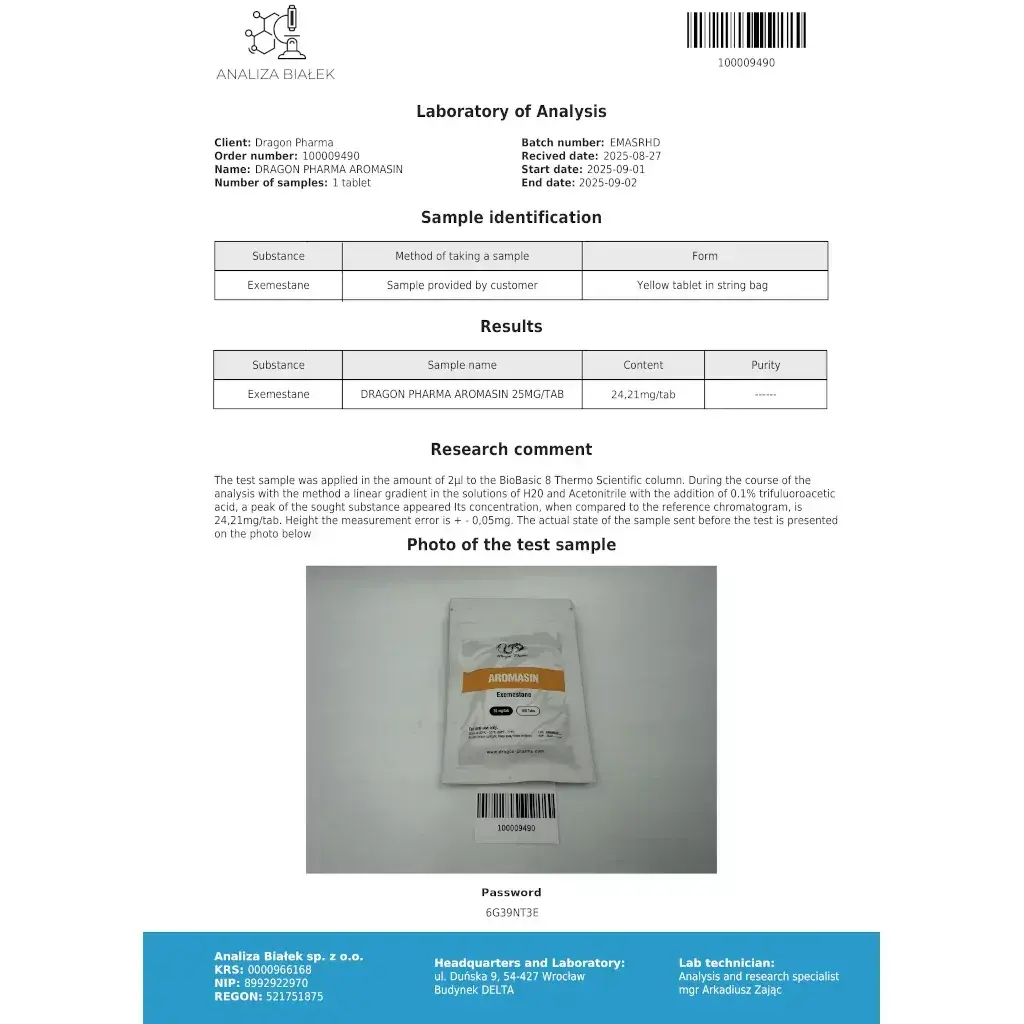
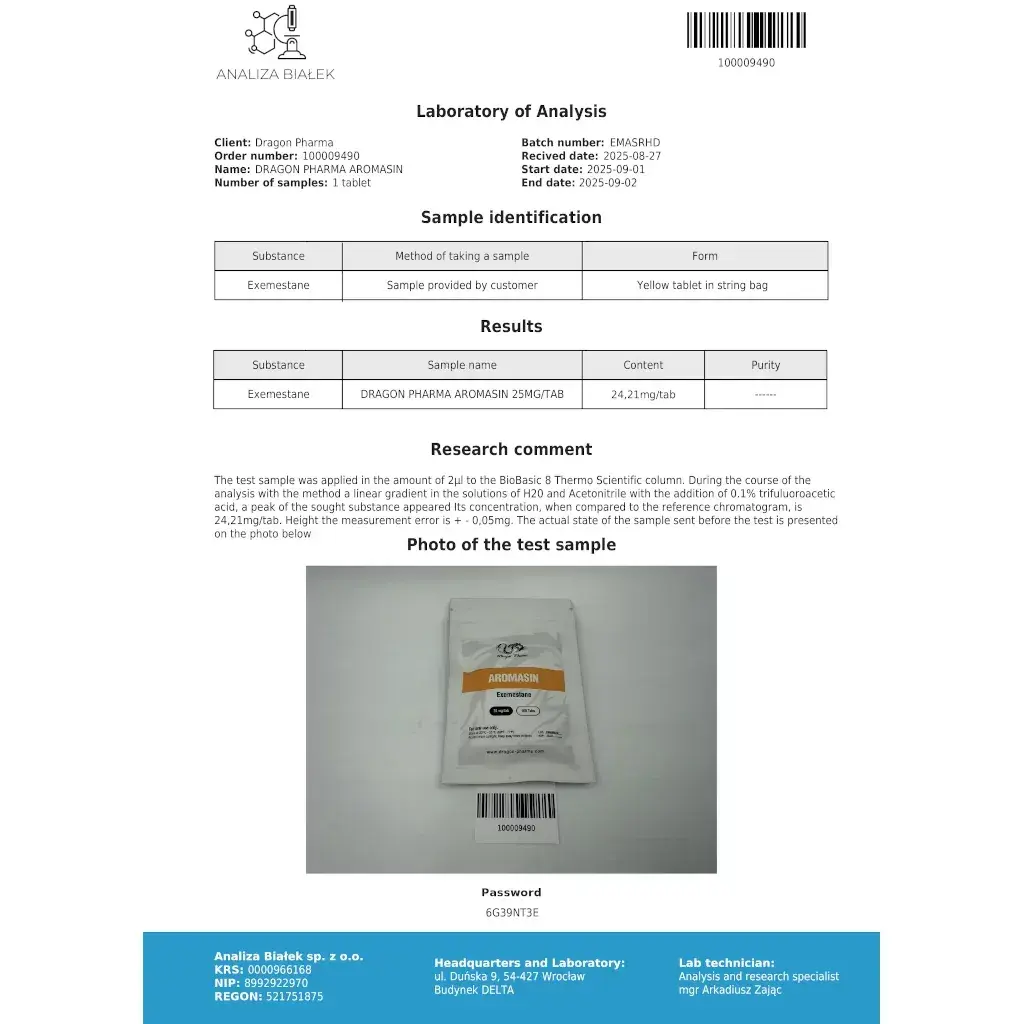
Published laboratory reports for Aromasin 25 mg are shown below with the test date, measured exemestane content, and percentage of the product's 25 mg label claim.
 View Report
Laboratory results apply to the specific tested sample represented in each published report and should not be interpreted as a measurement of every tablet or production batch.
The information below is provided for educational reference only. Exemestane is a prescription medication approved for breast cancer treatment in postmenopausal women. Medical use requires appropriate diagnosis and clinical supervision. Non-medical use falls outside approved indications and is not recommended.
In medically supervised settings, the recommended dose of exemestane is 25 mg once daily after a meal. In non-medical bodybuilding contexts, exemestane is typically referenced at substantially lower doses. A forum analysis of aromatase inhibitor use in steroid users reported a mean exemestane dose that is a fraction of the oncology label dose. Community protocols commonly reference 12.5–25 mg every other day as the most studied range for on-cycle estrogen management.
| Use Case | Common Reference Range | Frequency |
|---|---|---|
| Medical (breast cancer) | 25 mg / day | Once daily after a meal |
| Bodybuilding (non-medical) | 12.5–25 mg | Every other day |
| Low-dose (non-medical) | 6.25–12.5 mg | Every other day |
In non-medical contexts, exemestane is referenced alongside aromatizing anabolic steroids such as Testabol 400 or Dianabol 50 to manage estrogenic side effects. It may also be compared with Arimidex (anastrozole), which is a non-steroidal reversible inhibitor. Dosing of exemestane in this context should be based on individual response and bloodwork where possible.
Exemestane use is associated with reductions in bone mineral density over time. In clinical trials, patients receiving exemestane had a mean decrease in lumbar spine BMD of 3.1% and femoral neck BMD of 4.2% at 24 months. Bone mineral density monitoring is recommended in patients treated with exemestane. Other common adverse reactions include hot flushes, fatigue, arthralgia, headache, insomnia, and increased sweating. Increased serum cholesterol and cardiac ischemic events have also been reported.
Exemestane is a prescription medication. Non-medical use is not recommended and carries significant health risks including bone mineral density loss and cardiovascular events. The information above is for educational reference and does not constitute medical advice.
Exemestane is a prescription medication that can cause reductions in bone mineral density, increases in cholesterol, and cardiac ischemic events. Medical use requires appropriate diagnosis and clinical supervision.
Exemestane is FDA-approved for adjuvant treatment of postmenopausal women with estrogen-receptor positive early breast cancer and for advanced breast cancer in postmenopausal women whose disease has progressed following tamoxifen therapy. Exemestane is contraindicated in patients with a known hypersensitivity to the drug or to any of the excipients.
Exemestane can cause fetal harm when administered to a pregnant woman. Females of reproductive potential should use effective contraception during treatment and for one month after the last dose.
Exemestane has no approved indication for bodybuilding or performance enhancement. Non-medical use falls outside approved indications and carries health risks including bone mineral density loss, arthralgia, dyslipidemia, and cardiovascular risk. Product strength and laboratory verification do not establish safety for non-medical use.
Bone effects: Reductions in bone mineral density over time are seen with exemestane use. In clinical trials, mean BMD decreased by 3.1% in the lumbar spine and 4.2% in the femoral neck at 24 months. Bone mineral density monitoring is recommended.
Cardiovascular effects: Incidences of cardiac ischemic events (myocardial infarction, angina, and myocardial ischemia) were exemestane 1.6%, tamoxifen 0.6%.
Cholesterol: Plasma HDL cholesterol was decreased 6–9% in exemestane-treated patients. Increased serum cholesterol has been reported.
Common adverse reactions: Hot flushes (21%), fatigue (16%), arthralgia (15%), headache (13%), insomnia (12%), and increased sweating (12%).
Androgenic effects: Due to its steroidal profile, androgenic side effects such as weight gain, acne, and hypertrichosis have been reported, which may lead to tolerance problems, especially with prolonged treatment.
Exemestane should be used with caution in patients with pre-existing ischemic heart disease due to increased incidence of ischemic cardiovascular events. Bone mineral density monitoring is recommended. Routine assessment of 25-hydroxy vitamin D levels prior to the start of aromatase inhibitor treatment should be performed.
Medically supervised exemestane therapy involves monitoring for adverse effects including bone mineral density changes, cholesterol levels, and cardiovascular events. For patients receiving exemestane with a strong CYP3A4 inducer, the recommended dose is 50 mg once daily after a meal. No dosage adjustment is necessary for patients with renal impairment or for elderly patients. The AUC of exemestane is approximately 3 times higher in subjects with moderate or severe hepatic or renal impairment.
Store in a cool, dry place away from direct light and moisture. Keep the product in its original packaging and out of the reach of children.
Aromasin 25 mg is supplied through the Dragon Pharma distribution chain and shipped in original manufacturer packaging with discreet, privacy-focused handling.
The outer shipping package remains discreet, with privacy-focused handling and no unnecessary external product details. Products are supplied through the Dragon Pharma distribution chain.
To verify your Aromasin 25 mg product, cross-check the security features on the packaging against Dragon Pharma's official presentation. Batch-linked lab proof and original packaging help reinforce product legitimacy.
For complete delivery details, tracking policy, and reshipment terms, please see our Shipping Info page.
Proper storage conditions help preserve tablet integrity and overall product stability throughout shelf life.
Store in a cool, dry place away from excessive heat, moisture, and direct light. Maintaining stable conditions helps preserve the integrity of the tablets.
Keep the tablets in their original packaging until use. Do not use if the packaging appears compromised or if the tablets show signs of degradation such as discoloration or crumbling.
Keep out of reach of children.
Answers to common questions about Aromasin 25 mg, exemestane, aromatase inhibition, dosing, and safety.
Aromasin 25 mg contains exemestane, a prescription steroidal aromatase inhibitor. It is FDA-approved for adjuvant treatment of postmenopausal women with estrogen-receptor positive early breast cancer and for advanced breast cancer in postmenopausal women whose disease has progressed following tamoxifen therapy. In non-medical bodybuilding contexts, it is referenced for managing estrogenic side effects of anabolic steroid cycles, though such use is not approved and is considered illegal.
In medical practice, the recommended dose is 25 mg once daily after a meal. In non-medical bodybuilding contexts, exemestane is typically referenced at lower doses, commonly 12.5–25 mg every other day.
Exemestane is a steroidal aromatase inhibitor. It acts as an irreversible, mechanism-based inhibitor of the aromatase enzyme, which converts androgens to estrogens. This mechanism is the basis for both its medical use in breast cancer and its non-medical use in bodybuilding for managing estrogenic side effects.
The time to steady-state plasma levels is approximately 7 days. A single oral 25 mg dose of exemestane has been shown to decrease estradiol concentrations by approximately 62% within 12 hours.
The mean terminal elimination half-life of exemestane is approximately 24–27 hours. One study reported a significantly shorter half-life in men, of the order of 8 to 9 hours.
There is no universally "best" aromatase inhibitor. Exemestane is distinguished by its steroidal structure and irreversible mechanism of inhibition. Other options include Arimidex (anastrozole), a non-steroidal reversible inhibitor, and Femara (letrozole), another non-steroidal inhibitor. The appropriate choice depends on the clinical context.
Exemestane is a steroidal aromatase inhibitor that binds irreversibly to the enzyme. Arimidex (anastrozole) is a non-steroidal inhibitor that binds reversibly. Both reduce estrogen production but through different mechanisms, and exemestane has been associated with androgenic side effects not seen with non-steroidal inhibitors.
Exemestane is an aromatase inhibitor that reduces estrogen production. Nolvadex (tamoxifen) is a selective estrogen receptor modulator that blocks estrogen receptors without affecting estrogen levels. The two have different mechanisms and are not used in combination.
Medical exemestane dosing is 25 mg per day for breast cancer treatment. In non-medical bodybuilding contexts, lower doses are typically referenced, commonly 12.5–25 mg every other day. Aromasin 25 mg is labeled at 25 mg per tablet.
Aromasin 25 mg is labeled at 25 mg of exemestane per tablet. It is supplied in a 100-tablet package, giving 2,500 mg of total labeled exemestane content.
Yes. A published laboratory report dated September 02, 2025 measured Aromasin 25 mg at 24.21 mg per tablet, equivalent to 96.84% of its 25 mg label claim. Complete reports can be viewed in the Lab Reports tab.