Trenbolone 200 mg is an oil-based Trenbolone Enanthate injectable manufactured by Dragon Pharma and dosed at 200 mg/mL in a 10 mL vial.
Trenbolone 200 mg contains trenbolone enanthate, a long-acting ester of the potent 19-nor anabolic steroid trenbolone. Trenbolone is administered as a prodrug, with plasma esterases cleaving the enanthate group to release the active hormone. The enanthate ester extends the effective half-life compared to the acetate ester, allowing for less frequent injections while maintaining stable blood levels.
Trenbolone was developed for veterinary use and is approved by the FDA as an implant for beef cattle to increase rate of weight gain and improve feed efficiency. It is not approved for human use, and the veterinary labels explicitly state “Not for use in humans”. In non-medical bodybuilding contexts, Trenbolone 200 mg is commonly referenced for its pronounced effects on body recomposition, including significant muscle preservation during caloric deficits and simultaneous fat loss.
Trenbolone is notable for its resistance to aromatization, meaning it does not convert to estrogen. This characteristic distinguishes it from testosterone and many other anabolic steroids, and it is frequently cited as a reason for its popularity during cutting phases where water retention and estrogenic side effects are undesirable. However, trenbolone enanthate has been documented in peer-reviewed case reports to cause severe cholestatic hepatitis, with one case requiring simultaneous liver and kidney transplantation in a 40-year-old male following a 7-week course.
Trenbolone 200 mg uses MCT oil as its carrier, providing an oil base for the trenbolone enanthate formulation. The 200 mg/mL concentration is the standard strength for this compound.
Trenbolone enanthate is a long-acting 19-nor anabolic steroid with exceptional potency and a distinctive side effect profile. Its defining characteristics include a slower release profile compared to the acetate ester, resistance to aromatization, and significant androgenic activity.
Trenbolone is a 19-nortestosterone derivative that binds to the androgen receptor with high affinity. Research in bovine satellite cell cultures has shown that trenbolone directly increases protein synthesis rate and decreases protein degradation rate, with both the androgen receptor and the type 1 IGF receptor involved in these effects. This dual mechanism—promoting protein synthesis while inhibiting breakdown—contributes to its potent body recomposition effects.
The enanthate ester attached to the 17-beta hydroxyl group slows the release of trenbolone from the injection site, extending the drug's activity compared to the short-acting acetate ester. In non-medical contexts, this allows for injections once or twice per week rather than every other day. The urinary excretion half-life for trenbolone metabolites is approximately 1 day when free trenbolone is ingested orally, though the ester itself extends the release profile.
Trenbolone does not aromatize to estrogen, as it is a 19-nor compound. This distinguishes it pharmacologically from testosterone and contributes to its characteristic “dry” effects on physique.
The enanthate ester of Trenbolone 200 mg produces a longer duration of action than trenbolone acetate, typically requiring injections once or twice per week in non-medical contexts. This slower release means that blood levels build gradually, and side effects, if they occur, may persist for 3-4 weeks after discontinuation. The extended clearance period is a notable consideration compared to the acetate ester, which clears in 7-10 days.
Dragon Pharma offers multiple trenbolone preparations with different esters and release profiles. The Trenbolone 100 contains trenbolone acetate, a short-acting ester requiring more frequent injections. The Parabolan contains trenbolone hexahydrobenzylcarbonate, the longest-acting trenbolone ester commonly available. For those seeking a lower-concentration short-acting option, Trenbolone 75 is also available.
In non-medical bodybuilding contexts, trenbolone is frequently stacked with a testosterone base such as Cypionate 250. DHT-derived compounds such as Masteron 100 are also sometimes combined with trenbolone for enhanced hardening effects. A testosterone base is commonly referenced as important when using trenbolone, as the compound suppresses endogenous testosterone production.
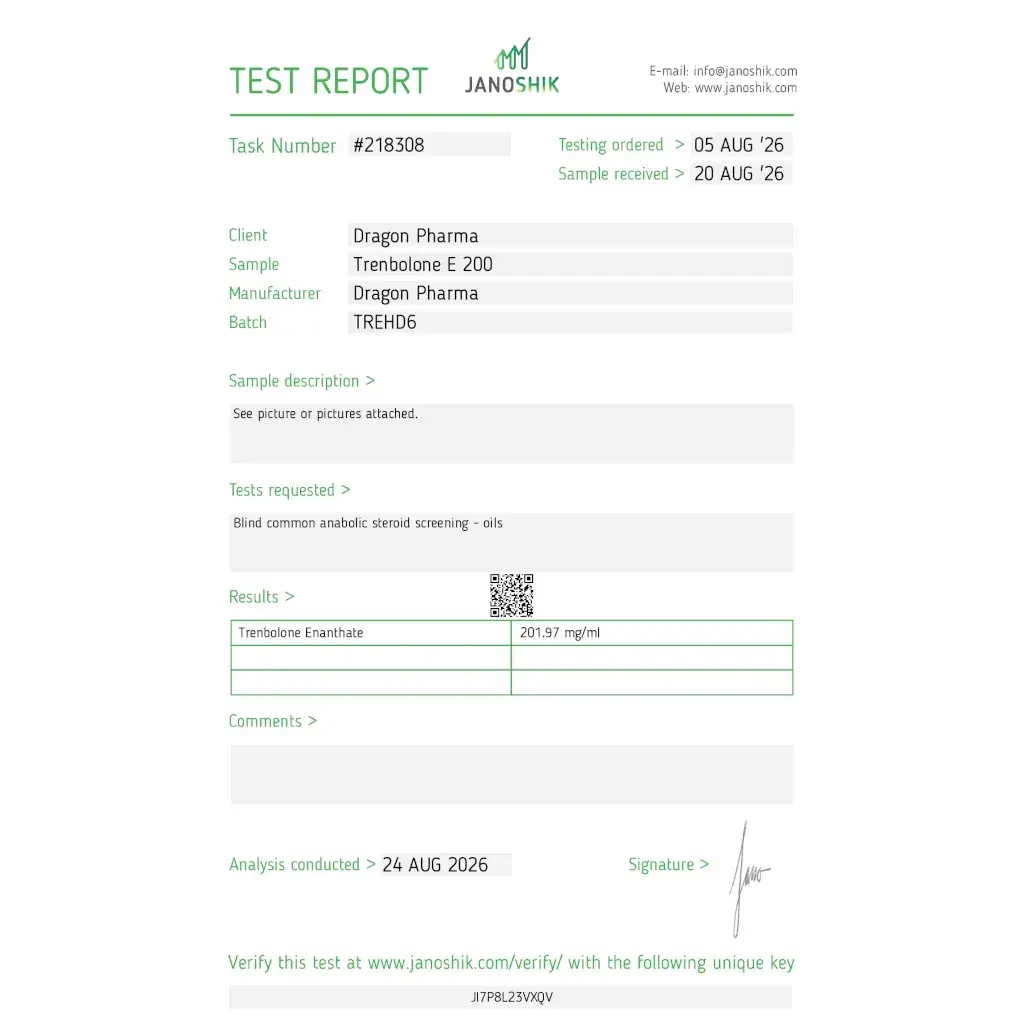
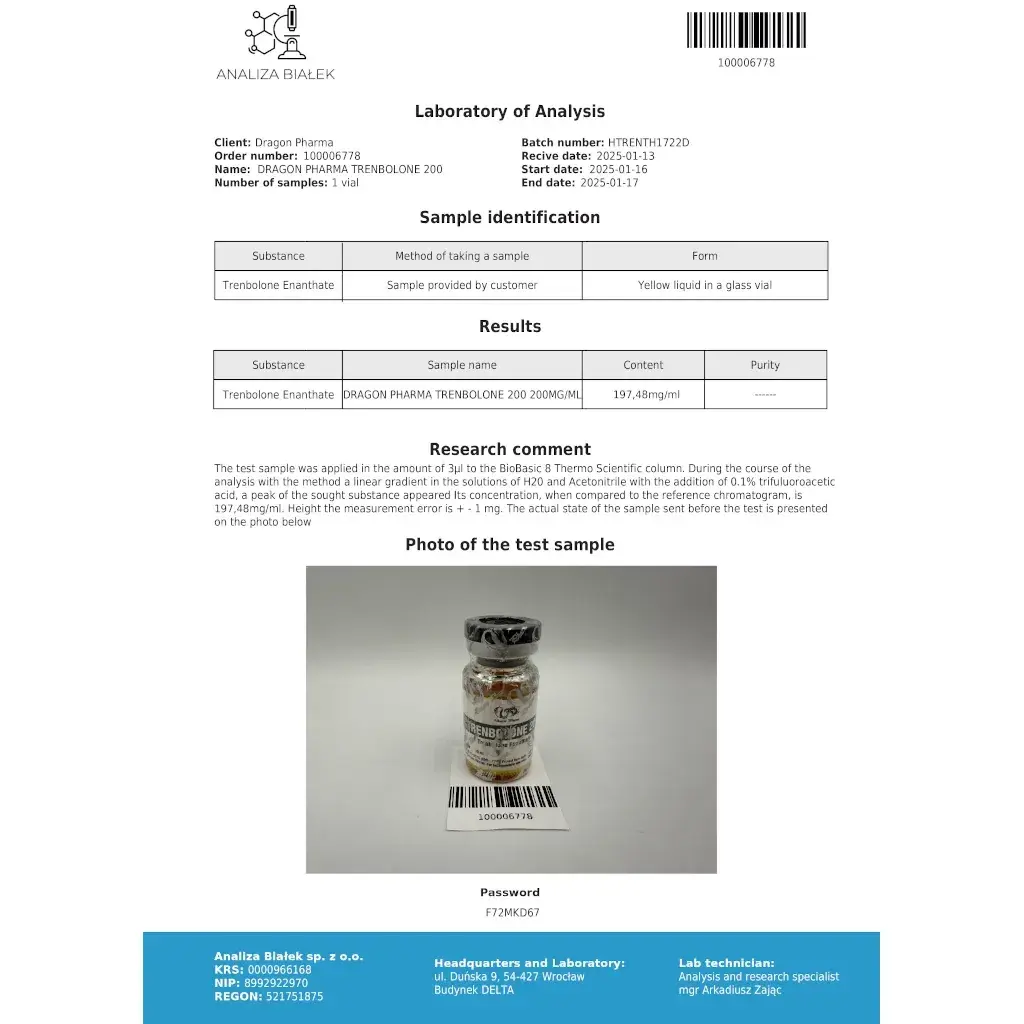
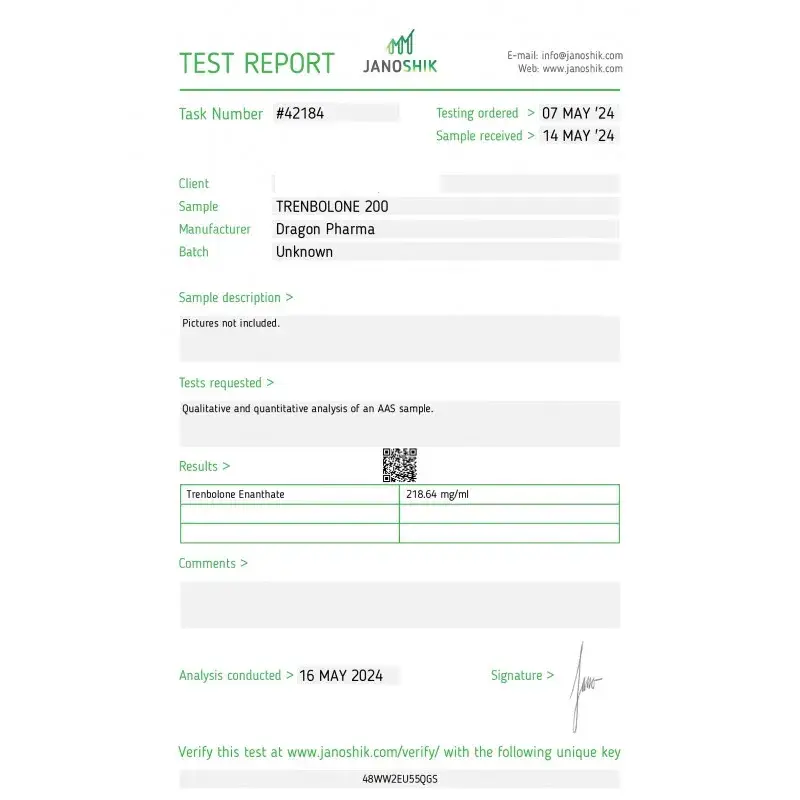
Published laboratory reports for Trenbolone 200 mg are shown below with the test date, measured concentration and percentage of the product's 200 mg/mL label claim.
 View Report
 View Report
 View Report
 View Report
Laboratory results apply to the specific tested sample represented in each published report and should not be interpreted as a measurement of every vial or production batch.
The information below is provided for educational reference only. Trenbolone enanthate is a veterinary medication that is not approved for human use; non-medical use falls outside any approved indications and carries substantial health risks.
In non-medical bodybuilding contexts, Trenbolone 200 mg is commonly referenced in the range of 200–400 mg per week for intermediate users, with some experienced users referencing up to 600 mg per week. A 2021 case report documented a 12-week AAS regimen that included trenbolone enanthate at 500 mg twice weekly. Forum discussions commonly reference 200 mg per week as a starting dose, with some users reporting 300-400 mg per week. Because of its long enanthate ester, the weekly total is typically divided into injections administered once or twice per week. The 200 mg/mL concentration means that 1 mL provides 200 mg of trenbolone enanthate.
| Use Case | Common Reference Range | Injection Frequency |
|---|---|---|
| Beginner (non-medical) | 200–250 mg / week | Once or twice weekly |
| Intermediate (non-medical) | 300–400 mg / week | Twice weekly |
| Advanced (non-medical) | 400–600 mg / week | Twice weekly |
In non-medical bodybuilding contexts, Trenbolone 200 mg is frequently stacked with a testosterone base such as Cypionate 250. A testosterone base is commonly referenced as important when using trenbolone, as the compound suppresses endogenous testosterone production. Cycle lengths of 8–12 weeks are commonly referenced for the enanthate ester, though some sources suggest limiting trenbolone use to 8 weeks maximum to minimize damage. The slower clearance of the enanthate ester means that side effects may persist longer after discontinuation compared to the acetate ester.
Trenbolone is sometimes combined with DHT-derived compounds such as Masteron 100 for enhanced hardening effects. A comparison of the acetate and enanthate esters shows that the enanthate provides more stable blood levels but slower clearance if side effects become problematic.
Trenbolone is associated with a distinctive and significant side effect profile. Cardiovascular effects include negative alterations in lipid profiles, with decreases in HDL cholesterol and increases in LDL. Blood pressure elevation of 10-25 mmHg systolic is commonly referenced. Neurological and psychological effects include insomnia, night sweats, increased aggression, anxiety, and mood disturbances.
A peer-reviewed case report documented severe cholestatic hepatitis caused by injectable trenbolone enanthate, with a liver biopsy confirming mixed hepatocellular and cholestatic injury. A more recent 2025 case report described a 40-year-old male who developed hepatorenal dysfunction requiring simultaneous liver and kidney transplantation after a 7-week course of trenbolone enanthate. This case underscores that injectable trenbolone carries significant hepatotoxic risk, not just oral C17-alpha-alkylated steroids.
“Tren cough” is a well-known phenomenon that can occur immediately after injection. The acetate ester is more commonly associated with this effect than the enanthate ester. Prolactin elevation is a recognized concern with 19-nor compounds, and cabergoline is sometimes referenced for management. As a DHT-derived compound, trenbolone can also accelerate hair loss in predisposed individuals.
After completing a cycle with Trenbolone 200 mg, post-cycle therapy is commonly recommended in non-medical contexts to help restore endogenous testosterone production. Because of the long enanthate ester, PCT should begin approximately 2–3 weeks after the final injection to allow the ester to clear. Agents such as Clomid or Nolvadex are frequently referenced for this purpose. Survey data indicates that 56.5% of men stopping AAS use some form of self-directed PCT, typically involving hCG or SERMs, though no controlled trials exist demonstrating safety or efficacy for this practice. Bloodwork and, where possible, medical guidance can help inform recovery strategy.
Dosing strategies, support compounds and recovery protocols should be adjusted based on experience level and bloodwork where possible. The information above is for educational reference and does not constitute medical advice.
Trenbolone enanthate is a veterinary anabolic steroid that is not approved for human use and is classified as a Schedule III controlled substance in the United States. It is associated with significant cardiovascular, hepatic, and neurological risks.
Trenbolone acetate is approved by the FDA only for use in cattle as an implant to increase rate of weight gain and improve feed efficiency. The veterinary labels explicitly state “Not for use in humans” and “For Animal Treatment Only”. Anabolic steroids, including trenbolone, are classified as Schedule III controlled substances in the United States under the Anabolic Steroids Control Act. Non-medical use for bodybuilding or performance enhancement falls outside any approved indication and may carry significant health risks.
Use of trenbolone enanthate for bodybuilding or performance enhancement falls outside approved veterinary indications. Higher-than-physiologic exposure can increase the risk of serious cardiovascular, hepatic, renal and neurological complications.
Hepatotoxicity is a documented and serious risk with injectable trenbolone enanthate. A peer-reviewed case report from 2016 described a young amateur bodybuilder who developed cholestatic hepatitis, confirmed by liver biopsy, following trenbolone enanthate use. A 2025 case report documented a 40-year-old male who developed severe cholestatic liver injury and bile cast nephropathy after a 7-week course of trenbolone enanthate, ultimately requiring simultaneous liver and kidney transplantation. This case highlights that injectable trenbolone is not exempt from the hepatotoxic risks traditionally associated with oral C17-alpha-alkylated steroids.
Cardiovascular effects include negative alterations in lipid profiles, with decreases in HDL cholesterol and increases in LDL. Blood pressure elevation is commonly reported, with some sources referencing a 10-25 mmHg increase in systolic pressure.
Neurological and psychological effects are prominent with trenbolone and include insomnia, night sweats, anxiety, increased aggression, and mood disturbances. Prolactin elevation is a recognized concern with 19-nor compounds and may contribute to sexual dysfunction. As a DHT-derived compound, trenbolone can also accelerate hair loss in predisposed individuals.
Trenbolone enanthate has not been evaluated for safety in humans with pre-existing medical conditions. Given its potent androgenic, hepatotoxic, and cardiovascular effects, individuals with a history of liver disease, cardiovascular disease, renal impairment, or hormone-sensitive conditions should exercise particular caution. The 2025 case report of hepatorenal failure requiring transplantation involved a patient with a history of treated hepatitis C, suggesting that pre-existing liver conditions may increase risk. Existing medical conditions should be discussed with a qualified healthcare professional before trenbolone is considered.
If trenbolone enanthate is used in any context, monitoring of liver function, lipid profiles, blood pressure, and kidney function is important given the compound's documented risks. In non-medical bodybuilding contexts, bloodwork before, during, and after a cycle is commonly referenced as a risk-reduction strategy. Laboratory testing of the product itself, such as the published potency reports shown in the Lab Reports tab, is separate from clinical monitoring of the person using the medication.
Keep the vial securely stored and protected from conditions that could compromise the product or container. Store at controlled room temperature and protect from light and moisture. Inspect the vial and solution before use and do not use a product that appears damaged, contaminated or otherwise abnormal.
Keep all medications and injectable products out of the reach of children. Follow the storage instructions provided with the product packaging.
Trenbolone 200 mg by Dragon Pharma is shipped in original manufacturer packaging with discreet, privacy-focused handling.
The outer shipping package remains discreet, with privacy-focused handling and no unnecessary external product details.
To verify your Trenbolone 200 mg product, use the security code on the vial label and cross-check it on the Dragon Pharma official site. Original Dragon Pharma packaging and batch-linked lab proof help reinforce product legitimacy. Given that trenbolone is a commonly counterfeited compound, laboratory verification is particularly valuable for this product.
For complete delivery details, tracking policy, and reshipment terms, please see our Shipping Info page.
Proper storage conditions help preserve formulation stability and overall product integrity throughout shelf life.
Store at controlled room temperature (15–25°C) and protect from excessive heat, moisture, and direct light. Maintaining stable conditions helps preserve the integrity of the oily formulation.
Keep the vial in its original packaging until use. Do not freeze. Before administration, inspect the solution and avoid use if it appears cloudy, discolored, contains particulate matter, or if the vial or seal is compromised.
Keep out of reach of children. Follow proper handling and sterile injection practices when administering the product.
Answers to common questions about Trenbolone 200 mg, trenbolone enanthate, usage considerations, product strength and laboratory testing.
Trenbolone 200 mg contains trenbolone enanthate, which is approved by the FDA as an implant for beef cattle to increase rate of weight gain and improve feed efficiency. It is not approved for human use. In non-medical bodybuilding settings, Trenbolone 200 mg is commonly referenced for dramatic body recomposition effects, including muscle preservation during caloric deficits and fat loss, though such use falls outside approved indications.
Because of its long enanthate ester, trenbolone enanthate is typically referenced as being administered once or twice per week in non-medical contexts. The 200 mg/mL concentration means that 1 mL provides 200 mg of trenbolone enanthate. More frequent administration may help maintain more stable blood levels.
In non-medical bodybuilding contexts, post-cycle therapy is commonly recommended after a trenbolone enanthate cycle to help restore endogenous testosterone production. Because of the long enanthate ester, PCT should begin approximately 2–3 weeks after the final injection. Agents such as Clomid or Nolvadex are commonly referenced for this purpose. Survey data indicates that 56.5% of men stopping AAS use some form of self-directed PCT, though no controlled trials exist demonstrating safety or efficacy for this practice.
Trenbolone enanthate is a prodrug that is cleaved by plasma esterases to release active trenbolone. Research has shown that trenbolone directly increases protein synthesis rate and decreases protein degradation rate in muscle cells, with both the androgen receptor and IGF-1 receptor involved in these effects. Unlike testosterone, trenbolone does not aromatize to estrogen.
Because of its long enanthate ester, trenbolone enanthate releases gradually over several weeks. In non-medical contexts, users commonly reference noticing effects on body composition and strength after approximately 2-3 weeks of use. The slower release means that blood levels build gradually, and side effects, if they occur, may persist for 3-4 weeks after discontinuation.
There is no single compound that is universally best for cutting. Trenbolone 200 mg is commonly referenced in bodybuilding contexts for its potent effects on body recomposition and muscle preservation during caloric deficits. However, it carries a significantly higher side effect burden than most other compounds, including documented cases of severe liver injury requiring transplantation. Other products such as Masteron 100 and Winstrol 50 are also referenced for cutting purposes.
The primary difference is the ester and release profile. Trenbolone 100 mg contains trenbolone acetate, a short-acting ester requiring frequent injections. Trenbolone 200 mg contains trenbolone enanthate, a longer-acting ester requiring less frequent administration. The acetate ester is associated with a more rapid onset and clearance, while the enanthate ester provides more stable blood levels but slower clearance if side effects become problematic.
Trenbolone 200 mg contains trenbolone enanthate, a long-acting ester. Parabolan contains trenbolone hexahydrobenzylcarbonate, the longest-acting trenbolone ester commonly available. Both ultimately provide the same parent hormone, trenbolone, but they have different release profiles and injection frequencies.
A milligram amount cannot be classified as appropriate or excessive without considering the specific context, individual response, and other factors. In non-medical bodybuilding contexts, trenbolone enanthate is commonly referenced in the 200–400 mg per week range, divided into injections once or twice per week. Some sources recommend limiting trenbolone use to 8 weeks maximum to minimize damage. Such use falls outside approved indications.
Trenbolone 200 mg is labeled at 200 mg of trenbolone enanthate per mL. It is supplied in a 10 mL vial, giving 2,000 mg of total labeled trenbolone enanthate content per vial.
Yes. A published laboratory report dated August 24, 2026 measured Trenbolone 200 mg at 201.97 mg, equivalent to 100.99% of its 200 mg/mL label claim.
The complete report can be viewed in the Lab Reports tab. Laboratory results apply to the tested sample represented by the individual report and should not be interpreted as a measurement of every vial.
Yes. While injectable anabolic steroids are often assumed to be less hepatotoxic than oral C17-alpha-alkylated compounds, published case reports have documented severe liver injury from injectable trenbolone enanthate. A 2016 case report described cholestatic hepatitis confirmed by liver biopsy. A 2025 case report documented hepatorenal dysfunction requiring simultaneous liver and kidney transplantation in a 40-year-old male after a 7-week course. This evidence indicates that injectable trenbolone carries significant hepatotoxic risk.