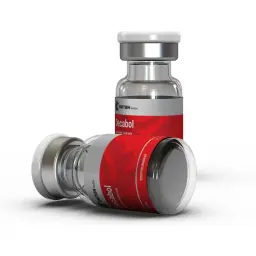
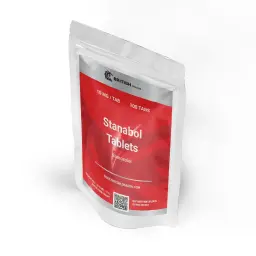
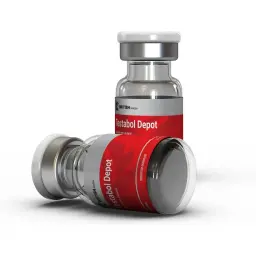
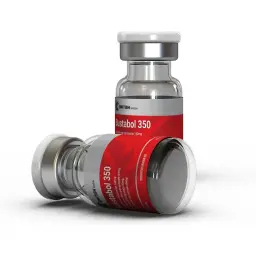
Turanabol 10 mg is an oral 4-Chlorodehydromethyltestosterone tablet manufactured by British Dragon and dosed at 10 mg per tablet, supplied in packs of 100 tablets.
Turanabol 10 mg contains 4-Chlorodehydromethyltestosterone (also known as chlorodehydromethyltestosterone, CDMT, or Oral Turinabol), a synthetic oral anabolic-androgenic steroid derived from testosterone. It was developed in the 1960s by the East German pharmaceutical company Jenapharm and marketed as Oral-Turinabol . The compound was designed to provide a strong separation between anabolic and androgenic effects, promoting lean muscle and strength gains with minimal water retention or estrogenic activity .
The defining structural feature of 4-Chlorodehydromethyltestosterone is the addition of a chlorine atom at the C-4 position, which prevents the molecule from being acted upon by the aromatase enzyme. As a result, it does not convert to estrogen, so classic estrogenic side effects such as water retention, gynecomastia, and fat gain are not driven by this compound . The 17α-methyl group allows it to survive first-pass metabolism in the liver, making it orally bioavailable, though this structural modification also contributes to hepatotoxicity .
In non-medical bodybuilding and athletic contexts, 4-Chlorodehydromethyltestosterone is commonly referenced for lean, dry muscle gains, significant strength increases, and enhanced endurance without water retention. It is often described as a "lean Dianabol" and is favored for recomposition and cutting cycles . However, the compound carries significant risks including hepatotoxicity, adverse lipid changes, and suppression of natural testosterone production, requiring post-cycle therapy . It is prohibited by WADA at all times under S1.1 Anabolic Androgenic Steroids. Such use falls outside approved indications.
4-Chlorodehydromethyltestosterone is a 17α-alkylated oral anabolic steroid with a 4-chloro substitution that prevents aromatization, producing lean, dry gains without estrogenic side effects .
4-Chlorodehydromethyltestosterone is a synthetic derivative of testosterone modified with a chlorine atom at the C-4 position and a methyl group at the C-17α position. The 4-chloro substitution renders the molecule electronically and sterically incompatible with the aromatase enzyme (CYP19A1), preventing conversion to estrogen . The 17α-methyl group allows the compound to survive first-pass metabolism in the liver, enabling oral bioavailability, but also contributes to its hepatotoxicity .
In the Hershberger assay, 4-Chlorodehydromethyltestosterone exhibits an anabolic effect of 53 and an androgenic effect of 6 relative to a testosterone baseline of 100 each, giving an anabolic-to-androgenic ratio of approximately 8.8. By contrast, its non-chlorinated analog methandrostenolone (Dianabol) registers an anabolic effect of 90 and an androgenic effect of 45, a ratio of 2.0. This represents a >4-fold improvement in anabolic–androgenic dissociation .
The compound also binds strongly to sex hormone-binding globulin (SHBG), which increases the amount of free, unbound testosterone and other steroids in a stack, enhancing the overall synergy and effectiveness of a cycle .
4-Chlorodehydromethyltestosterone was developed and marketed as Oral-Turinabol in the 1960s but was discontinued as a pharmaceutical in 1994 . It is not approved for human use and is classified as a Schedule III controlled substance in the US and prohibited by WADA .
British Dragon offers several oral compounds with distinct characteristics. Methanabol contains methandienone (Dianabol), a more potent bulking oral that aromatizes to estrogen. Oxanabol contains oxandrolone, a milder oral with a more favorable safety profile. Stanabol 10 contains stanozolol, another non-aromatizing oral with different characteristics.
Turanabol's distinguishing characteristic among these compounds is its unique combination of non-aromatization, strong anabolic activity, and relatively low androgenic activity, making it a commonly referenced option for lean mass preservation and strength without water retention.
The information below is provided for educational reference only. 4-Chlorodehydromethyltestosterone is a controlled substance; medical use is not applicable, and non-medical use falls outside approved indications.
In historical clinical settings, 4-Chlorodehydromethyltestosterone was sold in 1 mg and 5 mg dosages with recommendations for daily intake up to 50 mg . In non-medical bodybuilding contexts, community-reported protocols typically reference doses ranging from 20 to 80 mg daily, with most users describing 30–60 mg per day as a common range. A forum discussion from 2007 described a user starting at 60 mg daily and considering escalation to 80 mg, while another participant cautioned against exceeding 40–50 mg daily . Another forum thread from 2015 described a 50 mg daily protocol .
| Use Case | Common Reference Range | Frequency |
|---|---|---|
| Historical clinical use | Up to 50 mg | Daily |
| Non-medical (beginner, reported) | 20–30 mg | Daily |
| Non-medical (intermediate, reported) | 40–60 mg | Daily |
| Non-medical (advanced, reported) | 60–80 mg | Daily |
These non-medical ranges represent community-reported practices and are not derived from controlled clinical trials for performance enhancement. Cycle duration is typically limited to 6–8 weeks due to hepatotoxicity concerns .
In non-medical bodybuilding contexts, 4-Chlorodehydromethyltestosterone is frequently referenced as a "kicker" at the start of an injectable cycle due to its strong SHBG binding, which may increase the effectiveness of other compounds . It is also commonly used in cutting or recomposition cycles where lean mass preservation without water retention is the goal.
Because 4-Chlorodehydromethyltestosterone does not aromatize, it does not require aromatase inhibitors for estrogen management. However, it suppresses natural testosterone production, so post-cycle therapy is required .
4-Chlorodehydromethyltestosterone carries significant risks. Hepatotoxicity is a primary concern, as the 17α-alkylated structure is associated with liver strain; cycle duration is typically limited to 6–8 weeks . Adverse lipid changes include decreased HDL cholesterol and increased LDL cholesterol, which may impact cardiovascular risk .
Other potential effects include suppression of endogenous testosterone production, which may lead to testicular atrophy and reduced fertility. Women may experience virilization. Hair loss and acne may occur in predisposed individuals .
4-Chlorodehydromethyltestosterone suppresses endogenous testosterone production, requiring post-cycle therapy to restore natural hormone levels. In non-medical contexts, PCT protocols typically involve SERMs such as Clomiphene or Tamoxifen, beginning after the compound has cleared the system .
4-Chlorodehydromethyltestosterone has no approved human use for performance enhancement. Any information about non-medical use is derived from user-reported practices and is not validated by controlled clinical research. This information does not constitute medical advice.
4-Chlorodehydromethyltestosterone is a controlled anabolic steroid with significant hepatotoxicity and cardiovascular risks. It is prohibited by WADA at all times .
4-Chlorodehydromethyltestosterone is a 17α-alkylated anabolic steroid, a structural class associated with significant hepatotoxicity. The compound was discontinued as a pharmaceutical in 1994 and is not approved for human use . It is classified as a Schedule III controlled substance in the US and is prohibited by WADA at all times under S1.1 Anabolic Androgenic Steroids .
The use of anabolic steroids can produce adverse effects that, depending on the individual and duration of use, may be important and sometimes irreversible. These include nausea, vomiting, diarrhea, excitement, insomnia, depression, acne, and gynecomastia .
Non-medical use of 4-Chlorodehydromethyltestosterone falls outside approved indications. Product purity does not establish that non-medical use is safe or appropriate for an individual.
Anabolic steroids including 4-Chlorodehydromethyltestosterone can produce significant adverse effects. Cardiovascular risks include a pro-atherogenic lipid profile with decreased HDL cholesterol, increased LDL cholesterol, and increased risk of cardiovascular disease. The most serious adverse effects are related to morbid deformations of the heart as well as a significantly increased risk of stroke .
Anabolic steroids also produce alterations in liver function, blood coagulation, and the thyroid gland. Less frequently, they can cause erectile dysfunction, inhibition of sperm production (which may lead to sterility), hypercholesterolemia, hypercalcemia, and edema .
There is information on adverse reactions from products marketed as bodybuilding supplements whose labels list steroids or steroid alternatives, associated with cases of severe liver injury, stroke, kidney failure, and pulmonary embolism .
Anabolic steroids are contraindicated in patients with renal or hepatic insufficiency, cardiovascular disease, epilepsy, or diabetes, among other conditions . Individuals with pre-existing liver disease, cardiovascular disease, or risk factors for these conditions should discuss these with a healthcare provider before considering any use.
Because 4-Chlorodehydromethyltestosterone has no approved human use for performance enhancement, no standardized monitoring protocols exist for non-medical use. In clinical and research contexts, monitoring of liver function, lipid profile, and hematological parameters would be relevant given the compound's known effects .
Store tablets in a cool, dry place in the original packaging. Keep out of reach of children. Inspect tablets before use and do not use if they appear damaged or compromised.
Turanabol 10 mg is supplied through the official British Dragon distribution chain and shipped in original manufacturer packaging with discreet, privacy-focused handling.
The outer shipping package remains discreet, with privacy-focused handling and no unnecessary external product details. Products are supplied through the official British Dragon distribution chain.
To verify your Turanabol 10 mg product, use the security code on the packaging and cross-check it on the British Dragon official site. Official British Dragon presentation and original packaging help reinforce product legitimacy and buyer confidence.
For complete delivery details, tracking policy, and reshipment terms, please see our Shipping Info page.
Proper storage conditions help preserve tablet stability and overall product integrity throughout shelf life.
Store at controlled room temperature (15–25°C) in a cool, dry place, away from direct light and moisture. Keep tablets in their original packaging until use to protect from humidity.
Inspect tablets before use and do not use if they appear discolored, cracked, or otherwise compromised. Keep out of reach of children.
Answers to common questions about Turanabol 10 mg, the 4-Chlorodehydromethyltestosterone compound, and its applications.
Turanabol 10 mg contains 4-Chlorodehydromethyltestosterone, an oral anabolic steroid. It was historically developed and marketed as Oral-Turinabol in the 1960s but was discontinued as a pharmaceutical in 1994 . In non-medical bodybuilding contexts, it is commonly referenced for lean, dry muscle gains, strength increases, and recomposition, though such use falls outside approved indications.
The compound has a half-life of approximately 16 hours, supporting once-daily dosing, though some users prefer to split the dose into two administrations for more stable blood levels . In non-medical contexts, reported doses range from 20 to 80 mg daily, with 30–60 mg per day commonly referenced . These non-medical practices are not derived from controlled clinical trials.
Yes, 4-Chlorodehydromethyltestosterone suppresses endogenous testosterone production, requiring post-cycle therapy to restore natural hormone levels. In non-medical contexts, PCT protocols typically involve SERMs such as Clomiphene or Tamoxifen .
4-Chlorodehydromethyltestosterone binds to androgen receptors in muscle tissue, stimulating protein synthesis and nitrogen retention. The 4-chloro substitution prevents aromatization to estrogen, so it does not cause water retention or gynecomastia . It also binds strongly to SHBG, which may increase free testosterone levels .
In non-medical forum discussions, users commonly report beginning to feel the effects within 2–3 weeks of starting use . The compound has a half-life of approximately 16 hours, and cycles are typically run for 6–8 weeks .
There is no universally established "best" oral steroid, and 4-Chlorodehydromethyltestosterone has not been validated in controlled trials for performance outcomes. Its non-aromatizing nature and lean gains make it a commonly referenced option for recomposition, but its hepatotoxicity and suppression of natural testosterone production are significant drawbacks .
Turanabol and Methanabol are structurally related but behave differently. Turanabol has a 4-chloro substitution that prevents aromatization, while methandienone aromatizes to estrogen, causing water retention and gynecomastia risk. Turanabol produces leaner, drier gains, while methandienone is a more potent bulking compound .
Turanabol and Oxanabol are both non-aromatizing oral steroids but differ in other ways. Turanabol has a half-life of approximately 16 hours, while oxandrolone has a shorter half-life. Turanabol is often described as providing more strength gains, while oxandrolone is considered milder with a more favorable safety profile .
Turanabol 10 mg is labeled at 10 mg of 4-Chlorodehydromethyltestosterone per tablet. This is the lowest commonly available strength. In non-medical contexts, total daily doses of 20–80 mg are referenced, meaning multiple tablets may be used to achieve the desired dose .
Turanabol 10 mg is labeled at 10 mg of 4-Chlorodehydromethyltestosterone per tablet. It is supplied as oral tablets in packs of 100 tablets manufactured by British Dragon.
Yes. 4-Chlorodehydromethyltestosterone undergoes metabolic transformation to a unique long-term metabolite (DHCMT M3) that is detectable in urine for weeks to months after the last administration. In one study, it was detectable for 45 days after a single oral dose . This makes it a risky choice for tested athletes.