

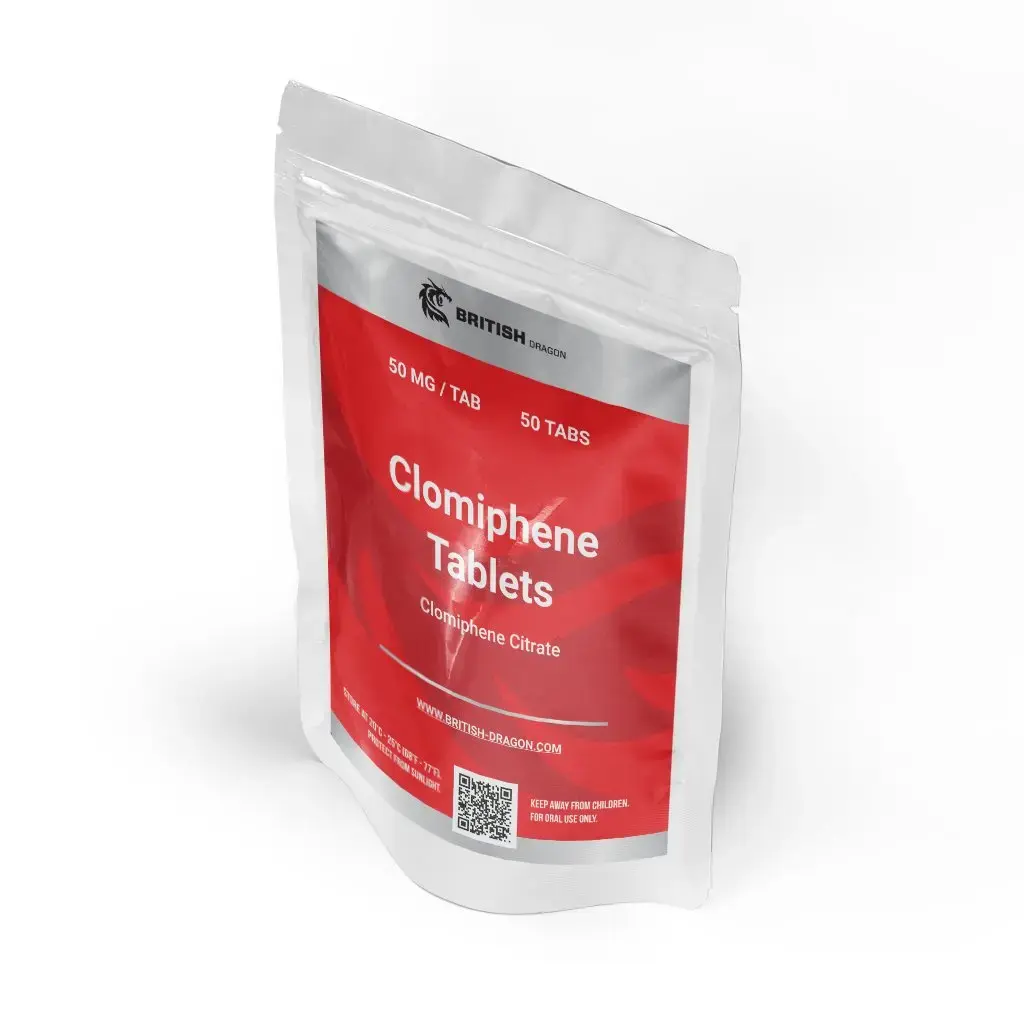
Clomiphene 50 mg is an oral selective estrogen receptor modulator (SERM) tablet manufactured by British Dragon and dosed at 50 mg per tablet, supplied in packs of 50 or 100 tablets.
Clomiphene 50 mg contains clomiphene citrate, a non-steroidal selective estrogen receptor modulator that has been used clinically for ovulation induction in women with anovulatory infertility for decades. In medical practice, clomiphene is also used off-label to treat male hypogonadism by stimulating endogenous testosterone production through the pituitary-gonadal axis.
Clomiphene works by binding to estrogen receptors in the hypothalamus and pituitary, blocking the negative feedback that estrogen normally exerts on gonadotropin-releasing hormone (GnRH) secretion. This leads to increased release of luteinizing hormone (LH) and follicle-stimulating hormone (FSH), which in turn stimulate the testes to produce more testosterone. A 2005 clinical trial demonstrated that low-dose clomiphene (25 mg daily) raised mean serum testosterone from 247.6 ng/dL to 610.0 ng/dL in hypogonadal men over 4–6 weeks.
In non-medical bodybuilding and performance-enhancement contexts, clomiphene is commonly referenced as a cornerstone of post-cycle therapy (PCT) to help restore endogenous testosterone production after suppressive anabolic steroid cycles. A case report documented successful reversal of steroid-induced hypogonadism using clomiphene at 100 mg daily for 2 months. Such use falls outside approved medical indications, though the clinical rationale is well-documented in the medical literature.
Clomiphene citrate is a non-steroidal SERM that acts primarily at the hypothalamic-pituitary level to modulate estrogen feedback and stimulate gonadotropin release.
Clomiphene is a mixture of two geometric isomers, enclomiphene and zuclomiphene, which have different pharmacokinetic and receptor activity profiles. The drug binds to estrogen receptors in the hypothalamus and pituitary, competitively inhibiting estrogen binding and reducing the negative feedback signal that suppresses GnRH secretion.
This blockade results in increased pulsatile release of GnRH, which in turn stimulates the pituitary to secrete more LH and FSH. In men, elevated LH acts on Leydig cells in the testes to increase testosterone synthesis, while FSH supports spermatogenesis. The increased testosterone production occurs through the body's natural feedback mechanisms rather than exogenous hormone administration.
Clinical research has demonstrated the efficacy of clomiphene for male hypogonadism. In a study of 36 hypogonadal men treated with 25 mg daily, mean testosterone rose from 247.6 ng/dL to 610.0 ng/dL by the first follow-up visit. A separate case report documented successful restoration of testosterone levels and pituitary-gonadal axis function in a patient with steroid-induced hypogonadism using 100 mg daily.
Clomiphene is FDA-approved for ovulation induction in women with anovulatory infertility. It is used off-label in men for hypogonadism and male infertility, with clinical evidence supporting its efficacy for testosterone restoration.
British Dragon offers several ancillary compounds used in non-medical bodybuilding contexts. Tamoxifen is another SERM commonly referenced for post-cycle therapy, while Anastrozole and Exemestane are aromatase inhibitors used to manage estrogenic side effects during cycles.
Clomiphene's distinguishing characteristic among these compounds is its dual action: blocking estrogen receptors at the pituitary while stimulating gonadotropin release, which makes it particularly suited for restoring endogenous testosterone production after suppression.
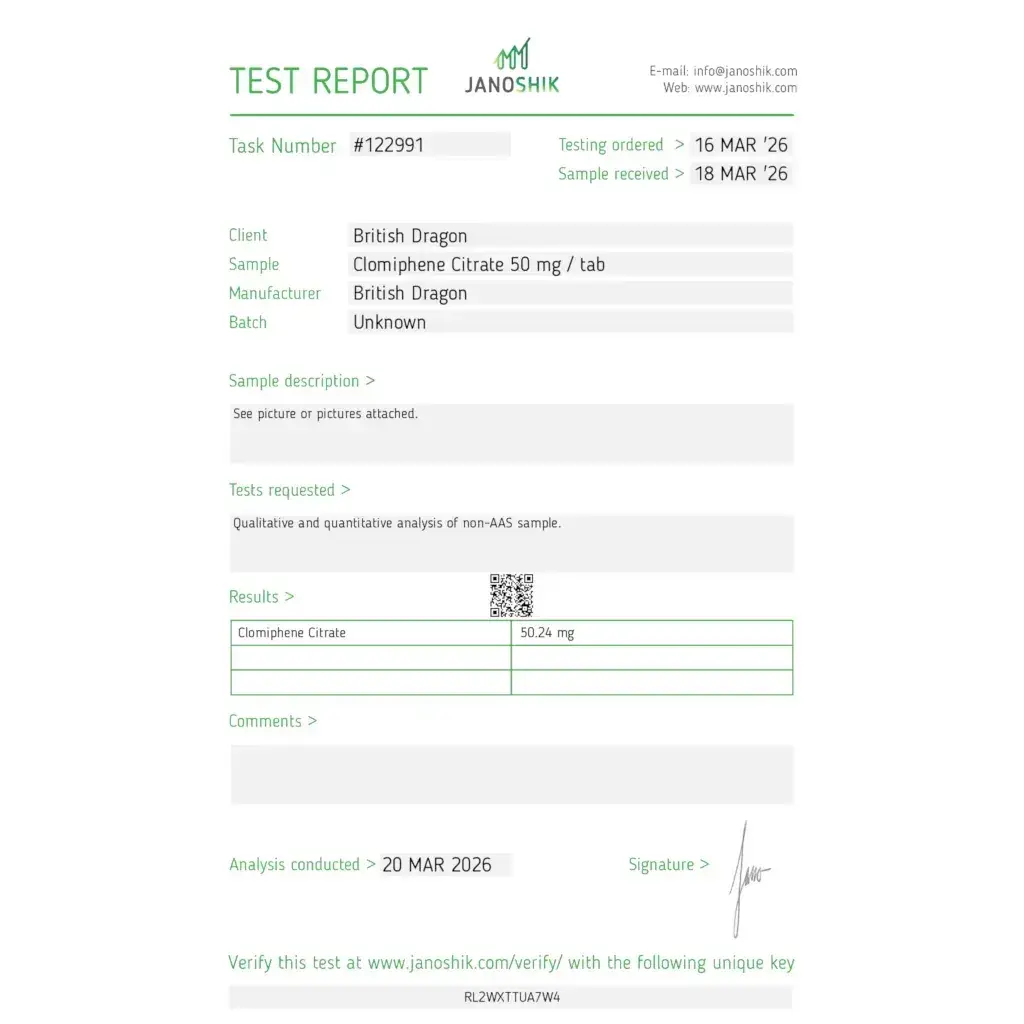
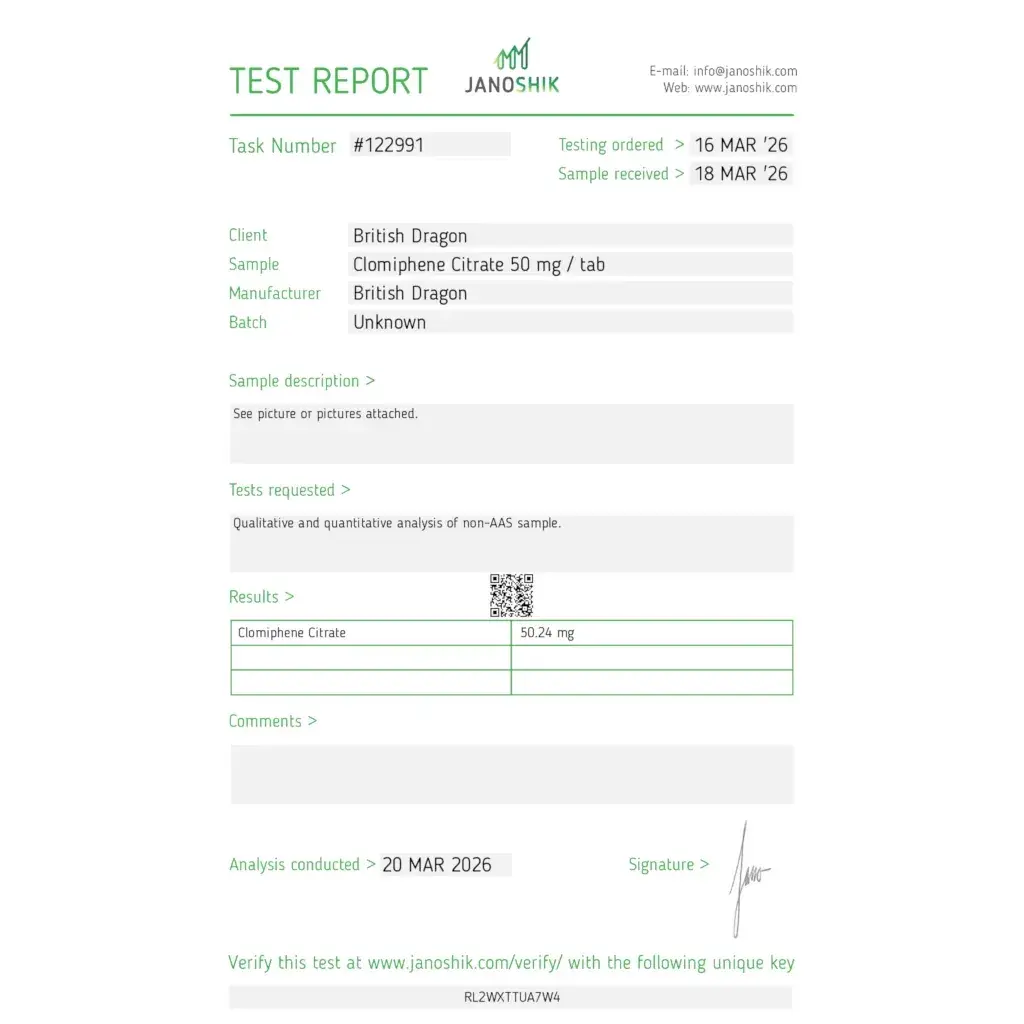
Published laboratory reports for Clomiphene 50 mg are shown below with the test date, measured result and percentage of the product's 50 mg label claim.
 View Report
Laboratory results apply to the specific tested sample represented in each published report and should not be interpreted as a measurement of every tablet or production batch.
The information below is provided for educational reference only. Clomiphene is a prescription medication; medical use requires appropriate diagnosis, clinical supervision, and ongoing monitoring. Non-medical use falls outside approved indications.
In clinical practice for ovulation induction, the standard clomiphene dose is 50 mg daily for 5 days, starting on or about day 5 of the menstrual cycle. In male hypogonadism research, doses of 25 mg daily have been shown to significantly elevate testosterone, while a case report used 100 mg daily for 2 months to reverse steroid-induced hypogonadism.
| Use Case | Common Reference Range | Frequency |
|---|---|---|
| Clinical (ovulation induction) | 50 mg | Once daily for 5 days |
| Male hypogonadism (research) | 25–50 mg | Once daily |
| Non-medical PCT (reported) | 50–100 mg | Once daily for 2–6 weeks |
These non-medical ranges represent community-reported practices and are not derived from controlled clinical trials for performance enhancement. Individual response to clomiphene varies based on baseline hormone levels and the degree of axis suppression.
In non-medical bodybuilding contexts, clomiphene is typically used as a standalone PCT compound rather than being stacked with other agents. It is commonly referenced alongside Tamoxifen as an alternative SERM, with some protocols describing the use of one or the other rather than both simultaneously.
Clinical research supports the use of clomiphene for restoring the pituitary-gonadal axis after suppression. PCT protocols typically begin after the last anabolic steroid dose has cleared the system, with duration based on cycle length and compounds used.
Common side effects reported in clinical trials include ovarian enlargement (13.6%), vasomotor flushes (10.4%), abdominal discomfort (5.5%), nausea and vomiting (2.2%), and breast discomfort (2.1%). Visual disturbances including blurred vision, floaters, and photophobia have been reported, and patients experiencing visual symptoms should discontinue treatment.
Serious adverse events reported post-marketing include thromboembolic events, pancreatitis, hepatic transaminase elevation, and psychiatric symptoms including anxiety and mood changes. Clomiphene is contraindicated in pregnancy (Category X) and should be used with caution in patients with a history of thrombophlebitis or hepatic disease.
Clomiphene has approved dosing for specific medical indications. Any information about non-medical use is derived from user-reported practices and is not validated by controlled clinical research. This information does not constitute medical advice.
Clomiphene is a prescription medication with known risks that require clinical oversight. It is contraindicated in pregnancy and certain medical conditions.
Clomiphene citrate is classified as Pregnancy Category X and is contraindicated in pregnant women. It should not be used in patients with hypersensitivity to clomiphene, hepatic impairment, abnormal uterine bleeding, uncontrolled thyroid or adrenal dysfunction, or a history of ovarian cysts not related to polycystic ovary syndrome.
Visual symptoms have been reported with clomiphene use, including blurred vision, floaters, photophobia, and scotomata. Patients experiencing any visual disturbance should discontinue treatment and undergo prompt ophthalmological evaluation.
Non-medical use of clomiphene falls outside approved indications. Product purity does not establish that non-medical use is safe or appropriate for an individual. Clomiphene should be used under medical supervision.
Common adverse reactions (incidence ≥1%) include ovarian enlargement (13.6%), vasomotor flushes (10.4%), abdominal-pelvic discomfort (5.5%), nausea and vomiting (2.2%), breast discomfort (2.1%), and visual complaints including blurred vision, floaters, and photophobia.
Serious adverse events reported post-marketing include deep vein thrombosis, pulmonary embolism, pancreatitis, hepatic transaminase elevation, and psychiatric symptoms including anxiety, irritability, and psychosis. Ovarian hyperstimulation syndrome (OHSS) has been reported and can progress rapidly within 24 hours.
Prolonged clomiphene use may elevate serum desmosterol levels due to interference with cholesterol synthesis, though sterol levels are not significantly altered at recommended doses.
Clomiphene is not appropriate for everyone. Contraindications include pregnancy, breastfeeding, history of hepatic impairment, abnormal uterine bleeding, uncontrolled adrenal dysfunction, non-PCOS-related ovarian cysts, organic intracranial lesions, uncontrolled thyroid disease, pituitary tumor, and endometrial cancer.
Caution is advised in patients with a history of thrombophlebitis or thromboembolic events, as case reports describe deep vein thrombosis following clomiphene treatment. Fasting lipid panel monitoring is recommended for patients at risk of hypertriglyceridemia.
Medically supervised clomiphene therapy may involve pregnancy testing and pelvic examination before each treatment cycle. In male hypogonadism research, serum testosterone, LH, and FSH levels are typically monitored to assess response and guide dosing. Any visual symptoms warrant immediate discontinuation and ophthalmological evaluation.
Store tablets in a cool, dry place in the original packaging. Keep out of reach of children. Inspect tablets before use and do not use if they appear damaged or compromised.
Clomiphene 50 mg is supplied through the official British Dragon distribution chain and shipped in original manufacturer packaging with discreet, privacy-focused handling.
The outer shipping package remains discreet, with privacy-focused handling and no unnecessary external product details. Products are supplied through the official British Dragon distribution chain.
To verify your Clomiphene 50 mg product, use the security code on the packaging and cross-check it on the British Dragon official site. Official British Dragon presentation and original packaging help reinforce product legitimacy and buyer confidence.
For complete delivery details, tracking policy, and reshipment terms, please see our Shipping Info page.
Proper storage conditions help preserve tablet stability and overall product integrity throughout shelf life.
Store at controlled room temperature (15–25°C) in a cool, dry place, away from direct light and moisture. Keep tablets in their original blister packaging or container until use to protect from humidity.
Inspect tablets before use and do not use if they appear discolored, cracked, or otherwise compromised. Keep out of reach of children.
Answers to common questions about Clomiphene 50 mg, the Clomiphene Citrate compound, and its applications.
Clomiphene 50 mg contains the SERM clomiphene citrate. In clinical medicine, it is approved for ovulation induction in women with anovulatory infertility. It is also used off-label to treat male hypogonadism by stimulating endogenous testosterone production. In non-medical bodybuilding contexts, it is commonly referenced as a post-cycle therapy (PCT) compound, though such use falls outside approved indications.
The clinical dose for ovulation induction is 50 mg daily for 5 days. In male hypogonadism research, doses of 25 mg daily have been used, while a case report used 100 mg daily for 2 months. In non-medical PCT contexts, community-reported protocols typically reference 50–100 mg daily for 2–6 weeks. These non-medical practices are not derived from controlled clinical trials.
Clomiphene is itself used as a post-cycle therapy (PCT) compound rather than requiring PCT after use. It is not an anabolic steroid and does not suppress endogenous testosterone production. Instead, it stimulates LH and FSH release to help restore the pituitary-gonadal axis after suppression.
Clomiphene is a selective estrogen receptor modulator that binds to estrogen receptors in the hypothalamus and pituitary, blocking estrogen's negative feedback on GnRH secretion. This leads to increased LH and FSH release, which in turn stimulates testosterone production in men. A clinical study demonstrated that 25 mg daily raised mean testosterone from 247.6 ng/dL to 610.0 ng/dL in hypogonadal men.
In clinical research, significant increases in testosterone were observed by the first follow-up visit at 4–6 weeks of daily clomiphene use. A case report documented normalization of testosterone levels with 2 months of treatment at 100 mg daily. Ovulation typically occurs 5–10 days after a 5-day course in women.
There is no universally established "best" SERM, and clomiphene has not been validated in controlled trials specifically for post-steroid-cycle recovery. However, clinical evidence supports its efficacy for restoring testosterone in hypogonadal men, and a case report documents successful use after steroid abuse. Tamoxifen is an alternative SERM commonly referenced in PCT contexts.
Clomiphene and Tamoxifen are both SERMs but have different receptor activity profiles and clinical applications. Clomiphene is primarily used for ovulation induction and has documented efficacy for male hypogonadism. Tamoxifen is used in breast cancer treatment and is also referenced in non-medical PCT contexts. Their side effect profiles differ.
Clomiphene and Anastrozole have different mechanisms. Clomiphene is a SERM that blocks estrogen receptors at the pituitary to stimulate LH/FSH release and testosterone production. Anastrozole is an aromatase inhibitor that reduces estrogen synthesis by blocking androgen-to-estrogen conversion. They are used for different purposes in non-medical contexts.
Clomiphene 50 mg is labeled at 50 mg of clomiphene citrate per tablet. This is the standard clinical dose for ovulation induction and is within the range used in male hypogonadism research. In non-medical PCT contexts, 50 mg is commonly referenced as a standard daily dose.
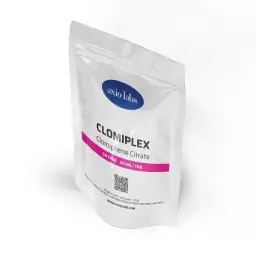
Clomiphene 50 mg is labeled at 50 mg of clomiphene citrate per tablet. It is supplied as oral tablets in packs of 50 or 100 tablets manufactured by British Dragon.
Yes. A published laboratory report dated March 20, 2026 measured Clomiphene 50 mg at 50.24 mg, equivalent to 100.48% of its 50 mg label claim. The complete report can be viewed in the Lab Reports tab.

Deca-Testosterone Cycle:
- Testoxyl Enanthate 250 x 2 Vials
- Nandroxyl 250 x 2 Vials
- Dianoxyl 10 x 200 Tablets
- Clomixyl x 100 Tablets
- Nolvaxyl x 100 Tablets
- HCG 5000 IU x 2 mL Vial

Advanced Mass Cycle:
- Nandroxyl 250 x 2 Vials
- Boldaxyl 300 x 2 Vials
- Mesterolone x 90 Tablets
- Clomixyl x 100 Tablets

Beginner Cycle:
- Dianoxyl 10 x 200 Tablets
- Nolvaxyl x 100 Tablets
- Clomixyl x 100 Tablets

Drug Class: SERM (Selective Estrogen Receptor Modulator)
Active Substance: Clomiphene Citrate
Strength: 50 mg/tablet
Amount: 100 tablets
Active Life: 5–7 days
Average Dose: 25–100 mg/day
Liver Toxicity: Low
Aromatization Rate: None
Anabolic Rate: N/A
Androgenic Rate: None
Manufacturer: Stealth Labs
Laboratory Test: View Result
Shipped Without Label!

Drug Class: Selective Estrogen Receptor Modulator (SERM)
Active Substance: Clomiphene Citrate
Strength: 50 mg/tablet
Amount: 100 tablets
Active Life: 5–7 days
Average Dose: 50–100 mg/day for 2–4 weeks
Liver Toxicity: Low
Aromatization Rate: None
Anabolic Rate: N/A
Androgenic Rate: N/A
Manufacturer: GenShi Labs