BPC 157 10 mg is a lyophilized research peptide manufactured by Stealth Labs, supplied as 10 mg/vial of BPC 157 (body protection compound 157) in a 2 mL vial.
BPC 157 10 mg is a synthetic pentadecapeptide composed of 15 amino acids, with the sequence GEPPPGKPADDAGLV. It is a stable gastric peptide fragment derived from a larger protein found in human gastric juice, and it is not approved by the FDA for any human indication.
In preclinical research, BPC 157 has been investigated for its potential effects on tissue healing, including tendon, ligament, muscle, and gastrointestinal mucosal repair. However, human evidence is extremely limited: only three uncontrolled pilot studies with a combined sample size of 30 participants have been reported, and no validated pharmacokinetic data or receptor identification exists. The FDA has concluded that there is insufficient clinical safety information to characterize the safety profile of BPC 157.
BPC 157 is commonly sold as a "research chemical" for laboratory use only. It is prohibited by the World Anti-Doping Agency and is not intended for human consumption. The FDA has placed BPC 157 on the Category 2 bulk drug substance list, restricting its use in compounding. A recent FDA advisory committee vote recommended loosening restrictions, but this does not constitute FDA approval or demonstrated clinical benefit.
BPC 157 10 mg is supplied as a lyophilized (freeze-dried) powder in a 2 mL glass vial. Reconstitution with an appropriate solvent is required before use in research applications.
BPC 157 is a synthetic pentadecapeptide that has been studied primarily in animal models for its potential tissue-healing properties.
BPC 157 is a partial sequence of a larger protein found in human gastric juice, consisting of 15 amino acids with the sequence GEPPPGKPADDAGLV. It is stable in gastric acid and has been investigated for its potential cytoprotective and healing effects across various tissue types in preclinical models.
Research in animal models has explored BPC 157's effects on tendon, ligament, and muscle healing, as well as gastrointestinal mucosal repair. A 2019 review noted that all studies investigating BPC 157 had demonstrated positive healing effects for various injury types, though these findings are largely from animal research.
Human data remains minimal. A 2025 systematic review concluded that findings from animal studies are largely unvalidated in human trials, and that information regarding indications, dosing, and frequency remains unknown. The FDA has stated that there is insufficient clinical safety information to characterize BPC 157's safety profile.
No human pharmacokinetic data exists for BPC 157 after oral, subcutaneous, nasal, or transdermal administration. The FDA found no studies that administered BPC 157 to humans via the proposed routes of administration, and only two studies using rectal enema have been identified.
Stealth Labs offers TB 500, another research peptide commonly referenced in tissue-healing contexts. Both BPC 157 and TB-500 are classified as doping substances by international sports authorities and are widely sold as research chemicals.
Compared to TB-500, BPC 157 is a smaller pentadecapeptide with a distinct amino acid sequence and different proposed mechanisms of action in preclinical research. Both are lyophilized powders requiring reconstitution, and neither is FDA-approved for human use.
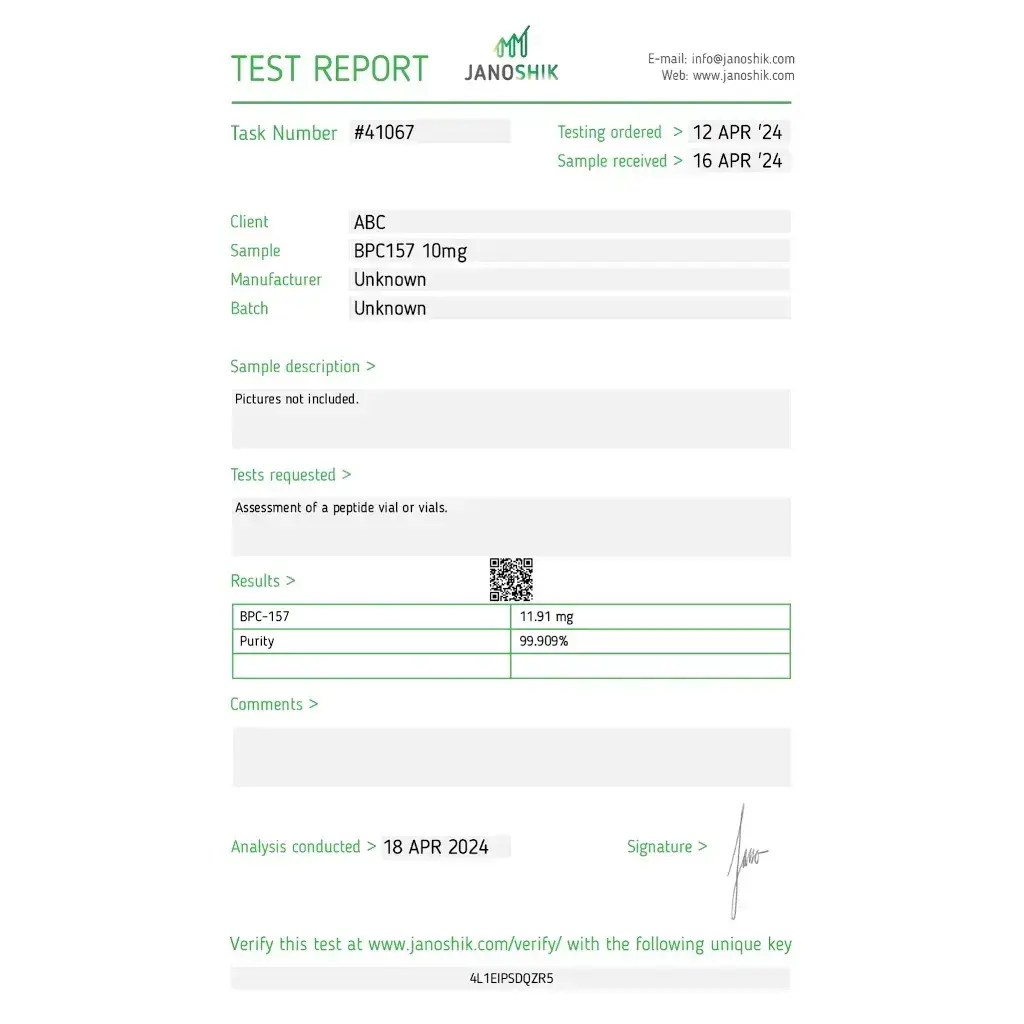
Published laboratory reports for BPC 157 10 mg are shown below with the test date, measured concentration and percentage of the product's 10 mg/vial label claim.
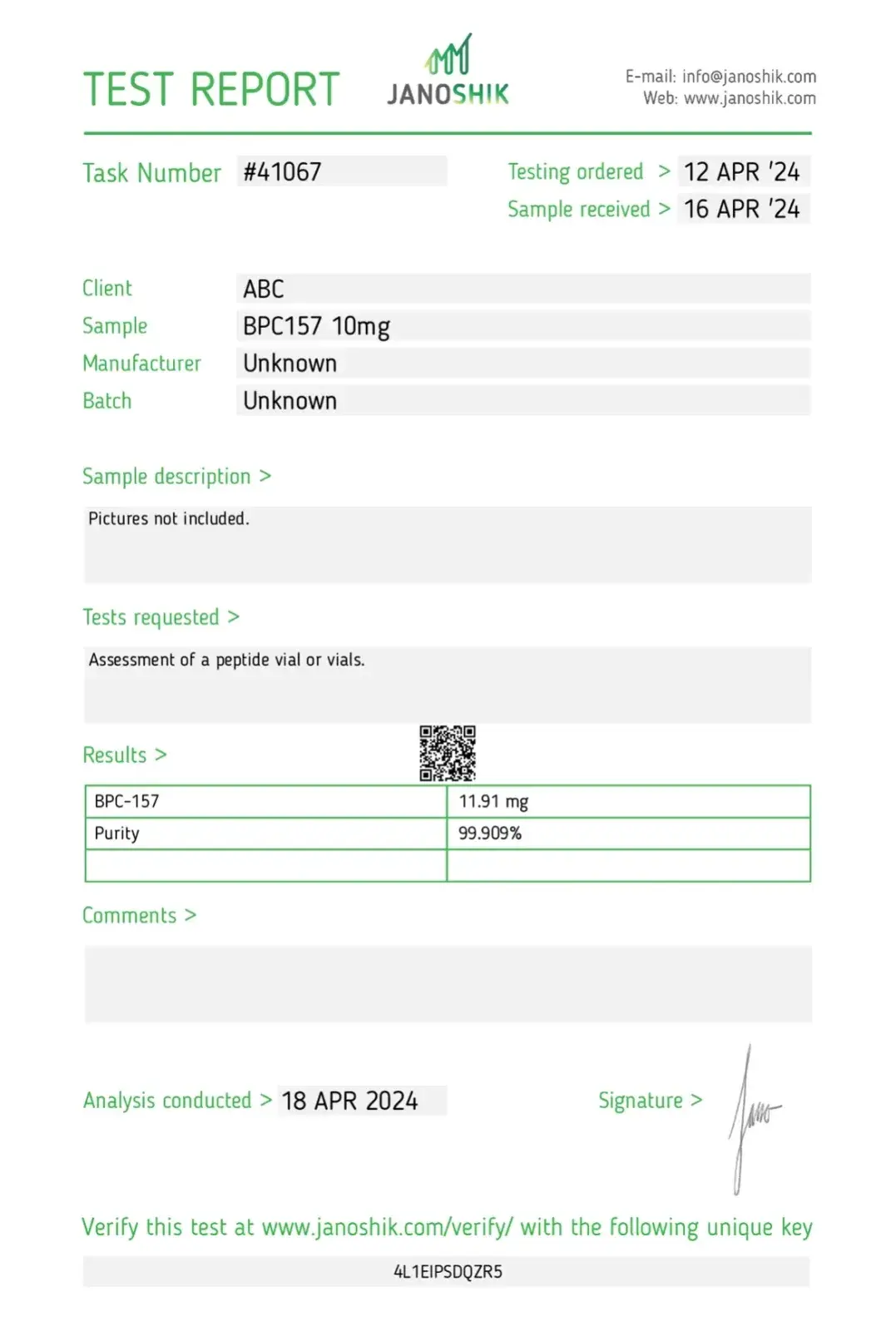 View Report
Laboratory results apply to the specific tested sample represented in each published report and should not be interpreted as a measurement of every vial or production batch.
The information below is provided for educational reference only. BPC 157 is not approved for human use and is sold as a research chemical only. No human dosing information is established, and non-medical use falls outside any approved indication.
Common reference ranges for BPC 157 in non-medical research contexts are not well characterized in publicly available bodybuilding resources, and no human pharmacokinetic data exists to support any specific dosing regimen. In community discussions, doses of 250–500 mcg per day have been referenced for research applications, but these are anecdotal and lack clinical validation.
| Use Case | Common Reference Range | Frequency |
|---|---|---|
| Research reference (anecdotal) | 250–500 mcg per day | Once daily |
| Cycle pattern (community convention) | 4–8 weeks on, 2–4 weeks off | Daily during active cycle |
| Clinical human data | None established | Not applicable |
BPC 157 is supplied as a lyophilized powder requiring reconstitution with an appropriate solvent such as bacteriostatic water or sterile saline. Once reconstituted, BPC 157 is more susceptible to degradation and should be stored refrigerated at 2–8°C, typically stable for 2–4 weeks. Avoid repeated freeze-thaw cycles, which can degrade the peptide.
Reconstitution should be performed gently by swirling rather than shaking to prevent denaturation or aggregation. A cloudy solution or visible particles may indicate incomplete dissolution, aggregation, or contamination and should not be used.
No human safety data exists to characterize the risk profile of BPC 157. The FDA has noted that as a peptide administered through parenteral or nasal routes, BPC 157 may pose a risk for immunogenicity, potentially amplified by aggregation and peptide-related impurities. Adverse events reported in the FAERS database include injection site reaction, shortness of breath, and diffuse hyperpigmentation, though causality is unclear.
Because BPC 157 is sold as a research chemical, product purity and identity may vary widely across vendors. No aromatase inhibitors or other ancillary compounds are relevant to BPC 157, as it is not an aromatizing compound and is not a steroid hormone.
BPC 157 is not a hormone and does not suppress endogenous testosterone production. No post-cycle therapy is applicable or necessary for BPC 157 alone. However, because it is often referenced alongside anabolic compounds in non-medical contexts, any PCT protocol would be determined by the other compounds used, not by BPC 157.
No human clinical data exists to support any specific dosing strategy for BPC 157. The information above is for educational reference only and does not constitute medical advice. BPC 157 is not for human use.
BPC 157 is not approved for human use and is sold as a research chemical only. The FDA has concluded that there is insufficient clinical safety information to characterize its safety profile.
BPC 157 is not a component of any FDA-approved drug and is not well-characterized from a physical and chemical perspective, according to the FDA. Inconsistent naming conventions for BPC 157-related substances introduce safety risks because it may be difficult to determine which specific substance a reference standard or product contains.
BPC 157 is prohibited by the World Anti-Doping Agency (WADA) and is classified as a doping substance by international sports authorities.
BPC 157 is sold as a research chemical for laboratory use only. It is not intended for human consumption, and no human safety or efficacy data supports its use in any population. Product concentration and laboratory verification do not establish that non-medical use is safe or appropriate.
No human studies have been conducted to characterize BPC 157's safety profile via the routes of administration commonly referenced in non-medical contexts (oral, subcutaneous, nasal, or transdermal). The FDA found no studies administering BPC 157 to humans via these routes.
As a peptide, BPC 157 may pose a risk for immunogenicity, particularly when administered parenterally or nasally. Aggregation and peptide-related impurities can amplify this risk and affect bioavailability. Adverse events reported in the FAERS database include injection site reaction, shortness of breath, and diffuse hyperpigmentation and gingival darkening, though it is unclear whether these were attributable to BPC 157.
Because no human safety data exists, there are no established contraindications or conditions requiring medical evaluation for BPC 157. Individuals with any medical condition should consult a qualified healthcare professional before considering any research peptide.
No monitoring parameters have been established for BPC 157 in humans. Laboratory testing of the product itself, such as the published potency report shown in the Lab Reports tab, is separate from any clinical monitoring of a person using the product. Product testing does not assess individual health status or suitability for use.
Lyophilized BPC 157 should be stored at -20°C or below for maximal stability, protected from moisture and light. Short-term storage at room temperature is relatively stable for weeks, but long-term storage requires freezing.
Reconstituted BPC 157 should be stored refrigerated at 2–8°C and used within 2–4 weeks. Aliquot reconstituted solution into single-use vials to avoid repeated freeze-thaw cycles if it will not be used promptly.
Keep all research peptides out of the reach of children.
BPC 157 10 mg is supplied through the official Stealth Labs distribution chain and shipped in original manufacturer packaging with discreet, privacy-focused handling.
The outer shipping package remains discreet, with privacy-focused handling and no unnecessary external product details. Products are supplied through the official Stealth Labs distribution chain.
To verify your BPC 157 10 mg product, use the security code on the vial label and cross-check it on the Stealth Labs official site. Official Stealth Labs presentation, batch-linked lab proof, and original packaging help reinforce product legitimacy and buyer confidence.
For complete delivery details, tracking policy, and reshipment terms, please see our Shipping Info page.
Proper storage conditions help preserve peptide stability and overall product integrity throughout shelf life.
Lyophilized BPC 157 should be stored at -20°C or below for maximal stability, protected from moisture and light. Short-term storage at room temperature is relatively stable for weeks, but long-term storage requires freezing. Allow the vial to warm to room temperature before opening to prevent condensation.
Reconstituted BPC 157 should be stored refrigerated at 2–8°C and used within 2–4 weeks. Avoid repeated freeze-thaw cycles, which can degrade the peptide; aliquot into single-use vials if necessary. Inspect the solution before use and do not use if it appears cloudy, discolored, or contains particulate matter.
Answers to common questions about BPC 157 10 mg, its research status, storage, and laboratory testing.
BPC 157 10 mg is a lyophilized research peptide sold for laboratory use only. In preclinical animal research, BPC 157 has been investigated for potential effects on tissue healing, including tendon, ligament, muscle, and gastrointestinal mucosal repair. It is not approved for human use, and human evidence is limited to three uncontrolled pilot studies with a combined sample size of 30 participants.
No human pharmacokinetic data exists to establish a dosing frequency for BPC 157. Anecdotal research references commonly cite 250–500 mcg per day, but these are not clinically validated. Because BPC 157 is not for human use, no dosing recommendation can be made.
BPC 157 is a peptide, not a hormone, and does not suppress endogenous testosterone production. No post-cycle therapy is applicable or necessary for BPC 157 alone. If BPC 157 is referenced alongside anabolic compounds in non-medical contexts, any PCT protocol would be determined by the other compounds, not by BPC 157.
BPC 157 is a synthetic pentadecapeptide derived from a protein found in human gastric juice. In animal models, it has been studied for cytoprotective and healing effects across various tissue types, potentially involving angiogenesis and the nitric oxide system. The mechanism of action in humans is unknown, and no receptor has been identified.
No human pharmacokinetic data exists for BPC 157, so the onset of any effects cannot be characterized in humans. In animal studies, healing effects have been reported, but translating these findings to humans is not supported by current evidence.
There is no clinical evidence to compare BPC 157 against other peptides or to establish it as superior for any indication. A 2025 systematic review concluded that findings from animal studies are largely unvalidated in human trials, and that significant research is required before definitive recommendations can be made. The FDA advisory committee vote to loosen compounding restrictions does not constitute FDA approval or demonstrated clinical benefit.
BPC 157 and TB 500 are distinct research peptides with different amino acid sequences. BPC 157 is a 15-amino-acid peptide derived from gastric juice, while TB-500 is a synthetic fragment of thymosin beta-4. Both are sold as research chemicals, are not FDA-approved for human use, and are classified as doping substances by international sports authorities.
BPC 157 and GHK-Cu are different peptides with distinct proposed mechanisms. BPC 157 is a pentadecapeptide studied for tissue healing in animal models, while GHK-Cu is a copper-binding tripeptide often referenced in skin and wound-healing contexts. Both lack robust human clinical evidence, and a 2026 UCLA review noted that evidence for peptides' effectiveness "is just not there".
A milligram amount cannot be classified as appropriate or excessive because no human dosing data exists for BPC 157. It is also important to distinguish a total vial content from a dose. BPC 157 10 mg indicates the total peptide content per vial; that quantity does not by itself specify how much should be used in any research application.
BPC 157 10 mg is labeled at 10 mg of BPC 157 per vial. It is supplied as a lyophilized powder in a 2 mL vial.
Yes. A published laboratory report dated April 18, 2024 measured BPC 157 10 mg at 11.91 mg, equivalent to 119.10% of its 10 mg/vial label claim. The complete report can be viewed in the Lab Reports tab. Laboratory results apply to the tested sample represented by the individual report.
BPC 157 is not for human use, and no clinical data exists to support any combination with other compounds. In non-medical research contexts, it is sometimes referenced alongside other peptides such as TB 500, but these combinations lack clinical validation and are not supported by human evidence.