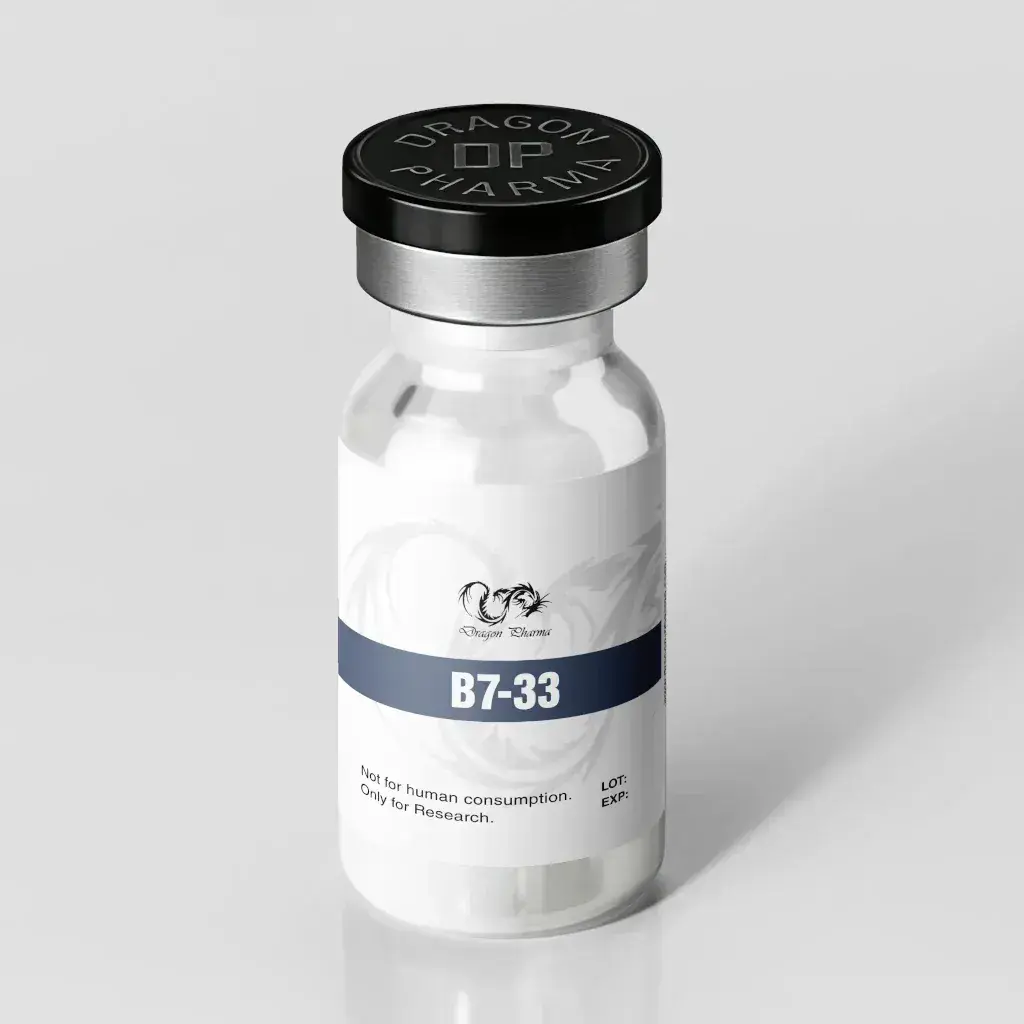
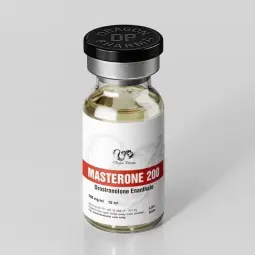
B7-33 Injectable
B7-33 10 mg contains a single-chain peptide analog derived from the B-chain of human relaxin-2. Unlike native relaxin-2, which is a two-chain, three-disulfide-bonded hormone, B7-33 is a linear 29-amino-acid peptide engineered to be freely water-soluble and easier to synthesize. It functions as a functionally selective agonist at the relaxin family peptide receptor 1 (RXFP1), preferentially activating the pERK1/2 signaling pathway over the cAMP pathway.
In research contexts, B7-33 is investigated for its anti-fibrotic effects in multiple organ systems. Preclinical studies have demonstrated that it reduces cardiac fibrosis and preserves cardiac function after myocardial infarction in mice. It has also been shown to attenuate left ventricular fibrosis in cardiomyopathy models and reduce fibrotic encapsulation around implants. Its mechanism involves inhibition of TGF-β1 signaling, reduction of myofibroblast differentiation, and upregulation of matrix metalloproteinases (MMPs) that degrade excess collagen.
In bodybuilding and recovery contexts, B7-33 is referenced anecdotally for its potential anti-fibrotic effects on scar tissue and muscle tightness. However, no human clinical trials have been conducted, no established human dose exists, and community usage data is virtually nonexistent. All currently available evidence comes from preclinical animal models. Any such use falls outside any approved indication.
Research Properties of B7-33 10 mg
- Single-chain relaxin-2 B-chain analog, water-soluble and synthetically accessible
- Functionally selective RXFP1 agonist, preferentially activating pERK1/2 over cAMP
- Investigated for anti-fibrotic effects in cardiac, renal, and pulmonary tissues
- Demonstrated cardioprotective effects in myocardial infarction models
- 10 mg per vial for research applications
Single-Chain Relaxin-2 Analog
B7-33 was developed to overcome the manufacturing challenges associated with native human relaxin-2, which requires a complex two-chain structure with three disulfide bonds. The B7-33 sequence was derived from the B-chain of relaxin-2, with truncation at the N-terminus and addition of a C-terminal KRSL sequence (Lys-Arg-Ser-Leu) to improve solubility and add positive charge. Two cysteine residues were replaced with serine to prevent dimerization and aggregation.
The peptide's defining characteristic is its functional selectivity at RXFP1. Native relaxin-2 activates both the cAMP and pERK1/2 pathways, but the cAMP pathway is associated with vasodilation and potential tumor-promoting effects. B7-33 preferentially signals through pERK1/2, which mediates the anti-fibrotic effects, while avoiding excessive cAMP activation.
Preclinical studies have demonstrated B7-33's anti-fibrotic efficacy in multiple models. In a mouse myocardial infarction model, B7-33 (0.25 mg/kg) significantly reduced infarct size (21.99% vs 45.32% for vehicle) and preserved cardiac function. In a cardiomyopathy model, B7-33 reduced left ventricular fibrosis more rapidly than the ACE inhibitor perindopril. It also reduced fibrotic encapsulation around implants by approximately 49% in a 6-week study.
Defining Characteristic
Functionally Selective RXFP1 Signaling
B7-33 activates the anti-fibrotic pERK1/2 pathway while minimizing cAMP signaling, which is associated with vasodilation and potential off-target effects. This functional selectivity distinguishes it from native relaxin-2.
B7-33 10 mg vs Other Dragon Pharma Preparations
Dragon Pharma offers several peptides referenced in tissue repair and recovery contexts, but B7-33's mechanism is distinct. BPC 157 is a gastric pentadecapeptide studied for angiogenesis and tissue repair through VEGF and NO pathways. TB 500 is a thymosin beta-4 fragment investigated for cell migration and actin regulation. B7-33 operates through the relaxin receptor RXFP1, targeting fibrosis through TGF-β1 inhibition and MMP upregulation, which is a fundamentally different mechanism from these repair-oriented peptides.
Typical Dosage Ranges
Common reference ranges for B7-33 are not well characterized in publicly available bodybuilding resources. No established consumer dose exists. Preclinical animal studies have used doses of 0.25 mg/kg in mice, but translating these to human use is speculative. Vendor websites reference 100–250 mcg daily for research purposes, but these are not derived from controlled human studies.
| Use Case |
Common Reference Range |
Frequency |
| Preclinical (animal models) |
0.25 mg/kg |
Once daily or twice daily |
| Vendor-suggested (unverified) |
100–250 mcg |
Once daily |
Reconstitution & Handling
B7-33 10 mg is supplied as a lyophilized powder requiring reconstitution. Bacteriostatic Water is commonly referenced for reconstituting research peptides. A 10 mg vial reconstituted with 2 mL yields a concentration of 5 mg/mL. Standard sterile technique and peptide handling practices should be observed. Reconstituted solutions should be stored refrigerated and used within a reasonable timeframe.
Stacking & Research Considerations
No established research exists on combining B7-33 with other peptides. Its anti-fibrotic mechanism is distinct from repair-oriented peptides like BPC 157, and no synergistic or complementary protocols have been validated. Any combination research would be exploratory.
Important
Individual Response Varies
The information above is for educational reference and does not constitute medical advice. B7-33 has not been evaluated by the FDA for safety or efficacy in humans.
Important Safety Information
B7-33 has never been tested in human clinical trials. No Phase 1 safety trial, no IND-enabling toxicology studies, and no GMP manufacturing for clinical use have been completed. Preclinical animal studies have shown no evidence of promoting tumor growth due to its limited cAMP activation, but this does not establish human safety.
Important
Non-Medical Use
Non-medical use of B7-33 falls outside any approved indication. No population exists for whom use of this compound is supported by evidence, and gray-market products are not manufactured under pharmaceutical standards.
Potential Adverse Effects
Because B7-33 is a relaxin analog, theoretical concerns include effects on blood pressure and vascular tone, though its functional selectivity at RXFP1 reduces cAMP-mediated vasodilation compared to native relaxin. However, some vasodilatory effects may still occur through pERK1/2-mediated pathways and endothelial NO production. No human safety data exists to characterize common or rare adverse effects.
Conditions Requiring Medical Evaluation
Individuals with cardiovascular conditions, hypotension, or those taking antihypertensive medications should exercise particular caution with any relaxin-pathway peptide. Pregnancy and breastfeeding are contraindications due to lack of safety data. No formal contraindication list exists for B7-33 because it has not undergone regulatory review.
Monitoring Considerations
No standardized monitoring protocol exists for B7-33. If used in any research context, monitoring of blood pressure may be prudent given the relaxin pathway's known vascular effects. Laboratory testing of the product itself is separate from clinical monitoring of the individual.
Product Care
Storage & Handling
Store the lyophilized powder under recommended conditions and protect from conditions that could compromise peptide integrity. Store lyophilized peptide at -20°C for long-term storage. Reconstitute only immediately before use and use within 7–10 days when stored at 2–8°C.
Keep all research peptides and injectable products out of the reach of children.
USA Domestic 3–5 business days
International 10–15 business days
Order Processing 24–48 business hours
Tracking Provided after dispatch
Direct Supply
Discreet Delivery & Original Packaging
The outer shipping package remains discreet, with no external product details. Products are supplied through the official Dragon Pharma distribution chain.
What to Expect
- Orders are processed after payment confirmation
- USA Domestic shipping is typically faster when local stock is available
- International orders include tracking, though update frequency may vary by destination
- Multiple warehouses may result in separate shipments when applicable
Authenticity Verification
To verify your B7-33 10 mg product, use the security code on the vial label and cross-check it on the official Dragon Pharma site. Original packaging and batch documentation help reinforce product legitimacy.
For complete delivery details, tracking policy, and reshipment terms, please see our Shipping Info page.
Recommended Conditions
Store the lyophilized powder in a cool, dry place protected from light and moisture. For long-term storage, keep lyophilized peptide at -20°C. The unopened vial should be kept under conditions that preserve the peptide's structural integrity until reconstitution.
Once reconstituted, B7-33 solution should be stored at 2–8°C and used within 7–10 days. Discard if solution becomes cloudy or develops particulate matter.
Keep out of reach of children. Follow proper handling practices for research peptides and use appropriate sterile technique during reconstitution.
Quick Reference
Do & Don't
- Do store lyophilized powder at -20°C for long-term storage
- Do protect from light and moisture
- Do use reconstituted solution within 7–10 days
- Don't expose to excessive heat
- Don't freeze reconstituted solution
- Don't use if powder appears discolored
What is B7-33 10 mg used for?
B7-33 10 mg is a research peptide supplied as a lyophilized powder. It contains a single-chain relaxin-2 analog that acts as a functionally selective RXFP1 agonist, investigated for anti-fibrotic effects in preclinical models. There is no FDA-approved human indication for B7-33.
How often should B7-33 10 mg be administered?
Common reference ranges for B7-33 are not well characterized in publicly available bodybuilding resources. No established consumer dose exists. Preclinical animal studies have used 0.25 mg/kg in mice, but translating these to human use is speculative.
Does B7-33 10 mg require PCT?
B7-33 is not an anabolic steroid and does not suppress endogenous testosterone production. Post-cycle therapy designed for steroid cycles is not applicable. Its mechanism involves RXFP1 receptor activation and anti-fibrotic signaling, not hormonal pathways.
What does B7-33 do?
B7-33 is a functionally selective RXFP1 agonist that preferentially activates the pERK1/2 signaling pathway over cAMP. This leads to inhibition of TGF-β1 signaling, reduced myofibroblast differentiation, and upregulation of matrix metalloproteinases that degrade excess collagen.
How long does B7-33 take to work?
No established onset timeline exists for B7-33 in humans because no clinical trials have been completed. Preclinical animal models have shown measurable cardioprotective effects within 7 days, and anti-fibrotic remodeling may require weeks of sustained exposure.
Is B7-33 the best anti-fibrotic peptide?
No single anti-fibrotic peptide is universally superior. B7-33's research profile focuses on RXFP1-mediated anti-fibrotic effects, while other peptides like BPC 157 operate through different mechanisms. Appropriate selection depends on the specific research context.
What is the difference between B7-33 and BPC 157?
B7-33 is a relaxin-2 B-chain analog targeting the RXFP1 receptor for anti-fibrotic effects, while BPC 157 is a gastric pentadecapeptide studied for angiogenesis and tissue repair through VEGF and NO pathways. Their mechanisms and research applications are fundamentally different.
What is the difference between B7-33 and TB 500?
TB 500 is a thymosin beta-4 fragment investigated for cell migration and actin regulation. B7-33 is a relaxin analog that targets fibrosis through TGF-β1 inhibition and MMP upregulation. These compounds operate through entirely different biological pathways.
Is 10 mg of B7-33 a lot?
10 mg is the total labeled content of the B7-33 10 mg vial. Because no standardized human dosage exists for this research peptide, the milligram amount cannot be classified as high or low relative to established protocols. Preclinical doses are in the mg/kg range.
What strength is B7-33 10 mg?
B7-33 10 mg by Dragon Pharma contains 10 mg of B7-33 per vial as a lyophilized powder. The vial size is 2 mL. This is a research presentation.
Can B7-33 be stacked with other peptides?
There is no established research on combining B7-33 with other peptides. Its anti-fibrotic mechanism is distinct from repair-oriented peptides, and no synergistic or complementary protocols have been validated.
No reviews found
Please log in to write B7-33 10 mg review.