
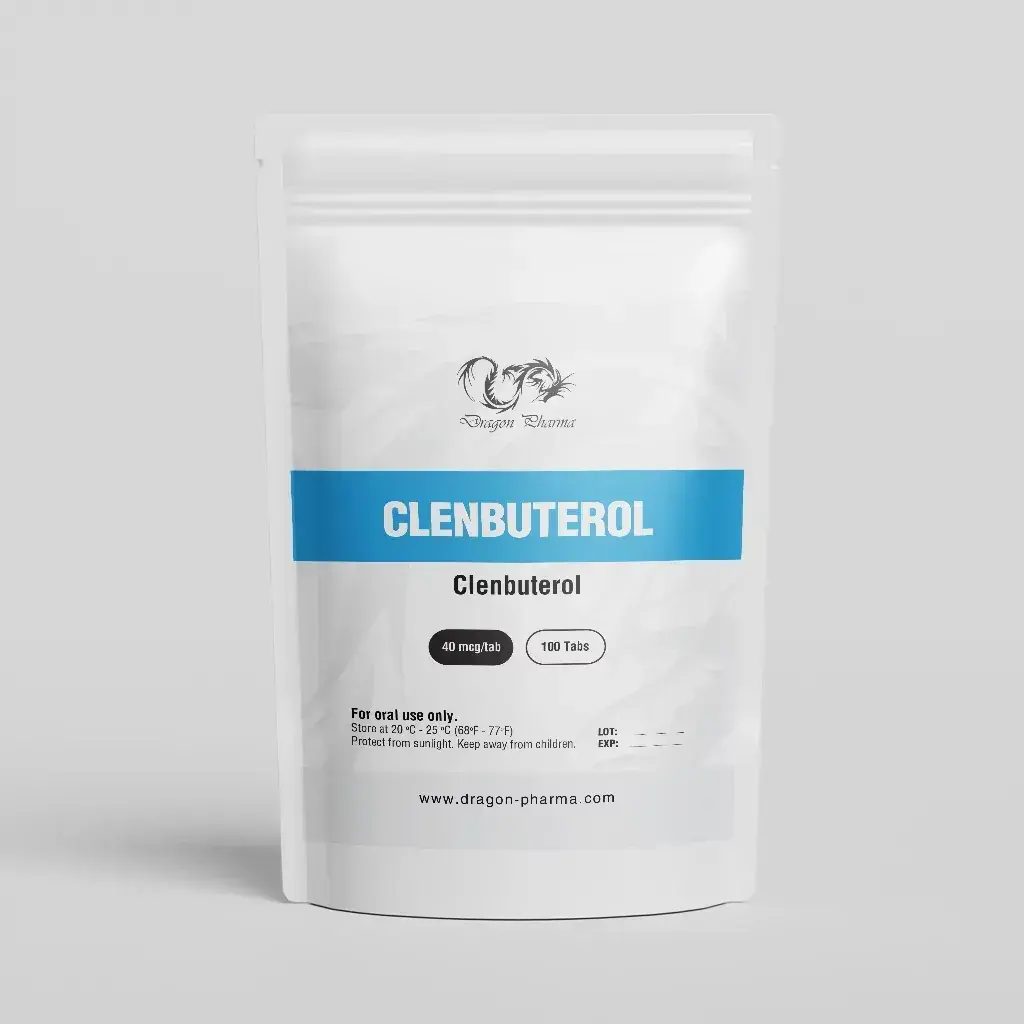
Clenbuterol 40 mcg is an oral clenbuterol hydrochloride tablet manufactured by Dragon Pharma and dosed at 40 mcg per tablet in a 100-tablet package.
Clenbuterol 40 mcg contains clenbuterol hydrochloride, a beta-2 adrenergic agonist that provides bronchodilating properties with minimum effect on the cardiovascular system at therapeutic doses. In the United States, clenbuterol is approved only for veterinary use in horses with respiratory conditions, while in parts of Europe and Latin America it is also approved as a human bronchodilator. It is not approved by the FDA for human use in the US.
In non-medical bodybuilding and fitness contexts, clenbuterol is widely referenced for its thermogenic and lipolytic effects, where it is used off-label to accelerate fat loss, enhance muscle definition, and reduce body weight. Animal studies have demonstrated that clenbuterol stimulates muscle beta-adrenoceptors to induce hypertrophy, increasing muscle mass and protein synthesis rates. These anabolic and lipolytic effects are the basis for its illicit use in bodybuilding subcultures.
Clenbuterol is associated with a wide range of health risks, particularly at the supratherapeutic doses commonly referenced in non-medical contexts. Cardiovascular complications include tachycardia, palpitations, hypertension, arrhythmias, and myocardial hypertrophy. Neurological effects may include anxiety, insomnia, tremors, and headaches, while metabolic disturbances can include hypokalemia and hyperglycemia. Clenbuterol is prohibited by the World Anti-Doping Agency (WADA) under the category of other anabolic agents and is banned both in and out of competition.
Clenbuterol is a selective beta-2 adrenergic agonist characterized by its long half-life, high oral bioavailability, and potent thermogenic and anabolic effects in animal models.
Clenbuterol is a beta-2 adrenergic agonist that binds to beta-2 receptors, providing bronchodilating properties as well as other effects, with minimum effect on the cardiovascular system at therapeutic doses. Compared to other beta-2 agonists, clenbuterol demonstrates greater potency, an extended half-life of approximately 25–40 hours, and higher gastrointestinal absorption rates of 70–80%. At high doses, it can also activate the beta-1 adrenoceptor subtype.
The pharmacokinetics of clenbuterol are well characterized. Following oral administration of 20, 40, and 80 mcg to healthy volunteers, plasma levels reached maximum values within 2.5 hours and lasted for over 6 hours. The half-life of clenbuterol in plasma was estimated to be about 35 hours. When administered repeatedly twice daily, plasma levels reached a plateau within 4 days. The bound ratio of the drug to plasma protein was estimated to be 89–98%.
Animal studies have demonstrated that clenbuterol stimulates muscle beta-adrenoceptors to induce hypertrophy, increasing muscle mass and protein synthesis rates. A single subcutaneous injection produced rapid increases in muscle cyclic AMP and lactate concentrations and decreased muscle glycogen concentrations, changes characteristic of muscle beta-adrenoceptor stimulation. These effects were abolished by propranolol, confirming the beta-adrenoceptor mechanism.
Clenbuterol is distinguished by its long half-life of approximately 35 hours, which supports less frequent dosing compared to shorter-acting beta-2 agonists.
Dragon Pharma offers multiple compounds discussed in bodybuilding and performance contexts. Clenbuterol's beta-2 adrenergic agonist mechanism contrasts with anabolic steroids such as Anavar 50 or Winstrol 50, which act directly on the androgen receptor. It is also distinct from thyroid hormones such as T3, which increase metabolic rate through a different mechanism. Clenbuterol is frequently referenced in combination with T3 in non-medical fat-loss protocols, though such stacking increases cardiovascular and metabolic risks.
The distinction between Clenbuterol and these compounds is one of mechanism: clenbuterol stimulates beta-2 adrenergic receptors to promote lipolysis and thermogenesis, rather than acting through androgen or thyroid hormone pathways.
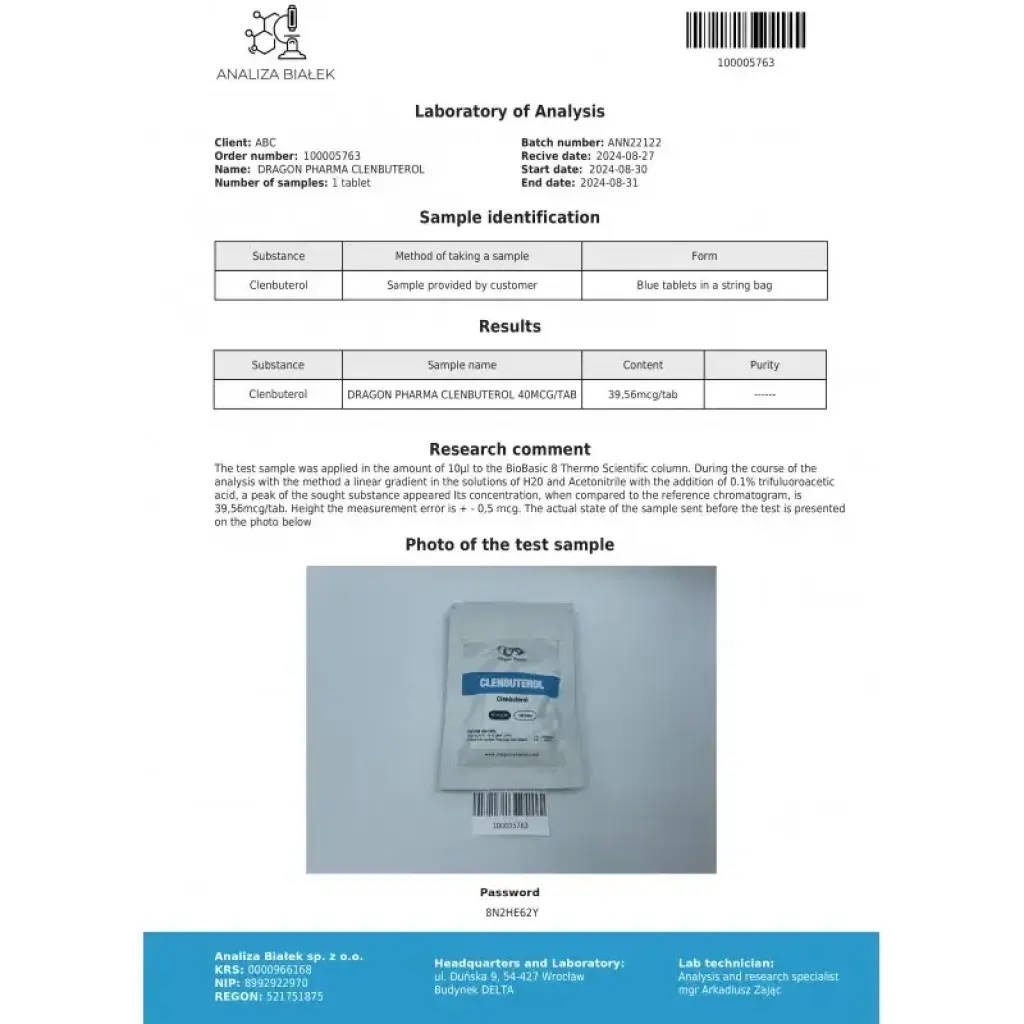
Published laboratory reports for Clenbuterol 40 mcg are shown below with the test date, measured clenbuterol content, and percentage of the product's 40 mcg label claim.
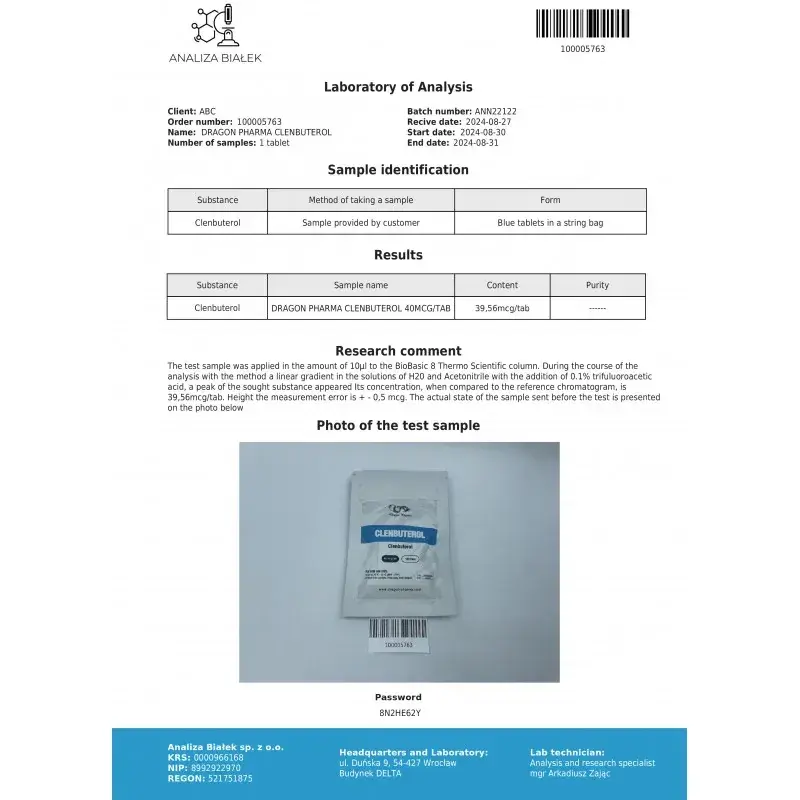 View Report
Laboratory results apply to the specific tested sample represented in each published report and should not be interpreted as a measurement of every tablet or production batch.
The information below is provided for educational reference only. Clenbuterol is not approved by the FDA for human use in the United States. Medical use in some countries requires appropriate diagnosis and clinical supervision. Non-medical use falls outside approved indications and carries significant health risks.
In clinical contexts where clenbuterol is approved for human use, therapeutic dosing for adults with asthma is typically 20 mcg (one tablet) twice daily. In non-medical bodybuilding contexts, clenbuterol is commonly referenced at substantially higher and progressively escalated doses. Anecdotal and observational reports indicate that some people begin with one 20 mcg tablet twice daily and increase the dose incrementally, with daily intakes of 120–200 mcg frequently reported. Clenbuterol 40 mcg tablets allow for flexible dosing in 40 mcg increments.
| Use Case | Common Reference Range | Frequency |
|---|---|---|
| Medical (asthma, where approved) | 20 mcg / twice daily | Twice daily |
| Bodybuilding (non-medical) | 120–200 mcg / day | Split into multiple doses |
| Advanced (non-medical) | Up to 200 mcg / day | Split doses, 2-week cycles |
In non-medical contexts, clenbuterol is frequently referenced in combination with thyroid hormones such as T3 for fat-loss protocols. A forum reference describes a protocol starting at 20 mcg twice daily, gradually increasing by 20 mcg every 1–3 weeks, with a maximum of 120 mcg per day split into multiple doses. The same source advises tapering off after the cycle rather than stopping abruptly. Stacking clenbuterol with other stimulants or thermogenic compounds significantly increases cardiovascular risk.
Clenbuterol is associated with a wide range of adverse effects, particularly at the supratherapeutic doses used in non-medical contexts. Cardiovascular complications include tachycardia, palpitations, hypertension, arrhythmias, and myocardial hypertrophy. Neurological effects may include anxiety, insomnia, tremors, and headaches. Metabolic disturbances include hypokalemia and hyperglycemia, and muscle cramps due to electrolyte imbalances have been reported. A case report describes acute poisoning in a 21-year-old bodybuilder who consumed 48 tablets (4.8 g) of clenbuterol. Electrolyte imbalances are particularly important when clenbuterol is used because of the potential for arrhythmias.
Clenbuterol is not approved for human use in the United States. The information above is for educational reference and does not constitute medical advice. Non-medical use is strongly cautioned against.
Clenbuterol is not approved by the FDA for human use in the United States. It is associated with serious cardiovascular, metabolic, and neurological adverse effects, particularly at supratherapeutic doses.
In the United States, clenbuterol is restricted to veterinary medicine, where it is prescribed for horses with respiratory conditions. It is not approved for human use. The substance is prohibited by the World Anti-Doping Agency (WADA) under the category of other anabolic agents and is banned both in and out of competition. Athletes have been cautioned about inadvertent positive doping tests from contaminated food products.
Clenbuterol is often obtained through unregulated markets, exposing users to counterfeit products and inaccurate dosing. Several studies have documented fatalities resulting from the simultaneous use of multiple performance-enhancing drugs, including clenbuterol.
Clenbuterol has no approved human indication in the United States. Non-medical use falls outside approved indications and carries significant health risks including cardiac hypertrophy, arrhythmias, and metabolic disturbances. Product strength and laboratory verification do not establish safety for human consumption.
Cardiovascular effects: Clenbuterol use is associated with tachycardia, palpitations, hypertension, arrhythmias, and myocardial hypertrophy. A study in horses demonstrated that chronic clenbuterol administration at therapeutic levels resulted in significantly increased left ventricular internal dimensions and interventricular septal wall thickness, suggesting negative alterations in cardiac function and increased risk of aortic rupture. Another study in mice showed that repeated doses of clenbuterol resulted in a marked increase in heart muscle weight.
Neurological effects: Anxiety, insomnia, tremors, and headaches have been reported.
Metabolic effects: Hypokalemia and hyperglycemia are known metabolic disturbances associated with clenbuterol use. Muscle cramps due to electrolyte imbalances have also been reported.
Acute toxicity: A case report describes a 21-year-old bodybuilder who consumed 48 tablets (4.8 g) of clenbuterol, resulting in acute poisoning.
Given the cardiovascular risks associated with clenbuterol, individuals with pre-existing heart conditions, hypertension, or arrhythmias are at heightened risk. Electrolyte imbalances are particularly concerning because of the potential for arrhythmias. Any consideration of clenbuterol exposure warrants comprehensive medical evaluation including cardiac assessment, electrolyte monitoring, and blood pressure evaluation.
There is no established monitoring protocol for non-medical clenbuterol use. For any human exposure, cardiac function, blood pressure, electrolyte levels, and blood glucose should be assessed by a qualified healthcare professional. No safe monitoring parameters have been established for non-medical doses because human safety data at those doses is inadequate.
Store in a cool, dry place away from direct light and moisture. Keep the product in its original packaging and out of the reach of children. This product is not for human consumption.
Clenbuterol 40 mcg is supplied through the Dragon Pharma distribution chain and shipped in original manufacturer packaging with discreet, privacy-focused handling.
The outer shipping package remains discreet, with privacy-focused handling and no unnecessary external product details. Products are supplied through the Dragon Pharma distribution chain.
To verify your Clenbuterol 40 mcg product, cross-check the security features on the packaging against Dragon Pharma's official presentation. Batch-linked lab proof and original packaging help reinforce product legitimacy.
For complete delivery details, tracking policy, and reshipment terms, please see our Shipping Info page.
Proper storage conditions help preserve tablet integrity and overall product stability throughout shelf life.
Store in a cool, dry place away from excessive heat, moisture, and direct light. Maintaining stable conditions helps preserve the integrity of the tablets.
Keep the tablets in their original packaging until use. Do not use if the packaging appears compromised or if the tablets show signs of degradation such as discoloration or crumbling.
Keep out of reach of children. This product is not for human consumption.
Answers to common questions about Clenbuterol 40 mcg, clenbuterol hydrochloride, its mechanism, dosing, and safety.
Clenbuterol 40 mcg contains clenbuterol hydrochloride, a beta-2 adrenergic agonist. In the United States, it is approved only for veterinary use in horses with respiratory conditions. In non-medical bodybuilding contexts, it is widely used off-label for its thermogenic and lipolytic effects to accelerate fat loss.
In clinical contexts where clenbuterol is approved for human use, therapeutic dosing is typically 20 mcg twice daily. In non-medical contexts, it is typically referenced as being taken in split doses, with daily intakes of 120–200 mcg frequently reported.
Clenbuterol is a beta-2 adrenergic agonist that provides bronchodilating properties with minimum effect on the cardiovascular system at therapeutic doses. Animal studies have shown that it stimulates muscle beta-adrenoceptors to induce hypertrophy, increasing muscle mass and protein synthesis rates. It also has thermogenic and lipolytic effects.
Following oral administration, clenbuterol plasma levels reach maximum values within 2.5 hours and last for over 6 hours. When administered repeatedly twice daily, plasma levels reach a plateau within 4 days.
The half-life of clenbuterol in plasma was estimated to be about 35 hours in human volunteers. This long half-life supports less frequent dosing compared to shorter-acting beta-2 agonists.
No. In the United States, clenbuterol is not approved by the FDA for human use and is restricted to veterinary medicine. In parts of Europe and Latin America, it is approved as a bronchodilator for human use.
Clenbuterol displays greater selectivity and potency, in addition to a significantly different pharmacokinetic profile, including greater oral bioavailability and a longer half-life compared to albuterol. Both are beta-2 agonists, but clenbuterol's longer duration of action distinguishes it.
Clenbuterol is a beta-2 adrenergic agonist that stimulates lipolysis through adrenergic receptors. T3 (triiodothyronine) is a thyroid hormone that increases metabolic rate through thyroid hormone receptors. Both are referenced in non-medical fat-loss contexts, and some protocols combine them, though this increases cardiovascular and metabolic risks.
Clinical therapeutic dosing where approved is typically 20 mcg twice daily. A 40 mcg tablet is therefore a moderate single dose. In non-medical contexts, users often take multiple tablets to reach daily intakes of 120–200 mcg. Clenbuterol 40 mcg is labeled at 40 mcg per tablet.
Clenbuterol 40 mcg is labeled at 40 micrograms of clenbuterol hydrochloride per tablet. It is supplied in a 100-tablet package, giving 4,000 mcg of total labeled clenbuterol content.
Yes. A published laboratory report dated August 31, 2024 measured Clenbuterol 40 mcg at 39.56 mcg per tablet, equivalent to 98.90% of its 40 mcg label claim. Complete reports can be viewed in the Lab Reports tab.
Yes. Clenbuterol use is associated with cardiovascular complications including tachycardia, palpitations, hypertension, arrhythmias, and myocardial hypertrophy. A study in horses demonstrated that chronic clenbuterol administration resulted in significantly increased left ventricular internal dimensions and wall thickness, suggesting negative alterations in cardiac function. Another study in mice showed that repeated doses of clenbuterol resulted in a marked increase in heart muscle weight.