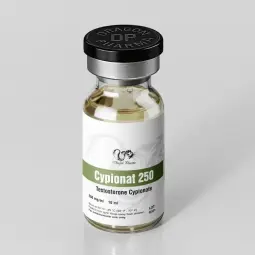


Oxymetholon 50 mg is an oral oxymetholone tablet manufactured by Dragon Pharma and dosed at 50 mg per tablet in a 100-tablet package.
Oxymetholon 50 mg contains oxymetholone, a synthetic anabolic-androgenic steroid that is orally active. Oxymetholone is a 17-alpha-alkylated derivative of dihydrotestosterone, a structural modification that allows it to survive first-pass metabolism through the liver and remain bioavailable when taken orally. It is one of the most potent oral anabolic steroids, known for rapid and significant gains in muscle mass and strength.
In medical practice, oxymetholone is FDA-approved for the treatment of anemias caused by deficient red blood cell production, including acquired aplastic anemia, congenital aplastic anemia, myelofibrosis, and hypoplastic anemias due to myelotoxic drugs. The usual dose range in adults is 1 to 5 mg per kg of body weight per day. In non-medical bodybuilding contexts, oxymetholone is commonly referenced as a mass-building oral used at the beginning of a cycle to accelerate gains in size, strength, and body weight. Its effects are often accompanied by significant water retention and a rapid increase in scale weight.
Oxymetholone is a 17-alpha-alkylated compound, which makes it orally active but also hepatotoxic. It can cause liver damage, including peliosis hepatis (blood-filled cysts in the liver) and liver tumors with long-term use. It also suppresses endogenous testosterone production, and a post-cycle therapy protocol is commonly referenced in non-medical contexts. Non-medical use for physique or performance enhancement falls outside approved indications and is not recommended.
Oxymetholone is a 17-alpha-alkylated oral anabolic steroid characterized by strong anabolic activity, significant water retention, and hepatotoxicity. It does not aromatize classically but can cause estrogenic side effects through other pathways.
Oxymetholone is structurally a 17-alpha-alkylated derivative of dihydrotestosterone. Unlike many anabolic steroids, oxymetholone has weak androgen receptor binding affinity but appears to act partly through estrogen receptor pathways directly, which is why it can cause estrogenic effects even though it does not aromatize classically.
The half-life of oxymetholone is commonly referenced as 8 to 9 hours. Animal studies have reported terminal elimination half-lives of approximately 2.46 hours in mice, though human pharmacokinetic data is more limited. This relatively extended half-life means once-daily or twice-daily dosing is common in non-medical contexts.
Oxymetholone is one of the most potent oral anabolic steroids for promoting weight gain and muscle mass. Clinical studies have documented significant increases in lean mass at higher doses, though much of the early weight gain includes water retention.
Oxymetholone is distinguished by its rapid and significant mass-building effects, accompanied by notable water retention and a distinct hepatotoxicity profile. It is not a compound for lean, dry gains.
Dragon Pharma offers several oral anabolic preparations with distinct profiles. Oxymetholone's potent mass-building and water-retaining character contrasts with Anavar 50, which is non-aromatizing and commonly referenced for lean muscle preservation. For users seeking a potent oral mass builder with a different side effect profile, Dianabol 50 offers a methandienone-based alternative that also aromatizes and promotes water retention. Superdrol 10 is another potent oral, though it is non-aromatizing and generally considered harsher on lipids.
The distinction between Oxymetholon and these compounds is primarily one of potency, water retention, and specific side effect profiles.
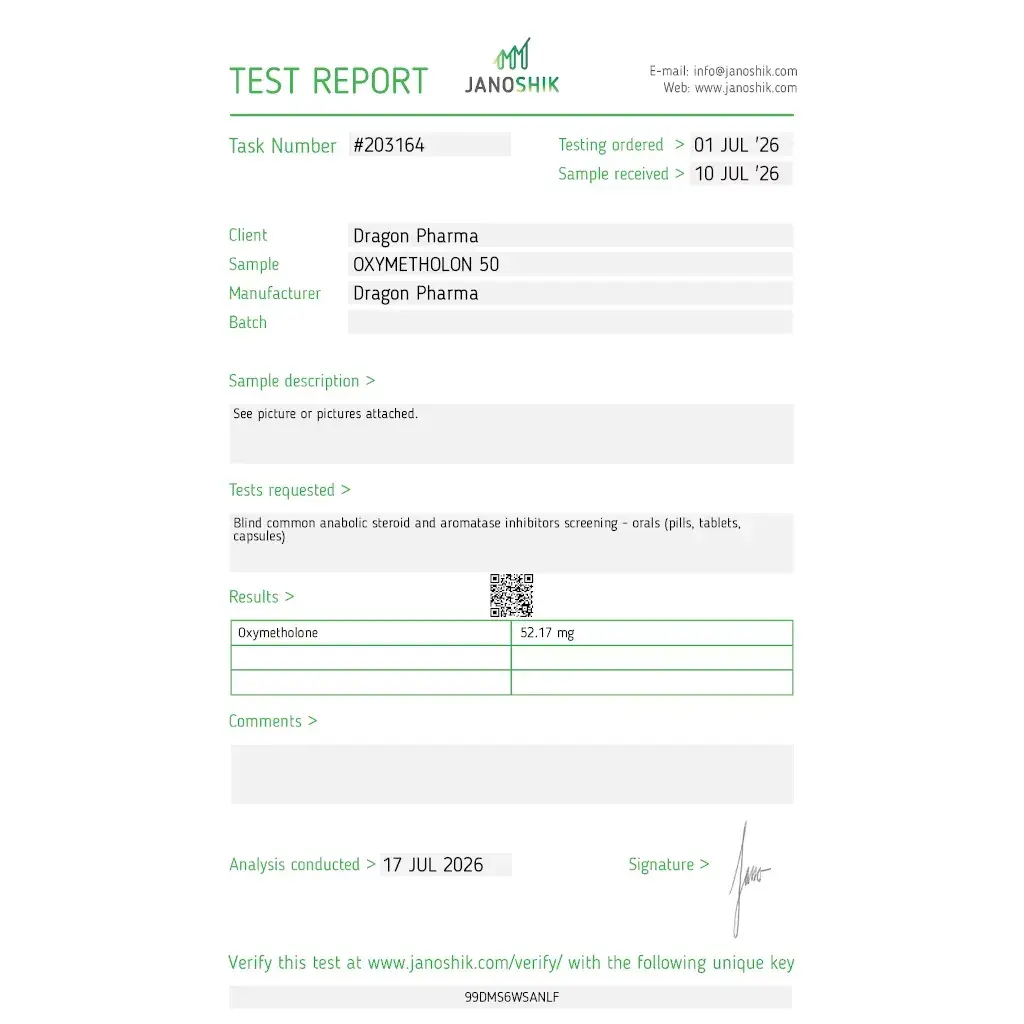
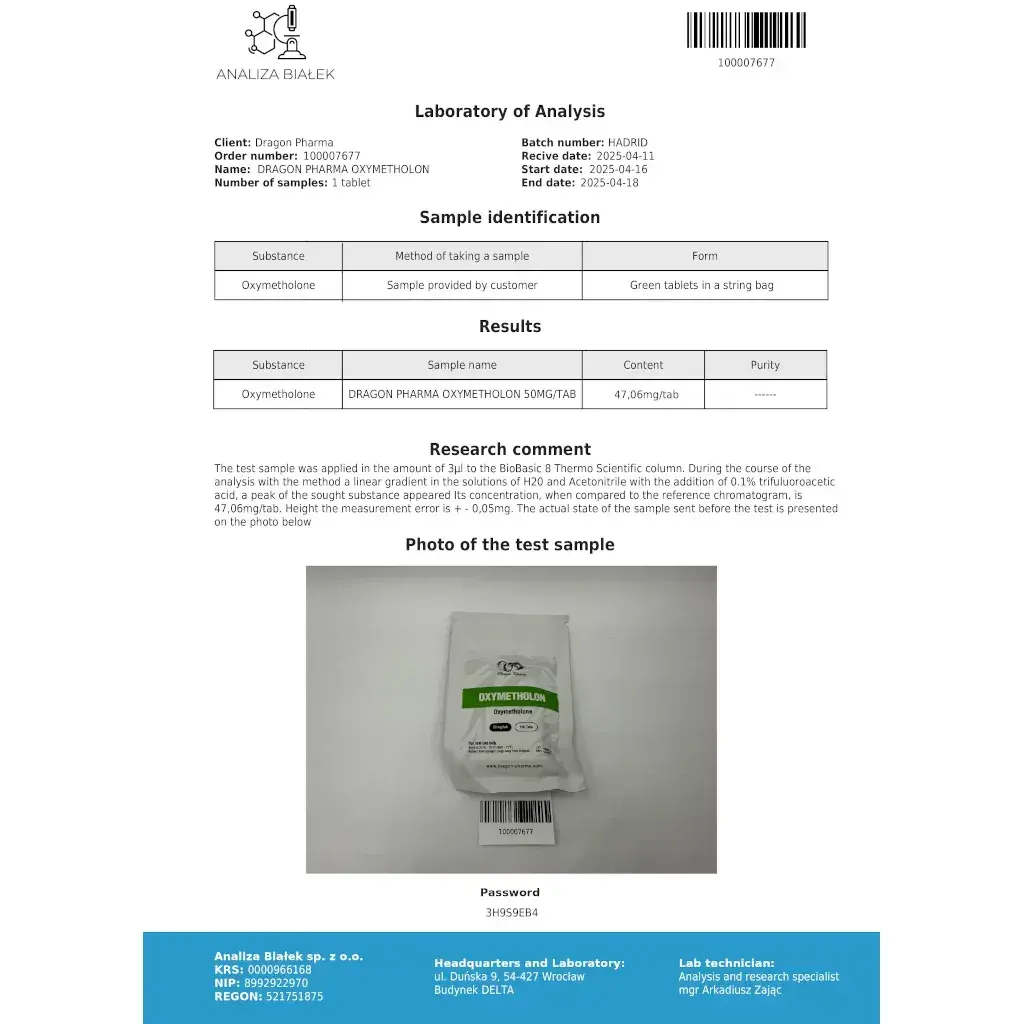
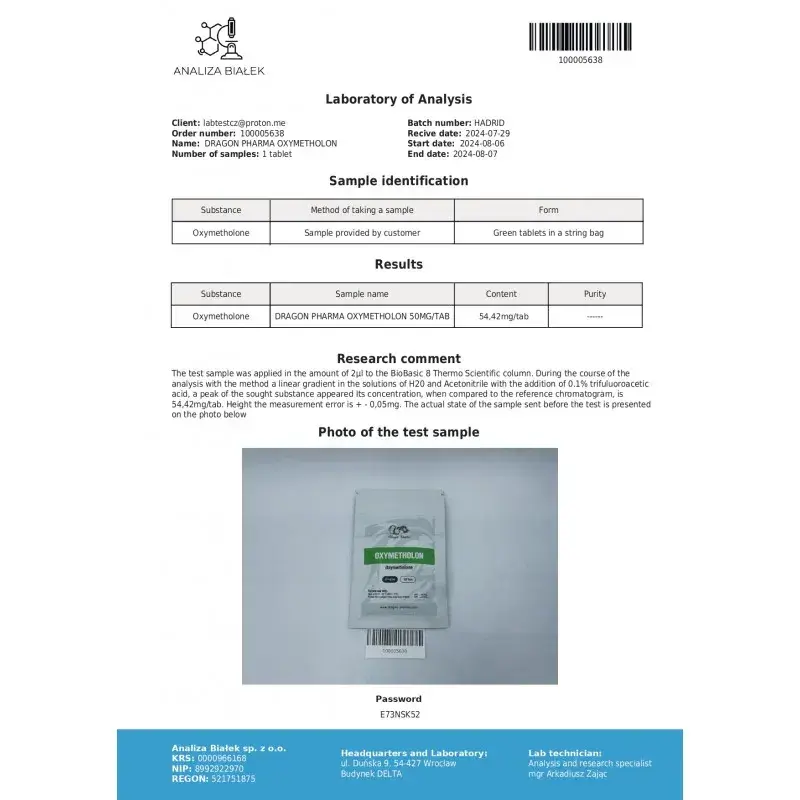
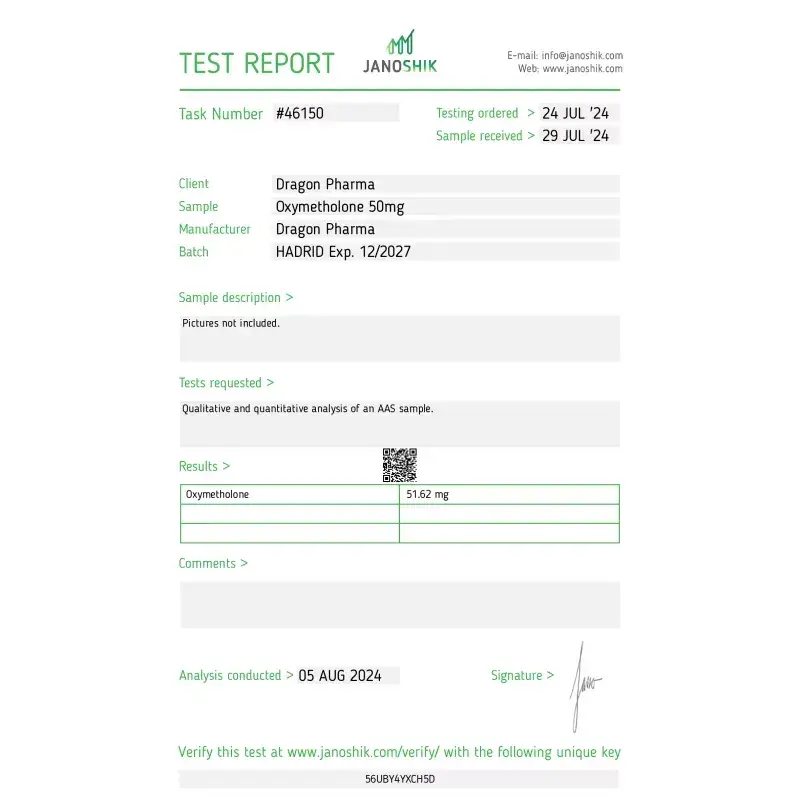
Published laboratory reports for Oxymetholon 50 mg are shown below with the test date, measured oxymetholone content, and percentage of the product's 50 mg label claim.
 View Report
 View Report
 View Report
 View Report
 View Report
Laboratory results apply to the specific tested sample represented in each published report and should not be interpreted as a measurement of every tablet or production batch.
The information below is provided for educational reference only. Oxymetholone is a prescription medication; medical use requires appropriate diagnosis and clinical supervision. Non-medical use falls outside approved indications and is not recommended.
In medically supervised settings, oxymetholone dosing is individualized based on the condition being treated and the patient's response, with typical adult doses ranging from 1 to 5 mg per kg of body weight per day. In non-medical bodybuilding contexts, oxymetholone is commonly referenced in the range of 25–100 mg per day, with some experienced users referencing doses up to 150 mg per day, though such use falls outside approved medical indications and carries substantial health risks.
| Use Case | Common Reference Range | Frequency |
|---|---|---|
| Medical (anemia) | 1–5 mg / kg / day | Once daily or divided |
| Bodybuilding (non-medical) | 25–100 mg / day | Once or split into 2 doses |
| Advanced (non-medical) | 100–150 mg / day | Split doses, not exceeding 4–6 weeks |
In non-medical bodybuilding contexts, oxymetholone is frequently referenced as a cycle starter or kickstart compound, used for the first 4–6 weeks of a longer injectable cycle to accelerate initial gains. It may be combined with injectable testosterone such as Testabol 400 for mass-building phases. Stacking multiple oral 17-alpha-alkylated compounds is generally discouraged due to cumulative liver stress.
Cycle duration for oxymetholone is uniformly referenced as brief, rarely exceeding 4–6 weeks, because of its hepatotoxicity.
Oxymetholone does not aromatize classically but can cause estrogenic side effects through other pathways, including water retention and gynecomastia. Aromatase inhibitors may be referenced in non-medical contexts to manage these effects, though this should be based on individual response and bloodwork where possible. Liver support and periodic liver function assessment are critical considerations due to the compound's hepatotoxicity. Blood pressure and lipid profile can be adversely affected even with short-term use.
After completing a cycle with Oxymetholon 50 mg, post-cycle therapy is commonly recommended to help restore endogenous testosterone production and support hormonal recovery. Agents such as Clomid or Nolvadex are commonly referenced for this purpose.
PCT protocols vary based on cycle length, compounds used, and individual factors. Bloodwork and, where possible, medical guidance can help inform recovery strategy.
Oxymetholone is a potent and hepatotoxic compound. The information above is for educational reference and does not constitute medical advice. Non-medical use is strongly cautioned against.
Oxymetholone is a prescription anabolic steroid that can cause severe liver damage, blood lipid changes, and endocrine effects. Medical use requires appropriate diagnosis and clinical supervision.
Oxymetholone is FDA-approved for specific anemia indications. Anabolic steroids have not been shown to enhance athletic ability, and non-medical use for physique or performance enhancement falls outside approved indications.
Long-term use of oxymetholone can cause liver tumors or blood-filled cysts in the liver (peliosis hepatis). Peliosis hepatis can be life-threatening if the cysts rupture. Liver cell tumors, both benign and malignant, have been reported with oxymetholone use.
Non-medical use of oxymetholone falls outside approved indications and carries significant health risks including severe hepatotoxicity, cardiovascular strain, and endocrine suppression. Product strength and laboratory verification do not establish safety for human consumption.
Hepatotoxicity: Oxymetholone is a 17-alpha-alkylated steroid associated with cholestatic jaundice, elevated liver enzymes, peliosis hepatis, and liver tumors.
Cardiovascular effects: Oxymetholone can decrease HDL cholesterol and increase LDL cholesterol, potentially accelerating atherosclerosis. Blood pressure elevation and fluid retention are also common.
Estrogenic effects: Despite not aromatizing classically, oxymetholone can cause gynecomastia and water retention through other pathways.
Androgenic effects: Acne, accelerated male-pattern hair loss, and increased body hair growth are possible. In women, virilization signs including voice deepening, hirsutism, and clitoromegaly may occur and can be irreversible.
Endocrine suppression: Oxymetholone suppresses endogenous testosterone production, leading to testicular atrophy, reduced libido, and potential fertility impairment.
Oxymetholone is contraindicated in known or suspected carcinoma of the prostate or male breast, carcinoma of the breast in females with hypercalcemia, pregnancy, nephrosis, and severe hepatic dysfunction. Caution is required in patients with a history of cardiovascular disease, liver disease, or risk factors for either.
Medically supervised oxymetholone therapy typically involves periodic laboratory assessment. Liver function tests, cholesterol profile, and hemoglobin/hematocrit should be monitored. In children, radiographs of the left wrist every 6 months may be recommended.
Store at room temperature away from moisture, heat, and light. Keep the product in its original packaging and out of the reach of children.
Oxymetholon 50 mg is supplied through the Dragon Pharma distribution chain and shipped in original manufacturer packaging with discreet, privacy-focused handling.
The outer shipping package remains discreet, with privacy-focused handling and no unnecessary external product details. Products are supplied through the Dragon Pharma distribution chain.
To verify your Oxymetholon 50 mg product, cross-check the security features on the packaging against Dragon Pharma's official presentation. Batch-linked lab proof and original packaging help reinforce product legitimacy.
For complete delivery details, tracking policy, and reshipment terms, please see our Shipping Info page.
Proper storage conditions help preserve tablet integrity and overall product stability throughout shelf life.
Store at room temperature away from moisture, heat, and light. Maintaining stable conditions helps preserve the integrity of the tablets.
Keep the tablets in their original packaging until use. Do not use if the packaging appears compromised or if the tablets show signs of degradation such as discoloration or crumbling.
Keep out of reach of children.
Answers to common questions about Oxymetholon 50 mg, oxymetholone, oral bioavailability, dosing, and laboratory testing.
Oxymetholon 50 mg contains oxymetholone, an oral anabolic steroid. In medical practice it is FDA-approved for the treatment of anemias caused by deficient red blood cell production, including aplastic anemia and myelofibrosis. In non-medical bodybuilding contexts, it is commonly referenced for rapid mass and strength gains, though such use falls outside approved indications.
Oxymetholone has a half-life commonly referenced as 8 to 9 hours. In non-medical contexts, it is typically referenced as being taken once daily or split into two doses to maintain stable blood levels. Medical dosing is individualized based on the condition being treated.
Oxymetholone is an anabolic-androgenic steroid that promotes nitrogen retention and protein synthesis, leading to increases in muscle mass and strength. It is orally active due to its 17-alpha-alkylated structure. It does not aromatize classically but can cause estrogenic side effects through other pathways.
Oxymetholone is known for rapid onset of effects. In non-medical contexts, users often report noticeable increases in scale weight and strength within the first 1–2 weeks of use. This rapid effect is partly attributable to water retention rather than purely muscle tissue accrual.
There is no universally "best" oral steroid for mass. Oxymetholone is distinguished by its rapid mass-building effects and significant water retention. Other oral compounds such as Dianabol 50 or Superdrol 10 have different trade-offs. The appropriate choice depends on individual goals and risk tolerance.
Both are 17-alpha-alkylated oral steroids used for mass-building. Oxymetholone is generally considered more potent for peak mass gains but with greater water retention and a distinct hepatotoxicity profile. Methandienone (Dianabol) aromatizes classically, while oxymetholone does not. Dragon Pharma offers Dianabol 50 as a methandienone-based product.
Oxymetholone is a potent mass-building oral associated with significant water retention, while oxandrolone (Anavar) is non-aromatizing and commonly referenced for lean muscle preservation. Oxymetholone is generally considered more hepatotoxic and more potent for rapid weight gain. Dragon Pharma offers Anavar 50 as an oxandrolone-based alternative.
Medical oxymetholone dosing ranges from 1 to 5 mg per kg of body weight per day. In non-medical contexts, 50 mg per day is a common starting point, with reference ranges extending to 150 mg per day for experienced users. Oxymetholon 50 mg is labeled at 50 mg per tablet, allowing for flexible dosing.
Oxymetholon 50 mg is labeled at 50 mg of oxymetholone per tablet. It is supplied in a 100-tablet package, giving 5,000 mg of total labeled oxymetholone content.
Yes. Published laboratory reports for Oxymetholon 50 mg are available. The most recent report dated July 17, 2026 measured the product at 52.17 mg per tablet, equivalent to 104.34% of its 50 mg label claim. Complete reports can be viewed in the Lab Reports tab.
Yes. Oxymetholone is a 17-alpha-alkylated steroid, a structural class associated with hepatotoxicity. Long-term use can cause liver tumors or blood-filled cysts in the liver (peliosis hepatis), which can be life-threatening if they rupture. Liver function should be monitored during medical use.