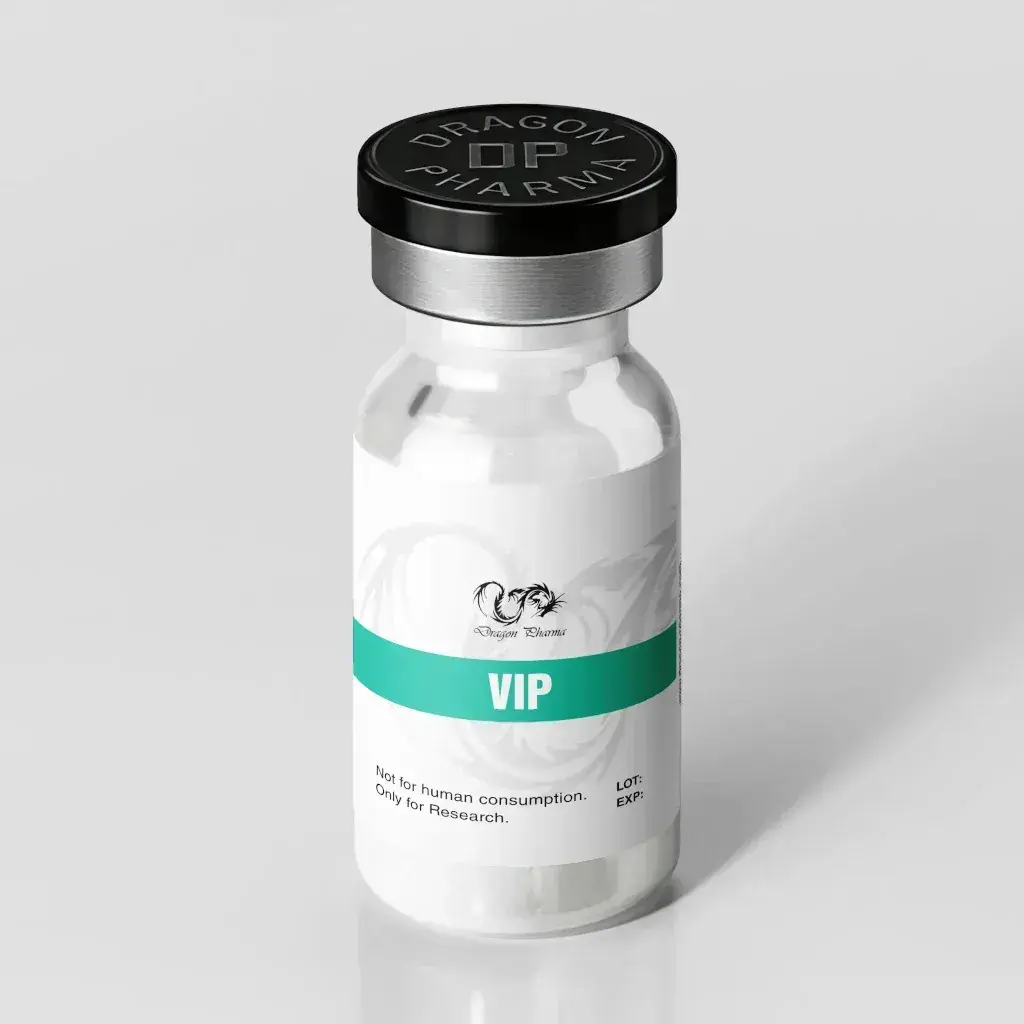
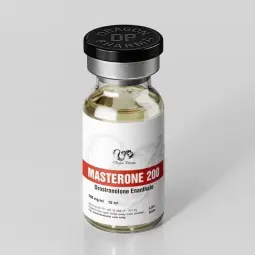
Vasoactive Intestinal Peptide Injectable
VIP 6 mg contains Vasoactive Intestinal Peptide (VIP), a 28-amino-acid neuropeptide widely distributed in the central and peripheral nervous systems. VIP activates the PACAP subfamily of class B1 G protein-coupled receptors (VPAC1 and VPAC2), exerting neuroprotective and immune modulatory roles. It causes vasodilation, lowers arterial blood pressure, stimulates myocardial contractility, and relaxes smooth muscle of the trachea, stomach, and gall bladder.
In research contexts, VIP is investigated for its potent anti-inflammatory and immunomodulatory properties. A 2025 review highlighted VIP's anti-inflammatory, antioxidant, and anti-apoptotic effects in Parkinson's disease models, where it regulates glial cells and immune cells to protect nerve cells. Another 2025 review classified VIP as an antimicrobial neuropeptide directly involved in innate immunity. Despite extensive preclinical research, **no FDA-approved VIP therapeutic product exists**; VIP remains an investigational agent.
In bodybuilding and wellness contexts, VIP is referenced anecdotally for immune support, neuroinflammation, and circadian rhythm regulation. However, all community protocols are extrapolated from preclinical studies and a contested clinical framework (Shoemaker CIRS protocol). VIP has an extremely short plasma half-life (approximately 1–2 minutes), which limits systemic injectable efficacy and drives the use of intranasal routes in community practice. Such use falls outside any approved indication.
Research Properties of VIP 6 mg
- 28-amino-acid neuropeptide activating VPAC1 and VPAC2 receptors
- Potent vasodilation and smooth muscle relaxation
- Anti-inflammatory and immunomodulatory effects in preclinical models
- Investigated for neuroprotective roles in Parkinson's disease
- 6 mg per vial for research applications
Neuropeptide (VPAC1/VPAC2 Agonist)
VIP belongs to the PACAP/secretin/glucagon superfamily of peptides. It is abundantly expressed throughout the CNS and peripheral nervous systems, where it primarily exerts neuroprotective and immune modulatory roles. VIP signals through two G protein-coupled receptors, VPAC1 and VPAC2, which are widely distributed in the brain, gastrointestinal tract, cardiovascular system, and immune cells.
The peptide's defining characteristic is its extremely short plasma half-life of approximately 1–2 minutes, driven by rapid enzymatic degradation. This pharmacokinetic property severely limits systemic injectable efficacy and explains why research and community protocols favor intranasal or inhaled routes for sustained local effects.
Preclinical research has demonstrated VIP's anti-inflammatory effects in models of Parkinson's disease, where it blocks microglial activation and protects dopaminergic neurons. VIP also plays a key role in microbial-neuroimmune control of intestinal motility and has been investigated for erectile dysfunction (as a combination intracavernosal product in Europe).
Defining Characteristic
Extremely Short Half-Life (1–2 Minutes)
VIP's rapid enzymatic degradation is its most pharmacologically relevant feature, driving the use of intranasal and inhaled routes in research and community practice. This contrasts sharply with long-acting peptides and hormone analogues.
VIP 6 mg vs Other Dragon Pharma Preparations
Dragon Pharma offers several peptides referenced in immune and neuro research. Thymosin Alpha-1 is a thymic peptide investigated for T-cell modulation. LL-37 is a cathelicidin antimicrobial peptide with membrane-disrupting activity. Selank is a tuftsin analogue studied for anxiolytic and nootropic effects. VIP's mechanism of VPAC receptor activation and vasodilation is distinct from these compounds.
Typical Dosage Ranges
Common reference ranges for VIP are derived from clinical research protocols and community practices. No standardized human dosing regimen exists because VIP is investigational. The most cited clinical framework is the Shoemaker protocol for Chronic Inflammatory Response Syndrome (CIRS), which uses 50 mcg intranasally 4 times daily. Clinical trials for ARDS/lung injury have used intravenous infusions of 50–200 pmol/kg/hr.
| Use Case |
Common Reference Range |
Frequency |
| CIRS (Shoemaker protocol) |
50 mcg intranasal |
4× daily for 30 days |
| ARDS/Lung injury (IV) |
50–200 pmol/kg/hr |
Continuous infusion |
| Community general use |
50–100 mcg intranasal |
2–3× daily, 4–8 weeks |
Reconstitution & Handling
VIP 6 mg is supplied as a lyophilized powder requiring reconstitution. Bacteriostatic Water is commonly referenced for reconstituting research peptides. VIP is fragile and susceptible to enzymatic degradation; reconstituted solutions should be stored at 2–8°C and used within 1–2 weeks. Freeze-thaw cycles and room-temperature storage significantly degrade potency.
Stacking & Research Considerations
In community research contexts, VIP is sometimes referenced alongside other immune-modulating peptides. The Shoemaker protocol positions VIP as a late-stage intervention after other CIRS interventions. However, no controlled studies have examined the safety or efficacy of peptide combinations. VIP's potent vasodilatory effects warrant caution when combined with antihypertensive medications or other vasoactive compounds.
Important
Individual Response Varies
The information above is for educational reference and does not constitute medical advice. VIP has not been evaluated by the FDA for safety or efficacy in non-investigational applications.
Important Safety Information
VIP has been studied in phase I and II clinical trials but has never received FDA approval for any indication. In the definitive randomized trial of inhaled aviptadil (a VIP analogue) for COVID-19 ARDS, the composite safety outcome occurred in 63% of aviptadil patients versus 56% on placebo, though this difference was not statistically significant. No long-term safety data exists.
Important
Non-Medical Use
Non-medical use of VIP falls outside any approved indication. Community protocols, including the Shoemaker CIRS framework, are contested and not supported by controlled trials. Gray-market products are not manufactured under pharmaceutical standards.
Potential Adverse Effects
The most commonly reported effect is vasodilation-related flushing and warmth, driven by VIP's primary pharmacology. Hypotension is a predictable consequence of potent vasodilation and requires careful monitoring during IV infusion. Other reported effects include mild headache, loose stool or increased GI motility, nasal irritation, and lightheadedness on standing.
At sustained high doses, VIP reproduces the biology of VIPoma (profuse watery diarrhea with potassium loss), defining an unpleasant ceiling for dose escalation. Palpitations and transient hypotension are more likely at higher doses or when stacked with antihypertensives.
Conditions Requiring Medical Evaluation
Individuals with active cardiovascular disease, hypotension, or those taking antihypertensive medications should exercise particular caution. The theoretical immunosuppressive effect of VIP's immunomodulatory action warrants caution in immunocompromised individuals. No formal contraindication list exists for non-investigational use because no approved indication exists.
Monitoring Considerations
If VIP is used in any research context, monitoring of blood pressure and heart rate may be considered given the vasodilatory effects. The Shoemaker protocol references monitoring of inflammatory markers (TGF-β1, C4a, VEGF) and serum VIP levels, though this framework is not universally accepted. Laboratory testing of the product itself is separate from clinical monitoring of the individual.
Product Care
Storage & Handling
Store lyophilized powder at -20°C for long-term storage, protected from light and moisture. After reconstitution, store at 2–8°C and use within 1–2 weeks. Do not freeze reconstituted solution. VIP is fragile and degrades rapidly outside cold-chain conditions.
Keep all research peptides and injectable products out of the reach of children.
Further Safety Information
USA Domestic 3–5 business days
International 10–15 business days
Order Processing 24–48 business hours
Tracking Provided after dispatch
Direct Supply
Discreet Delivery & Original Packaging
The outer shipping package remains discreet, with no external product details. Products are supplied through the official Dragon Pharma distribution chain.
What to Expect
- Orders are processed after payment confirmation
- USA Domestic shipping is typically faster when local stock is available
- International orders include tracking, though update frequency may vary by destination
- Multiple warehouses may result in separate shipments when applicable
Authenticity Verification
To verify your VIP 6 mg product, use the security code on the vial label and cross-check it on the official Dragon Pharma site. A credible certificate of analysis should show HPLC purity above 95 percent and mass spectrometry confirmation of the correct molecular weight (approximately 3326 Da for human VIP). Original packaging and batch documentation help reinforce product legitimacy.
For complete delivery details, tracking policy, and reshipment terms, please see our Shipping Info page.
Recommended Conditions
Store lyophilized powder at -20°C for long-term storage, protected from light and moisture. The unopened vial should be kept under conditions that preserve the peptide's structural integrity until reconstitution.
Once reconstituted, VIP solution should be stored at 2–8°C and used within 1–2 weeks. Do not freeze reconstituted solution. VIP is a fragile 28-amino-acid peptide that degrades rapidly outside cold-chain conditions.
Keep out of reach of children. Follow proper handling practices for research peptides and use appropriate sterile technique during reconstitution.
Quick Reference
Do & Don't
- Do store lyophilized powder at -20°C for long-term storage
- Do protect from light and moisture
- Do use reconstituted solution within 1–2 weeks
- Don't freeze reconstituted solution
- Don't expose to room temperature for extended periods
- Don't use if powder appears discolored
What is VIP 6 mg used for?
VIP 6 mg is a research peptide supplied as a lyophilized powder. It contains Vasoactive Intestinal Peptide, which is investigated for vasodilation, immune modulation, and neuroprotective effects. There is no FDA-approved therapeutic indication for VIP as a standalone agent.
How often should VIP 6 mg be administered?
No standardized human dosing regimen exists for VIP because it is investigational. The most cited clinical framework (Shoemaker CIRS protocol) uses 50 mcg intranasally 4 times daily. Clinical trials for ARDS used intravenous infusions of 50–200 pmol/kg/hr.
Does VIP 6 mg require PCT?
VIP is not an anabolic steroid and does not suppress endogenous testosterone production. Post-cycle therapy designed for steroid cycles is not applicable. Its mechanism involves VPAC receptor activation and neuroimmune modulation, not hormonal pathways.
What does VIP do?
VIP activates VPAC1 and VPAC2 receptors, causing vasodilation, lowering arterial blood pressure, and relaxing smooth muscle. It also exerts anti-inflammatory and immunomodulatory effects by regulating glial cells and immune cells.
How long does VIP take to work?
VIP's plasma half-life is extremely short (1–2 minutes), so acute effects like vasodilation occur rapidly. Community protocols describe mucosal and local immune effects developing over 2–7 days, with cytokine normalization requiring 4–8 weeks of consistent dosing.
Is VIP the best neuropeptide?
No single neuropeptide is universally superior. VIP has one of the broadest physiological activity profiles among neuropeptides, with roles in nearly every organ system. However, its extremely short half-life limits systemic efficacy and drives intranasal use in research.
What is the difference between VIP and Thymosin Alpha-1?
Thymosin Alpha-1 is a thymic peptide investigated for T-cell maturation and immune regulation. VIP is a neuropeptide that acts through VPAC receptors on neurons, immune cells, and smooth muscle. Their mechanisms and origins are fundamentally different.
What is the difference between VIP and LL-37?
LL-37 is a cathelicidin antimicrobial peptide that disrupts microbial membranes. VIP is a neuropeptide that modulates vascular tone and immune function through receptor signaling. Both have antimicrobial properties, but VIP's primary role is neuroendocrine, not direct membrane disruption.
Is 6 mg of VIP a lot?
6 mg is the total labeled content of the VIP 6 mg vial. Because no standardized human dosage exists for this investigational peptide, the milligram amount cannot be classified as high or low relative to established protocols. Clinical and community doses are in the microgram range.
What strength is VIP 6 mg?
VIP 6 mg by Dragon Pharma contains 6 mg of VIP per vial as a lyophilized powder. The vial size is 2 mL. This is a research presentation.
Can VIP be stacked with other peptides?
There is no established research on combining VIP with other peptides. In community contexts, it is sometimes referenced alongside other immune-modulating peptides, but no controlled studies support these combinations. VIP's potent vasodilatory effects warrant caution when combined with antihypertensives.
No reviews found
Please log in to write VIP 6 mg review.