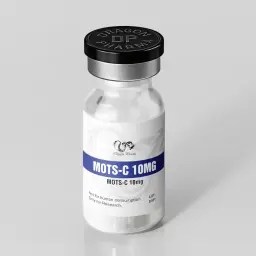
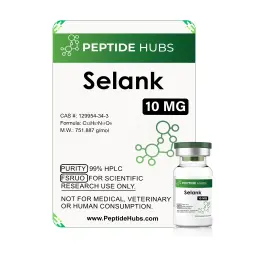
Thymosin Alpha-1 10 mg is a lyophilized powder research peptide manufactured by Dragon Pharma and supplied as 10 mg of Thymosin Alpha-1 per 2 mL vial.
Thymosin Alpha-1 10 mg contains the synthetic 28-amino-acid peptide corresponding to the naturally occurring thymic hormone thymosin alpha 1 (Tα1). It is also known internationally by the INN name thymalfasin. The peptide was originally isolated from thymosin fraction 5, a bovine thymus extract containing multiple immunologically active peptides.
In medical research, Thymosin Alpha-1 is studied as an immunomodulatory agent. It is investigated for its effects on T-cell maturation and function, including promotion of T-cell differentiation, enhancement of natural killer cell activity, and regulation of cytokine production such as interferon-gamma and interleukin-2. Clinical applications have been explored in viral infections, sepsis, and as a vaccine adjuvant.
In bodybuilding and fitness contexts, Thymosin Alpha-1 is referenced for its proposed immune-supporting properties, particularly during periods of intense training or when immune function may be compromised. However, such use falls outside approved medical indications, and the peptide is not FDA-approved for human use in the United States.
Thymosin Alpha-1 10 mg is supplied as a lyophilized powder requiring reconstitution with a suitable diluent before research use. The 2 mL vial size provides adequate capacity for the reconstituted solution.
Thymosin Alpha-1 is an immunomodulatory peptide studied primarily for its effects on T-cell function and immune regulation. Its research profile is distinct from anabolic steroids, growth hormone secretagogues, and gonadotropins.
Thymosin Alpha-1 belongs to the class of thymic peptides and immunological adjuvants. Its mechanism of action is not completely understood but is thought to involve augmentation of T-cell function through multiple pathways.
In vitro studies have shown that the peptide can promote T-cell differentiation and maturation, increase production of Th1 cytokines including interferon-gamma and interleukin-2, and enhance natural killer cell-mediated cytotoxicity. It has also been shown to upregulate toll-like receptor expression on dendritic cells, providing another pathway for its immunomodulatory effects.
The pharmacokinetic profile of thymalfasin shows rapid absorption with peak serum levels achieved at approximately 2 hours after subcutaneous administration, and a biological half-life of approximately 2 hours with no evidence of accumulation following multiple doses.
Thymosin Alpha-1 is studied for its capacity to modulate both innate and adaptive immune responses. Its research profile centers on T-cell function rather than direct hormonal or anabolic effects.
Dragon Pharma offers several peptides referenced in bodybuilding and recovery research contexts with different mechanisms. BPC 157 is studied for tissue repair and gut health, while TB 500 is referenced for soft tissue healing and flexibility. A combined TB 500/BPC 157 preparation is also available for researchers examining complementary mechanisms. Thymosin Alpha-1's immunomodulatory focus is distinct from these repair-oriented peptides.
The information below is provided for educational reference only. Thymosin Alpha-1 has not been approved by the FDA for human use in the United States. Medical use requires appropriate regulatory approval and clinical supervision. Non-medical use falls outside approved indications.
In clinical research settings, Thymosin Alpha-1 has been studied at doses of 1.6 mg administered subcutaneously, typically twice weekly for chronic conditions or daily in acute settings. In non-medical bodybuilding contexts, reference ranges commonly align with clinical research protocols, with some users favoring lower or less frequent administration for general immune support. Reference ranges vary, and no standardized non-clinical protocol exists.
| Use Case | Common Reference Range | Frequency |
|---|---|---|
| Clinical research (viral/immune) | 1.6 mg | Twice weekly or daily |
| Non-medical (immune support) | 1.6 mg | Twice weekly, cyclic |
Thymosin Alpha-1 10 mg is supplied as a lyophilized powder requiring reconstitution. Bacteriostatic Water is commonly referenced for reconstituting research peptides. Standard sterile technique and peptide handling practices should be observed. The reconstituted solution should be stored appropriately and used within a reasonable timeframe.
In non-medical research contexts, Thymosin Alpha-1 is sometimes referenced alongside repair-oriented peptides such as BPC 157 or TB 500 during periods of intense training. However, because Thymosin Alpha-1 primarily modulates immune function rather than tissue repair pathways, its research profile is complementary rather than synergistic with these compounds.
The information above is for educational reference and does not constitute medical advice. Thymosin Alpha-1 has not been evaluated by the FDA for safety or efficacy in non-medical applications.
Thymosin Alpha-1 has been studied in clinical research for various indications, but it is not FDA-approved for human use in the United States. Medical use requires clinical supervision.
Thymosin Alpha-1 has been investigated in clinical trials for conditions including hepatitis B and C, sepsis, and as a vaccine adjuvant. While these studies have generally reported a favorable safety profile, the peptide has not received FDA approval for any human indication. Clinical evaluation and monitoring are appropriate for any research or medical use.
Non-medical use of Thymosin Alpha-1 falls outside any approved indication. Product purity does not establish that non-medical use is safe or appropriate for an individual.
In clinical research, Thymosin Alpha-1 has been generally well tolerated. Reported adverse effects in clinical settings have been uncommon and typically mild. However, systematic safety data from large-scale trials in non-medical populations are not available. As with any peptide, individual hypersensitivity reactions are possible.
Individuals with autoimmune conditions or those taking immunosuppressive medications should exercise particular caution with any immunomodulatory peptide. No formal contraindication list exists for Thymosin Alpha-1 in non-approved applications.
In clinical research, monitoring during Thymosin Alpha-1 therapy has focused on the specific condition being treated. No standardized monitoring protocol exists for non-medical use. Laboratory testing of the product itself is separate from clinical monitoring of the individual.
Store the lyophilized powder under recommended conditions and protect from conditions that could compromise peptide integrity. Follow standard practices for handling lyophilized peptide products and inspect the vial before reconstitution.
Keep all research peptides and injectable products out of the reach of children.
Thymosin Alpha-1 10 mg by Dragon Pharma is supplied through the official distribution chain and shipped with discreet, privacy-focused handling.
The outer shipping package remains discreet, with no external product details. Products are supplied through the official Dragon Pharma distribution chain.
To verify your Thymosin Alpha-1 10 mg product, use the security code on the vial label and cross-check it on the official Dragon Pharma site. Original packaging and batch documentation help reinforce product legitimacy.
For complete delivery details, tracking policy, and reshipment terms, please see our Shipping Info page.
Proper storage conditions help preserve peptide integrity and maintain product stability throughout shelf life.
Store the lyophilized powder in a cool, dry place protected from light and moisture. The unopened vial should be kept under conditions that preserve the peptide's structural integrity until reconstitution.
Once reconstituted, Thymosin Alpha-1 solution should be handled according to standard peptide practices. The reconstituted solution is typically less stable than the lyophilized powder.
Keep out of reach of children. Follow proper handling practices for research peptides and use appropriate sterile technique during reconstitution.
Answers to common questions about Thymosin Alpha-1 10 mg, immunomodulatory peptide research, and product details.
Thymosin Alpha-1 10 mg is a research peptide supplied as a lyophilized powder. It contains thymosin alpha 1 (thymalfasin), which is investigated for immunomodulatory effects on T-cell function and cytokine production. In non-medical contexts, it is referenced for potential immune support, though such use falls outside approved indications.
In clinical research, Thymosin Alpha-1 has been studied at 1.6 mg administered subcutaneously, typically twice weekly for chronic conditions or daily in acute settings. Non-medical reference ranges commonly align with these clinical protocols, though no standardized non-clinical regimen exists.
Thymosin Alpha-1 is not an anabolic steroid and is not proposed to suppress endogenous testosterone production. Post-cycle therapy designed for steroid cycles is not applicable to Thymosin Alpha-1 research. Its immunomodulatory mechanism is distinct from hormonal suppression.
Thymosin Alpha-1 is studied for its immunomodulatory effects, including promotion of T-cell differentiation and maturation, enhancement of natural killer cell activity, and regulation of cytokine production such as interferon-gamma and interleukin-2. Its mechanism is not completely understood but appears to involve multiple immune signaling pathways.
No established onset timeline exists for Thymosin Alpha-1 in non-medical contexts. Its biological half-life is approximately 2 hours, but downstream immune effects may develop over days to weeks depending on the research protocol and individual factors. Clinical research protocols have typically spanned weeks to months.
Thymosin Alpha-1 and TB 500 are both peptides but have entirely different mechanisms and research focuses. Thymosin Alpha-1 is studied for immunomodulation and T-cell function, while TB 500 (thymosin beta 4 fragment) is referenced for tissue repair and cell migration. Their research profiles are not comparable.
BPC 157 is a pentadecapeptide studied for gut health and tissue repair through angiogenesis and growth factor pathways. Thymosin Alpha-1 targets immune function through T-cell modulation. These compounds belong to different research categories and are sometimes referenced together in complementary research contexts.
1.6 mg is the dose used in clinical research protocols for Thymosin Alpha-1, administered subcutaneously. This is the most commonly referenced clinical dose. Higher or lower amounts may be referenced in different research contexts, and individual response varies.
Thymosin Alpha-1 10 mg by Dragon Pharma contains 10 mg of Thymosin Alpha-1 per vial as a lyophilized powder. The vial size is 2 mL. This is a research presentation that allows for flexible reconstitution volumes.
Thymosin Alpha-1 is sometimes referenced alongside repair-oriented peptides in research contexts, though its immunomodulatory mechanism is distinct from tissue repair pathways. No established research on specific peptide combinations exists. Any combination research would be exploratory.