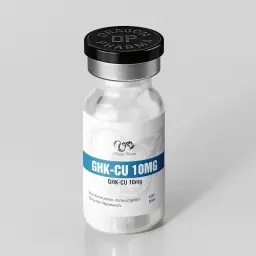


MOTS-c 10 mg is a lyophilized powder research peptide manufactured by Dragon Pharma, containing 10 mg of MOTS-c (Mitochondrial Open Reading Frame of the 12S rRNA Type-C) per 2 mL vial.
MOTS-c is a 16-amino-acid mitochondrial-derived peptide (MDP) encoded by the 12S rRNA region of the mitochondrial genome. Unlike nuclear-encoded peptides, MOTS-c is synthesized within mitochondria and acts as a retrograde signaling molecule that communicates mitochondrial metabolic status to the nucleus. It has been characterized as a key regulator of metabolic homeostasis, insulin sensitivity, and cellular stress responses.
In preclinical research, MOTS-c has been shown to regulate insulin sensitivity and metabolic homeostasis through AMPK activation, a mechanism that involves inhibition of the folate cycle and accumulation of the AMPK activator AICAR. Exercise has been identified as a stimulus for MOTS-c expression in skeletal muscle, with studies demonstrating increased MOTS-c protein levels after 4–8 weeks of voluntary running in rodents. Systemic administration of MOTS-c in animal models has been reported to improve physical performance, enhance glucose metabolism, and increase lifespan in aged mice.
MOTS-c is not FDA-approved for any human use. A Phase 2a clinical trial (NCT07505745) is currently evaluating whether 12 weeks of MOTS-c treatment improves insulin sensitivity in adults with prediabetes and overweight/obesity, with an estimated enrollment of 120 participants and a study start date in February 2026. This investigational trial represents the first controlled human study of MOTS-c. In non-medical bodybuilding contexts, MOTS-c is commonly referenced for its potential metabolic and performance-enhancing effects, though such use falls outside approved indications.
MOTS-c 10 mg is supplied as a lyophilized (freeze-dried) powder in a 2 mL vial. This form requires reconstitution with a suitable solvent such as bacteriostatic water before use.
MOTS-c is a 16-amino-acid mitochondrial-derived peptide that functions as a retrograde signaling molecule, communicating mitochondrial metabolic status to the nucleus and regulating systemic metabolic homeostasis.
MOTS-c is encoded within the mitochondrial DNA’s 12S rRNA region and consists of 16 amino acids with the sequence MRWQEMGYIFYPRKLR. It is one of a small class of mitochondrial-derived peptides (MDPs) that act as signaling molecules. Under metabolic stress conditions, MOTS-c translocates from mitochondria to the nucleus, where it binds to antioxidant response elements and regulates nuclear gene expression in an NFE2L2-dependent manner.
The primary mechanism of MOTS-c action involves activation of AMPK, a central regulator of cellular energy homeostasis. MOTS-c inhibits the folate cycle, leading to accumulation of the de novo purine synthesis intermediate AICAR, which activates AMPK and stimulates mitochondrial metabolism, fatty acid oxidation, and glucose utilization. A 2025 study identified CK2 (casein kinase 2) as a direct and functional target of MOTS-c, demonstrating that MOTS-c binds to and activates CK2 in skeletal muscle, contributing to its effects on muscle glucose uptake and protection against atrophy.
Preclinical research has demonstrated that MOTS-c administration improves muscle mitochondrial bioenergetic performance in a PGC-1α/AMPK-dependent manner, lowers mitochondrial reactive oxygen species emission, and reduces oxidative stress-related protein damage. A single dose of MOTS-c (15 mg/kg) administered to untrained mice improved total running time by 12% and distance by 15% during an acute exercise test. Long-term physical activity has been shown to increase MOTS-c protein expression 1.5–5-fold in rodent skeletal muscle.
All published efficacy data for MOTS-c come from in vitro and animal studies. A Phase 2a randomized, double-blind, placebo-controlled trial (NCT07505745) is currently evaluating MOTS-c in adults with prediabetes and overweight/obesity, with an estimated primary completion date in February 2027. No completed controlled human trial data exist for MOTS-c at this time.
Dragon Pharma offers several peptides that are commonly referenced alongside MOTS-c 10 mg. SS-31 is a mitochondria-targeted peptide studied for mitochondrial function and oxidative stress, acting through a different mechanism (cardiolipin binding) than MOTS-c. Humanin is another mitochondrial-derived peptide studied for cytoprotective and metabolic effects. AOD 9604 is a growth hormone fragment studied for fat metabolism, while L-Carnitine supports fatty acid transport at the mitochondrial level. For metabolic support, Mazdutide and Survodutide are incretin-based compounds with different mechanisms of action.
The information below is provided for educational reference only. MOTS-c is not FDA-approved for any human use in the United States. All use in non-medical contexts falls outside approved indications.
No human clinical trials have established a safe or effective dose of MOTS-c. The ongoing Phase 2a trial (NCT07505745) is evaluating MOTS-c in adults with prediabetes and overweight/obesity but has not yet reported dosing protocols. Community protocols for MOTS-c are anecdotal and vary widely, with commonly referenced doses ranging from 1 mg to 10 mg per week. These figures are not medically established.
| Use Case | Common Reference Range | Injection Frequency |
|---|---|---|
| Community reference (conservative) | 1 mg per administration | Daily or 3x weekly |
| Community reference (standard) | 5 mg per administration | 1–2x weekly |
| Community reference (performance) | 10 mg per week | Split into 2 doses |
| Preclinical (animal studies) | 5–15 mg/kg | Variable by study |
Common reference ranges for MOTS-c in non-medical contexts are not well characterized in publicly available bodybuilding resources. The table above reflects community anecdotal reports rather than validated clinical protocols.
MOTS-c is sometimes referenced in community protocols alongside other mitochondrial-support compounds such as SS-31 and NAD+ precursors. Some users report combining MOTS-c with Methylene Blue and SLU-PP-332 for metabolic support. These combinations are anecdotal and not supported by clinical evidence.
Community protocols typically reference cycles of 8–12 weeks followed by a 4-week washout period. The rationale for cycling is based on the hypothesis that continuous AMPK activation may lead to tolerance, though this has not been formally evaluated. Bacteriostatic Water is commonly referenced for reconstitution.
No human safety data exist for MOTS-c in controlled trials. In community reports, some users have described injection-site reactions and histamine-type responses that worsened with progressive use. One user reported moving from daily to 3x weekly dosing to manage injection-site reactions.
Theoretical concerns include potential effects on blood pressure, as some users have reported increases in blood pressure during MOTS-c use. Individuals with pre-existing hypertension should exercise particular caution. The long-term effects of MOTS-c use have not been established.
MOTS-c acts on mitochondrial signaling pathways rather than the hypothalamic-pituitary-gonadal axis. Post-cycle therapy in the context of testosterone recovery is not applicable, as MOTS-c does not affect endogenous testosterone production.
Dosing strategies for MOTS-c are not established in clinical settings. The information above is for educational reference and does not constitute medical advice.
MOTS-c is not FDA-approved for any human use in the United States. It is an investigational compound with no completed controlled human trial data.
MOTS-c is a mitochondrial-derived peptide that has been studied primarily in preclinical models. No controlled human trials have been completed, and the Phase 2a trial currently underway has not yet reported results. The FDA has assigned MOTS-c a UNII code (A5CV6JFB78) for identification purposes, but this does not constitute approval for human use.
MOTS-c is not on the 503A Bulks List, and compounded MOTS-c products are not eligible for the exemptions that apply to certain bulk drug substances used in traditional compounding. Products marketed as “research use only” are not intended or tested for human injection.
MOTS-c is not FDA-approved for human use. Any use outside of approved clinical trials falls outside approved indications. Product concentration and laboratory verification do not establish that non-medical use is safe or appropriate for an individual.
No human adverse event data exist for MOTS-c in controlled trials. Community reports have described injection-site reactions and histamine-type responses. Increases in blood pressure have been anecdotally reported.
The theoretical basis for concern relates to MOTS-c’s role as an AMPK activator. Chronic AMPK activation could theoretically affect cellular energy balance, but this has not been evaluated in humans. Because MOTS-c is a mitochondrial-derived peptide, potential effects on mitochondrial function and cellular stress responses require further study.
Individuals with cardiovascular conditions, particularly uncontrolled hypertension, should exercise caution given anecdotal reports of blood pressure increases. Because MOTS-c has not been studied in humans, the full range of contraindications and potential drug interactions is unknown.
No safety data exist for MOTS-c in pregnancy, lactation, or pediatric populations. Individuals with metabolic disorders, diabetes, or prediabetes should consult a qualified healthcare professional before considering MOTS-c, as its effects on glucose metabolism are the subject of ongoing clinical investigation.
No established monitoring protocol exists for MOTS-c in non-medical contexts. In research settings where MOTS-c has been studied, endpoints have focused on metabolic markers, mitochondrial function, and exercise performance rather than standardized safety parameters.
No published laboratory reports are available for this specific product. Product potency verification would apply to tested samples only and is separate from any clinical monitoring of the individual.
Lyophilized MOTS-c should be stored tightly sealed in its original container, protected from light, and kept desiccated at -20°C for long-term storage. After reconstitution, store refrigerated at 2–8°C and use within 2–4 weeks. Avoid repeated freeze-thaw cycles.
Keep all peptides and injectable products out of the reach of children. Follow the storage instructions provided with the product packaging.
MOTS-c 10 mg by Dragon Pharma is supplied through the official distribution chain and shipped in original manufacturer packaging with discreet, privacy-focused handling.
The outer shipping package remains discreet, with privacy-focused handling and no unnecessary external product details. Products are supplied through the official Dragon Pharma distribution chain.
To verify your MOTS-c 10 mg product, use the security code on the vial label and cross-check it on the Dragon Pharma official site. Official presentation, batch-linked lab proof when available, and original packaging help reinforce product legitimacy and buyer confidence.
For complete delivery details, tracking policy, and reshipment terms, please see our Shipping Info page.
Proper storage conditions help preserve peptide stability and overall product integrity throughout shelf life.
Store the lyophilized (dry) powder tightly sealed in its original container, protected from light, and desiccated at -20°C for long-term storage. Brief handling at refrigerated or ambient conditions is acceptable provided the container is allowed to equilibrate to room temperature before opening to prevent moisture uptake.
MOTS-c is a 16-amino-acid peptide susceptible to degradation once reconstituted. After reconstitution, store refrigerated at 2–8°C and use within 2–4 weeks. Avoid repeated freeze-thaw cycles.
Keep out of reach of children. Follow proper handling and sterile technique when administering the product.
Answers to common questions about MOTS-c 10 mg, its mechanism, product strength, and research status.
MOTS-c 10 mg contains a mitochondrial-derived peptide studied for its role in metabolic regulation and insulin sensitivity. In preclinical research, it has been investigated for effects on glucose metabolism, mitochondrial function, and exercise performance. A Phase 2a clinical trial is currently evaluating MOTS-c in adults with prediabetes and overweight/obesity. It is not FDA-approved for any human use, and all non-medical use falls outside approved indications.
No established dosing protocol exists for MOTS-c in humans. Community protocols commonly reference doses ranging from 1 mg daily to 5 mg twice weekly, with cycle lengths of 8–12 weeks. These protocols are anecdotal and not supported by clinical evidence. The ongoing Phase 2a trial has not yet reported its dosing protocol.
No. MOTS-c acts on mitochondrial signaling pathways and AMPK activation rather than the hypothalamic-pituitary-gonadal axis. It does not suppress endogenous testosterone production, so post-cycle therapy in the context of testosterone recovery is not applicable. A washout period of 4 weeks between cycles is commonly referenced in community protocols.
MOTS-c is a mitochondrial-derived peptide that acts as a retrograde signaling molecule, communicating mitochondrial metabolic status to the nucleus. It activates AMPK through inhibition of the folate cycle and accumulation of AICAR. In preclinical models, MOTS-c improves insulin sensitivity, enhances mitochondrial bioenergetic performance, and mimics some effects of exercise.
The time course for MOTS-c is not established in humans. In preclinical studies, a single dose of MOTS-c (15 mg/kg) improved exercise performance in mice when tested acutely. Long-term physical activity increased MOTS-c protein expression in skeletal muscle over 4–8 weeks. Human effects and timeframes have not been characterized.
There is no evidence-based “best” mitochondrial peptide. MOTS-c is studied for AMPK-mediated metabolic effects, while SS-31 targets cardiolipin and mitochondrial membrane integrity through a different mechanism. Humanin is another mitochondrial-derived peptide with cytoprotective properties. The appropriate choice depends on research goals and individual circumstances.
MOTS-c is a mitochondrial-derived peptide that activates AMPK and regulates nuclear gene expression. SS-31 is a synthetic tetrapeptide that binds to cardiolipin on the inner mitochondrial membrane, stabilizing mitochondrial structure and reducing oxidative stress. The two have different mechanisms, and some community protocols reference them in combination.
Both are mitochondrial-derived peptides, but they have different primary mechanisms. MOTS-c is studied for metabolic regulation through AMPK activation, while Humanin is investigated for cytoprotective and neuroprotective effects. They are sometimes referenced together in research contexts for their complementary mitochondrial functions.
The 10 mg vial strength provides flexibility for reconstitution and dosing. Community protocols reference a range from 1 mg to 10 mg per week. Preclinical animal studies have used doses of 5–15 mg/kg, which would translate to much higher human-equivalent doses. Because no human dosing has been established, the appropriate amount should be based on research context rather than a fixed protocol.
MOTS-c 10 mg is labeled at 10 mg of MOTS-c per vial. It is supplied as a lyophilized powder in a 2 mL vial, requiring reconstitution before use.
No published laboratory report is currently available for this specific product. Product potency and purity verification would apply to tested samples only and should not be interpreted as a measurement of every vial or production batch.
Lyophilized MOTS-c is typically reconstituted with a suitable solvent such as Bacteriostatic Water or sterile water. The volume of solvent added determines the concentration of the resulting solution. Proper sterile technique should be used during reconstitution.