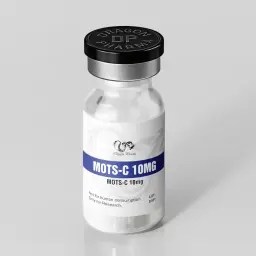
SS-31 50 mg is a lyophilized powder research peptide manufactured by Dragon Pharma, containing 50 mg of SS-31 (Elamipretide) per 2 mL vial.
SS-31 (elamipretide) is a synthetic mitochondria-targeted tetrapeptide with the amino acid sequence D-Arg-dimethylTyr-Lys-Phe-NH2. It is a member of the Szeto-Schiller (SS) peptides, designed to selectively target and bind to cardiolipin on the inner mitochondrial membrane. This mechanism is fundamentally different from conventional receptor-based peptides — SS-31 does not bind to cell surface receptors but instead enters cells and localizes directly to mitochondria.
SS-31 is the first cardiolipin-directed mitochondrial therapeutic to receive FDA accelerated approval. In 2026, elamipretide was approved for Barth syndrome, a rare genetic disorder characterized by mitochondrial dysfunction, cardiomyopathy, and skeletal myopathy. By binding to cardiolipin, SS-31 prevents cardiolipin from converting cytochrome c into a peroxidase while protecting its electron-carrying function, thereby stabilizing mitochondrial cristae structure and promoting oxidative phosphorylation.
In non-medical research and bodybuilding contexts, SS-31 is commonly referenced for its potential to restore mitochondrial bioenergetics, reduce oxidative stress, and support cellular energy production, particularly in aging or high-training-load scenarios. It is not approved for bodybuilding or performance enhancement, and all such use falls outside approved indications.
SS-31 50 mg is supplied as a lyophilized (freeze-dried) powder in a 2 mL vial. This form requires reconstitution with a suitable solvent such as bacteriostatic water before use.
SS-31 (elamipretide) is a mitochondria-targeted tetrapeptide that binds to cardiolipin on the inner mitochondrial membrane, stabilizing mitochondrial structure and optimizing electron transport chain function.
SS-31 contains alternating aromatic and basic amino acids that confer unique properties: it readily penetrates cell membranes and localizes to the inner mitochondrial membrane, where it binds selectively to cardiolipin via electrostatic and hydrophobic interactions. Unlike conventional peptides, SS-31 does not bind to cell surface receptors and does not activate or desensitize any receptor pathways. Its mechanism is structural: by interacting with cardiolipin, SS-31 prevents cardiolipin from converting cytochrome c into a peroxidase while protecting its electron-carrying function.
This interaction protects the structure of mitochondrial cristae and promotes oxidative phosphorylation. SS-31 demonstrates remarkable efficacy in reducing elevated levels of reactive oxygen species (ROS) resulting from mitochondrial dysfunction. In neuronal cell studies, SS-31 was very potent (EC50 < 1 nM) in preventing oxidant-induced apoptosis, associated with decreased ROS production and mitochondrial protection.
SS-31 has been studied extensively in preclinical models of ischemia-reperfusion injury, heart failure, and aging. Treatment with SS-31 ameliorated cardiac hypertrophy, systolic failure, and myocardial fibrosis in pressure-overload heart failure models. In aged mice, SS-31 treatment reversed age-related redox stress and improved exercise tolerance.
Unlike GHRP-class peptides that act on ghrelin receptors or GHRH analogs that act on pituitary receptors, SS-31 works inside cells by binding to cardiolipin. This means there is no receptor-mediated desensitization, no HPTA suppression, and no interference with other peptide signaling systems. Its short half-life supports once-daily dosing.
Dragon Pharma offers several research peptides that are commonly referenced alongside SS-31 50 mg. MOTS-c is a mitochondrial-derived peptide that acts through AMPK activation and nuclear gene regulation, complementing SS-31’s membrane-stabilizing mechanism. Humanin is another mitochondrial-derived peptide studied for cytoprotective effects. BPC 157 is a research peptide studied for tissue repair through angiogenesis and collagen synthesis. GHK-CU is a copper peptide studied for extracellular matrix remodeling. These compounds act through distinct pathways from SS-31’s cardiolipin binding.
The information below is provided for educational reference only. SS-31 (elamipretide) is FDA-approved for a specific rare disease indication. Non-medical use falls outside approved indications.
In clinical trials, elamipretide has been administered at 40 mg per day subcutaneously for rare mitochondrial diseases. In non-medical research and community contexts, SS-31 is commonly referenced at 5–10 mg per day subcutaneously for general mitochondrial support. The 50 mg vial strength provides flexibility for reconstitution and dosing based on individual protocol requirements.
| Use Case | Common Reference Range | Injection Frequency |
|---|---|---|
| Clinical trial (rare disease) | 40 mg per day | Once daily, subcutaneous |
| Community standard (longevity/performance) | 5–10 mg per day | Once daily, subcutaneous |
| Community conservative start | 2–5 mg per day | Once daily |
| Stacked with MOTS-c | 5 mg SS-31 + MOTS-c protocol | Morning, separate injections |
SS-31 is commonly stacked with MOTS-c in community protocols, pairing SS-31’s membrane-stabilizing “structural engineer” role with MOTS-c’s AMPK-activating “operations manager” role. The two are typically injected separately at different times of day to avoid potential signaling overlap.
Community protocols typically reference cycles of 4–8 weeks on followed by 2–4 weeks off. Morning administration is common for all-day energy support, while pre-workout dosing (30–60 minutes before training) is referenced for performance applications. Bacteriostatic Water is commonly used for reconstitution.
Across approximately 1,500 clinical trial participants, SS-31 has demonstrated a clean safety record with no serious adverse events clearly tied to the peptide. The most common complaint is injection-site redness, itch, or small welts, usually fading within hours. Mild headache, stomach upset (more common at higher IV doses), and brief dizziness after injection have also been reported.
In clinical trials, SS-31 is generally well-tolerated. Injection-site reactions are the most frequently reported effect.
SS-31 does not suppress the hypothalamic-pituitary-gonadal axis and does not require post-cycle therapy in the context of testosterone recovery. It does not interfere with endogenous hormone production or receptor sensitivity.
Dosing strategies for SS-31 should be based on individual response and, where possible, medical guidance. The information above is for educational reference and does not constitute medical advice.
SS-31 (elamipretide) has received FDA accelerated approval for Barth syndrome but is not approved for bodybuilding, performance enhancement, or general anti-aging use.
Elamipretide (SS-31) is the first therapy directly targeting the mitochondrial etiology of Barth syndrome, receiving FDA accelerated approval based on improvements in functional assessments and cardiac function. Clinical trials of phase 3 continue for other indications including primary mitochondrial myopathy and age-related macular degeneration.
SS-31 is not approved for use in healthy adults for body composition or anti-aging. Long-term safety in healthy people is unknown because no long-term tracking studies have been conducted.
SS-31 is not approved for bodybuilding or performance enhancement. Any such use falls outside approved indications. Product concentration and laboratory verification do not establish that non-medical use is safe or appropriate for an individual.
In clinical trials involving approximately 1,500 participants, SS-31 has a clean safety record with no serious adverse events clearly attributed to the peptide. The most common side effect is injection-site redness, itch, or small welts, typically fading within a few hours. Mild headache, stomach upset (more common at higher IV doses used in heart-failure trials), brief dizziness after injection, and slight bumps in liver enzymes have been reported.
Populations that should avoid SS-31 include individuals under 25, pregnant or breastfeeding women, those with active cancer or known mitochondrial disease without specialist oversight, tested athletes (banned under WADA S0 category), and those on multiple psychiatric or cardiovascular drugs.
Individuals with active or suspected malignancy, known mitochondrial disease, or those taking multiple medications affecting mitochondrial function should consult a qualified healthcare professional before considering SS-31. The long-term effects of SS-31 in healthy populations have not been established.
Research-grade SS-31 obtained online is not pharmacy-grade. Purity varies between vendors, and most risks come from improper handling, dirty bacteriostatic water, or warm storage rather than the peptide itself.
No specific bloodwork monitoring protocol exists for SS-31 in non-medical contexts. Individuals commonly reference tracking subjective markers such as morning energy, workout endurance, recovery score, and sleep quality. Optional biomarkers may include fasting glucose and liver enzymes.
No published laboratory reports are available for this specific product. Product potency verification would apply to tested samples only and is separate from any clinical monitoring of the individual.
Lyophilized SS-31 should be stored tightly sealed in its original container, protected from light, and kept desiccated at -20°C for long-term storage (up to 3 years). After reconstitution, store refrigerated at 2–8°C and use within 28 days. Avoid repeated freeze-thaw cycles.
Keep all peptides and injectable products out of the reach of children. Follow the storage instructions provided with the product packaging.
SS-31 50 mg by Dragon Pharma is supplied through the official distribution chain and shipped in original manufacturer packaging with discreet, privacy-focused handling.
The outer shipping package remains discreet, with privacy-focused handling and no unnecessary external product details. Products are supplied through the official Dragon Pharma distribution chain.
To verify your SS-31 50 mg product, use the security code on the vial label and cross-check it on the Dragon Pharma official site. Official presentation, batch-linked lab proof when available, and original packaging help reinforce product legitimacy and buyer confidence.
For complete delivery details, tracking policy, and reshipment terms, please see our Shipping Info page.
Proper storage conditions help preserve peptide stability and overall product integrity throughout shelf life.
Store the lyophilized (dry) powder tightly sealed in its original container, protected from light, and desiccated at -20°C for long-term storage. Powder stored at -20°C is stable for up to 3 years. Brief handling at refrigerated or ambient conditions is acceptable provided the container is allowed to equilibrate to room temperature before opening to prevent moisture uptake.
After reconstitution, store refrigerated at 2–8°C and use within 28 days. Avoid repeated freeze-thaw cycles.
Keep out of reach of children. Follow proper handling and sterile technique when administering the product.
Answers to common questions about SS-31 50 mg, its mechanism, product strength, and research status.
SS-31 50 mg contains elamipretide, a mitochondria-targeted peptide. It is FDA-approved for Barth syndrome, a rare genetic mitochondrial disorder. In non-medical research contexts, it is commonly referenced for supporting mitochondrial bioenergetics and reducing oxidative stress, though such use falls outside approved indications.
Clinical trials have used 40 mg per day subcutaneously for rare mitochondrial diseases. Community protocols commonly reference 5–10 mg per day subcutaneously. Morning administration is typical for energy support, while pre-workout dosing is referenced for performance applications.
No. SS-31 does not bind to cell surface receptors and does not suppress the hypothalamic-pituitary-gonadal axis. It does not suppress endogenous testosterone production, and post-cycle therapy in the context of testosterone recovery is not applicable.
SS-31 binds to cardiolipin on the inner mitochondrial membrane, preventing cardiolipin from converting cytochrome c into a peroxidase while protecting its electron-carrying function. This stabilizes mitochondrial cristae structure and promotes oxidative phosphorylation. SS-31 does not bind to cell surface receptors and has no known receptor-mediated effects.
Most users report feeling nothing in the first week. Mitochondrial changes take 2 to 3 weeks to accumulate, and by week 3 or 4 users may notice improved stamina in their last set. The peptide is not a stimulant, and effects are judged over weeks via recovery and energy, not a 20-minute “feel”.
There is no single “best” mitochondrial peptide. SS-31 is the first FDA-approved mitochondrial peptide, with a cardiolipin-binding mechanism. MOTS-c acts through AMPK activation and nuclear gene regulation, complementing SS-31’s membrane-stabilizing role. The appropriate choice depends on individual goals.
SS-31 is a cardiolipin-binding peptide that stabilizes the inner mitochondrial membrane and optimizes electron transport chain function. MOTS-c is a mitochondrial-derived peptide that activates AMPK and regulates nuclear gene expression. They are often stacked together as complementary “structural engineer” and “operations manager” compounds.
SS-31 targets cardiolipin on the inner mitochondrial membrane to support cellular energy production. BPC 157 is a research peptide studied for tissue repair through angiogenesis and collagen synthesis. The two act through entirely different pathways and are sometimes referenced together in recovery-focused protocols.
10 mg is at the upper end of community reference ranges, which typically span 5–10 mg per day. Clinical trials for rare diseases have used 40 mg per day. The 50 mg vial provides multiple doses at community reference levels.
SS-31 50 mg is labeled at 50 mg of SS-31 (Elamipretide) per vial. It is supplied as a lyophilized powder in a 2 mL vial, requiring reconstitution before use.
No published laboratory report is currently available for this specific product. Product potency and purity verification would apply to tested samples only and should not be interpreted as a measurement of every vial or production batch.
Lyophilized SS-31 is typically reconstituted with a suitable solvent such as Bacteriostatic Water or sterile water. The volume of solvent added determines the concentration of the resulting solution. Proper sterile technique should be used during reconstitution.