

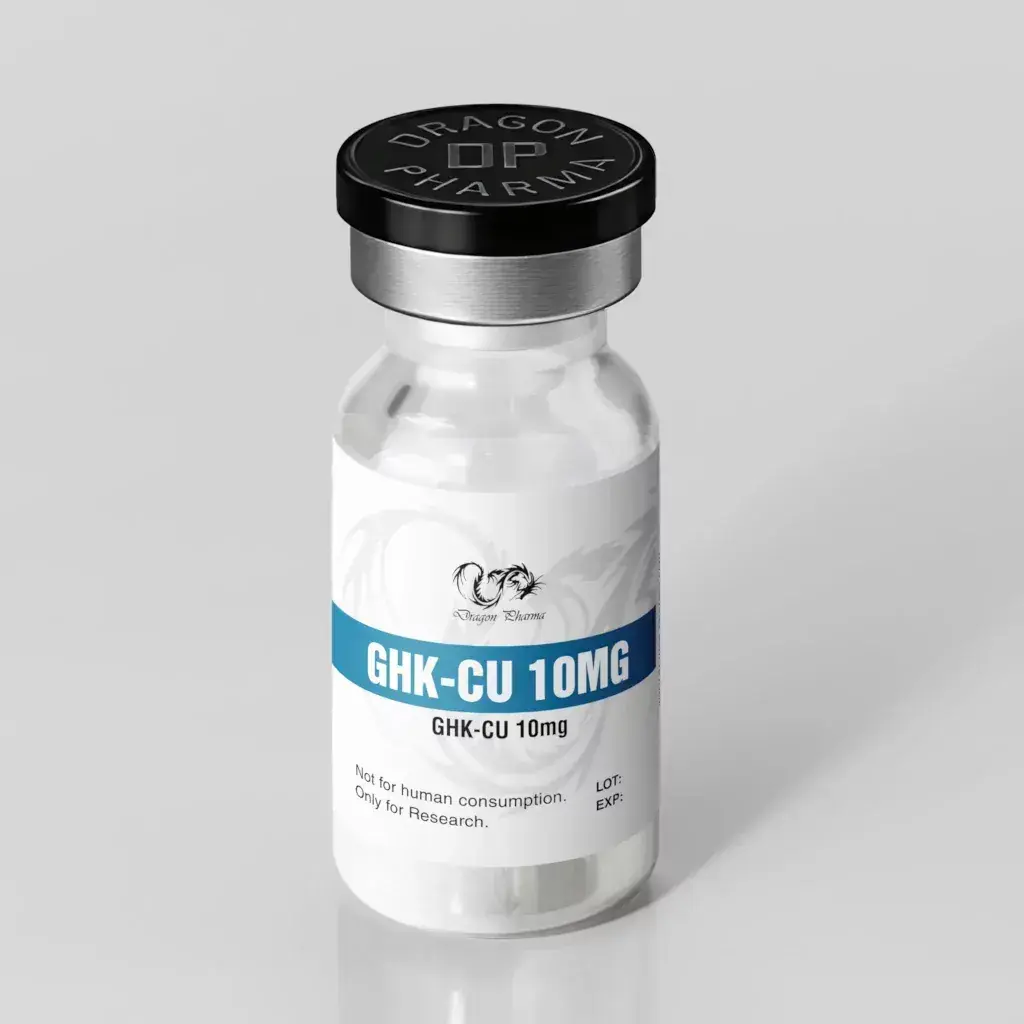
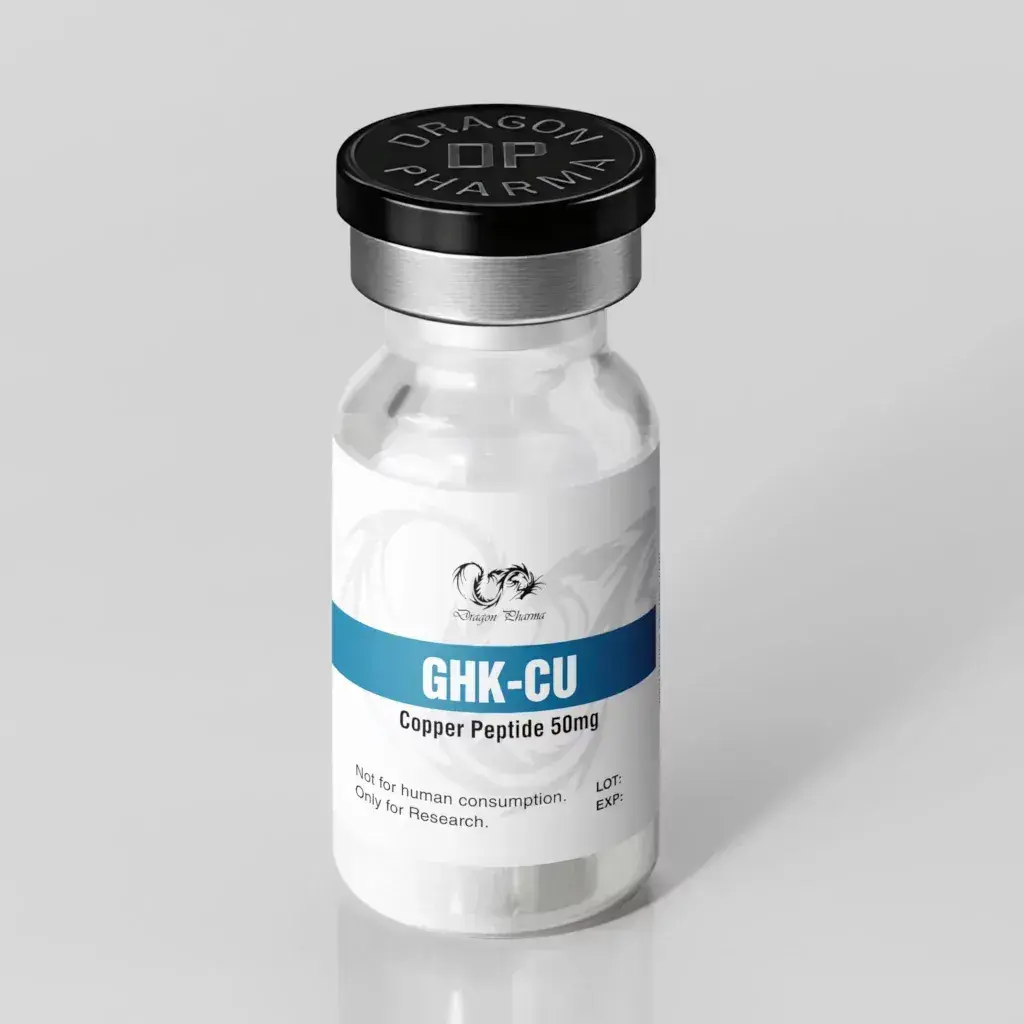
GHK-CU is a lyophilized copper peptide research product manufactured by Dragon Pharma, supplied as 10 mg or 50 mg per 2 mL vial for laboratory research purposes.
GHK-CU contains GHK-Cu (glycyl-L-histidyl-L-lysine copper), a naturally occurring tripeptide-copper complex found in human plasma, saliva, and urine. The peptide sequence is Gly-His-Lys, and it functions as a carrier for copper(II) ions, with a molecular weight of approximately 403.92 g/mol for the copper-bound form. GHK-Cu was first isolated from human albumin in 1973 and has since been studied extensively for its role in tissue remodeling and wound healing.
In preclinical research, GHK-Cu has demonstrated several biological activities. It plays a role in skin regeneration and wound healing, and its skin absorption has been studied using microneedle-assisted delivery, which significantly enhanced penetration compared to intact skin. A 2023 study on liposomal carriers found that GHK-Cu led to 48.90% elastase inhibition, suggesting a mechanism for reducing elastin degeneration and supporting skin structural integrity. A 2023 preprint also reported that intranasal GHK-Cu treatment in Alzheimer's model mice delayed cognitive impairment, reduced amyloid plaques, and lowered inflammation.
GHK-Cu is not FDA-approved for any human use. In April 2026, the FDA announced it would remove GHK-Cu from Category 1 of the 503A bulk drug substances list because the nomination was withdrawn, with PCAC consultation planned before the end of February 2027. FDA has also issued warning letters to online peptide sellers that market GHK-Cu and other peptides with human-use claims while labeling them as research-only. In non-medical research contexts, GHK-Cu is commonly referenced for skin quality and recovery support, with community protocols describing subcutaneous doses of 100–300 mcg per day.
GHK-CU is supplied as a lyophilized powder in a 2 mL vial. The powder requires reconstitution with bacteriostatic water before laboratory use. Once reconstituted, the solution should be refrigerated and handled according to standard research peptide protocols.
GHK-Cu is a naturally occurring copper-binding tripeptide studied for its role in skin regeneration, wound healing, and tissue remodeling.
GHK-Cu belongs to the class of copper-binding peptides. Its structure consists of the tripeptide glycyl-L-histidyl-L-lysine (Gly-His-Lys) complexed with a copper(II) ion. GHK-Cu is found naturally in human plasma, saliva, and urine, and its plasma concentration has been reported to decline with age. The peptide was first isolated in 1973 and has since been studied for its ability to stimulate collagen synthesis, angiogenesis, and tissue repair.
The pharmacokinetic profile of GHK-Cu is characterized by poor skin permeation due to its hydrophilic nature. A 2024 review noted that GHK-Cu has "limited permeation through the lipophilic stratum corneum". A 2015 study using microneedle-assisted delivery found that 134 ± 12 nanomoles of peptide and 705 ± 84 nanomoles of copper permeated through microneedle-treated human skin in 9 hours, while "almost no peptide or copper permeated through intact human skin". This suggests that without enhancement techniques, GHK-Cu absorption through intact skin is minimal.
In non-medical research contexts, GHK-Cu is studied for both topical and injectable applications. Injectable GHK-Cu entered the regulatory conversation in 2026 when the FDA removed it from Category 2 restrictions, though it remains an unapproved new drug. Community protocols for injectable use describe subcutaneous doses of 100–300 mcg per day, with cycles of 4–12 weeks. Topical formulations are studied at concentrations of 1–5% for skin applications.
GHK-Cu has no FDA-approved human indication. In April 2026, FDA announced removal of GHK-Cu from Category 1 of the 503A bulk substances list due to withdrawal of the nomination, with PCAC consultation planned before February 2027. FDA has issued warning letters to online sellers marketing GHK-Cu with human-use claims.
Dragon Pharma offers a range of research peptides relevant to skin, tissue repair, and recovery research. GHK-CU is positioned as a copper peptide, complementing other tissue repair compounds.
For tissue repair research, Dragon Pharma offers BPC 157, which is studied for angiogenesis and fibroblast activity through different mechanisms. For combined tissue repair and systemic recovery, TB 500 is also available. For research on copper peptide variants, GHK-Cu Basic is offered as a 10 mg alternative.
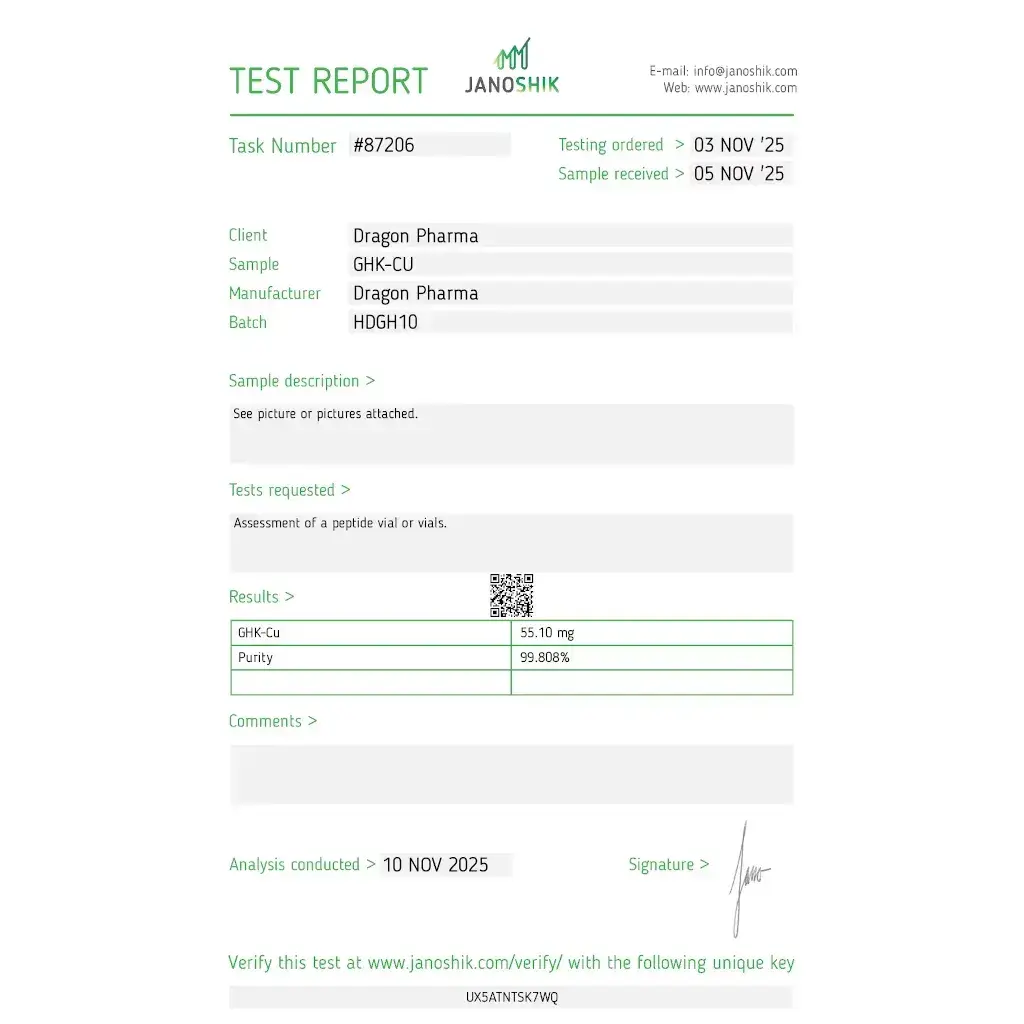
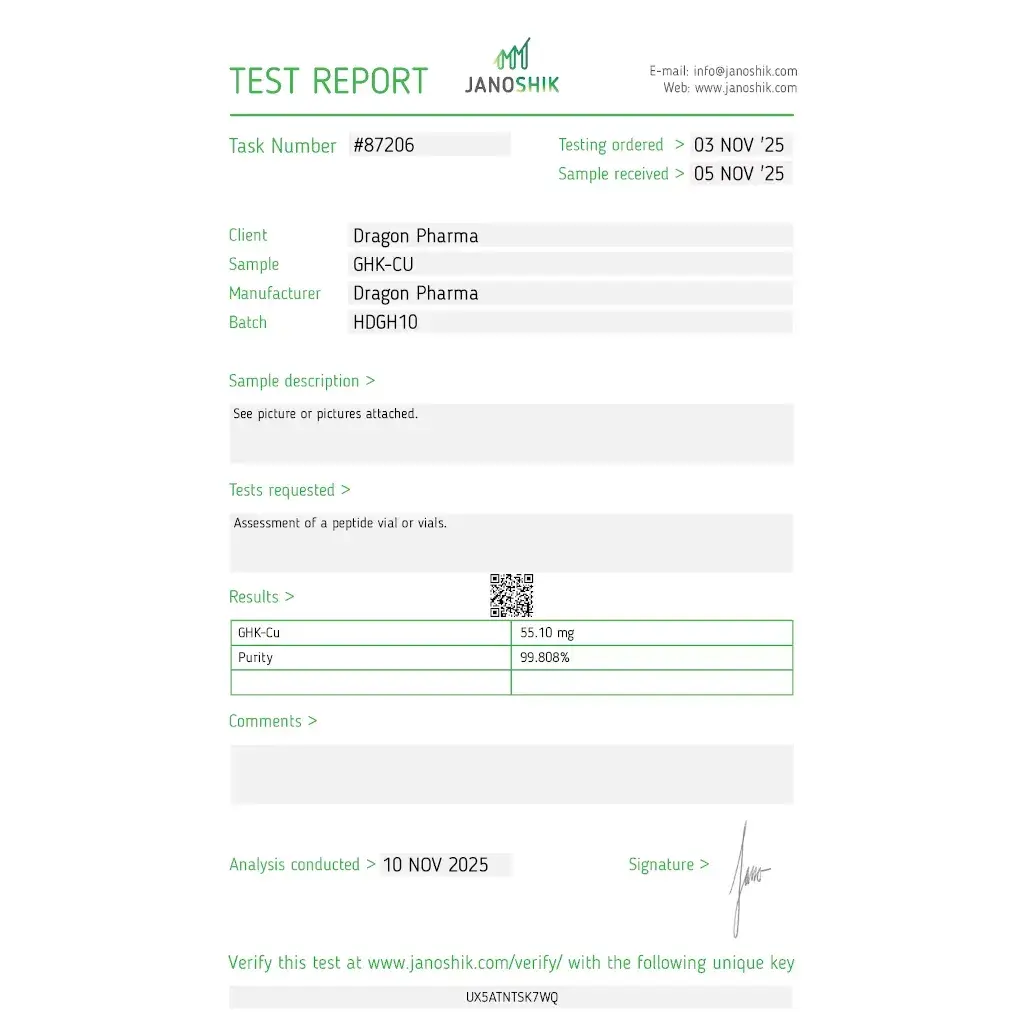
Published laboratory reports for GHK-CU are shown below with the test date and measured content.
 View Report
Laboratory results apply to the specific tested sample represented in each published report and should not be interpreted as a measurement of every vial or production batch.
The information below is provided for educational reference only. GHK-Cu is a research compound that has not been approved for human use. No established human dosing protocol exists. Non-medical use falls outside any approved indications and carries unknown health risks.
No established human dosing protocol exists for GHK-Cu. In non-medical community contexts, injectable protocols commonly reference 100–300 mcg per day subcutaneously, with cycles of 4–12 weeks. A conservative starting protocol is 100 mcg once daily, escalating to 200 mcg after two weeks if tolerated. Another community reference describes 1–2 mg injected subcutaneously twice weekly for muscle-related research. Topical formulations are studied at 1–5% concentrations.
| Use Case | Common Reference Range | Frequency |
|---|---|---|
| Non-medical (conservative start) | 100 mcg | Once daily, SubQ |
| Non-medical (standard) | 200 mcg | Once daily, SubQ |
| Non-medical (muscle research) | 1–2 mg | Twice weekly, SubQ |
| Topical (skin research) | 1–5% concentration | Once or twice daily |
Community doses are referenced from non-medical discussions and are not supported by clinical evidence. GHK-Cu has no established human dosing protocol.
GHK-Cu is not an anabolic compound and is not stacked for muscle-building purposes. In non-medical research contexts, it is sometimes referenced alongside BPC 157 for combined tissue repair coverage. Community protocols describe cycling patterns of 4–12 weeks on followed by a break, or 30 days on and 14 days off.
For injectable use, reconstitution with bacteriostatic water is the standard practice to maintain stability across multiple draws. A 50 mg vial reconstituted with 2 mL of bacteriostatic water produces a concentration of 25 mg/mL, allowing for precise low-dose draws.
No human clinical safety data exists for GHK-Cu. A 2026 Dana-Farber review cautioned that there is "very little new evidence suggesting these peptides are safe and effective" and that products sold for research purposes "bypass FDA regulations and are not guaranteed to be pure or to contain a specified dose".
The most significant theoretical safety concern is copper toxicity. Copper is an essential micronutrient, but excessive copper can lead to multi-organ failure, neurologic impairment, and even death. Injectable GHK-Cu delivers copper directly into the bloodstream, bypassing the body's normal regulatory mechanisms for copper absorption. Community reports describe injection site reactions, but no systematic safety data exists.
GHK-Cu is not part of any post-cycle therapy protocol. It has no relationship to the hypothalamic-pituitary-gonadal axis, and its research focus has been on skin and tissue remodeling. PCT compounds such as Clomid and Nolvadex address entirely different biological systems.
GHK-Cu has never been approved for human use. FDA has issued warning letters to online sellers marketing GHK-Cu with human-use claims. The information above is for educational reference and does not constitute medical advice.
GHK-Cu is an experimental research peptide that has never been approved for human use. No human safety data exists for injectable applications.
GHK-Cu is not FDA-approved for any human indication. In April 2026, FDA announced it would remove GHK-Cu from Category 1 of the 503A bulk drug substances list because the nomination was withdrawn, with PCAC consultation planned before the end of February 2027. FDA has also issued warning letters to online peptide sellers that market GHK-Cu with human-use claims while labeling products as research-only. The agency evaluates the total marketing context, not just the label.
GHK-CU is sold strictly for research purposes. It is not a dietary supplement, medication, or approved therapeutic agent. Human consumption for skin, recovery, or any other purpose is not recommended and may pose unknown health risks.
No human clinical safety data exists for GHK-Cu. A 2026 Dana-Farber Cancer Institute review noted that "there is very little new evidence suggesting these peptides are safe and effective" and that unapproved products "bypass FDA regulations and are not guaranteed to be pure or to contain a specified dose".
The most significant theoretical concern is copper toxicity. While copper is an essential trace element, excessive copper exposure can lead to multi-organ failure, neurologic impairment, and death. Injectable GHK-Cu delivers copper directly into the bloodstream, bypassing normal homeostatic mechanisms. Long-term safety data does not exist.
For topical applications, irritation may occur at higher concentrations. Community guidance suggests starting at 1% and escalating only if skin remains calm.
GHK-Cu has no approved indications and no established contraindications because no human use is supported. However, given the involvement of copper, individuals with Wilson's disease or other copper metabolism disorders should be particularly cautious. No human reproductive or developmental toxicology data exists.
No monitoring protocols exist for GHK-Cu because it has no approved human use. For any hypothetical injectable use, monitoring of copper levels and liver function would be theoretically relevant, but no evidence-based guidance exists.
Store lyophilized powder refrigerated or frozen for long-term stability. Once reconstituted with bacteriostatic water, refrigerate at 2-8°C and use according to standard research peptide protocols. Protect from light and excessive heat. Keep all research compounds out of the reach of children.
GHK-CU is supplied through the official Dragon Pharma distribution chain and shipped in original manufacturer packaging with discreet, privacy-focused handling.
The outer shipping package remains discreet, with privacy-focused handling and no unnecessary external product details. Products are supplied through the official Dragon Pharma distribution chain.
To verify your GHK-CU product, use the security code on the packaging and cross-check it on the Dragon Pharma official site. Official Dragon Pharma presentation, batch-linked lab proof, and original packaging help reinforce product legitimacy and buyer confidence.
Proper storage conditions help preserve peptide integrity and stability throughout shelf life.
Store lyophilized powder refrigerated or frozen for long-term stability. Keep the vial in its original packaging until use. Once reconstituted with bacteriostatic water, refrigerate at 2-8°C and use according to standard research peptide protocols.
Protect from light and excessive heat. Do not freeze the reconstituted solution if intended for immediate use. Keep out of reach of children.
Answers to common questions about GHK-CU, its research status, mechanism of action, and safety considerations.
GHK-CU is a research peptide studied for its role in skin regeneration, wound healing, and tissue remodeling. It is a naturally occurring copper-binding tripeptide found in human plasma. It has never been approved for human use and is sold strictly for laboratory research purposes.
No established human dosing protocol exists. In non-medical community contexts, injectable protocols reference 100–300 mcg per day subcutaneously, with cycles of 4–12 weeks. A conservative starting protocol is 100 mcg once daily, escalating to 200 mcg after two weeks if tolerated.
GHK-Cu is a naturally occurring copper-binding tripeptide. In preclinical research, it has been studied for its role in skin regeneration and wound healing, with microneedle-assisted delivery showing enhanced skin permeation. A 2023 study found that GHK-Cu led to 48.90% elastase inhibition, reducing elastin degeneration.
No human data exists on the time course of GHK-Cu effects. In preclinical research, effects on tissue remodeling have been observed over treatment periods of weeks to months. Community protocols typically run 4–12 weeks before assessing results.
GHK-Cu is the most extensively studied copper peptide, with research spanning skin regeneration, wound healing, and tissue remodeling. However, no human clinical trials have established its safety or efficacy. Dragon Pharma offers GHK-Cu Basic as a lower-strength alternative for research applications.
GHK-CU and BPC 157 target different aspects of tissue repair. GHK-Cu is studied for skin regeneration and collagen synthesis through copper-dependent mechanisms, while BPC 157 is studied for angiogenesis and fibroblast activity through the nitric oxide system. They are sometimes referenced together in recovery research contexts.
GHK-CU and TB 500 have different mechanisms. GHK-Cu is a copper-binding tripeptide studied for skin and tissue remodeling, while TB-500 is a thymosin beta-4 fragment studied for actin sequestration and cell motility. Both are research peptides with different evidence bases and applications.
No human dosing standards exist for GHK-Cu. The 50 mg vial strength is a research quantity. When reconstituted with 2 mL of bacteriostatic water, it produces a concentration of 25 mg/mL, allowing for precise low-dose draws. At a community-referenced dose of 200 mcg, the vial provides approximately 250 doses.
GHK-CU is available in 10 mg and 50 mg vial strengths. It is supplied as a lyophilized powder in a 2 mL vial, requiring reconstitution before laboratory use.
Yes. A published laboratory report dated November 10, 2025 measured GHK-CU at 55.10 mg/vial for the 50 mg vial. The batch number for this report was #HDGH10. The complete report can be viewed in the Lab Reports tab.
This is not known. Copper is an essential trace element, but excessive copper can lead to multi-organ failure, neurologic impairment, and death. Injectable GHK-Cu delivers copper directly into the bloodstream, bypassing normal homeostatic mechanisms. No human safety data exists to establish a safe dose or assess long-term risk.
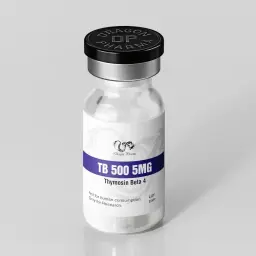
Drug Class: Peptide / Tissue Repair Agent
Active Substance: Thymosin Beta-4
Strength: 5 mg/vial
Form: Lyophilized Powder
Amount: 2 mL Vial
Active Life: 2–3 hours
Average Dose: 2–5 mg per week (divided doses)
Liver Toxicity: None
Aromatization Rate: None
Anabolic Rate: Indirect via tissue regeneration
Androgenic Rate: None
Manufacturer: Dragon Pharma
Laboratory Test: View Result
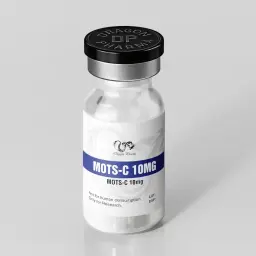
Drug Class: Mitochondrial-Derived Peptide (MDP)
Active Substance: MOTS-C
Strength: 10 mg/vial
Form: Lyophilized Powder
Amount: 2 mL Vial
Active Life: 12–24 hours
Average Dose: 5–10 mg/week (split doses)
Liver Toxicity: None
Aromatization Rate: None
Anabolic Rate: Indirect (via metabolic support)
Androgenic Rate: None
Manufacturer: Dragon Pharma
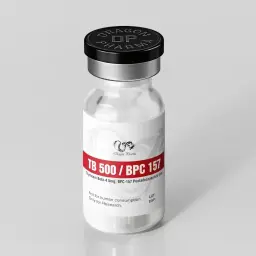
Drug Class: Regenerative Peptide Blend
Active Substance: Thymosin Beta-4 (5 mg), Pentadecapeptide (5 mg)
Strength: 10 mg/vial total
Form: Lyophilized Powder
Amount: 2 mL Vial
Active Life: 2–3 hours (TB 500), 6–8 hours (BPC 157)
Average Dose: 500–1000 mcg/day of each peptide
Liver Toxicity: None
Aromatization Rate: None
Anabolic Rate: Indirect via healing pathways
Androgenic Rate: None
Manufacturer: Dragon Pharma
Laboratory Test: View Result