
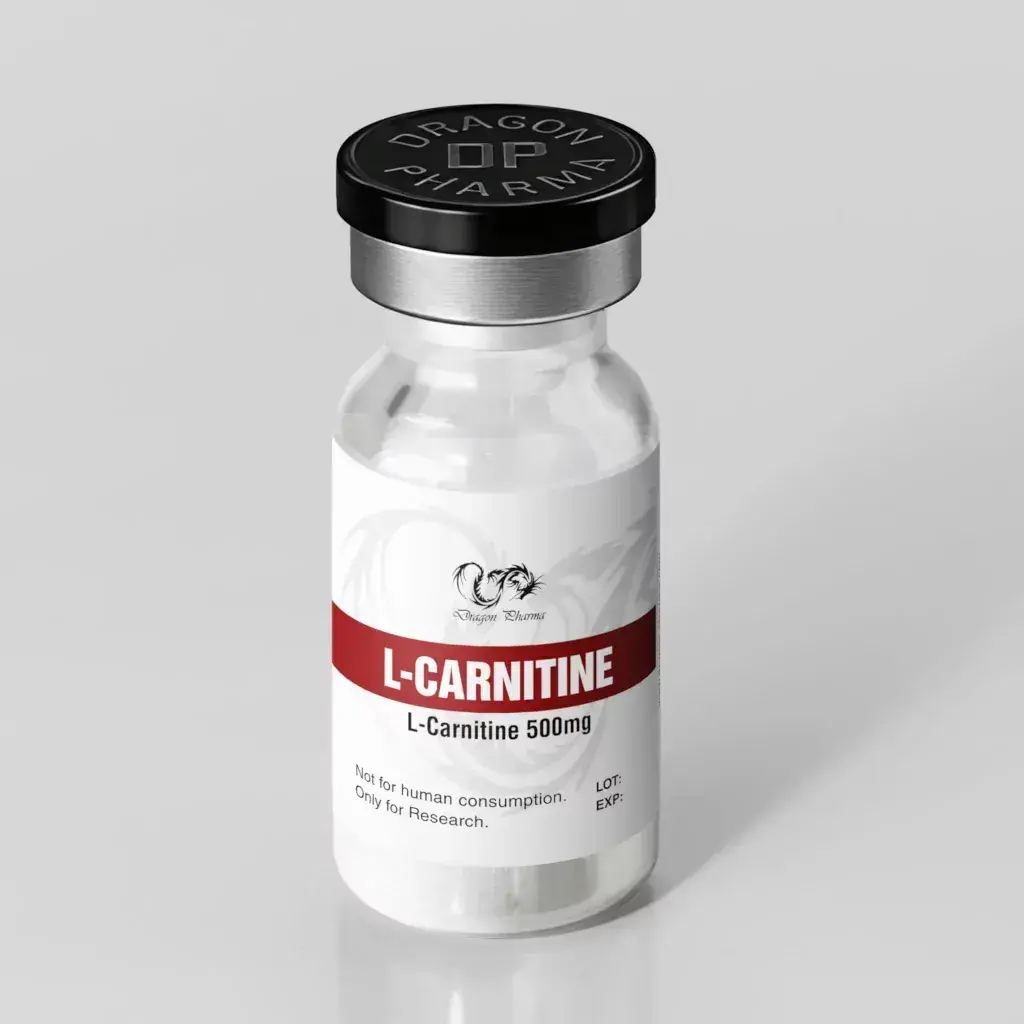
L-Carnitine 500 mg is a lyophilized powder injectable manufactured by Dragon Pharma, containing 500 mg of Levocarnitine (L-Carnitine) per 2 mL vial.
L-Carnitine (levocarnitine) is a naturally occurring quaternary ammonium compound that is essential for fatty acid metabolism. Its primary physiological function is to transport long-chain fatty acids from the cytosol into the mitochondrial matrix, where they undergo beta-oxidation to produce energy. This transport is mediated by carnitine palmitoyltransferase enzymes and is rate-limiting for fatty acid oxidation in skeletal and cardiac muscle.
In clinical medicine, levocarnitine injection is FDA-approved for the acute and chronic treatment of patients with inborn errors of metabolism resulting in secondary carnitine deficiency, and for the prevention and treatment of carnitine deficiency in patients with end-stage renal disease undergoing dialysis. In non-medical bodybuilding contexts, L-Carnitine is commonly referenced for its potential to support exercise recovery and reduce muscle soreness, though such use falls outside approved indications.
Research on L-Carnitine supplementation in athletic populations has focused primarily on its role in recovery from exercise-induced muscle damage. A 2021 randomized controlled trial found that L-carnitine tartrate supplementation for 5 weeks improved recovery in both men and women, blunting declines in strength and power following exercise. A 9-week study in resistance-trained males reported significant increases in bench press lifting volume and reductions in post-exercise blood lactate levels with 2 g/day L-carnitine supplementation. However, other studies have shown mixed results, with acute supplementation failing to improve performance in some protocols.
L-Carnitine 500 mg is supplied as a lyophilized (freeze-dried) powder in a 2 mL vial. This form requires reconstitution with a suitable solvent such as bacteriostatic water or sterile water before use.
Levocarnitine is the biologically active stereoisomer of carnitine, a compound synthesized endogenously from lysine and methionine and obtained through dietary sources, primarily animal products.
L-Carnitine's primary function is to shuttle long-chain fatty acids into mitochondria for beta-oxidation. This process is essential for energy production in skeletal muscle and cardiac tissue, where fatty acids serve as the main substrate for energy production. The enzyme gamma-butyrobetaine dioxygenase, which catalyzes the final step of endogenous carnitine synthesis, is found only in the liver and kidney, meaning carnitine produced in these organs must be transported to muscle tissue via the bloodstream.
In research contexts, L-Carnitine has been studied for its effects on exercise recovery and muscle damage markers. A 2002 study by Volek et al. examined L-carnitine L-tartrate (LCLT) supplementation and found that it favorably affected markers of purine catabolism, free radical formation, and muscle tissue disruption after squat exercise, with MRI-measured muscle disruption in the LCLT group being only 41-45% of the placebo group. A 2021 systematic review noted that L-carnitine has been frequently recommended as a supplement to improve sports performance due to its role in fatty acid oxidation.
The absolute bioavailability of oral levocarnitine is low, reported as approximately 15% for both tablet and oral solution formulations. This low bioavailability is one reason why injectable administration is used in clinical settings for patients with carnitine deficiency. In non-medical contexts, injectable L-Carnitine is sometimes referenced as a way to bypass the limitations of oral absorption, though this use falls outside approved indications.
Oral levocarnitine has an absolute bioavailability of approximately 15%. Following intravenous administration, the mean terminal elimination half-life is approximately 17.4 hours, and about 76% of the dose is excreted in urine within 24 hours. This pharmacokinetic profile supports the use of injectable administration in clinical contexts.
Dragon Pharma offers several products that are commonly referenced alongside L-Carnitine 500 mg in research and bodybuilding contexts. AOD 9604 is a growth hormone fragment studied for fat metabolism, while L-Carnitine supports fatty acid transport at the mitochondrial level. GHK-CU is a copper peptide studied for tissue remodeling and may be referenced alongside L-Carnitine in recovery-focused protocols. For metabolic support, MOTS-C is a mitochondrial-derived peptide studied for metabolic regulation. Bacteriostatic Water is commonly referenced for reconstitution of lyophilized peptides.
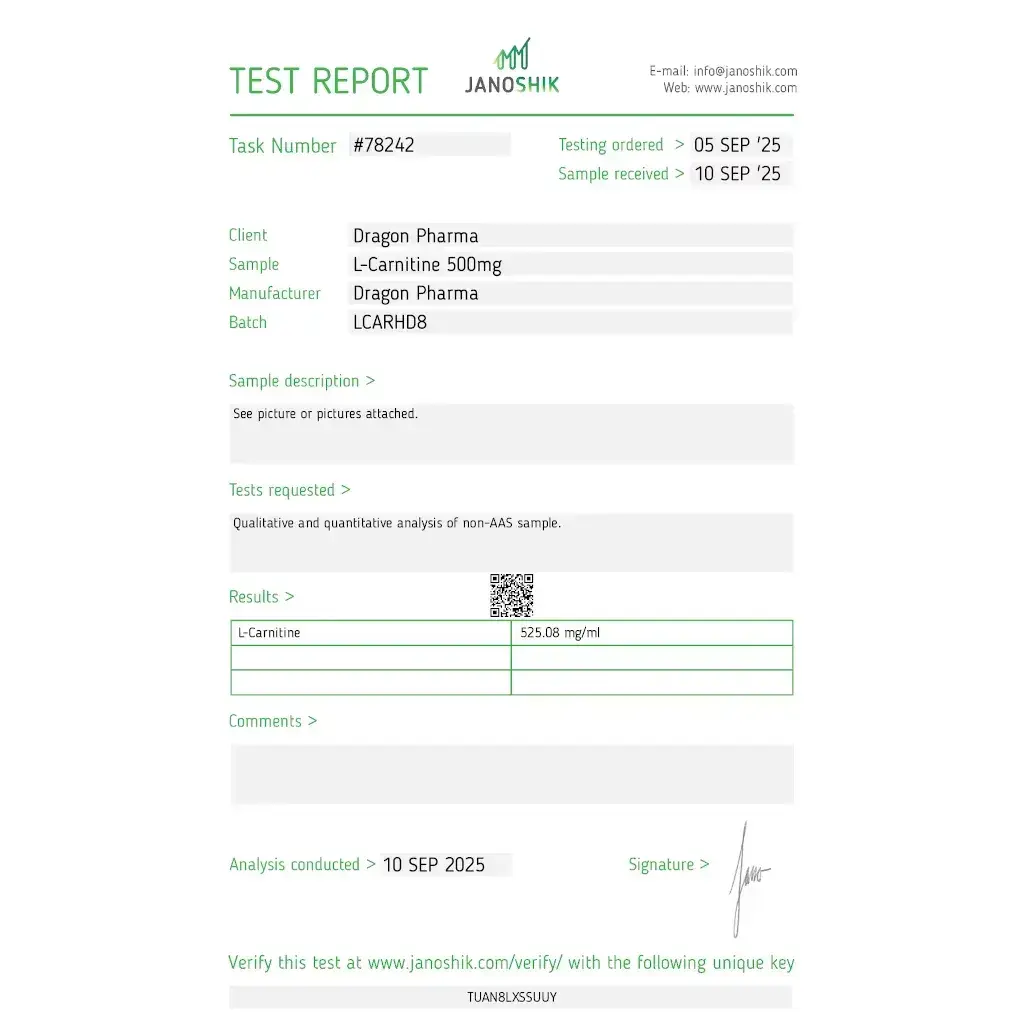
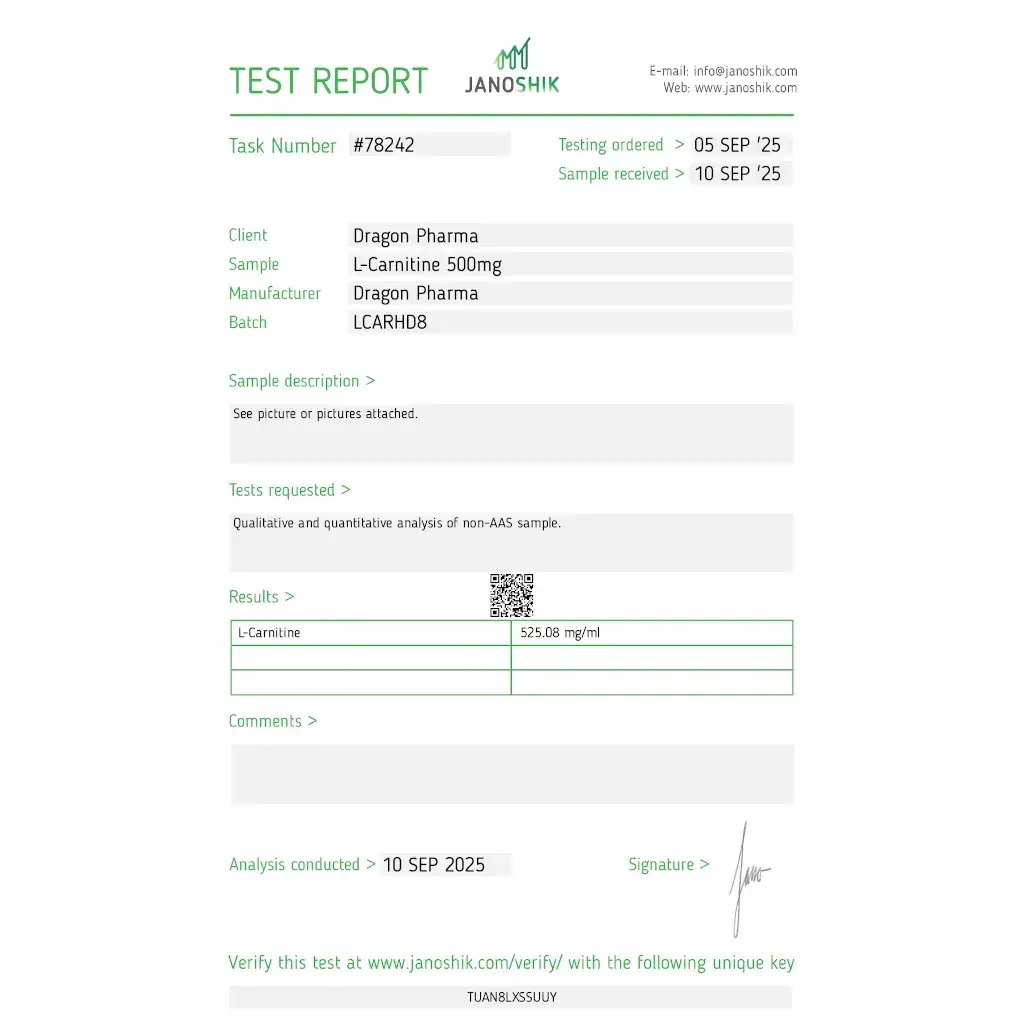
Published laboratory reports for L-Carnitine 500 mg are shown below with the test date, measured concentration, and percentage of the product's 500 mg label claim.
 View Report
Laboratory results apply to the specific tested sample represented in each published report and should not be interpreted as a measurement of every vial or production batch.
The information below is provided for educational reference only. Levocarnitine injection is a prescription medication approved for specific carnitine deficiency indications; medical use requires appropriate diagnosis, clinical supervision and ongoing monitoring. Non-medical use falls outside approved indications.
In medically supervised use for metabolic disorders, the recommended dose of levocarnitine injection is 50 mg/kg given as a slow 2-3 minute bolus injection or by infusion, often with a loading dose followed by an equivalent dose over 24 hours. In clinical research on exercise recovery, oral L-carnitine has been studied at doses of 1-3 g/day, with one trial administering 3 g/day divided into 1 g every 8 hours for 21 days.
| Use Case | Common Reference Range | Administration Frequency |
|---|---|---|
| Medical (metabolic disorders) | 50 mg/kg per dose | Every 3–4 hours (IV) |
| Medical (ESRD on dialysis) | 10–20 mg/kg | 3 times per week post-dialysis |
| Clinical research (exercise recovery) | 1–3 g/day (oral) | Divided doses daily |
| Community reference (non-medical) | 500–1000 mg per administration | Protocol-dependent |
In clinical research, L-Carnitine supplementation is often combined with carbohydrate intake, as insulin release facilitates carnitine transport into muscle tissue. Studies have shown that chronic oral ingestion of L-carnitine and carbohydrate increases muscle carnitine content and alters muscle fuel metabolism during exercise.
Community protocols for injectable L-Carnitine are not well characterized in publicly available bodybuilding resources. In non-medical contexts, some individuals reference combining L-Carnitine with other metabolic support compounds, though such combinations are not supported by clinical evidence. Bacteriostatic Water is commonly referenced for reconstitution.
Common side effects of L-Carnitine include nausea, stomach cramps, diarrhea, and a fishy body odor due to the metabolite trimethylamine. Transient nausea and vomiting have been observed in clinical trials, with less frequent adverse reactions including body odor and gastritis.
More serious but rare concerns include reports of seizures in individuals with seizure disorders, and potential effects on thyroid hormone activity at the tissue level. L-Carnitine may interact with pivalate-conjugated antibiotics and valproic acid.
L-Carnitine is not a hormonal compound and does not suppress the hypothalamic-pituitary-gonadal axis. Post-cycle therapy in the context of testosterone recovery is not applicable. L-Carnitine may be referenced in recovery-focused protocols for its potential effects on exercise-induced muscle damage, but this is separate from hormonal recovery.
Dosing strategies for L-Carnitine should be based on clinical guidance where applicable. The information above is for educational reference and does not constitute medical advice.
Levocarnitine injection is a prescription medication with specific FDA-approved indications. Non-medical use falls outside approved indications and should be considered in the context of potential risks.
Levocarnitine injection is FDA-approved for the acute and chronic treatment of patients with inborn errors of metabolism resulting in secondary carnitine deficiency, and for prevention and treatment of carnitine deficiency in patients with end-stage renal disease undergoing dialysis. The safety and efficacy of oral levocarnitine has not been evaluated in patients with renal insufficiency.
Chronic administration of high doses of oral levocarnitine in patients with severely compromised renal function or in ESRD patients on dialysis may result in accumulation of potentially toxic metabolites, trimethylamine (TMA) and trimethylamine-N-oxide (TMAO), since these metabolites are normally excreted in urine.
L-Carnitine is not approved for bodybuilding, performance enhancement, or general fatigue. Any such use falls outside approved indications. Product concentration and laboratory verification do not establish that non-medical use is safe or appropriate for an individual.
Commonly reported adverse effects include transient nausea and vomiting, body odor, nausea, and gastritis. In clinical trials in hemodialysis patients, adverse events occurring at ≥5% included a range of systemic reactions.
Low incidences of seizures have been reported with oral doses in individuals with or without pre-existing seizure disorders. L-Carnitine may also counteract thyroid hormone activity at the tissue level, which is a consideration for individuals with thyroid conditions.
Gut bacteria metabolize unabsorbed carnitine to form TMAO, which has been associated with increased cardiovascular risk in some studies, though the implications of these findings are not well understood.
Individuals with seizure disorders should consult a healthcare practitioner before using L-Carnitine. Those with liver or kidney disease, or who have been instructed to follow a low-protein diet, should also seek medical advice prior to use.
L-Carnitine may interact with pivalate-conjugated antibiotics (such as pivampicillin) and valproic acid, potentially leading to carnitine depletion. Individuals taking these medications should discuss carnitine intake with their healthcare provider.
In medically supervised levocarnitine therapy, monitoring includes plasma carnitine concentrations (target free carnitine between 35 and 60 µmol/L), blood chemistries, vital signs, and overall clinical condition. Weekly and monthly monitoring is recommended during parenteral therapy.
Laboratory testing of the product itself, such as the published potency report shown in the Lab Reports tab, is separate from clinical monitoring of the individual.
Lyophilized L-Carnitine should be stored in its original container, protected from light. After reconstitution, store refrigerated and use within the period specified. Parenteral drug products should be inspected visually for particulate matter and discoloration prior to administration.
Keep all medications and injectable products out of the reach of children. Follow the storage instructions provided with the product packaging.
L-Carnitine 500 mg by Dragon Pharma is supplied through the official distribution chain and shipped in original manufacturer packaging with discreet, privacy-focused handling.
The outer shipping package remains discreet, with privacy-focused handling and no unnecessary external product details. Products are supplied through the official Dragon Pharma distribution chain.
To verify your L-Carnitine 500 mg product, use the security code on the vial label and cross-check it on the Dragon Pharma official site. Official presentation, batch-linked lab proof, and original packaging help reinforce product legitimacy and buyer confidence.
For complete delivery details, tracking policy, and reshipment terms, please see our Shipping Info page.
Proper storage conditions help preserve product stability and overall integrity throughout shelf life.
Store the lyophilized powder in its original container, protected from light. After reconstitution, store refrigerated and use within the period specified by the manufacturer. Parenteral drug products should be inspected visually for particulate matter and discoloration prior to administration.
Do not freeze reconstituted solution unless specifically directed. Keep out of reach of children.
Answers to common questions about L-Carnitine 500 mg, its mechanism, product strength, and laboratory testing.
L-Carnitine 500 mg contains levocarnitine, which is FDA-approved for treatment of carnitine deficiency in patients with inborn errors of metabolism and in end-stage renal disease patients undergoing dialysis. In non-medical bodybuilding contexts, L-Carnitine is commonly referenced for its potential to support exercise recovery and reduce muscle soreness, though such use falls outside approved indications.
In medically supervised use for metabolic disorders, the recommended dose is 50 mg/kg given every 3-4 hours by intravenous injection or infusion. In clinical research on exercise recovery, oral L-carnitine has been studied at 1-3 g/day. Community protocols for injectable L-Carnitine are not well characterized in publicly available resources.
No. L-Carnitine is not a hormonal compound and does not suppress the hypothalamic-pituitary-gonadal axis. Post-cycle therapy in the context of testosterone recovery is not applicable. L-Carnitine may be referenced in recovery-focused protocols for its potential effects on exercise-induced muscle damage, but this is separate from hormonal recovery.
Levocarnitine is the biologically active form of carnitine that transports long-chain fatty acids from the cytosol into the mitochondrial matrix for beta-oxidation and energy production. This process is essential for energy metabolism in skeletal and cardiac muscle. L-Carnitine also plays a role in regulating metabolic pathways involved in muscle protein balance.
Following intravenous administration, the mean terminal elimination half-life is approximately 17.4 hours, with about 76% of the dose excreted in urine within 24 hours. For exercise recovery effects, clinical studies have used supplementation periods of 3-9 weeks. The onset of effects depends on the specific outcome being evaluated.
There is no single supplement that is universally best for recovery. L-Carnitine has been studied for its effects on markers of muscle damage and recovery, with some trials showing improvements in recovery outcomes. However, results across studies are mixed, and any benefits tend to be modest and individualized.
L-Carnitine is the basic form used for general carnitine support and fatty acid transport. Acetyl-L-Carnitine (ALCAR) is an acetylated form that crosses the blood-brain barrier more efficiently and is often referenced for cognitive support. The two forms have different tissue distribution and research applications.
L-Carnitine L-Tartrate (LCLT) is a stable salt form of L-carnitine that is commonly used in sports nutrition research. LCLT has been studied specifically for exercise recovery outcomes, including reductions in muscle soreness and damage markers following resistance exercise. The tartrate form provides 500 mg of L-carnitine per 750 mg of LCLT.
500 mg is a standard strength for a single vial presentation. In clinical research, oral L-carnitine supplementation has been studied at 1-3 g/day. The 500 mg vial strength provides 500 mg of levocarnitine per vial, requiring reconstitution before use. Dosing depends on the specific protocol and route of administration.
L-Carnitine 500 mg is labeled at 500 mg of levocarnitine per vial. It is supplied as a lyophilized powder in a 2 mL vial, requiring reconstitution before use.
Yes. A published laboratory report dated September 12, 2025 measured L-Carnitine 500 mg at 525.08 mg, equivalent to 105% of its 500 mg label claim. The batch number for this report is #LCARHD8.
The complete report can be viewed in the Lab Reports tab. Laboratory results apply to the tested sample represented by the individual report and should not be interpreted as a measurement of every vial.
Lyophilized L-Carnitine is typically reconstituted with a suitable solvent such as Bacteriostatic Water or sterile water. The volume of solvent added determines the concentration of the resulting solution. Proper sterile technique should be used during reconstitution. Parenteral drug products should be inspected visually for particulate matter prior to administration.