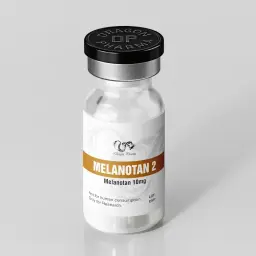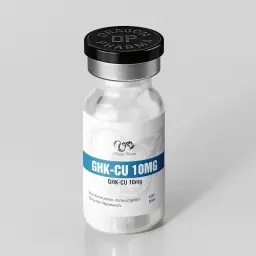


Kisspeptin 10 mg is a lyophilized powder research peptide manufactured by Dragon Pharma, containing 10 mg of Kisspeptin-10 (Metastin 45-54 human) per 2 mL vial.
Kisspeptin-10 is a synthetic decapeptide corresponding to the biologically active C-terminal fragment of the KISS1 gene product, acting as the endogenous agonist for the GPR54 receptor (KISS1R). It is widely recognized as one of the most potent activators of the hypothalamic-pituitary-gonadal (HPG) axis known to date, stimulating gonadotropin-releasing hormone (GnRH) release and downstream luteinizing hormone (LH) secretion.
In clinical research settings, kisspeptin-10 has been studied for its effects on reproductive hormone release in both healthy volunteers and patients with hypothalamic amenorrhea. It is not FDA-approved for any human use, and the FDA has evaluated kisspeptin-10 for inclusion on the 503A Bulks List, concluding that available evidence weighs against inclusion due to insufficient safety and effectiveness data. In non-medical bodybuilding contexts, kisspeptin is sometimes referenced as a potential alternative to HCG for stimulating endogenous testosterone production, though such use falls outside approved indications.
Unlike HCG, which acts directly on Leydig cells as an LH mimetic, kisspeptin works upstream at the hypothalamic level to stimulate GnRH release, which then drives pituitary LH and FSH secretion. This upstream mechanism means kisspeptin requires a functional HPG axis to exert its effects, which distinguishes it mechanistically from direct gonadotropin analogs.
Kisspeptin 10 mg is supplied as a lyophilized (freeze-dried) powder in a 2 mL vial. This form requires reconstitution with a suitable solvent such as bacteriostatic water before use.
Kisspeptin-10 is a decapeptide agonist at the GPR54 (KISS1R) receptor that plays a central role in regulating the hypothalamic-pituitary-gonadal axis through modulation of GnRH secretion.
Kisspeptin-10 binds to the G protein-coupled receptor KISS1R (GPR54) on GnRH neurons in the hypothalamus. This binding activates G(q)-dependent signaling, leading to phospholipase C activation, intracellular calcium release, and depolarization of GnRH neurons, which in turn stimulates GnRH secretion into the hypophyseal portal system.
Unlike HCG, which directly stimulates Leydig cells as an LH mimetic, kisspeptin operates upstream at the hypothalamic level. This mechanism requires a functional HPG axis and intact GnRH neuronal signaling, meaning kisspeptin’s effectiveness depends on the integrity of the endogenous reproductive hormone cascade. In men with hypogonadotropic hypogonadism who were receiving exogenous testosterone, kisspeptin-10 failed to elicit LH responses in a small study, suggesting that suppression of the HPG axis may limit its effectiveness.
In healthy male volunteers, intravenous kisspeptin-10 administration has been shown to trigger immediate LH pulse induction followed by another peak at normal intervals. The effects on LH are dose-dependent, with a maximum response observed at approximately 1 μg/kg in one study.
Kisspeptin-10 produces a rapid, short-lived LH pulse after intravenous administration, with effects observed within minutes. Its short half-life and pulsatile mechanism distinguish it from longer-acting gonadotropin analogs like HCG, and support the hypothesis that intermittent rather than continuous stimulation may be preferable.
Dragon Pharma offers several hormonal products that are commonly referenced in reproductive and recovery contexts. HCG 5000 IU provides direct LH receptor stimulation at the Leydig cell level, bypassing the hypothalamic-pituitary axis entirely. HMG 150 IU contains both FSH and LH activity for dual gonadotropin support. Gonadorelin is a synthetic GnRH analog that acts on the same hypothalamic pathway but through direct receptor binding rather than kisspeptin’s upstream modulation. Clomid and Nolvadex are selective estrogen receptor modulators that increase endogenous gonadotropin release through estrogen feedback blockade.
The information below is provided for educational reference only. Kisspeptin-10 is not FDA-approved for any human use in the United States. All use in non-medical contexts falls outside approved indications.
Clinical research studies have administered kisspeptin-10 primarily via intravenous bolus or infusion, with doses ranging from 0.01 to 4 μg/kg. In non-medical bodybuilding contexts, community protocols commonly reference doses of 100–200 mcg per administration, with some users reporting 500 mcg per day.
| Use Case | Common Reference Range | Administration Frequency |
|---|---|---|
| Clinical research (IV bolus) | 0.01–3 μg/kg | Single bolus |
| Clinical research (IV infusion) | 1.5–4 μg/kg | 22.5-hour infusion |
| Non-medical community reference | 100–200 mcg per administration | Once daily |
| Community PCT reference | 500 mcg per day | Once daily, 2–6 weeks |
Common reference ranges for kisspeptin-10 in non-medical bodybuilding contexts are not well characterized in publicly available resources. The table above reflects a combination of clinical research data and community anecdotal reports.
In non-medical post-cycle therapy contexts, kisspeptin is sometimes referenced as an alternative to HCG 5000 IU based on its different mechanism of action. Because kisspeptin acts upstream at the hypothalamus while HCG acts directly on Leydig cells, the two are sometimes combined or sequenced in community protocols, though no clinical data support this approach.
Kisspeptin is also sometimes referenced alongside selective estrogen receptor modulators such as Clomid or Nolvadex in recovery protocols, as these agents work through estrogen feedback mechanisms to increase endogenous gonadotropin release. The FDA has concluded that there is insufficient evidence to support the effectiveness of kisspeptin-10 for male hypogonadism, and that FDA-approved treatments exist for this condition.
Clinical studies of kisspeptin-10 administration in humans have not reported significant adverse effects. Subcutaneous or intravenous administration of kisspeptins in humans did not provoke any secondary effects in published research. However, the FDA has noted that kisspeptin-10 is not well characterized from a physicochemical perspective and that there is a lack of information about whether it can be safely used in the intended population, including immunogenicity risks.
Because kisspeptin-10 stimulates the HPG axis, it may affect reproductive hormone levels and potentially fertility. The long-term effects of chronic kisspeptin-10 use have not been established.
Kisspeptin is sometimes referenced as a component of post-cycle therapy in non-medical bodybuilding contexts, based on its ability to stimulate the HPG axis upstream at the hypothalamic level. Unlike HCG, which can cause desensitization with prolonged use, kisspeptin’s mechanism is non-suppressive and does not require its own PCT.
However, the FDA has concluded that there is insufficient evidence to make a conclusion on the effectiveness of kisspeptin-10 as a treatment option for men with secondary hypogonadism, and that no studies have administered kisspeptin-10 via intramuscular or subcutaneous routes in this population.
Dosing strategies for kisspeptin-10 are not established in non-medical contexts. The information above is for educational reference and does not constitute medical advice.
Kisspeptin-10 is not FDA-approved for any human use in the United States. The FDA has evaluated kisspeptin-10 for inclusion on the 503A Bulks List and concluded that available evidence weighs against inclusion.
The FDA’s 2024 evaluation of kisspeptin-10 concluded that the substance is not well characterized from a physicochemical perspective and that there is a lack of information about whether it can be safely used in the intended population, including immunogenicity risks. The agency also found insufficient evidence to conclude that kisspeptin-10 is effective as a treatment for men with secondary hypogonadism, and noted that FDA-approved treatments exist for this condition.
Kisspeptin-10 is listed in the FDA’s Global Substance Registration System as a substance with UNII code FS1N52VS3S. However, this registration does not constitute approval for use in compounded drug products.
Kisspeptin-10 is not FDA-approved for human use. Any use outside of approved research applications falls outside approved indications. Product concentration and laboratory verification do not establish that non-medical use is safe or appropriate for an individual.
Published clinical studies of kisspeptin-10 administration in humans have not reported significant adverse effects. Subcutaneous or intravenous administration of kisspeptins in humans did not provoke any secondary effects in published research.
However, the FDA has identified concerns regarding immunogenicity risks and the lack of safety data in the intended population. Because kisspeptin-10 stimulates the HPG axis and affects reproductive hormone levels, potential effects on fertility and reproductive function should be considered. The long-term effects of chronic use have not been established.
Individuals with reproductive hormone disorders, pituitary conditions, or hormone-sensitive conditions should consult a qualified healthcare professional before considering kisspeptin-10. The FDA’s evaluation noted that kisspeptin-10 has not been adequately studied for safety in men with secondary hypogonadism.
The long-term effects of chronic kisspeptin-10 use have not been established. No data are available on the safety of kisspeptin-10 in pregnancy, lactation, or pediatric populations.
In research settings where kisspeptin-10 has been studied, monitoring has focused on LH, FSH, and testosterone responses. In non-medical contexts, individuals commonly reference periodic bloodwork to monitor reproductive hormone levels, though the appropriate monitoring protocol for non-medical kisspeptin-10 use is not established.
No published laboratory reports are available for this specific product. Product potency verification would apply to tested samples only and is separate from any clinical monitoring of the individual.
Lyophilized kisspeptin-10 should be stored tightly sealed in its original container, protected from light, and kept desiccated at -20°C for long-term storage. After reconstitution, store refrigerated at 2–8°C and use within 2–4 weeks. Avoid repeated freeze-thaw cycles.
Keep all peptides and injectable products out of the reach of children. Follow the storage instructions provided with the product packaging.
Kisspeptin 10 mg by Dragon Pharma is supplied through the official distribution chain and shipped in original manufacturer packaging with discreet, privacy-focused handling.
The outer shipping package remains discreet, with privacy-focused handling and no unnecessary external product details. Products are supplied through the official Dragon Pharma distribution chain.
To verify your Kisspeptin 10 mg product, use the security code on the vial label and cross-check it on the Dragon Pharma official site. Official presentation, batch-linked lab proof when available, and original packaging help reinforce product legitimacy and buyer confidence.
For complete delivery details, tracking policy, and reshipment terms, please see our Shipping Info page.
Proper storage conditions help preserve peptide stability and overall product integrity throughout shelf life.
Store the lyophilized (dry) powder tightly sealed in its original container, protected from light, and desiccated at -20°C for long-term storage. Brief handling at refrigerated or ambient conditions is acceptable provided the container is allowed to equilibrate to room temperature before opening to prevent moisture uptake.
Kisspeptin-10 is a peptide susceptible to degradation. After reconstitution, store refrigerated at 2–8°C and use within 2–4 weeks. Avoid repeated freeze-thaw cycles.
Keep out of reach of children. Follow proper handling and sterile technique when administering the product.
Answers to common questions about Kisspeptin 10 mg, its mechanism, product strength, and regulatory status.
Kisspeptin 10 mg contains kisspeptin-10, a research peptide that stimulates the hypothalamic-pituitary-gonadal axis through GPR54 receptor activation. In research settings it is used to study reproductive hormone regulation. In non-medical bodybuilding contexts, it is sometimes referenced as a potential alternative to HCG, though such use falls outside approved indications and the FDA has concluded that there is insufficient evidence to support its effectiveness for male hypogonadism.
Clinical research has primarily used intravenous bolus or infusion administration. In non-medical community contexts, protocols commonly reference 100–200 mcg per administration once daily, with some users reporting 500 mcg per day. Common reference ranges for this compound in non-medical contexts are not well characterized.
Kisspeptin is sometimes referenced as a component of post-cycle therapy rather than requiring PCT itself, based on its upstream mechanism at the hypothalamic level. Unlike HCG, which can cause desensitization with prolonged use, kisspeptin’s mechanism is non-suppressive. However, the FDA has concluded that there is insufficient evidence to support its effectiveness for this purpose.
Kisspeptin-10 binds to the GPR54 receptor on GnRH neurons in the hypothalamus, stimulating GnRH release, which in turn drives pituitary LH and FSH secretion. It is one of the most potent activators of the HPG axis known to date. This upstream mechanism distinguishes it from direct gonadotropin analogs like HCG.
Clinical studies have shown that intravenous kisspeptin-10 triggers immediate LH pulse induction, with effects observed within minutes of administration. In healthy male volunteers, kisspeptin-10 administration resulted in rapid dose-dependent LH peaks. Any cumulative effects on reproductive hormone levels would develop over the course of administration.
There is no single compound that is universally best for HPG axis stimulation. HCG 5000 IU provides direct LH receptor stimulation and is FDA-approved for specific indications. Gonadorelin is a synthetic GnRH analog that acts on the same pathway. Kisspeptin-10 operates upstream at the hypothalamic level but has not been established as effective for male hypogonadism.
HCG 5000 IU acts directly on Leydig cells as an LH mimetic, bypassing the hypothalamic-pituitary axis entirely. Kisspeptin-10 acts upstream at the hypothalamus to stimulate GnRH release. This means kisspeptin requires a functional HPG axis, whereas HCG does not. In men with suppressed HPG axes, kisspeptin-10 failed to elicit LH responses in one small study.
Gonadorelin is a synthetic GnRH analog that binds directly to GnRH receptors on pituitary gonadotrophs. Kisspeptin-10 acts upstream by stimulating endogenous GnRH release from hypothalamic neurons. The two compounds therefore act at different levels of the HPG axis, though both ultimately increase LH and FSH secretion.
Clinical research has used doses ranging from 0.01 to 4 μg/kg intravenously, which for a typical 80 kg individual translates to roughly 0.8–320 mcg. Community protocols commonly reference 100–200 mcg per administration. The 10 mg vial contains 10,000 mcg total, providing 50–100 doses at these levels.
Kisspeptin 10 mg is labeled at 10 mg of kisspeptin-10 per vial. It is supplied as a lyophilized powder in a 2 mL vial, requiring reconstitution before use.
No published laboratory report is currently available for this specific product. Product potency and purity verification would apply to tested samples only and should not be interpreted as a measurement of every vial or production batch.
Lyophilized kisspeptin-10 is typically reconstituted with a suitable solvent such as Bacteriostatic Water or sterile water. The volume of solvent added determines the concentration of the resulting solution. Proper sterile technique should be used during reconstitution.