
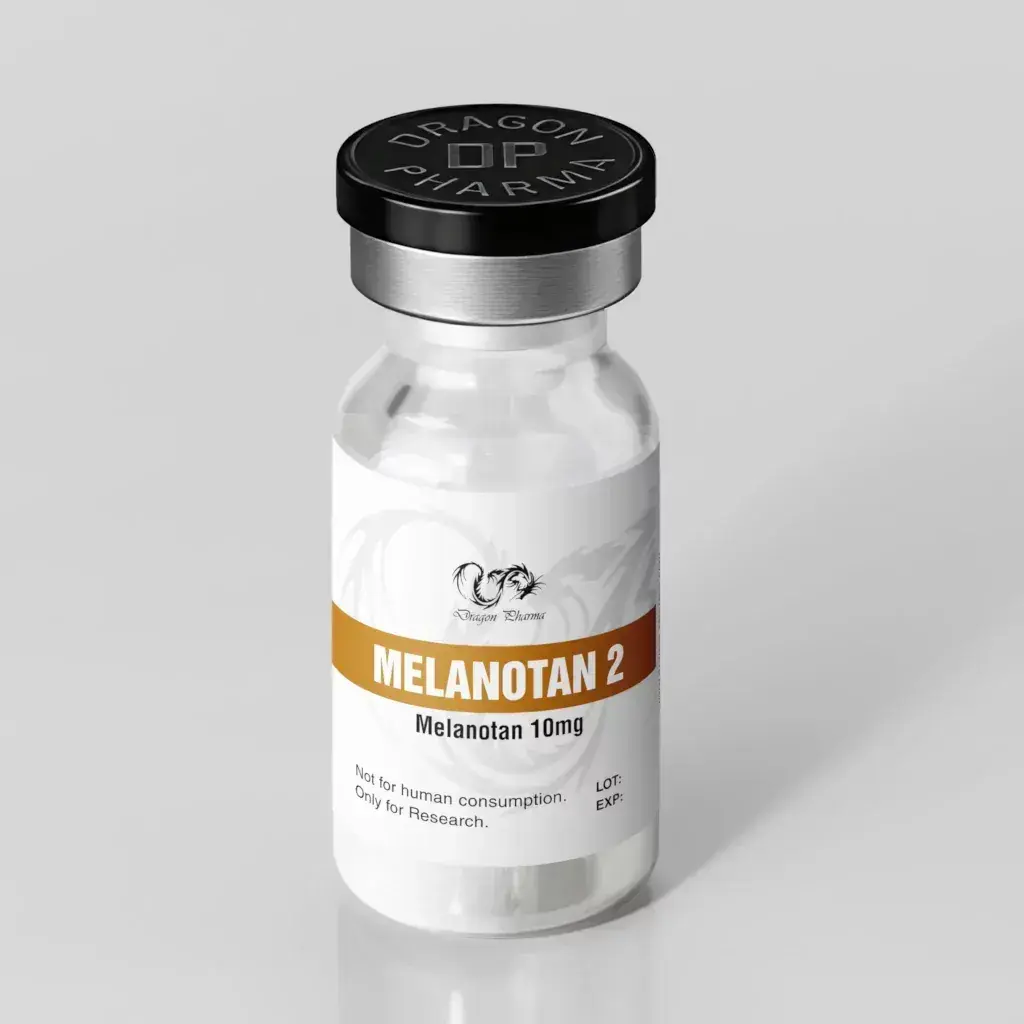
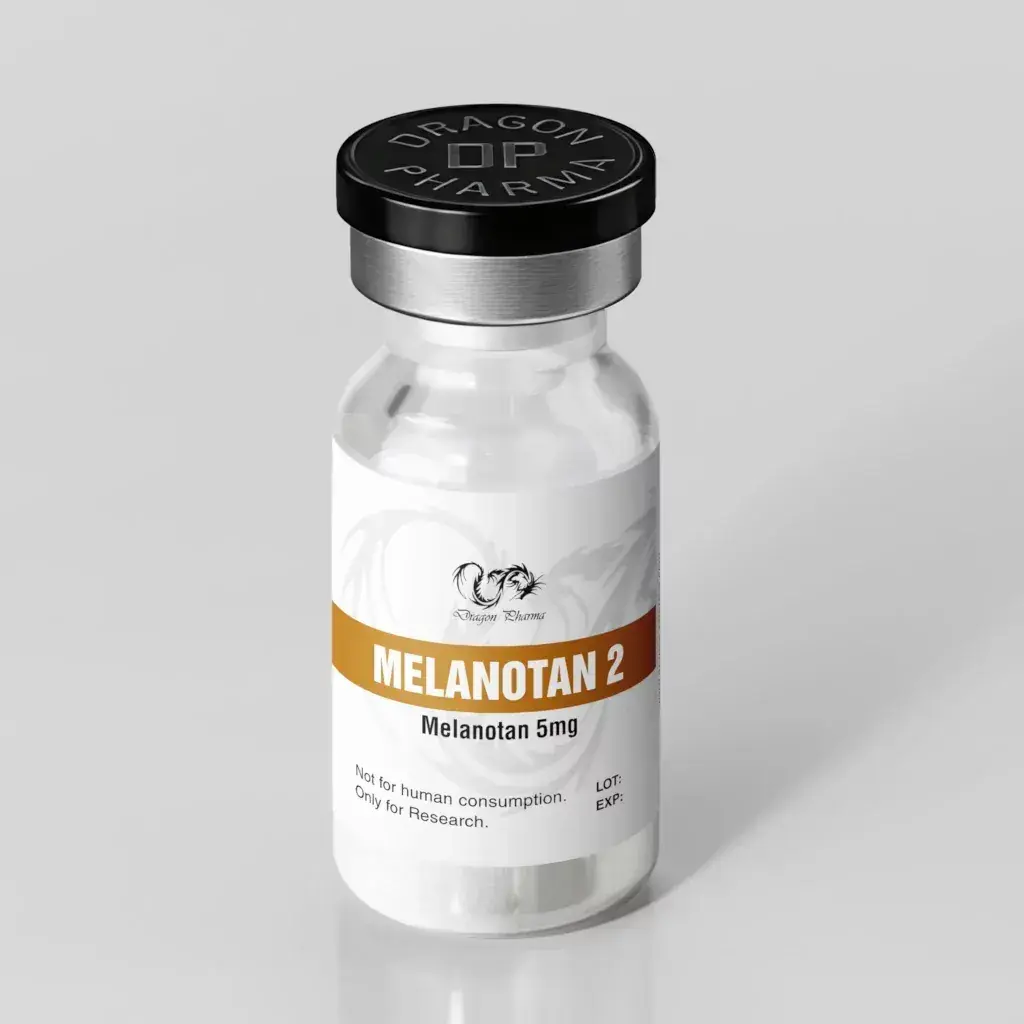
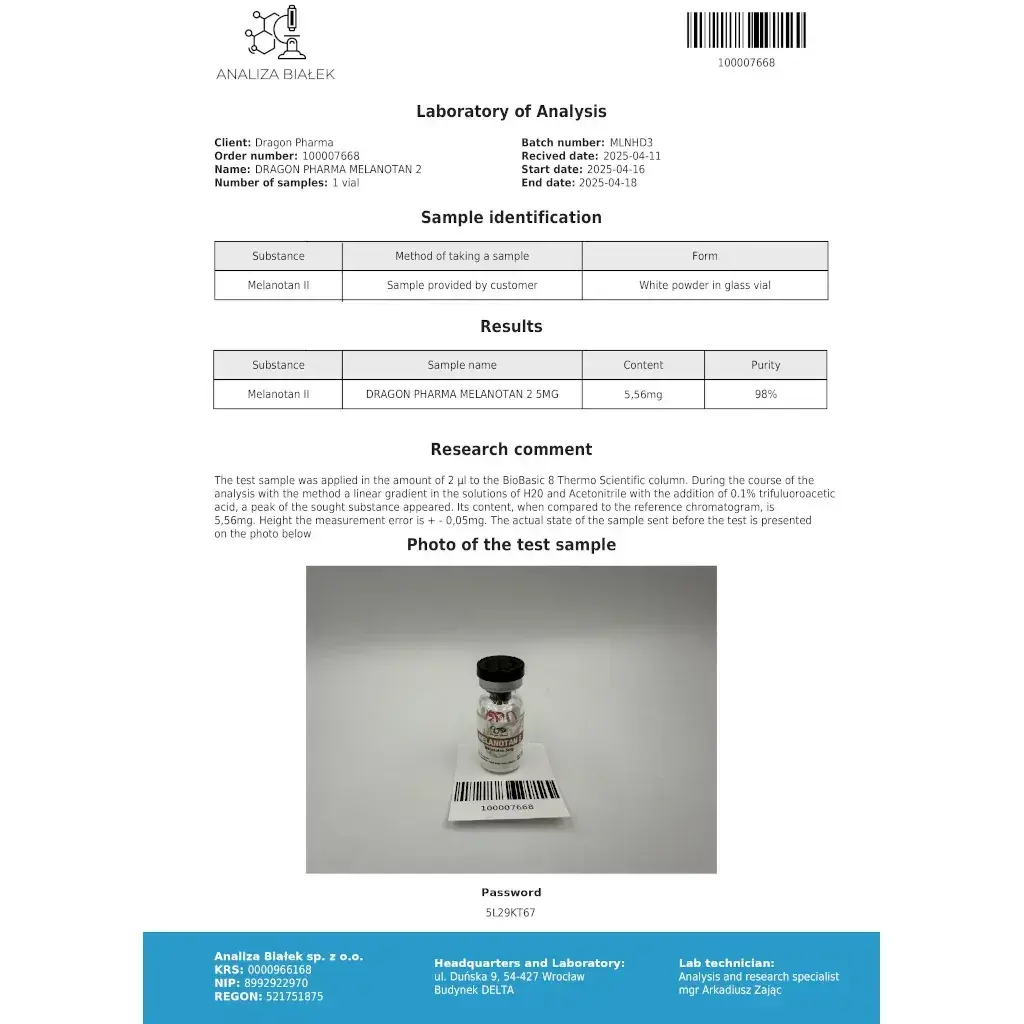
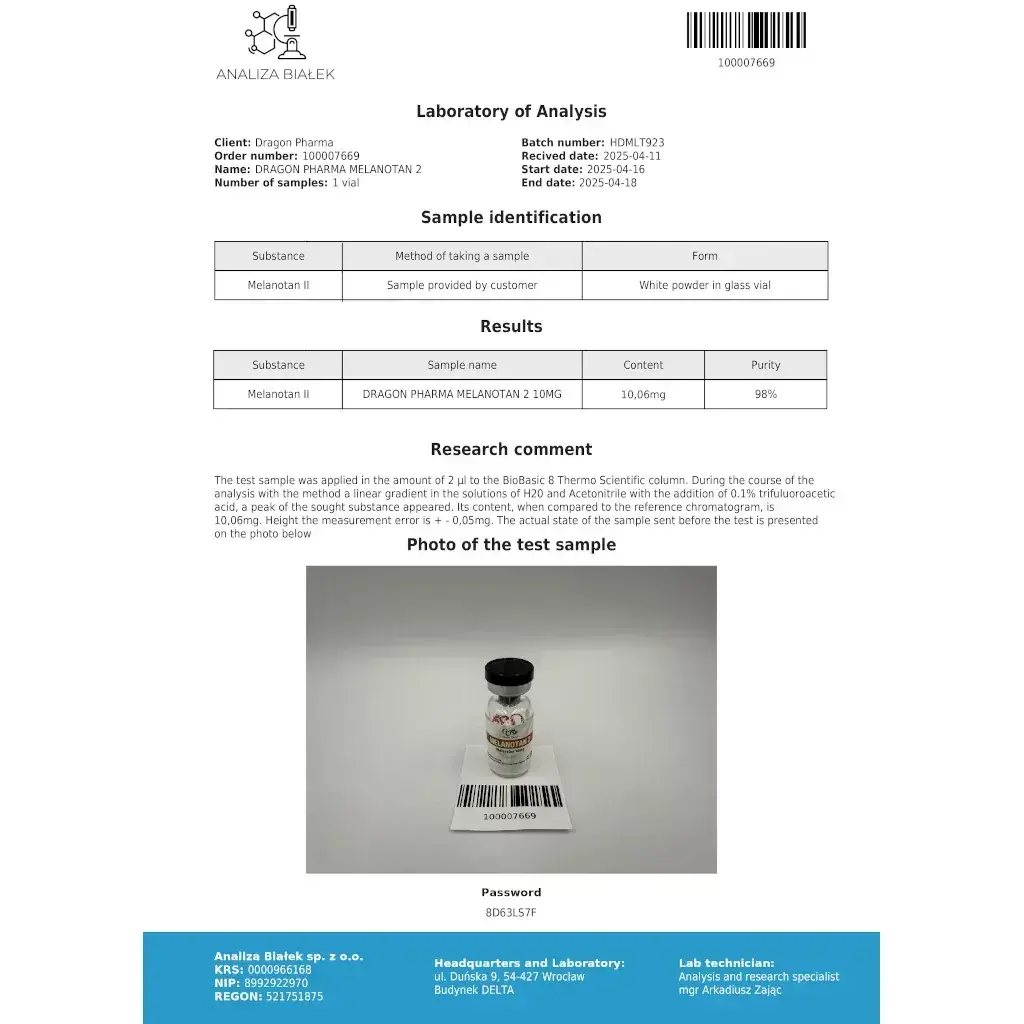
Melanotan 2 is a lyophilized powder research peptide manufactured by Dragon Pharma, available in 5 mg or 10 mg per vial presentations.
Melanotan 2 is a synthetic cyclic heptapeptide analog of alpha-melanocyte-stimulating hormone (α-MSH). It acts as a non-selective agonist at melanocortin receptors, binding to MC1R (which stimulates melanin production in skin cells), as well as MC3R, MC4R, and MC5R. This broad receptor activity distinguishes it from Melanotan 1 (afamelanotide), which is more selective for MC1R and is approved in some regions for photoprotection in erythropoietic protoporphyria.
Melanotan 2 is not FDA-approved for any human use in the United States, and the FDA does not consider it a legal dietary or cosmetic ingredient. Its sale is illegal in all 50 U.S. states, as well as in the United Kingdom, Australia, and many other countries. The peptide was originally developed as a research compound related to afamelanotide but has become widely available through unregulated online sources marketed for tanning purposes.
The tanning effect of Melanotan 2 requires exposure to ultraviolet (UV) radiation to manifest; the peptide does not produce pigmentation on its own. Products containing Melanotan 2 have been found to vary widely in actual content, with one study reporting that vials claimed to contain 10 mg actually ranged from 4.32 to 8.84 mg. The TGA in Australia found nasal spray bottles labelled as 30 mg ranged between 22 mg and 54 mg.
Melanotan 2 is supplied as a lyophilized (freeze-dried) powder in a 2 mL vial. This form requires reconstitution with a suitable solvent such as bacteriostatic water before use.
Melanotan 2 is a synthetic peptide analog of α-MSH that binds non-selectively to melanocortin receptors, producing a range of effects beyond skin pigmentation.
Melanotan 2 stimulates melanin synthesis through MC1R activation in melanocytes, the pigment-producing cells of the skin. Unlike the endogenous hormone α-MSH or the more selective analog afamelanotide (Melanotan 1), Melanotan 2 also activates MC3R, MC4R, and MC5R. MC4R activation in the central nervous system is associated with appetite suppression and effects on sexual function, which explains the spontaneous erections and reduced appetite reported by users.
The pigmentary effect of Melanotan 2 requires UV exposure to become visible; the peptide increases melanin production capacity but does not produce a tan in the absence of UV radiation. This means that using Melanotan 2 typically involves deliberate sun exposure or tanning bed use, which itself carries independent skin cancer risks.
Melanotan 2 is administered by subcutaneous injection in non-medical contexts, typically into the fatty tissue around the abdomen. Community protocols commonly reference daily injections during an initial loading phase followed by maintenance injections once or twice weekly.
Melanotan 2 is not approved by any regulatory agency for human use. The Skin Cancer Foundation has issued a warning that it is “an unregulated substance with serious reported side effects that is not safe for consumer use”. Published case reports have documented melanoma development following Melanotan 2 use.
Dragon Pharma offers several research peptides, but Melanotan 2 is unique in its melanocortin receptor activity. PT-141 (bremelanotide) is a related melanocortin receptor agonist studied primarily for sexual dysfunction rather than tanning. Melanotan 1 is a more selective MC1R agonist with a different receptor profile. Peptides such as BPC 157 and TB 500 act on entirely different pathways related to tissue repair rather than pigmentation.
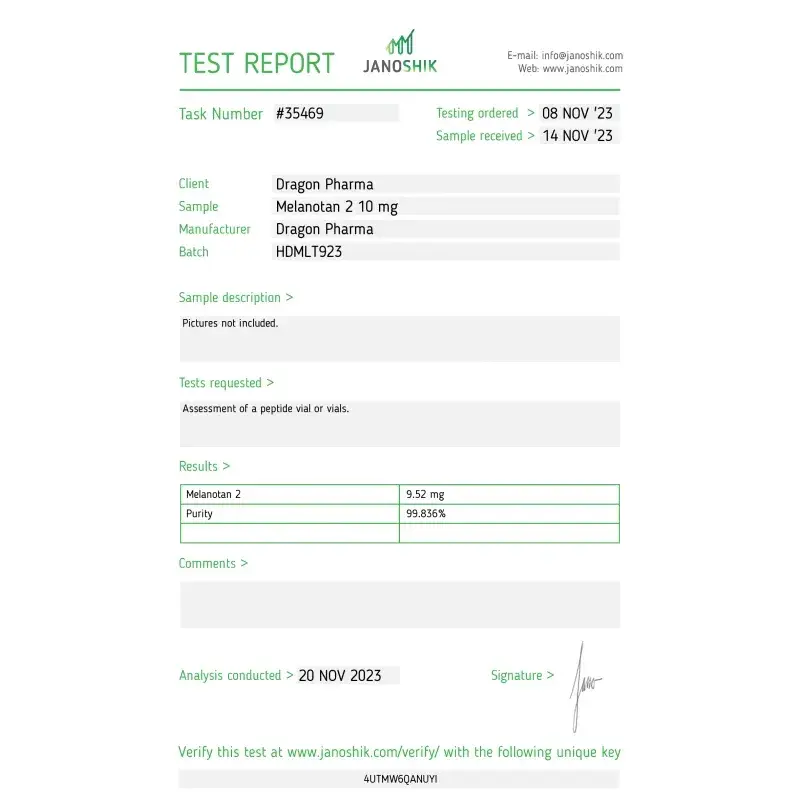
Published laboratory reports for Melanotan 2 are shown below with the test date, measured concentration, and percentage of the product's label claim.
 View Report
 View Report
 View Report
Laboratory results apply to the specific tested sample represented in each published report and should not be interpreted as a measurement of every vial or production batch.
The information below is provided for educational reference only. Melanotan 2 is not FDA-approved for any human use in the United States and is illegal to sell in all 50 states. All use in non-medical contexts falls outside approved indications.
No established safe or effective dose exists for Melanotan 2 in any indication. Published research on the related compound afamelanotide (Melanotan 1) has used subcutaneous implants of 16 mg administered every two months for erythropoietic protoporphyria, but this is a different molecule with a different receptor profile and an approved indication. Community protocols for Melanotan 2 are anecdotal and not supported by clinical evidence.
| Use Case | Common Reference Range | Administration Frequency |
|---|---|---|
| Research/Community (non-medical) | Not established | Daily during loading, then weekly |
| Related compound (afamelanotide, approved) | 16 mg implant | Every 2 months |
| University of Arizona pilot (MT-II, 1980s) | 0.01–0.03 mg/kg | 5 doses over 2 weeks |
Common reference ranges for Melanotan 2 in non-medical contexts are not well characterized in publicly available bodybuilding resources. The table above reflects a pilot study from the 1980s and data from a related but distinct approved compound.
Melanotan 2 is not typically referenced in stacking protocols because it is used as a standalone agent for tanning purposes. Community protocols commonly reference a daily “loading” phase until the desired skin tone is achieved, followed by once- or twice-weekly maintenance injections. These protocols are anecdotal and are not supported by clinical safety or efficacy data.
Because Melanotan 2 requires UV exposure to produce visible tanning, its use typically involves deliberate sun exposure or tanning bed use. This combination is associated with the same skin cancer risks as UV exposure alone, plus the additional unknown risks of the peptide itself. Bacteriostatic Water is commonly referenced for reconstitution.
Reported side effects of Melanotan 2 include nausea, vomiting, facial flushing, decreased appetite, spontaneous erections (priapism), and darkening of existing moles or formation of new moles. Serious risks include priapism (painful, prolonged erections that can cause permanent damage), renal infarction, rhabdomyolysis, and melanoma.
Case reports have documented melanoma development following Melanotan 2 use, including a case of oral mucosal malignant melanoma in a 22-year-old after nasal spray use. The Skin Cancer Foundation warns that Melanotan 2 use can cause rapid changes in moles and pigmented lesions that make skin cancer detection more difficult.
Melanotan 2 does not suppress the hypothalamic-pituitary-gonadal axis and is not a hormonal compound in the anabolic-androgenic sense. Post-cycle therapy in the context of testosterone recovery is not applicable.
Dosing strategies for Melanotan 2 are not established in clinical settings. The information above is for educational reference and does not constitute medical advice.
Melanotan 2 is not approved by the FDA for any use and is illegal to sell in all 50 U.S. states. The Skin Cancer Foundation strongly discourages its use.
Melanotan 2 is an unregulated substance that has not undergone the rigorous testing required for approved medications. Because it is obtained through unregulated sources, consumers cannot be certain of its purity, dosage, or contents. One study found that vials labeled as 10 mg actually contained between 4.32 and 8.84 mg. The TGA in Australia found nasal spray bottles labeled as 30 mg contained between 22 mg and 54 mg.
Melanotan 2 binds non-selectively to melanocortin receptors, producing effects beyond skin pigmentation including appetite suppression and sexual arousal. This broad receptor activity is associated with a wider range of side effects than the more selective Melanotan 1.
Melanotan 2 is not FDA-approved for human use. Any use outside of approved research applications falls outside approved indications. Product concentration and laboratory verification do not establish that non-medical use is safe or appropriate for an individual.
Commonly reported side effects include nausea, vomiting, facial flushing, decreased appetite, and spontaneous erections. Serious risks include priapism (painful, prolonged erections that can cause scarring and permanent erectile dysfunction), renal infarction, and rhabdomyolysis (muscle breakdown that can lead to kidney injury and death).
Melanotan 2 can cause a sudden increase in moles and freckles, and rapid changes in existing moles that make skin cancer detection more difficult. Published case reports have documented melanoma development following Melanotan 2 use, including a case of oral mucosal malignant melanoma.
Individuals with a personal or family history of melanoma or other skin cancers should avoid Melanotan 2. Because the peptide increases melanin production and alters pigmented lesions, anyone with numerous or atypical moles should exercise extreme caution.
The long-term effects of Melanotan 2 are unknown. No safety data exist for use in pregnancy, lactation, or pediatric populations. Individuals with cardiovascular conditions, renal impairment, or psychiatric conditions should consult a qualified healthcare professional before considering Melanotan 2.
No established monitoring protocol exists for Melanotan 2 in non-medical contexts. Because the peptide can alter moles and pigmented lesions, regular skin examinations by a dermatologist would be prudent for anyone who has used it, though this does not make its use safe.
Laboratory testing of the product itself, such as the published potency reports shown in the Lab Reports tab, is separate from any clinical monitoring of the individual.
Lyophilized Melanotan 2 should be stored in its original container, protected from light. The product requires refrigeration according to information from health authorities. After reconstitution, store refrigerated and use within the period specified. Do not freeze reconstituted solution.
Keep out of reach of children. Follow proper handling and sterile technique when administering the product.
Melanotan 2 by Dragon Pharma is supplied through the official distribution chain and shipped in original manufacturer packaging with discreet, privacy-focused handling.
The outer shipping package remains discreet, with privacy-focused handling and no unnecessary external product details. Products are supplied through the official Dragon Pharma distribution chain.
To verify your Melanotan 2 product, use the security code on the vial label and cross-check it on the Dragon Pharma official site. Official presentation, batch-linked lab proof, and original packaging help reinforce product legitimacy and buyer confidence.
For complete delivery details, tracking policy, and reshipment terms, please see our Shipping Info page.
Proper storage conditions help preserve peptide stability and overall product integrity throughout shelf life.
Store the lyophilized powder in its original container, protected from light. Health authorities recommend that Melanotan products be stored in a refrigerator. Brief handling at room temperature is acceptable provided the container is allowed to equilibrate before opening to prevent moisture uptake.
After reconstitution, store refrigerated at 2–8°C and use within the period specified. Do not freeze reconstituted solution. Avoid repeated freeze-thaw cycles.
Keep out of reach of children. Follow proper handling and sterile technique when administering the product.
Answers to common questions about Melanotan 2, its mechanism, product strength, and regulatory status.
Melanotan 2 is a synthetic peptide that stimulates melanin production in the skin when combined with UV exposure. It is marketed for tanning purposes, but it is not FDA-approved for any use and is illegal to sell in all 50 U.S. states. All use falls outside approved indications.
No established dosing protocol exists for Melanotan 2. Community protocols commonly reference daily injections during an initial loading phase followed by once- or twice-weekly maintenance injections. These protocols are anecdotal and not supported by clinical evidence. The related compound afamelanotide is administered as a 16 mg implant every two months for an approved indication.
No. Melanotan 2 acts on melanocortin receptors and does not suppress the hypothalamic-pituitary-gonadal axis. Post-cycle therapy in the context of testosterone recovery is not applicable.
Melanotan 2 is a non-selective melanocortin receptor agonist that binds MC1R, MC3R, MC4R, and MC5R. MC1R activation stimulates melanin production in skin cells, which can darken the skin when combined with UV exposure. MC4R activation is associated with appetite suppression and sexual arousal effects.
The tanning effect of Melanotan 2 requires UV exposure to become visible and typically develops over days to weeks of consistent use combined with sun exposure. The effect fades when use is discontinued. Individual response varies and no standardized timeline exists.
There is no evidence-based “best” tanning peptide. Melanotan 2 is a non-selective melanocortin agonist with a broad side effect profile, while Melanotan 1 (afamelanotide) is more selective for MC1R and is approved in some regions for a specific medical condition. The Skin Cancer Foundation strongly discourages use of Melanotan 2 for any purpose.
Melanotan 1 (afamelanotide) is a more selective MC1R agonist approved in some regions for photoprotection in erythropoietic protoporphyria. Melanotan 2 binds non-selectively to MC1R, MC3R, MC4R, and MC5R, producing more side effects including nausea, appetite suppression, and sexual arousal effects.
PT-141 (bremelanotide) is a melanocortin receptor agonist studied primarily for sexual dysfunction and is FDA-approved for hypoactive sexual desire disorder in some formulations. Melanotan 2 is a related peptide but is used primarily for tanning purposes and is not approved for any indication. Both share MC4R activity, which explains some overlapping effects.
The 10 mg vial strength is a standard presentation for Melanotan 2 in the unregulated market. However, one study found that vials labeled as 10 mg actually contained between 4.32 and 8.84 mg, and the TGA in Australia found even wider variability in nasal spray products. Because no established dosing protocol exists, the appropriate amount should be discussed with a qualified healthcare professional.
Melanotan 2 by Dragon Pharma is available in 5 mg and 10 mg per vial strengths. It is supplied as a lyophilized powder in a 2 mL vial, requiring reconstitution before use.
Yes. Published laboratory reports are available for both strengths. The 10 mg vial was measured at 10.06 mg (100.6% of label claim) on April 18, 2025. The 5 mg vial was measured at 5.56 mg (111.2% of label claim) on April 18, 2025. An earlier report dated November 20, 2023 measured a 10 mg vial at 9.52 mg (95.2% of label claim). Complete reports can be viewed in the Lab Reports tab.
Lyophilized Melanotan 2 is typically reconstituted with a suitable solvent such as Bacteriostatic Water or sterile water. The volume of solvent added determines the concentration of the resulting solution. Proper sterile technique should be used during reconstitution.