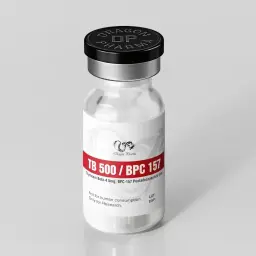
Sermorelin 5 mg is a lyophilized powder research peptide manufactured by Dragon Pharma, containing 5 mg of Sermorelin per 2 mL vial.
Sermorelin is a synthetic 29-amino-acid peptide corresponding to the first 29 amino acids of endogenous growth hormone-releasing hormone (GHRH). It acts as a GHRH receptor agonist on pituitary somatotroph cells, stimulating the synthesis and pulsatile release of endogenous growth hormone. This mechanism distinguishes it from exogenous HGH, which bypasses the pituitary entirely.
Sermorelin has a documented regulatory history in the United States. It was FDA-approved in 1997 under the brand name Geref for the treatment of idiopathic or organic growth hormone deficiency in children with growth failure. The product was voluntarily discontinued by its manufacturer in 2008 due to manufacturing and commercial viability challenges, not safety signals. Sermorelin remains available through compounding pharmacies with a valid prescription.
In non-medical bodybuilding and longevity contexts, Sermorelin is commonly referenced for its potential to support endogenous GH production, which may influence recovery, sleep quality, and body composition. Clinical research in older adults has shown that nightly sermorelin (500 mcg) increased IGF-1 by an average of 18% over 12 weeks. Sermorelin is not approved for bodybuilding or performance enhancement, and all such use falls outside approved indications.
Sermorelin 5 mg is supplied as a lyophilized (freeze-dried) powder in a 2 mL vial. This form requires reconstitution with a suitable solvent such as bacteriostatic water before use.
Sermorelin is a GHRH analog with a short half-life of approximately 4–5 minutes that stimulates pituitary GH secretion in a pulsatile manner.
Sermorelin binds to GHRH receptors on anterior pituitary somatotroph cells, stimulating both the synthesis and release of growth hormone. Unlike GHRP-class compounds that act on the ghrelin receptor, sermorelin acts through the GHRH receptor pathway. The two receptor systems act synergistically when co-administered.
The peptide's short half-life of approximately 4–5 minutes produces a transient GH pulse that mimics endogenous GHRH signaling. Sermorelin is reported to have no effect on prolactin, LH, FSH, insulin, cortisol, glucose, glucagon, or thyroid hormone levels. This selectivity distinguishes it from GHRPs like GHRP-2 and GHRP-6, which can elevate cortisol and prolactin.
Clinical research has examined sermorelin's effects on IGF-1. A study in healthy older adults found that 12 weeks of nightly sermorelin (500 mcg) increased IGF-1 by an average of 18% (from 142 ng/mL to 168 ng/mL). Sermorelin was also studied as a diagnostic agent for GH deficiency, with intravenous and subcutaneous administration stimulating GH secretion from the anterior pituitary.
Sermorelin's short half-life of approximately 4–5 minutes means it produces a transient GH pulse rather than sustained elevation. This pulsatile pattern is considered more physiologic than continuous GH exposure and may reduce side effects like water retention and insulin resistance compared to longer-acting GHRH analogs such as CJC-1295 with DAC.
Dragon Pharma offers several GH-axis compounds that are commonly referenced alongside Sermorelin 5 mg. CJC-DAC is a long-acting GHRH analog with a half-life of 5–8 days, producing sustained GH elevation rather than pulsatile release. Ipamorelin is a selective GHRP that acts on the ghrelin receptor and produces minimal cortisol or prolactin effects. CJC 1295 No DAC/Ipamorelin combines a short-acting GHRH analog with a GHRP for synergistic GH release. GHRP-2 and GHRP-6 are GHRP-class compounds that act on the ghrelin receptor. Sermorelin's GHRH receptor mechanism is complementary to these GHRP-class compounds.
The information below is provided for educational reference only. Sermorelin was previously FDA-approved for pediatric GH deficiency but is now available only as a compounded medication. Non-medical use falls outside approved indications.
In clinical research and community protocols, Sermorelin is commonly referenced at doses of 200–500 mcg administered subcutaneously, typically before bedtime to amplify the natural nocturnal GH pulse. A study in older adults used 500 mcg nightly for 12 weeks. Community protocols commonly reference starting at 200 mcg and titrating upward based on response.
| Use Case | Common Reference Range | Injection Frequency |
|---|---|---|
| Clinical study (older adults) | 500 mcg | Nightly for 12 weeks |
| Community standard | 300 mcg | Nightly, before bed |
| Community conservative start | 200 mcg | Nightly, before bed |
| Stacked with GHRP | 200 mcg Sermorelin + 100 mcg GHRP | Nightly |
Sermorelin is commonly stacked with GHRP-class peptides such as Ipamorelin or GHRP-2. The combination of a GHRH analog and a GHRP stimulates GH through complementary receptor pathways, producing a larger GH pulse than either alone. When stacked with a GHRP, sermorelin doses are often reduced to 200 mcg to avoid excessive GH stimulation.
Community protocols typically reference cycles of 8–12 weeks followed by a break. Bedtime administration is preferred to align with the natural nocturnal GH pulse. Bacteriostatic Water is commonly used for reconstitution.
Commonly reported side effects of Sermorelin include injection-site reactions (redness, pain, swelling), headaches, dizziness, nausea, and facial flushing. These effects are typically mild and transient, often resolving as the body adjusts.
Less common side effects include joint pain, hyperactivity or restlessness, sleep disturbances, and changes in appetite. Rare but serious side effects include severe allergic reactions (anaphylaxis), swelling of extremities (edema), carpal tunnel syndrome, and gynecomastia. Potential long-term risks in individuals with underlying conditions include diabetes risk, joint pain, acromegaly, and cardiovascular risks.
Sermorelin acts on the GHRH receptor in the pituitary and does not suppress the hypothalamic-pituitary-gonadal axis. It does not suppress endogenous testosterone production, and post-cycle therapy in the context of testosterone recovery is not applicable.
Dosing strategies for Sermorelin should be based on individual response and, where possible, medical guidance. The information above is for educational reference and does not constitute medical advice.
Sermorelin was previously FDA-approved as Geref but is now discontinued and available only as a compounded medication. It is not approved for bodybuilding or performance enhancement.
Sermorelin received FDA approval in September 1997 for treating growth hormone deficiency in children with short stature. The brand product Geref was voluntarily discontinued in 2008 due to manufacturing and commercial viability challenges, not safety concerns. Sermorelin remains available through compounding pharmacies with a valid prescription.
Sermorelin is not approved for use in adults for body composition or anti-aging indications. Any such use falls outside approved indications. The long-term safety of Sermorelin in adults has not been established through large-scale controlled trials.
Sermorelin is not approved for bodybuilding or performance enhancement. Any such use falls outside approved indications. Product concentration and laboratory verification do not establish that non-medical use is safe or appropriate for an individual.
Common side effects include injection site reactions, headaches, dizziness, nausea, and flushing. These are typically mild and transient.
Less common effects include joint pain, restlessness, sleep disturbances, and changes in appetite. Rare but serious effects include anaphylaxis, edema, carpal tunnel syndrome, and gynecomastia. Long-term risks in susceptible individuals may include diabetes, joint pain and swelling, acromegaly, and cardiovascular risks.
GHRH and its receptors may promote tumor growth in some contexts, though definitive evidence linking Sermorelin to cancer is lacking. Individuals with active or history of malignancy should exercise caution.
Populations of particular concern based on GH-axis compound class data include individuals with active or history of malignancy, uncontrolled diabetes or significant insulin resistance, acromegaly or conditions associated with excess GH/IGF-1, pregnancy or breastfeeding, active pituitary pathology, and known hypersensitivity to the compound or its excipients.
Individuals with diabetes or cardiovascular issues may be at higher risk of long-term side effects and may need closer monitoring.
In clinical settings, Sermorelin therapy may involve monitoring of IGF-1 levels to assess response and ensure levels remain within age-adjusted reference ranges. Blood glucose and HbA1c monitoring may also be appropriate given GH's effects on insulin sensitivity.
No published laboratory reports are available for this specific product. Product potency verification would apply to tested samples only and is separate from any clinical monitoring of the individual.
Lyophilized Sermorelin should be stored tightly sealed in its original container, protected from light, and kept desiccated at -20°C for long-term storage. After reconstitution, store refrigerated at 2–8°C and use within the period specified. Avoid repeated freeze-thaw cycles.
Keep all peptides and injectable products out of the reach of children. Follow the storage instructions provided with the product packaging.
Sermorelin 5 mg by Dragon Pharma is supplied through the official distribution chain and shipped in original manufacturer packaging with discreet, privacy-focused handling.
The outer shipping package remains discreet, with privacy-focused handling and no unnecessary external product details. Products are supplied through the official Dragon Pharma distribution chain.
To verify your Sermorelin 5 mg product, use the security code on the vial label and cross-check it on the Dragon Pharma official site. Official presentation, batch-linked lab proof when available, and original packaging help reinforce product legitimacy and buyer confidence.
For complete delivery details, tracking policy, and reshipment terms, please see our Shipping Info page.
Proper storage conditions help preserve peptide stability and overall product integrity throughout shelf life.
Store the lyophilized (dry) powder tightly sealed in its original container, protected from light, and desiccated at -20°C for long-term storage. Brief handling at refrigerated or ambient conditions is acceptable provided the container is allowed to equilibrate to room temperature before opening to prevent moisture uptake.
After reconstitution, store refrigerated at 2–8°C and use within the period specified. Avoid repeated freeze-thaw cycles.
Keep out of reach of children. Follow proper handling and sterile technique when administering the product.
Answers to common questions about Sermorelin 5 mg, its mechanism, product strength, and laboratory testing.
Sermorelin 5 mg contains sermorelin, a GHRH analog. It was previously FDA-approved for pediatric growth hormone deficiency. In non-medical contexts, it is commonly referenced for stimulating endogenous GH production and supporting recovery, sleep, and body composition, though such use falls outside approved indications.
Sermorelin is typically administered subcutaneously once nightly before bed, at doses of 200–500 mcg. The bedtime timing is intended to amplify the natural nocturnal GH pulse. Community protocols commonly reference 300 mcg as a standard nightly dose.
No. Sermorelin acts on the GHRH receptor in the pituitary and does not suppress the hypothalamic-pituitary-gonadal axis. It does not suppress endogenous testosterone production, and post-cycle therapy in the context of testosterone recovery is not applicable.
Sermorelin binds to GHRH receptors on pituitary somatotroph cells, stimulating the synthesis and pulsatile release of endogenous growth hormone. It has a short half-life of approximately 4–5 minutes and is reported to have no effect on prolactin, cortisol, or other pituitary hormones.
The GH pulse from a single Sermorelin injection is transient due to its short half-life of 4–5 minutes. Effects on IGF-1 develop over weeks. A study in older adults found that 12 weeks of nightly sermorelin (500 mcg) increased IGF-1 by an average of 18%.
There is no single “best” GHRH analog. Sermorelin has a short half-life and a documented FDA approval history. CJC-DAC has a much longer half-life of 5–8 days, producing sustained rather than pulsatile GH elevation. The appropriate choice depends on individual goals and risk tolerance.
Sermorelin has a short half-life of 4–5 minutes and produces a transient GH pulse. CJC-1295 with DAC has a half-life of 5–8 days and produces sustained GH elevation. Sermorelin has a historical FDA approval, while CJC-1295 does not.
Sermorelin acts on the GHRH receptor, while Ipamorelin acts on the ghrelin receptor. The two mechanisms are complementary and are often stacked for synergistic GH release. Ipamorelin is selective for GH and has minimal effects on cortisol or prolactin.
500 mcg is the dose used in a clinical study of older adults that produced an 18% increase in IGF-1 over 12 weeks. Community protocols commonly reference 200–300 mcg as a standard dose, with 500 mcg at the higher end of the reference range.
Sermorelin 5 mg is labeled at 5 mg of Sermorelin per vial. It is supplied as a lyophilized powder in a 2 mL vial, requiring reconstitution before use.
No published laboratory report is currently available for this specific product. Product potency and purity verification would apply to tested samples only and should not be interpreted as a measurement of every vial or production batch.
Lyophilized Sermorelin is typically reconstituted with a suitable solvent such as Bacteriostatic Water or sterile water. The volume of solvent added determines the concentration of the resulting solution. Proper sterile technique should be used during reconstitution.