
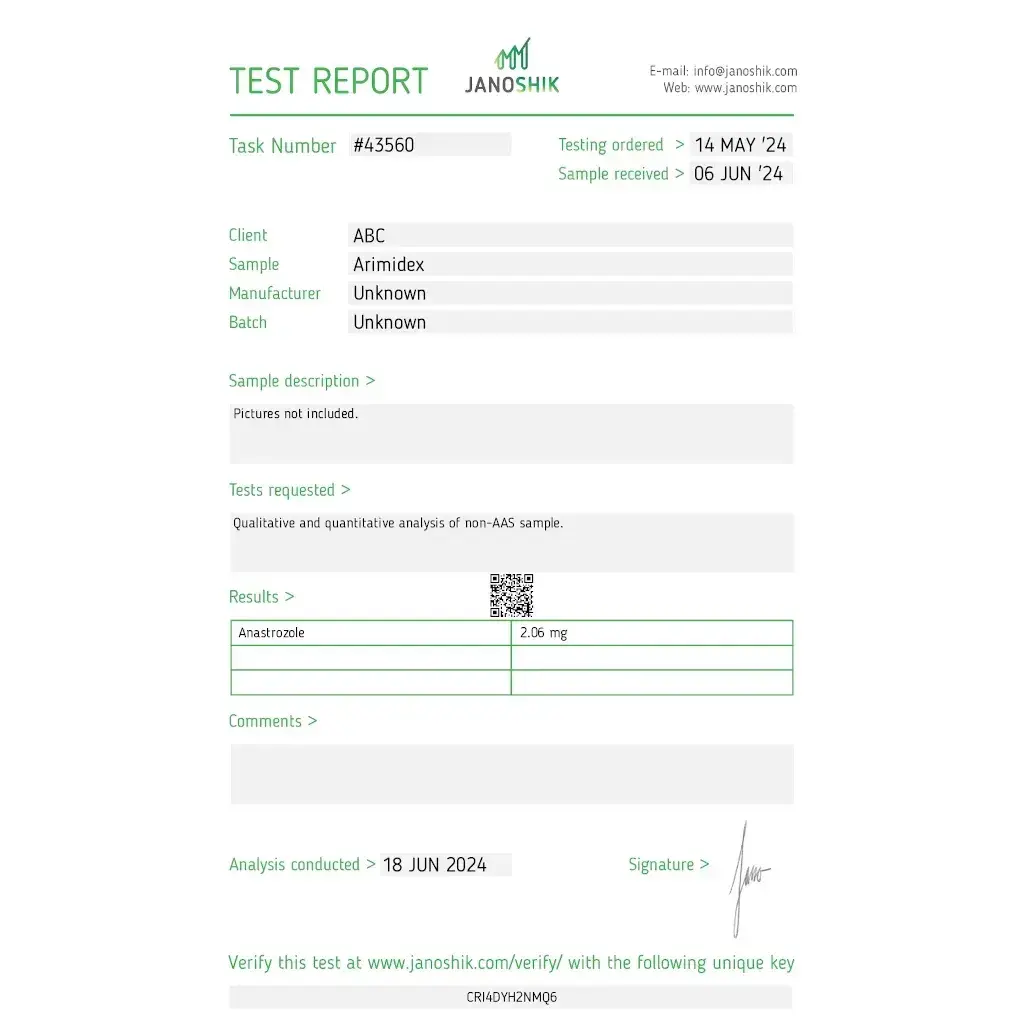
Arimidex 2 mg is an oral tablet containing anastrozole manufactured by Stealth Labs, supplied as 2 mg per tablet in a 100-tablet package.
Arimidex 2 mg contains anastrozole, a third-generation non-steroidal aromatase inhibitor. It is FDA-approved only for specific breast cancer indications in postmenopausal women: adjuvant treatment of hormone receptor-positive early breast cancer, first-line treatment of locally advanced or metastatic breast cancer, and treatment of advanced breast cancer following disease progression on tamoxifen. It is not approved for use in men, for athletic performance enhancement, or for bodybuilding purposes.
Anastrozole works by inhibiting the aromatase enzyme, which converts androgens to estrogens. In clinical settings, this reduces estrogen levels in postmenopausal women whose primary source of estrogen is peripheral aromatization of adrenal androgens. In non-medical bodybuilding contexts, anastrozole is used illicitly to mitigate estrogenic side effects of aromatizing anabolic steroids, with a commonly referenced dose of 0.5 mg twice weekly during a cycle. However, this use falls outside approved indications, and the FDA has issued no guidelines for this purpose.
Anastrozole carries significant risks even at approved doses. FDA labeling warns of decreased bone mineral density, increased cholesterol, and increased ischemic cardiovascular events in women with pre-existing heart disease. A forum analysis of steroid users found that anastrozole was used at a mean dose of 0.4 mg over a median of 70 days, with reported adverse drug reactions including decreased libido, erectile dysfunction, acne, and joint pain. As a research chemical product sold outside the pharmaceutical supply chain, this formulation has not undergone FDA review for purity, sterility, or actual content.
Arimidex 2 mg is supplied as oral tablets. The FDA-approved dosage for the 1 mg tablet is one tablet taken once daily for breast cancer indications. This 2 mg strength is not an FDA-approved dosage form for any indication.
Anastrozole is a potent and selective third-generation aromatase inhibitor with approved indications limited to postmenopausal breast cancer.
Anastrozole is a benzyltriazole compound that acts as a potent and selective inhibitor of aromatase, the enzyme responsible for converting androgens to estrogens. It is classified as a third-generation non-steroidal aromatase inhibitor. In postmenopausal women, the primary source of circulating estrogens is peripheral conversion of adrenal androgens by aromatase, making aromatase inhibition an effective strategy for estrogen deprivation.
The FDA-approved dose is one 1 mg tablet taken once daily, with or without food. No dosage adjustment is required for renal impairment or elderly patients, and no changes are recommended for mild-to-moderate hepatic impairment.
In non-medical contexts, anastrozole is used illicitly by bodybuilders to manage estrogenic side effects from aromatizing steroids, typically at 0.5 mg twice weekly. This use is not recommended, and many high-estrogen side effects resolve once the offending steroids are stopped.
Anastrozole is FDA-approved only for postmenopausal women with hormone receptor-positive breast cancer. It is not approved for use in men, for athletic performance enhancement, or for bodybuilding purposes.
Stealth Labs offers Tamoxifen as another estrogen-modulating agent used in non-medical contexts. Unlike anastrozole, which inhibits aromatase enzyme activity, tamoxifen is a selective estrogen receptor modulator (SERM) that blocks estrogen at the receptor level.
Compared to Clomid, another SERM commonly referenced in post-cycle therapy, anastrozole works through a fundamentally different mechanism. Anastrozole reduces estrogen production, while SERMs modulate estrogen receptor activity.
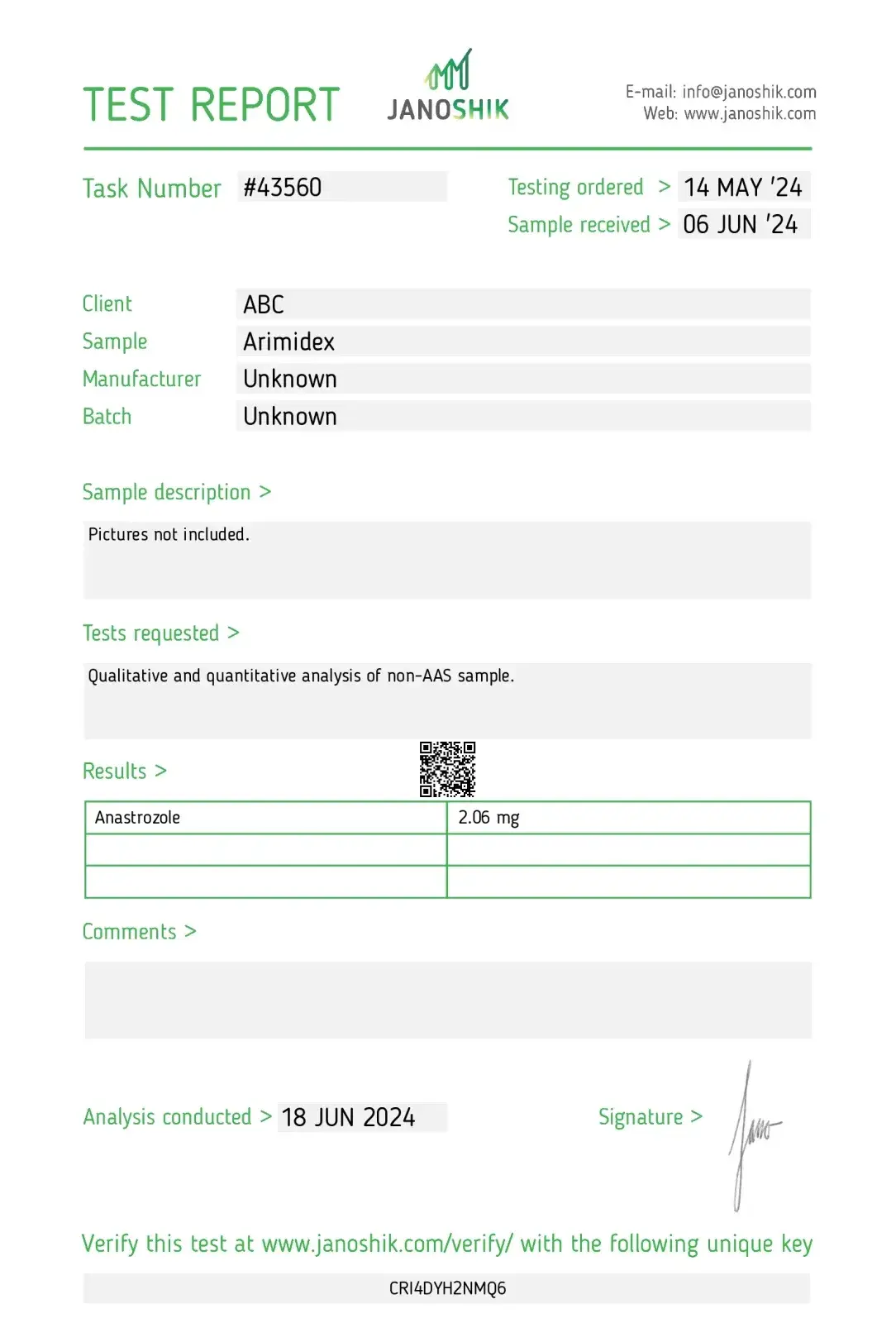
Published laboratory reports for Arimidex 2 mg are shown below with the test date, measured concentration and percentage of the product's 2 mg label claim.
 View Report
Laboratory results apply to the specific tested sample represented in each published report and should not be interpreted as a measurement of every vial or production batch.
The information below is provided for educational reference only. Anastrozole is a prescription medication; medical use requires appropriate diagnosis, clinical supervision and ongoing monitoring. This research chemical product is not for human use, and non-medical use falls outside approved indications.
The FDA-approved dose of anastrozole is one 1 mg tablet taken once daily for breast cancer indications in postmenopausal women. In non-medical bodybuilding contexts, anastrozole is commonly referenced at 0.5 mg twice weekly during an anabolic steroid cycle, starting from week two. A forum analysis of steroid users found a mean dose of 0.4 mg over a median of 70 days. These figures are anecdotal and lack clinical validation for non-medical use.
| Use Case | Reference Range | Frequency |
|---|---|---|
| Breast cancer (FDA-approved) | 1 mg daily | Once daily |
| Non-medical reference | 0.5 mg per dose | Twice weekly |
| Forum-reported mean | 0.4 mg daily | Daily |
In non-medical bodybuilding contexts, anastrozole is sometimes used alongside aromatizing anabolic steroids such as testosterone. It may be referenced in combination with Testosterone Enanthate or Testosterone Cypionate. However, anastrozole is not FDA-approved for this purpose, and taking it for bodybuilding is not recommended.
Because anastrozole suppresses estrogen production, excessive dosing can lead to "crashed" estradiol levels, which are associated with loss of libido, joint pain, mood disturbances, and adverse lipid changes. Recovery from crashed estradiol can take weeks after stopping the medication due to its long half-life.
FDA labeling for anastrozole includes warnings for ischemic cardiovascular events, bone mineral density loss, and elevated cholesterol. In the ATAC trial, patients receiving anastrozole had a mean decrease in lumbar spine and total hip bone mineral density compared to baseline. More patients receiving anastrozole had elevated serum cholesterol compared to tamoxifen (9% versus 3.5%).
In women with pre-existing ischemic heart disease, an increased incidence of ischemic cardiovascular events was observed with anastrozole (17%) compared to tamoxifen (10%). Common adverse reactions include hot flashes, asthenia, arthritis, pain, arthralgia, hypertension, depression, nausea, rash, osteoporosis, fractures, and back pain.
In non-medical users, forum analyses have reported decreased libido, erectile dysfunction, acne, and joint pain as common adverse effects.
Anastrozole is not a compound that requires post-cycle therapy in the traditional sense, as it is not an anabolic steroid. In non-medical contexts, it may be discontinued after the offending aromatizing compounds are cleared. However, recovery from suppressed estradiol can take time, and estrogen levels should be allowed to normalize.
Dosing strategies, support compounds and recovery protocols should be adjusted based on medical supervision and bloodwork where possible. The information above is for educational reference and does not constitute medical advice. This research chemical is not for human use.
Anastrozole is an FDA-approved prescription medication for postmenopausal breast cancer. It is not approved for use in men or for non-medical purposes. This research chemical product is not FDA-regulated and is not for human use.
Anastrozole is contraindicated in women who are or may become pregnant, as it may cause fetal harm. It is also contraindicated in patients with hypersensitivity to anastrozole or any excipients, with observed reactions including anaphylaxis, angioedema, and urticaria.
Anastrozole is not approved for use in men, and efficacy has not been demonstrated for pubertal boys with gynecomastia. Use in men for any purpose is off-label and not supported by FDA-approved labeling.
This product is sold as a research chemical and is not approved for human use in this form. Products sold online under the name Arimidex through research compound vendors are not FDA-regulated, have no verified manufacturing standards, and carry unknown contamination, dosing, and safety risks.
Common adverse reactions in women taking anastrozole for breast cancer include hot flashes, asthenia, arthritis, pain, arthralgia, hypertension, depression, nausea, vomiting, rash, osteoporosis, fractures, back pain, insomnia, headache, peripheral edema, and lymphedema.
Bone effects are significant. Patients receiving anastrozole had a mean decrease in both lumbar spine and total hip bone mineral density compared to baseline. Cholesterol elevation has also been reported. In women with pre-existing ischemic heart disease, an increased incidence of ischemic cardiovascular events was observed.
In non-medical users, adverse effects include decreased libido, erectile dysfunction, acne, joint pain, and visual disturbances. Crashed estradiol from over-dosing can cause prolonged loss of libido and mood disturbances.
Anastrozole should be used with caution in patients with pre-existing ischemic heart disease due to increased cardiovascular event risk. Bone mineral density monitoring should be considered. Cholesterol monitoring is also advised.
Anastrozole has not been studied in patients with severe hepatic impairment.
Medically supervised anastrozole therapy typically involves monitoring of bone mineral density and serum cholesterol. In non-medical contexts, estradiol levels are often monitored to avoid over-suppression, though the optimal range is not clinically defined for this use.
Laboratory testing of the product itself, such as the published potency report shown in the Lab Reports tab, is separate from clinical monitoring of the person using the medication. Product testing does not assess individual health status or suitability for use.
Oral tablets should be stored at controlled room temperature (15–25°C) in the original packaging, protected from excessive heat, moisture, and direct light. Keep out of reach of children.
Arimidex 2 mg is supplied through the official Stealth Labs distribution chain and shipped in original manufacturer packaging with discreet, privacy-focused handling.
The outer shipping package remains discreet, with privacy-focused handling and no unnecessary external product details. Products are supplied through the official Stealth Labs distribution chain.
To verify your Arimidex 2 mg product, use the security code on the package label and cross-check it on the Stealth Labs official site. Official Stealth Labs presentation, batch-linked lab proof, and original packaging help reinforce product legitimacy and buyer confidence.
For complete delivery details, tracking policy, and reshipment terms, please see our Shipping Info page.
Proper storage conditions help preserve tablet stability and overall product integrity throughout shelf life.
Store at controlled room temperature (15–25°C) in the original packaging, protected from excessive heat, moisture, and direct light. Keep the container tightly closed when not in use.
Do not use if tablets appear discolored, crumbled, or otherwise abnormal. Keep out of reach of children.
Answers to common questions about Arimidex 2 mg, its research status, clinical data, and laboratory testing.
Arimidex 2 mg contains anastrozole, which is FDA-approved only for postmenopausal women with hormone receptor-positive breast cancer. It is not approved for use in men, for athletic performance enhancement, or for bodybuilding purposes. In non-medical contexts, it is used illicitly to manage estrogenic side effects of aromatizing anabolic steroids.
The FDA-approved dose is one 1 mg tablet taken once daily for breast cancer indications. In non-medical bodybuilding contexts, anastrozole is commonly referenced at 0.5 mg twice weekly during a cycle. No dosing recommendation can be made for this research chemical product, as it is not FDA-approved for human use in the form sold.
Anastrozole is not an anabolic steroid and does not suppress endogenous testosterone production in the same way. Post-cycle therapy is not required for anastrozole itself. However, in non-medical contexts where it is used alongside aromatizing steroids, any PCT protocol would be determined by the other compounds used.
Anastrozole is a potent and selective third-generation aromatase inhibitor. It works by inhibiting the aromatase enzyme, which converts androgens to estrogens, thereby reducing estrogen levels. In postmenopausal women, this is the primary mechanism for estrogen deprivation in breast cancer treatment.
Anastrozole produces rapid estrogen suppression. In clinical settings, the effects on estrogen levels are observed relatively quickly, though the therapeutic benefits in breast cancer treatment are assessed over longer periods. The time required to notice effects depends on the individual and the specific outcome being evaluated.
There is no single aromatase inhibitor that is universally best. Anastrozole is a well-established third-generation inhibitor with proven efficacy in breast cancer. Other aromatase inhibitors such as letrozole and exemestane also exist. The appropriate choice depends on the clinical circumstances.
Anastrozole is an aromatase inhibitor that reduces estrogen production, while Tamoxifen is a selective estrogen receptor modulator (SERM) that blocks estrogen at the receptor level. They have different mechanisms of action and different side effect profiles. Anastrozole is associated with bone loss and fractures, while tamoxifen is associated with increased risk of endometrial cancer and thromboembolic events.
Anastrozole is an aromatase inhibitor, while Clomid is a selective estrogen receptor modulator (SERM). They have fundamentally different mechanisms of action. Anastrozole reduces estrogen production by inhibiting the aromatase enzyme; Clomid modulates estrogen receptor activity. Both are used in non-medical contexts, but for different purposes.
The FDA-approved dose of anastrozole is 1 mg once daily. A 2 mg tablet is not an approved dosage form for any indication. In non-medical contexts, doses as low as 0.5 mg twice weekly are commonly referenced. It is also important to distinguish a dose from a product's tablet strength. Arimidex 2 mg indicates 2 mg per tablet; that strength does not by itself specify how much should be taken.
Arimidex 2 mg is labeled at 2 mg of anastrozole per tablet. It is supplied as oral tablets in a 100-tablet package.
Yes. A published laboratory report dated June 18, 2024 measured Arimidex 2 mg at 2.06 mg, equivalent to 103.00% of its 2 mg label claim. The complete report can be viewed in the Lab Reports tab. Laboratory results apply to the tested sample represented by the individual report.
In non-medical bodybuilding contexts, anastrozole is sometimes used alongside aromatizing anabolic steroids. However, it is not FDA-approved for this purpose, and taking it for bodybuilding is not recommended. FDA labeling advises against combining anastrozole with tamoxifen, as no additional benefit was seen over tamoxifen monotherapy.