
Tamoxifen 40 mg is an oral tamoxifen citrate tablet manufactured by Stealth Labs and dosed at 40 mg per tablet in a 100-tablet pack.
Tamoxifen 40 mg contains tamoxifen citrate, a selective estrogen receptor modulator (SERM) that has been used in clinical medicine for decades. In medical practice, tamoxifen is approved for the treatment and prevention of estrogen receptor-positive breast cancer in women. In non-medical bodybuilding settings, tamoxifen is commonly referenced for its anti-estrogenic properties, particularly in the context of managing estrogen-related side effects from anabolic steroid use and in post-cycle therapy protocols.
Tamoxifen works by binding to estrogen receptors in target tissues, where it acts as an antagonist in breast tissue while exhibiting mixed agonist/antagonist activity depending on the tissue. This mechanism allows it to block estrogen's effects in certain tissues without eliminating estrogen entirely. In male bodybuilders, tamoxifen is commonly referenced off-label for preventing or reducing gynecomastia (gyno) and as part of comprehensive post-cycle hormone recovery programs.
While tamoxifen's medical applications are well established in oncology, its use for physique or performance enhancement falls outside approved medical indications. Non-medical use should be considered in the context of potential adverse effects, including thromboembolic risk, which is a documented concern with tamoxifen therapy.
Tamoxifen citrate is a non-steroidal selective estrogen receptor modulator with a well-characterized pharmacological profile. Its primary mechanism involves competitive binding to estrogen receptors, with tissue-specific effects that distinguish it from both aromatase inhibitors and pure anti-estrogens.
Tamoxifen belongs to the SERM class of compounds, which are characterized by their ability to produce estrogen-like or anti-estrogenic effects depending on the target tissue. In breast tissue, tamoxifen acts as an estrogen antagonist, blocking estrogen's proliferative effects. This is the basis for its approved use in breast cancer treatment and prevention.
After oral administration, tamoxifen is extensively metabolized by cytochrome P450 enzymes, including CYP3A, CYP2D6, CYP2C9, and CYP2C19. The metabolites N-desmethyltamoxifen and endoxifen are pharmacologically active, with endoxifen demonstrating significantly greater potency at the estrogen receptor than the parent compound.
Following a single 20 mg oral dose, tamoxifen reaches an average peak plasma concentration of approximately 40 ng/mL, with steady-state concentrations achieved after several weeks of daily administration.
Unlike aromatase inhibitors that reduce estrogen production, tamoxifen blocks estrogen's effects at the receptor level in specific tissues. This distinction is important: tamoxifen does not lower circulating estrogen levels but rather modulates their activity in target tissues.
Stealth Labs offers several products that are commonly referenced alongside tamoxifen in non-medical bodybuilding contexts. For managing estrogen-related side effects during cycles, Arimidex is an aromatase inhibitor that reduces estrogen production, representing a different approach than tamoxifen's receptor blockade.
For post-cycle therapy, Clomid is another SERM frequently compared to tamoxifen. Both compounds are used to support endogenous testosterone recovery, though they differ in their receptor selectivity and side effect profiles. Tamoxifen is often referenced for its breast tissue protection, while Clomid is noted for its effects on LH and FSH signaling.
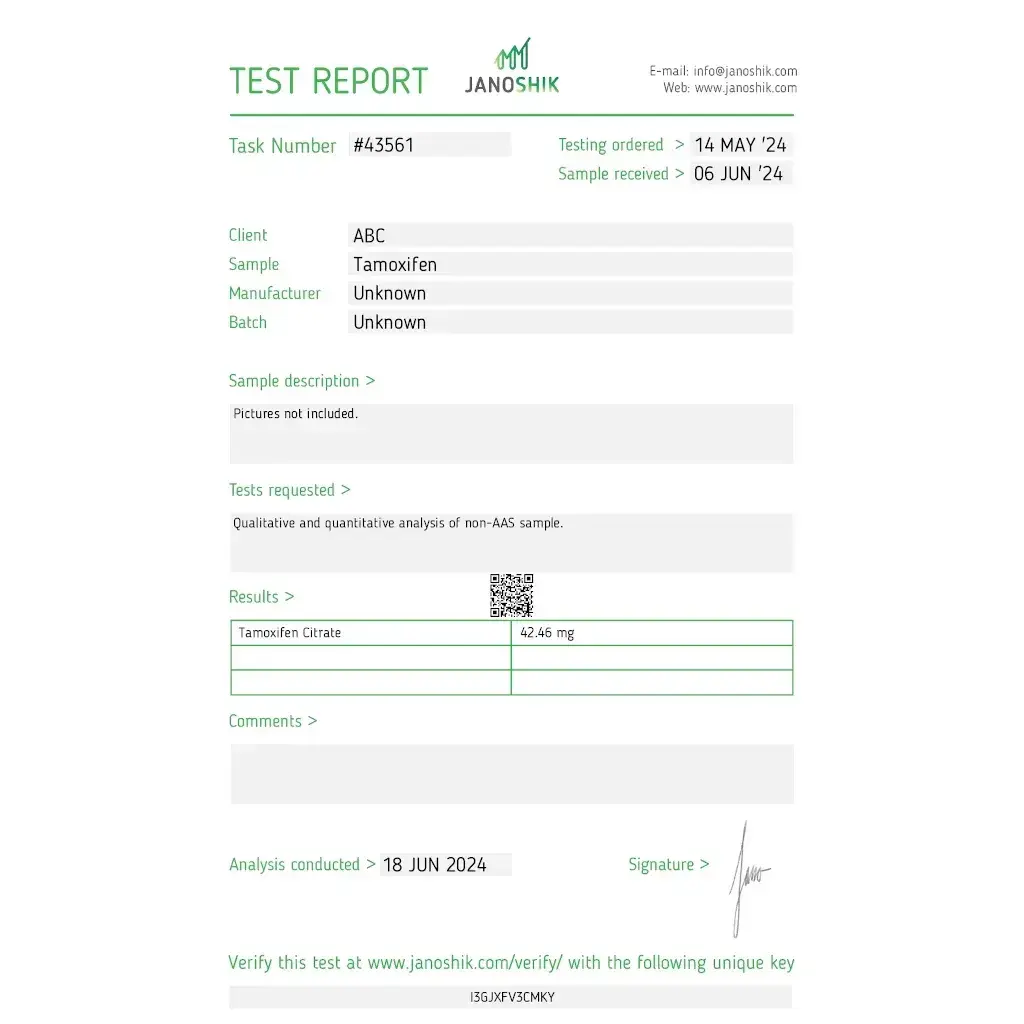
Published laboratory reports for Tamoxifen 40 mg are shown below with the test date, measured content and percentage of the product's 40 mg label claim.
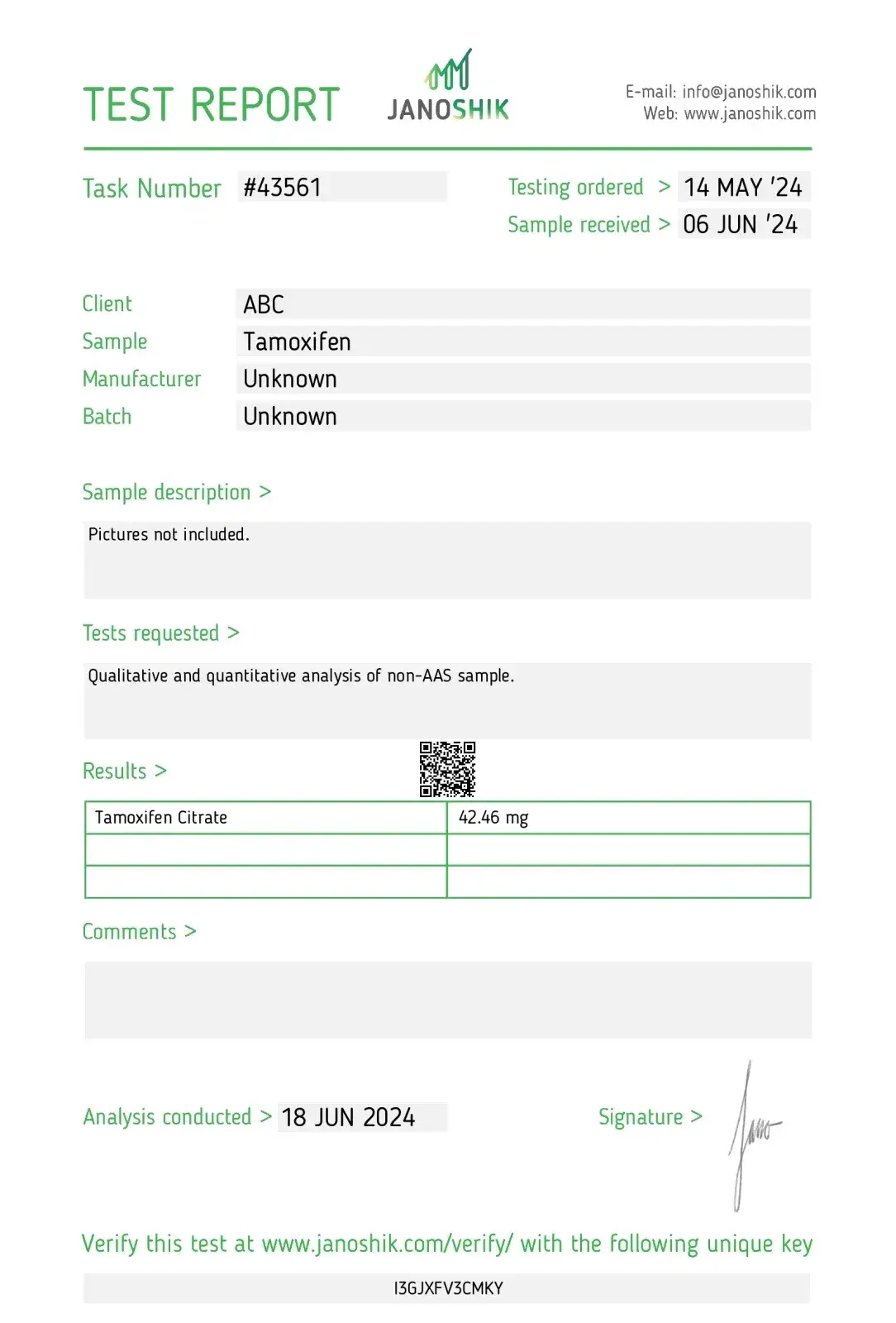 View Report
Laboratory results apply to the specific tested sample represented in each published report and should not be interpreted as a measurement of every tablet or production batch.
The information below is provided for educational reference only. Tamoxifen is a prescription medication; medical use requires appropriate diagnosis, clinical supervision and ongoing monitoring. Non-medical use falls outside approved indications.
In medically supervised settings, tamoxifen dosing varies by indication. For breast cancer treatment, the standard adult dose is 20–40 mg daily, divided into one or two administrations. In non-medical bodybuilding contexts, tamoxifen is commonly referenced at dosages of 10–40 mg per day depending on the intended purpose, whether for on-cycle estrogen management or post-cycle therapy.
| Use Case | Common Reference Range | Frequency |
|---|---|---|
| Medical (breast cancer) | 20–40 mg daily | Once or twice daily |
| On-cycle (non-medical) | 10–20 mg daily | Once daily |
| PCT (non-medical) | 20–40 mg daily | Once daily, tapered |
In non-medical bodybuilding contexts, tamoxifen is commonly referenced either during a cycle to manage estrogen-related side effects or as part of post-cycle therapy. When used on-cycle, it is typically employed at lower doses for gynecomastia prevention in individuals who are prone to estrogenic side effects.
For post-cycle recovery, tamoxifen is often used alongside or compared to Clomid, with some protocols incorporating both SERMs for complementary effects on hormonal recovery. Cycle structure and support protocols should be considered in the context of individual experience, health status and bloodwork where possible.
Tamoxifen is associated with several potential side effects that should be considered. Thromboembolic events, including deep vein thrombosis and pulmonary embolism, are documented risks with tamoxifen therapy and may be relevant in the context of non-medical use. Other commonly reported effects include hot flashes, fatigue, and mood changes.
For individuals using tamoxifen in non-medical contexts, monitoring for signs of thromboembolic events and being aware of potential drug interactions is important. Tamoxifen is metabolized by CYP2D6, and concurrent use of strong CYP2D6 inhibitors may affect its metabolism.
After completing a cycle of suppressive compounds, post-cycle therapy is commonly referenced in non-medical bodybuilding contexts to support restoration of endogenous testosterone production. Tamoxifen is one of the SERMs most frequently cited for this purpose, typically at dosages of 20–40 mg daily for 3–4 weeks, often with a tapering approach.
PCT protocols vary based on cycle length, compounds used and individual factors. Bloodwork and, where possible, medical guidance can help inform recovery strategy.
Dosing strategies, support compounds and recovery protocols should be adjusted based on experience level and bloodwork where possible. The information above is for educational reference and does not constitute medical advice.
Tamoxifen is a prescription medication with a well-documented safety profile established through decades of clinical use. Medical tamoxifen therapy requires appropriate diagnosis, clinical supervision and ongoing monitoring.
Tamoxifen carries a boxed warning for increased risk of uterine malignancies, including endometrial cancer and uterine sarcoma, in women taking the medication. The risk is primarily observed in women over 50 and increases with duration of use.
Thromboembolic events, including stroke, deep vein thrombosis and pulmonary embolism, are also documented risks with tamoxifen therapy. These risks are relevant considerations in any context of tamoxifen use.
Tamoxifen's approved indications are limited to breast cancer treatment and risk reduction in high-risk women. Use for bodybuilding, performance enhancement, or post-cycle therapy falls outside approved medical indications and should be considered in the context of documented safety concerns, including thromboembolic and uterine risks.
The most commonly reported side effect of tamoxifen is hot flashes, experienced by approximately 40% of women in clinical trials. Vaginal discharge, fatigue, and mood disturbances are also commonly reported.
Serious adverse effects include increased risk of endometrial cancer, uterine sarcoma, and thromboembolic events. Visual disturbances, including cataracts and retinal changes, have been reported and may require ophthalmic evaluation.
In men, there is limited reliable information on tamoxifen's side effect profile, though some evidence suggests long-term use may be associated with weight gain and sexual dysfunction.
Tamoxifen is contraindicated in pregnancy and should not be used by women who are pregnant or breastfeeding. Individuals with a history of thromboembolic events or known thrombophilia should discuss tamoxifen use with a healthcare professional.
Pre-existing visual problems, liver disease, and abnormal blood counts should be evaluated before tamoxifen use. Any unusual gynecological symptoms, particularly vaginal bleeding, require prompt medical evaluation.
Medical tamoxifen therapy typically involves regular follow-up to monitor for adverse effects, including gynecological evaluation and ophthalmic examinations where appropriate. Laboratory monitoring may include blood counts and liver function tests.
Laboratory testing of the product itself, such as the published potency report shown in the Lab Reports tab, is separate from clinical monitoring of the person using tamoxifen.
Store in the original packaging, protected from excessive heat, moisture and direct light. Keep all medications out of the reach of children. Follow the storage instructions provided with the product packaging.
Tamoxifen 40 mg is supplied through the official Stealth Labs distribution chain and shipped in original manufacturer packaging with discreet, privacy-focused handling.
The outer shipping package remains discreet, with privacy-focused handling and no unnecessary external product details. Products are supplied through the official Stealth Labs distribution chain.
To verify your Tamoxifen 40 mg product, use the security code on the product packaging and cross-check it on the Stealth Labs official site. Official Stealth Labs presentation, batch-linked lab proof, and original packaging help reinforce product legitimacy and buyer confidence.
For complete delivery details, tracking policy, and reshipment terms, please see our Shipping Info page.
Proper storage conditions help preserve product integrity and ensure the tablets remain suitable for their intended use throughout their shelf life.
Store tamoxifen tablets in a cool, dry place away from direct sunlight and excessive heat. Keep the tablets in their original packaging until use to protect them from moisture and contamination.
Do not store in areas subject to temperature extremes, such as bathrooms or near kitchen appliances. Keep out of reach of children and pets.
Answers to common questions about Tamoxifen 40 mg, tamoxifen citrate, its mechanisms, dosage considerations and laboratory testing.
Tamoxifen 40 mg contains tamoxifen citrate, a selective estrogen receptor modulator. In medical practice, tamoxifen is approved for the treatment and prevention of estrogen receptor-positive breast cancer in women. In non-medical bodybuilding settings, it is commonly referenced for managing estrogen-related side effects and in post-cycle therapy protocols, though such use falls outside approved medical indications.
In medical settings, tamoxifen is typically administered once or twice daily depending on the indication, with total daily doses ranging from 20–40 mg. In non-medical contexts, tamoxifen is commonly referenced at dosages of 10–40 mg per day, either as a single daily dose or split into two administrations.
Tamoxifen itself is commonly used as a component of post-cycle therapy in non-medical bodybuilding contexts, rather than requiring its own PCT. After suppressive steroid cycles, tamoxifen is referenced for supporting endogenous testosterone recovery, typically at 20–40 mg daily for 3–4 weeks with a tapering approach. For comparing SERM options, Clomid is another compound frequently referenced in PCT protocols.
Tamoxifen citrate is a selective estrogen receptor modulator that binds to estrogen receptors, acting as an antagonist in breast tissue while exhibiting mixed agonist/antagonist effects in other tissues. This mechanism underlies its medical use in breast cancer treatment and prevention. In non-medical contexts, it is referenced for blocking estrogen's effects at the receptor level, particularly in breast tissue.
Following oral administration, tamoxifen reaches peak plasma concentrations at approximately 5 hours, with steady-state levels achieved after several weeks of daily dosing. In medical contexts, therapeutic effects in breast cancer treatment are typically assessed over months rather than days. In non-medical settings, the onset of effects for estrogen management would depend on the specific context and individual response.
There is no single SERM that is universally best. Tamoxifen has the most extensive clinical evidence base of any SERM, with decades of data supporting its use in breast cancer treatment and prevention. Other SERMs such as clomiphene have different receptor selectivity profiles and side effect characteristics, which may make one more suitable than another depending on the specific context.
Both tamoxifen and clomiphene are SERMs, but they differ in receptor selectivity and effects. Tamoxifen is often referenced for its breast tissue protection and is used in medical settings for breast cancer. Clomiphene is more commonly referenced for stimulating LH and FSH output. In non-medical PCT contexts, some protocols incorporate both compounds for complementary effects. Clomid by Stealth Labs offers an alternative SERM option.
Tamoxifen and Arimidex (anastrozole) work through entirely different mechanisms. Tamoxifen is a SERM that blocks estrogen receptors, while anastrozole is an aromatase inhibitor that reduces estrogen production by blocking the aromatase enzyme. This fundamental difference means they have distinct applications and side effect profiles. Arimidex represents the aromatase inhibitor approach to estrogen management.
In medical contexts, 40 mg daily represents the upper end of the standard dosing range for tamoxifen, with 20 mg daily being the most common maintenance dose. In non-medical bodybuilding contexts, 40 mg is commonly referenced in post-cycle therapy protocols, particularly during the initial phase before tapering. Whether any dose is appropriate depends on the specific context and individual factors.
Tamoxifen 40 mg is labeled at 40 mg of tamoxifen citrate per tablet. It is supplied as 100 oral tablets per package, giving 4,000 mg of total labeled content.
Yes. A published laboratory report dated June 18, 2024 measured Tamoxifen 40 mg at 42.46 mg per tablet, equivalent to 106.15% of its 40 mg label claim. The complete report can be viewed in the Lab Reports tab. Laboratory results apply to the tested sample represented by the individual report.