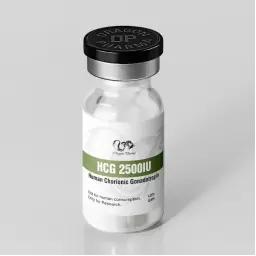
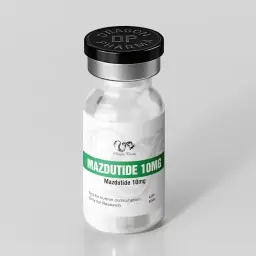
Mazdutide 10 mg is a lyophilized research peptide manufactured by Stealth Labs, supplied as 10 mg/vial of mazdutide in a 2 mL vial.
Mazdutide 10 mg is a long-acting synthetic peptide that functions as a dual glucagon-like peptide-1 (GLP-1) and glucagon receptor agonist. It is based on the endogenous peptide hormone oxyntomodulin and contains a fatty acyl side chain to extend its duration of action, allowing for once-weekly subcutaneous dosing. Mazdutide is approved in China for weight management and glycemic control but is not FDA-approved for any indication in the United States.
Mazdutide has potent binding affinity to both human GLP-1 and glucagon receptors. This dual mechanism is designed to leverage the anorexic and energy-regulating effects of glucagon activity alongside the established metabolic benefits of GLP-1 receptor agonism. Clinical trials have demonstrated dose-dependent, clinically meaningful reductions in body weight, waist circumference, and HbA1c, along with improvements in blood pressure, lipid profiles, and liver enzymes.
In the GLORY-2 Phase 3 trial, mazdutide 9 mg achieved a mean weight reduction of 18.55% at 60 weeks in Chinese adults with obesity, with 44% of participants achieving at least 20% weight reduction. A US-based Phase 2 trial reported a mean body weight reduction of 18.1% at week 32 with mazdutide 16 mg. The most common adverse events are gastrointestinal, predominantly nausea, vomiting, and diarrhea, mostly mild to moderate and transient.
Mazdutide 10 mg is supplied as a lyophilized (freeze-dried) powder in a 2 mL glass vial. Reconstitution with an appropriate solvent is required before use in research applications.
Mazdutide is a dual GLP-1/glucagon receptor agonist peptide developed for weight management and metabolic control, currently approved in China but not in the United States.
Mazdutide is a fatty acid-modified oxyntomodulin analog with dual agonism on GLP-1R and glucagon receptor (GCGR), developed for once-weekly subcutaneous administration to treat type 2 diabetes and obesity. The addition of glucagon activity on the basis of GLP-1R agonism is expected to provide additional weight-reduction and metabolic benefits through glucagon's anorexic effect and its regulation of energy homeostasis by lipid and protein catabolism.
Unlike earlier glucagon receptor antagonists that were explored for diabetes, glucagon is now being deliberately harnessed through balanced co-agonism with GLP-1, allowing its broader metabolic actions—including hepatic fatty acid β oxidation, ketogenesis, and increased energy expenditure—to be therapeutically exploited without compromising glycemic control. This represents a shift toward multihormone receptor modulators (MHRMs) in metabolic medicine.
Mazdutide has been studied across multiple Phase 1, 2, and 3 clinical trials, primarily in Chinese populations, with emerging data from US-based trials. The most common adverse events are gastrointestinal, consistent with the GLP-1 receptor agonist class.
Mazdutide (2 mg, 4 mg, and 6 mg doses) received approval in China for long-term weight management in June 2025, and for glycemic control in adults with type 2 diabetes in September 2025. It is not FDA-approved for any indication in the United States. Products sold in the US under the name mazdutide are research compounds not regulated by the FDA.
Stealth Labs offers Cagrilintide and Survodutide as other research peptides commonly referenced in metabolic research contexts. Unlike mazdutide, which targets GLP-1 and glucagon receptors, cagrilintide is an amylin analogue that targets amylin and calcitonin receptors.
Compared to TB 500, which is a thymosin beta-4 fragment studied for tissue healing, mazdutide is a metabolic peptide with a distinct mechanism of action targeting appetite regulation and energy homeostasis. Both are lyophilized powders requiring reconstitution, and neither is FDA-approved for human use.
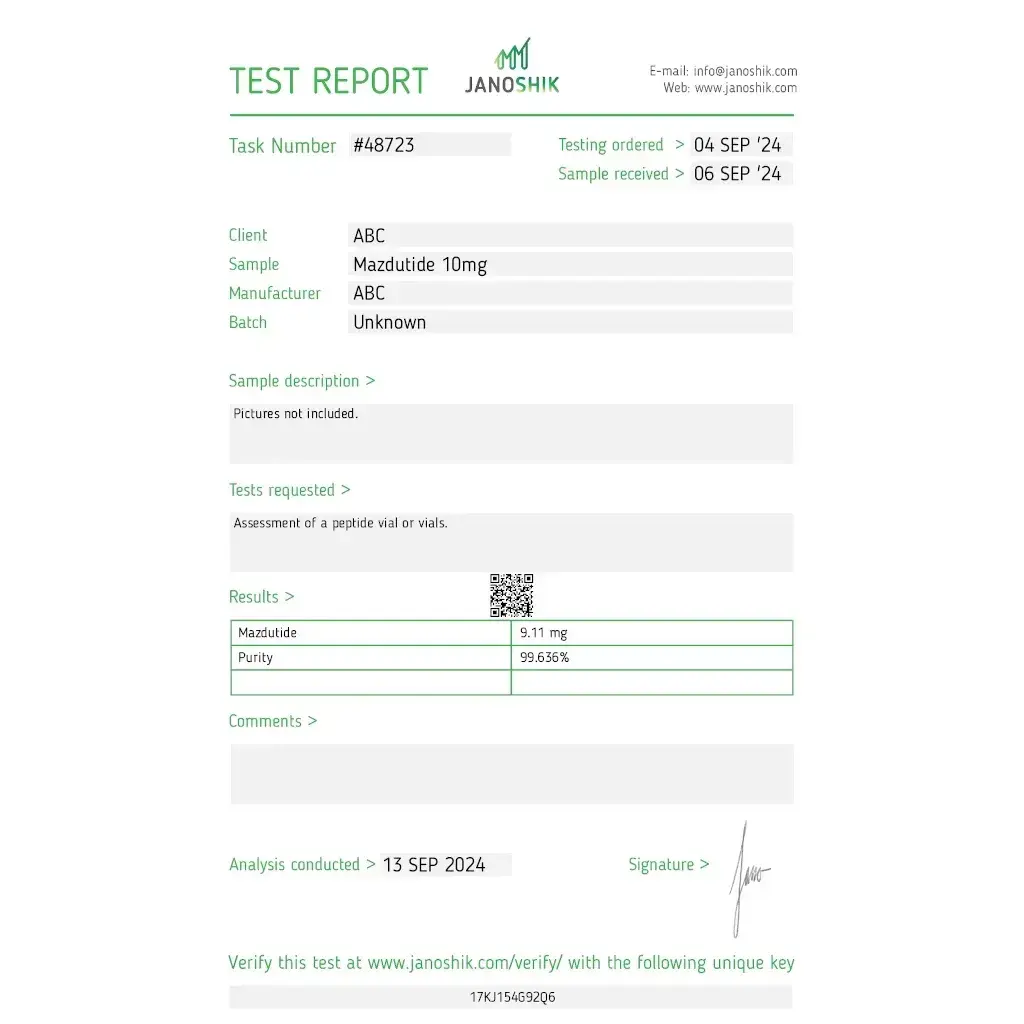
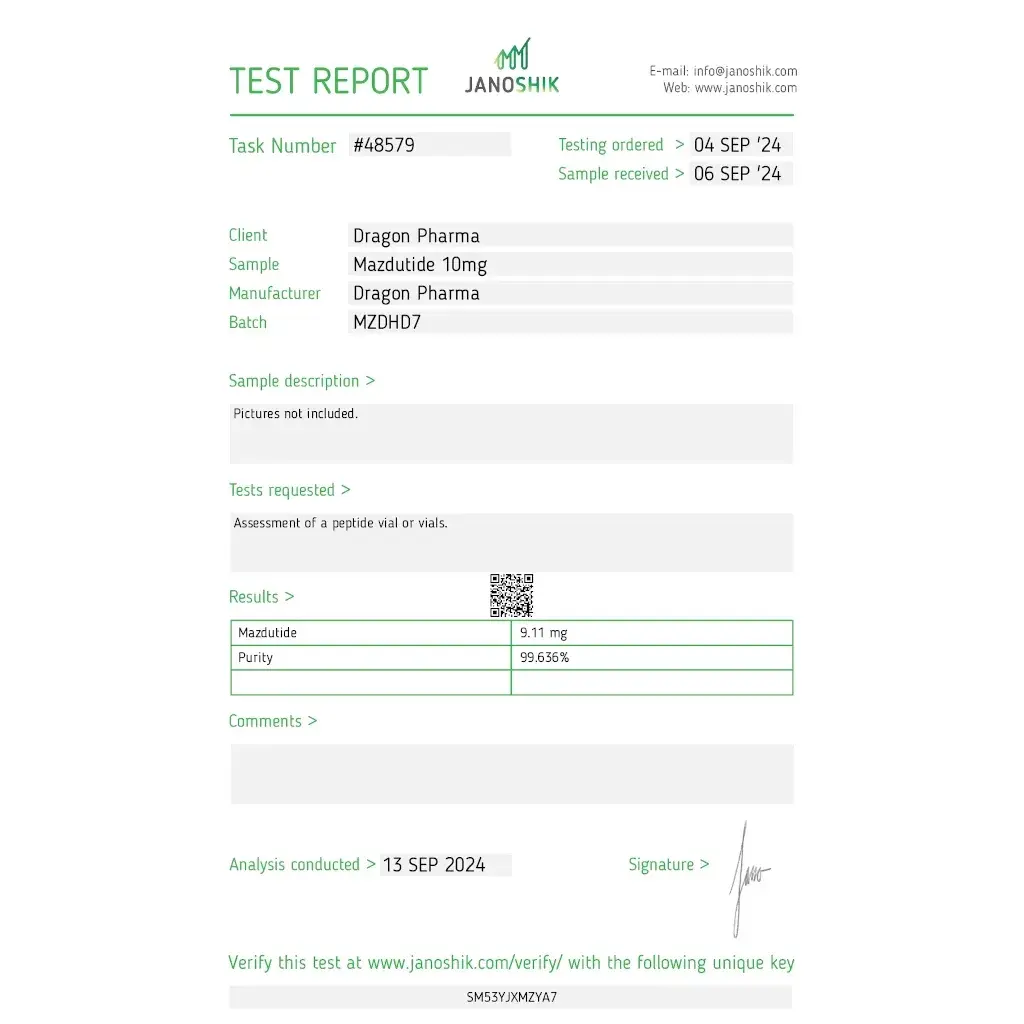
Published laboratory reports for Mazdutide 10 mg are shown below with the test date, measured concentration and percentage of the product's 10 mg/vial label claim.
 View Report
Laboratory results apply to the specific tested sample represented in each published report and should not be interpreted as a measurement of every vial or production batch.
The information below is provided for educational reference only. Mazdutide is not FDA-approved for any indication and is approved in China only. No human dosing information is established for non-clinical settings, and non-medical use falls outside any approved indication.
In clinical trials, mazdutide has been studied at doses ranging from 2 mg to 16 mg administered once weekly by subcutaneous injection. The approved doses in China are 2 mg, 4 mg, and 6 mg. Phase 3 trials have evaluated 6 mg and 9 mg doses, with 9 mg showing 16.65% mean weight reduction at 60 weeks in the GLORY-2 trial. A US Phase 2 trial evaluated doses up to 16 mg, with 16 mg achieving 18.1% mean weight reduction at week 32.
| Use Case | Clinical Trial Reference Range | Frequency |
|---|---|---|
| China-approved dose | 2 mg, 4 mg, or 6 mg per week | Once weekly |
| Phase 3 (GLORY-2) | 9 mg per week | Once weekly |
| US Phase 2 (highest dose) | 16 mg per week | Once weekly |
Mazdutide is supplied as a lyophilized powder requiring reconstitution with an appropriate solvent such as bacteriostatic water or sterile saline. Once reconstituted, peptide solutions are more susceptible to degradation and should be stored refrigerated at 2–8°C. Avoid repeated freeze-thaw cycles, which can degrade the peptide and potentially increase immunogenicity risk.
Reconstitution should be performed gently by swirling rather than shaking to prevent denaturation or aggregation. A cloudy solution or visible particles may indicate incomplete dissolution, aggregation, or contamination and should not be used.
In clinical trials, gastrointestinal adverse events were the most common, including nausea, vomiting, and diarrhea, occurring predominantly during dose escalation and typically mild to moderate in severity. In the GLORY-2 trial, vomiting occurred in 53.1% of the mazdutide group versus 1.3% in the placebo group, nausea in 46.9% versus 3.2%, and diarrhea in 39.4% versus 6.5%.
Gastrointestinal adverse events were increased with mazdutide compared to placebo, with odds ratios of 3.5 to 6.3 for effective doses, but serious adverse events were not significantly elevated. Because mazdutide is not FDA-approved, no long-term safety data exist outside clinical trial settings.
Mazdutide is a peptide and does not suppress endogenous testosterone production. No post-cycle therapy is applicable or necessary for mazdutide alone. If mazdutide is referenced alongside anabolic compounds in non-medical contexts, any PCT protocol would be determined by the other compounds, not by mazdutide.
No human clinical data exists to support any specific dosing strategy for mazdutide in non-clinical settings. The information above is for educational reference only and does not constitute medical advice. Mazdutide is not FDA-approved for any indication.
Mazdutide is not FDA-approved for any indication in the United States. Its safety profile outside clinical trial settings is not characterized.
Mazdutide is approved in China at 2 mg, 4 mg, and 6 mg doses for weight management and glycemic control in type 2 diabetes. It is not FDA-approved for any indication in the United States. Products sold in the US under the name mazdutide are research compounds not regulated by the FDA, with no verified manufacturing standards or safety oversight.
Phase 3 trials have been conducted exclusively in Chinese populations, and no Phase 3 registration trials of mazdutide have been published or completed in non-Chinese populations as of 2026. The US-based Phase 2 trial provides preliminary data in a more diverse population.
Mazdutide is investigational in the United States and not approved for human use. Products sold online under the name mazdutide through research compound vendors are not FDA-regulated, have no verified manufacturing standards, and carry unknown contamination, dosing, and safety risks.
In clinical trials, the most common adverse events were gastrointestinal, including nausea, vomiting, and diarrhea. In the GLORY-2 trial, vomiting occurred in 53.1% of participants receiving mazdutide 9 mg versus 1.3% with placebo, nausea in 46.9% versus 3.2%, and diarrhea in 39.4% versus 6.5%. Most adverse events were mild to moderate in severity.
A Bayesian network meta-analysis found that gastrointestinal adverse events were increased with mazdutide compared to placebo, with odds ratios of 3.5 to 6.3 for effective doses, but serious adverse events were not significantly elevated. Adverse events leading to treatment discontinuation were reported in 2.9% of mazdutide participants versus 0% with placebo in GLORY-2.
Cardiovascular effects observed in clinical trials showed reduced blood pressure and other cardiovascular risk factors without elevating heart rate more than GLP-1 receptor monoagonists. An increase in pulse rate was observed, consistent with other multi-hormone receptor modulators containing glucagon receptor agonists.
As mazdutide is not approved for any indication in the United States, there are no established contraindications in non-clinical settings. In clinical trials, exclusion criteria have included type 1 diabetes, pregnancy or breastfeeding, and recent use of other GLP-1 receptor agonist medications. Individuals with a history of pancreatitis, severe gastrointestinal disease, or diabetic retinopathy should consult a qualified healthcare professional.
No monitoring parameters have been established for mazdutide outside clinical trial settings. Laboratory testing of the product itself, such as the published potency report shown in the Lab Reports tab, is separate from any clinical monitoring. Product testing does not assess individual health status or suitability for use.
Lyophilized mazdutide should be stored at -20°C or below for maximal stability, protected from moisture and light. Allow the vial to warm to room temperature before opening to prevent condensation.
Reconstituted mazdutide should be stored refrigerated at 2–8°C and used within a reasonable timeframe. Avoid repeated freeze-thaw cycles, which can degrade the peptide. Keep all research peptides out of the reach of children.
Mazdutide 10 mg is supplied through the official Stealth Labs distribution chain and shipped in original manufacturer packaging with discreet, privacy-focused handling.
The outer shipping package remains discreet, with privacy-focused handling and no unnecessary external product details. Products are supplied through the official Stealth Labs distribution chain.
To verify your Mazdutide 10 mg product, use the security code on the vial label and cross-check it on the Stealth Labs official site. Official Stealth Labs presentation, batch-linked lab proof, and original packaging help reinforce product legitimacy and buyer confidence.
For complete delivery details, tracking policy, and reshipment terms, please see our Shipping Info page.
Proper storage conditions help preserve peptide stability and overall product integrity throughout shelf life.
Lyophilized mazdutide should be stored at -20°C or below for maximal stability, protected from moisture and light. Short-term storage at room temperature is relatively stable for weeks, but long-term storage requires freezing. Allow the vial to warm to room temperature before opening to prevent condensation.
Reconstituted mazdutide should be stored refrigerated at 2–8°C and used within a reasonable timeframe. Avoid repeated freeze-thaw cycles, which can degrade the peptide. Inspect the solution before use and do not use if it appears cloudy, discolored, or contains particulate matter.
Answers to common questions about Mazdutide 10 mg, its research status, clinical trial data, and laboratory testing.
Mazdutide 10 mg is a lyophilized research peptide sold for laboratory use only. In clinical trials, mazdutide has been investigated for weight management and glycemic control in type 2 diabetes. It is approved in China for these indications but is not FDA-approved for any indication in the United States.
In clinical trials, mazdutide is administered as a once-weekly subcutaneous injection. The approved doses in China are 2 mg, 4 mg, and 6 mg. Phase 3 trials have evaluated 9 mg, and a US Phase 2 trial evaluated doses up to 16 mg. No dosing recommendation can be made for non-clinical settings, as mazdutide is not FDA-approved.
Mazdutide is a peptide, not a hormone, and does not suppress endogenous testosterone production. No post-cycle therapy is applicable or necessary for mazdutide alone. If mazdutide is referenced alongside anabolic compounds in non-medical contexts, any PCT protocol would be determined by the other compounds, not by mazdutide.
Mazdutide is a dual GLP-1 and glucagon receptor agonist based on the endogenous peptide oxyntomodulin. It binds to and activates both GLP-1 and glucagon receptors, providing anorexic and energy-regulating effects alongside the metabolic benefits of GLP-1 receptor agonism. Clinical trials have shown dose-dependent reductions in body weight, HbA1c, and multiple cardiometabolic risk factors.
In clinical trials, weight loss effects were observed over treatment periods of 20 to 60 weeks, with continued reductions over time. In the GLORY-2 trial, mazdutide 9 mg achieved 16.65% mean weight reduction at 60 weeks. The time required to notice effects depends on the individual and the specific outcome being evaluated.
There is no single agent that is universally best. Mazdutide has demonstrated clinically meaningful weight reduction in clinical trials, with 9 mg achieving 16.65% mean weight reduction at 60 weeks and 16 mg achieving 18.1% at week 32 in a US trial. However, Phase 3 trials have been conducted primarily in Chinese populations, and mazdutide is not FDA-approved.
Mazdutide is a dual GLP-1 and glucagon receptor agonist, while semaglutide is a GLP-1 receptor agonist only. The addition of glucagon activity in mazdutide is designed to provide additional weight-reduction and metabolic benefits through glucagon's effects on energy expenditure and lipid metabolism. Semaglutide is FDA-approved; mazdutide is not.
Mazdutide is a dual GLP-1/glucagon receptor agonist, while Cagrilintide is an amylin analogue that targets amylin and calcitonin receptors. These are distinct compounds with different mechanisms of action. Both are investigational in the United States and sold as research peptides.
A milligram amount cannot be classified as appropriate or excessive because mazdutide is not FDA-approved and no non-clinical dosing information exists. It is also important to distinguish a total vial content from a dose. Mazdutide 10 mg indicates the total peptide content per vial; that quantity does not by itself specify how much should be used in any research application.
Mazdutide 10 mg is labeled at 10 mg of mazdutide per vial. It is supplied as a lyophilized powder in a 2 mL vial.
Yes. A published laboratory report dated September 13, 2024 measured Mazdutide 10 mg at 9.11 mg, equivalent to 91.10% of its 10 mg/vial label claim. The complete report can be viewed in the Lab Reports tab. Laboratory results apply to the tested sample represented by the individual report.
Mazdutide is not FDA-approved, and no clinical data exists to support any combination with other compounds outside of clinical trials. In clinical trials, mazdutide has been studied as monotherapy and in combination with lifestyle interventions. Stealth Labs offers Cagrilintide and Survodutide as other research peptides, but combinations with mazdutide lack clinical validation.
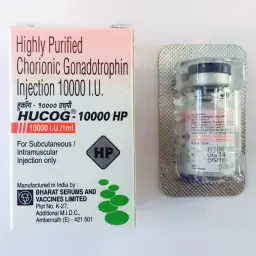
Drug Class: Natural Hormone
Active Substance: Pre-mixed Human Chorionic Gonadotropin 10000IU
Active Life: -
Average Dose: -
Liver Toxicity: No
Aromatization Rate: No
Anabolic Rate: Not a steroid
Androgenic Rate: Not a steroid
This Price Is Per amp (1 mL Each)
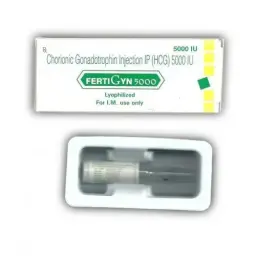
Drug Class: Natural Hormone
Active Substance: Human Chorionic Gonadotropin 5000IU
Active Life: -
Average Dose: -
Liver Toxicity: No
Aromatization Rate: No
Anabolic Rate: Not a steroid
Androgenic Rate: Not a steroid
This Price Is Per amp (1 mL Each)
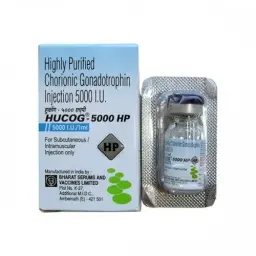
Drug Class: Natural Hormone
Active Substance: Pre-mixed Human Chorionic Gonadotropin 5000IU
Active Life: -
Average Dose: -
Liver Toxicity: No
Aromatization Rate: No
Anabolic Rate: Not a steroid
Androgenic Rate: Not a steroid
This Price Is Per amp (1 mL Each)