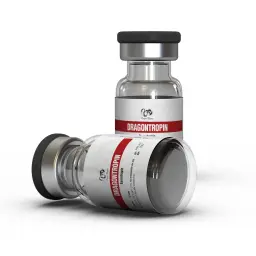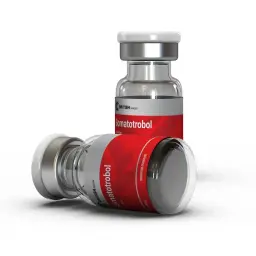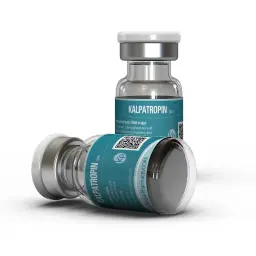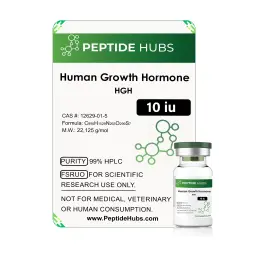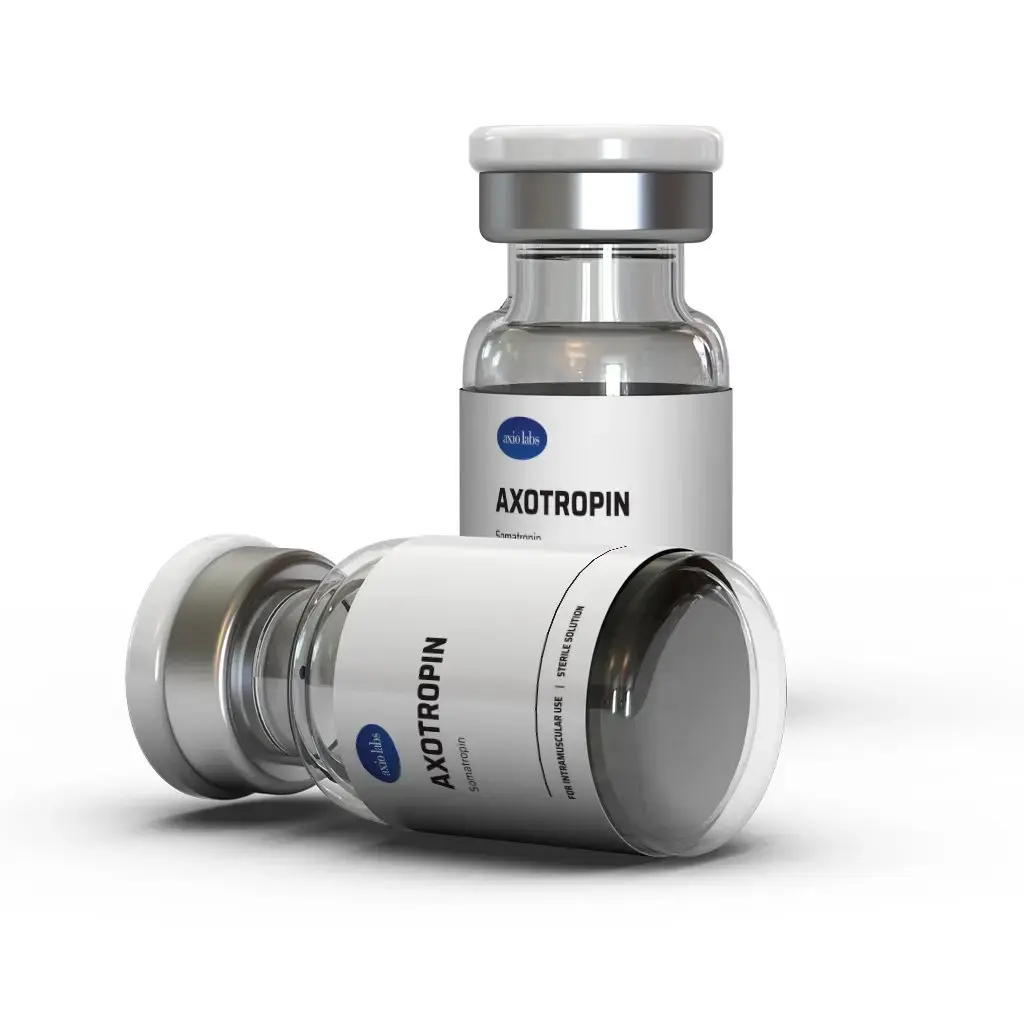
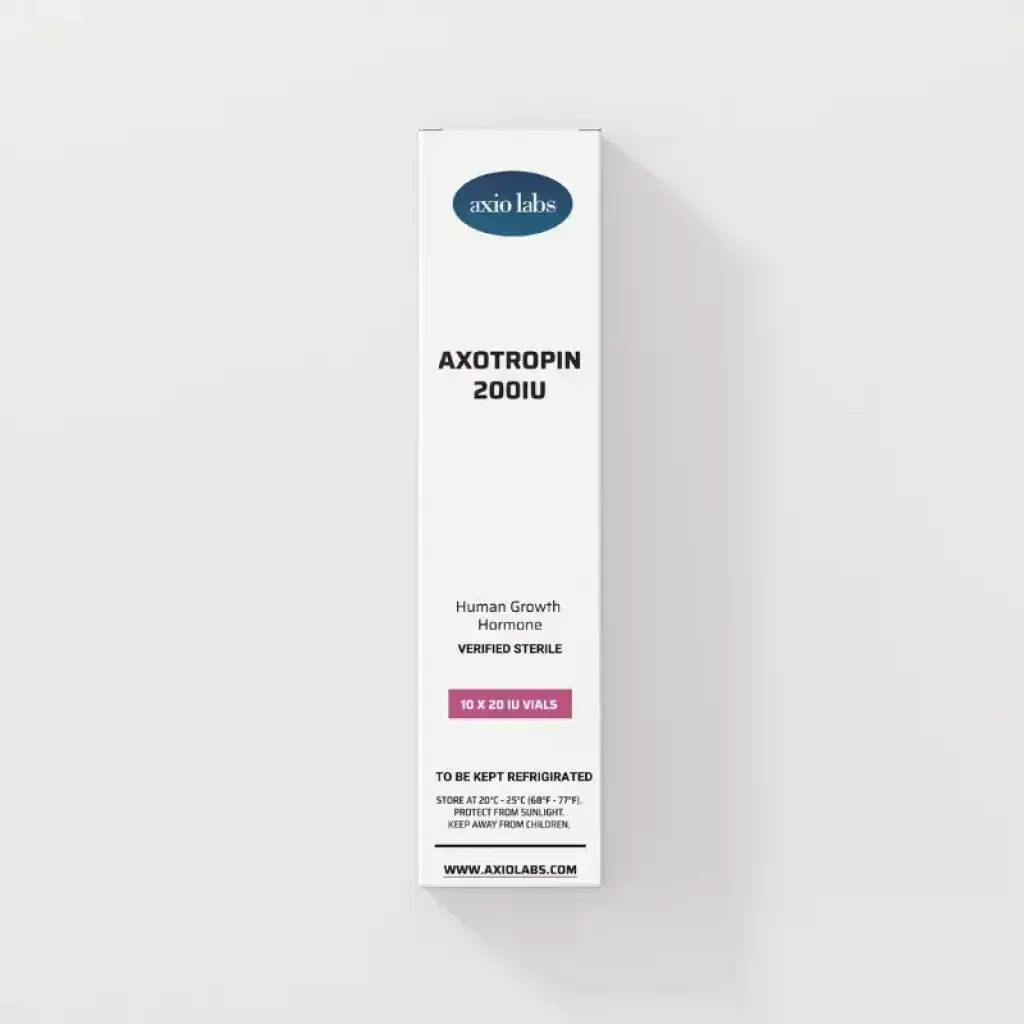
Axotropin HGH is a lyophilized powder somatropin product manufactured by Axiolabs and supplied as 10 IU or 20 IU vials in a kit containing 10 x 2 mL vials.
Axotropin HGH contains somatropin, a recombinant human growth hormone produced through recombinant DNA technology. Somatropin is structurally and biologically equivalent to endogenous growth hormone secreted by the anterior pituitary gland. The FDA has approved multiple somatropin products for therapeutic use, including Omnitrope, Humatrope, Norditropin, and Zomacton, among others. Growth hormone plays a central role in stimulating growth, cell reproduction, and regeneration, with its major anabolic effects mediated through insulin-like growth factor 1 (IGF-1) production in the liver and other tissues.
In clinical medicine, somatropin is indicated for growth hormone deficiency in both pediatric and adult patients, as well as conditions including Turner syndrome, Prader-Willi syndrome, small for gestational age with failure to catch up, and idiopathic short stature. The Endocrine Society has published clinical practice guidelines for the evaluation and treatment of adult growth hormone deficiency, emphasizing that GH therapy offers benefits in body composition, exercise capacity, skeletal integrity, and quality of life measures, with the final decision to treat requiring thoughtful clinical judgment. In bodybuilding and performance-enhancement contexts, somatropin is commonly referenced for its effects on body composition, including reductions in body fat and increases in lean muscle mass, though such use falls outside approved medical indications.
Somatropin exerts its effects by binding to growth hormone receptors on target tissues, particularly the liver, where it stimulates the production of IGF-1. IGF-1 then mediates many of the anabolic effects of growth hormone, including stimulation of amino acid uptake and protein synthesis in muscle tissue. Growth hormone also directly influences lipid and carbohydrate metabolism, promoting lipolysis and reducing glucose uptake in some tissues. Non-medical use of somatropin for physique enhancement falls outside approved indications and carries risks including fluid retention, joint pain, and potential metabolic disturbances.
Somatropin is a recombinant form of human growth hormone with well-characterized anabolic and metabolic effects, distinguished from other performance-enhancing compounds by its mechanism of action through IGF-1 mediation.
Somatropin is produced using recombinant DNA technology and is structurally identical to pituitary-derived human growth hormone. It consists of a single polypeptide chain of 191 amino acids with two disulfide bridges. The lyophilized powder formulation used in Axotropin HGH requires reconstitution with an appropriate diluent before subcutaneous administration.
Growth hormone exerts its effects through both direct and indirect mechanisms. Direct effects involve binding to growth hormone receptors on target cells, while indirect effects are primarily mediated through IGF-1 produced in the liver and other tissues in response to GH stimulation. IGF-1 is responsible for many of the anabolic effects associated with growth hormone, including stimulation of muscle protein synthesis and amino acid uptake.
The metabolic effects of somatropin include increased lipolysis, reduced glucose uptake in peripheral tissues, and increased protein synthesis. In clinical studies, GH replacement in adults with GH deficiency has been shown to improve body composition, with reductions in fat mass and increases in lean body mass. These effects are the basis for its non-medical use in bodybuilding contexts, though such use falls outside approved indications.
Somatropin's anabolic effects are largely mediated through IGF-1 production, distinguishing it from anabolic steroids and other compounds that act directly on androgen receptors. Its metabolic effects on fat and carbohydrate metabolism are also characteristic.
Axiolabs produces several products referenced in different contexts within bodybuilding. Axotropin HGH is a somatropin product, placing it in a distinct category from anabolic steroids such as Testaplex C 250 or Decaplex 250. Growth hormone is not suppressive to the hypothalamic-pituitary-gonadal axis and does not require post-cycle therapy for testosterone recovery.
For bodybuilders considering peptide alternatives that stimulate endogenous growth hormone release, Axiolabs offers Sermorelin and Ipamorelin. These products work through different mechanisms than exogenous somatropin, stimulating the body's own GH production rather than providing the hormone directly.
The information below is provided for educational reference only. Somatropin is a prescription medication; medical use requires appropriate diagnosis and clinical supervision. Non-medical use falls outside approved indications.
In FDA-approved labeling, somatropin dosing for adult growth hormone deficiency is highly individualized, with typical starting doses ranging from 0.15 to 0.3 mg per day (approximately 0.45 to 0.9 IU), adjusted based on clinical response and serum IGF-1 levels. In non-medical bodybuilding contexts, somatropin is commonly referenced in the range of 2–6 IU per day, with some experienced users referencing higher totals. Doses are typically administered via subcutaneous injection, often in the evening to mimic the body's natural GH secretion pattern.
| Use Case | Common Reference Range | Injection Frequency |
|---|---|---|
| Medical (adult GHD) | Individualized by clinician | Once daily (evening) |
| Bodybuilding (non-medical) | 2–6 IU / day | Once daily or split |
| Advanced (non-medical) | 6–10 IU / day | Split into 2 doses |
In non-medical bodybuilding contexts, somatropin is frequently referenced alongside anabolic steroids, with users reporting synergistic effects on body composition. It is sometimes combined with insulin or thyroid hormones in advanced protocols, though these combinations carry significant risks and require careful monitoring. Somatropin is not a cycle compound in the traditional sense and can be used for extended periods, though non-medical cycles are commonly referenced in durations of 3–6 months.
Common side effects of somatropin therapy include fluid retention manifesting as peripheral edema, arthralgia, myalgia, and carpal tunnel syndrome. These effects are often dose-dependent and may subside with continued use or dose reduction. Injection site reactions and lipoatrophy can occur if injection sites are not rotated.
More serious considerations include potential effects on glucose metabolism, with somatropin capable of decreasing insulin sensitivity and potentially unmasking or worsening diabetes mellitus. Monitoring of blood glucose is recommended during therapy. Intracranial hypertension has been reported, usually within the first 8 weeks of treatment.
Somatropin does not suppress the hypothalamic-pituitary-gonadal axis and does not require post-cycle therapy for testosterone recovery. It is not a hormonal compound in the same category as anabolic steroids and does not require the same recovery protocols.
Dosing strategies and support protocols should account for individual experience and health status. The information above is for educational reference and does not constitute medical advice.
Somatropin is a prescription medication that can affect glucose metabolism, fluid balance, and musculoskeletal function. Medical use requires appropriate diagnosis and ongoing clinical supervision.
Somatropin therapy is contraindicated in patients with active proliferative or severe non-proliferative diabetic retinopathy, pediatric patients with closed epiphyses, and in patients with hypersensitivity to somatropin or any excipient. Therapy should be supervised by a physician experienced in the diagnosis and management of patients with growth hormone deficiency.
Somatropin can decrease insulin sensitivity, particularly at higher doses. Monitoring of glucose levels is recommended for all patients receiving somatropin, especially those with existing diabetes mellitus or risk factors for diabetes.
Somatropin is not approved for bodybuilding or athletic performance enhancement in healthy individuals. Non-medical use falls outside approved indications and may carry additional health risks beyond those associated with supervised medical use.
Common adverse reactions reported in clinical trials include upper respiratory infection, fever, pharyngitis, headache, otitis media, edema, arthralgia, paresthesia, myalgia, carpal tunnel syndrome, and impaired glucose tolerance. Fluid retention may occur in adults and is often dose-dependent.
Serious but less common adverse effects include intracranial hypertension, which has been reported usually within 8 weeks of initiation and may present with papilledema, headache, nausea, or visual changes. Hypoadrenalism may occur, and patients with known hypoadrenalism may require increases in glucocorticoid replacement doses. Hypothyroidism may first become evident or worsen during somatropin therapy.
In pediatric patients, slipped capital femoral epiphysis and progression of preexisting scoliosis are potential concerns. Pancreatitis has been reported, and should be considered in patients with persistent severe abdominal pain.
Somatropin therapy requires careful evaluation of the underlying indication and potential contraindications. Medical evaluation is required before any consideration of use, including assessment of glucose metabolism, thyroid function, and adrenal function. Fundoscopic examination should be performed prior to initiating therapy and periodically thereafter to exclude preexisting papilledema.
Medically supervised somatropin therapy typically involves monitoring of serum IGF-1 levels, thyroid function, glucose metabolism, and clinical response to treatment. These monitoring practices are relevant to medical use; non-medical use lacks the same clinical oversight. Blood work including IGF-1, fasting glucose, and lipid panels may be considered in non-medical contexts, though evidence for specific monitoring protocols is limited.
Store lyophilized powder in the refrigerator at 2° to 8°C (36° to 46°F). Protect from light. Once reconstituted, store according to the product labeling, typically refrigerated and used within a specified period. Keep out of reach of children. Do not use if the product appears damaged or compromised.
Axotropin HGH is shipped in original manufacturer packaging with discreet, privacy-focused handling.
Outer packaging remains discreet with no external product details. Products are supplied in original manufacturer presentation.
To verify product authenticity, examine the packaging for manufacturer security features and compare against official Axiolabs presentation. Original packaging and consistent labeling help confirm product legitimacy.
For complete delivery details, please see our Shipping Info page.
Proper storage conditions are essential for maintaining the stability and potency of lyophilized somatropin powder.
Store the lyophilized powder in the refrigerator at 2° to 8°C (36° to 46°F). Protect from light. Do not freeze the reconstituted solution unless specified by the product labeling. Once reconstituted, store according to the product labeling, typically refrigerated and used within a specified period.
Keep vials in their original packaging until use. Do not use if the product appears compromised or if the powder shows signs of deterioration.
Answers to common questions about Axotropin HGH, somatropin, dosing, and product characteristics.
Axotropin HGH contains somatropin, recombinant human growth hormone. In medical practice, it is approved for growth hormone deficiency and several other conditions. In non-medical bodybuilding contexts, it is commonly referenced for body composition improvements, though such use falls outside approved indications.
Somatropin is typically administered via subcutaneous injection once daily, preferably in the evening to mimic the body's natural GH secretion pattern. In non-medical contexts, some users split the daily dose into two injections. Injection sites should be rotated to avoid lipoatrophy.
No. Somatropin does not suppress the hypothalamic-pituitary-gonadal axis and does not require post-cycle therapy for testosterone recovery. It is not a hormonal compound in the same category as anabolic steroids and does not require the same recovery protocols.
Somatropin binds to growth hormone receptors and stimulates the production of IGF-1, which mediates many of its anabolic effects. It also directly influences lipid and carbohydrate metabolism, promoting lipolysis and increasing protein synthesis. In clinical studies, GH replacement improves body composition by reducing fat mass and increasing lean body mass.
The time to noticeable effects depends on the context and individual factors. In clinical studies of adult GH deficiency, improvements in body composition have been observed over several months of therapy. In bodybuilding contexts, users sometimes report changes in body composition after 4–8 weeks, though individual response varies considerably.
There is no universally "best" growth hormone product. Somatropin is the active substance in all FDA-approved growth hormone products, and the differences between brands typically relate to formulation, delivery device, and excipients rather than the hormone itself. Axotropin HGH is a lyophilized powder formulation that requires reconstitution.
Axotropin HGH provides exogenous somatropin directly, while Sermorelin is a peptide that stimulates the body's own production of growth hormone. The two work through entirely different mechanisms, and their effects and side effect profiles differ accordingly.
Ipamorelin is a growth hormone secretagogue that stimulates endogenous GH release through the ghrelin receptor, while Axotropin HGH provides exogenous somatropin directly. Axiolabs offers Ipamorelin as its ghrelin receptor agonist product. The choice between exogenous GH and secretagogues depends on individual goals and preferences.
In medical practice, adult GH replacement doses typically range from 0.15 to 0.3 mg per day, which is approximately 0.45 to 0.9 IU. In non-medical bodybuilding contexts, 2–6 IU per day is commonly referenced. Axotropin HGH contains 10 or 20 IU per vial, so a 4 IU dose would represent a portion of one vial.
Axotropin HGH is supplied as 10 IU or 20 IU per vial in a kit containing 10 x 2 mL vials, giving 100 IU or 200 IU of total labeled somatropin content per kit.
Lab testing information for Axotropin HGH is not available on this page. For product-specific testing inquiries, please contact customer support.
Yes. Somatropin can decrease insulin sensitivity, particularly at higher doses, and may unmask or worsen diabetes mellitus. Monitoring of glucose levels is recommended for all patients receiving somatropin, especially those with existing diabetes or risk factors. This is a significant consideration in both medical and non-medical contexts.