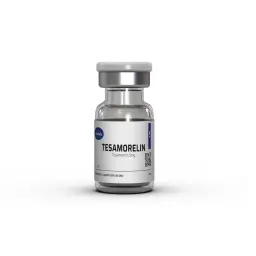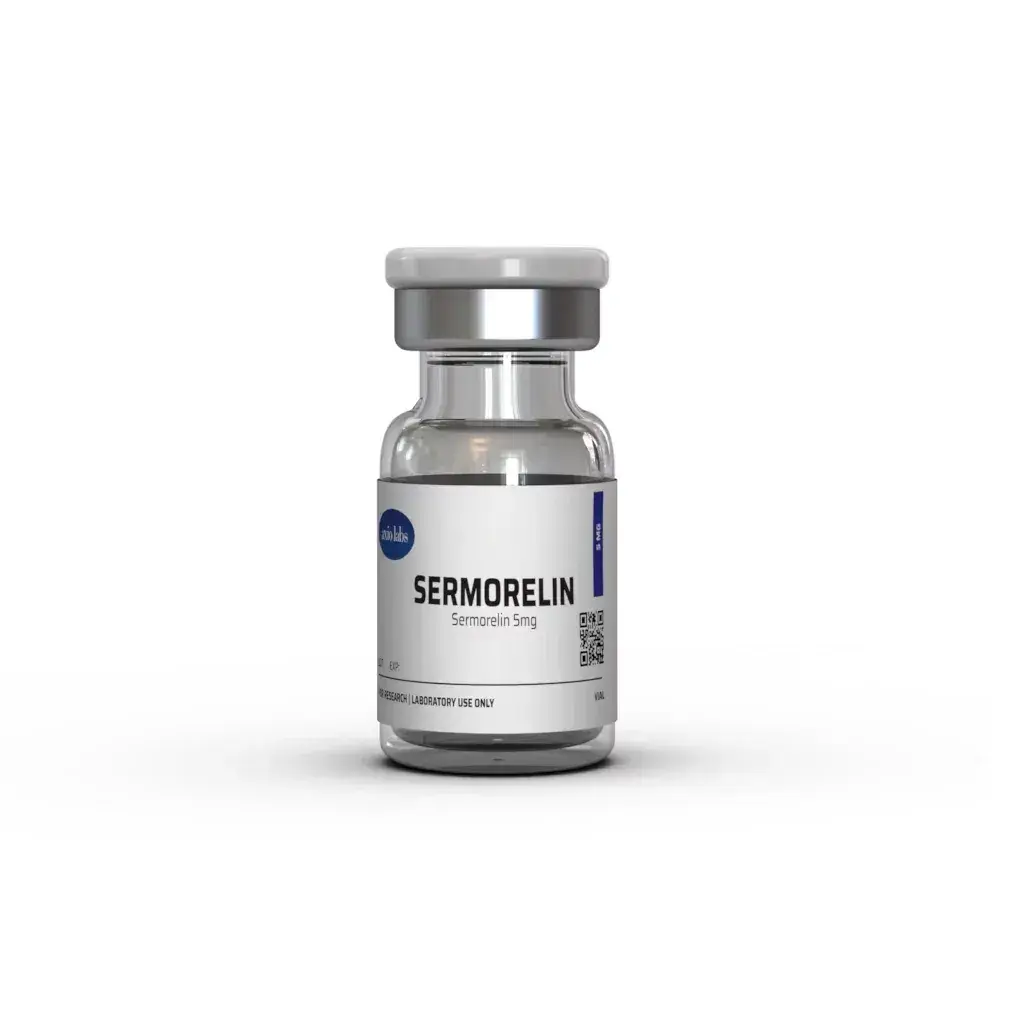
Sermorelin 5 mg is a lyophilized research peptide manufactured by Axiolabs containing Sermorelin at 5 mg per vial, supplied as a powder for reconstitution in a 2 mL vial.
Sermorelin 5 mg contains the synthetic peptide sermorelin, a truncated analog of growth hormone-releasing hormone (GHRH) consisting of the first 29 amino acids of the native 44-amino-acid hormone. Sermorelin acts as a GHRH receptor agonist, stimulating the pituitary gland to produce and secrete endogenous growth hormone in a physiological, pulsatile manner.
Sermorelin was historically approved by the FDA under the brand name Geref for the diagnosis and treatment of idiopathic growth hormone deficiency in children with growth failure. The product was later discontinued for commercial reasons, not for safety or effectiveness concerns. Sermorelin is also used in clinical practice as a diagnostic agent for assessing pituitary GH reserve.
In non-medical bodybuilding and anti-aging contexts, sermorelin is commonly referenced for its potential to support natural GH production, which may influence recovery, body composition, and sleep quality. A narrative review on performance-enhancing peptides notes that GHRH analogues including sermorelin are encountered in online self-administration protocols, though regulatory approval for physique or performance indications is absent and product composition in unregulated supply chains is uncertain. Such use falls outside approved indications.
Sermorelin 5 mg is supplied as a lyophilized powder in a 2 mL vial. Lyophilization preserves peptide stability during storage and transport. The powder requires reconstitution with an appropriate solvent before experimental use.
Sermorelin is a synthetic GHRH analog that stimulates pituitary growth hormone secretion through a physiological receptor-mediated mechanism.
Sermorelin is a 29-amino-acid peptide corresponding to the N-terminal portion of human growth hormone-releasing hormone. It binds to GHRH receptors on pituitary somatotroph cells, activating cAMP-mediated signaling that stimulates synthesis and release of growth hormone.
Unlike exogenous GH administration, sermorelin works through the body's own regulatory feedback mechanisms. This means GH release occurs in a pulsatile pattern and is subject to negative feedback by IGF-1, potentially reducing the risk of supraphysiologic GH exposure compared to direct GH injection.
Sermorelin has been studied as a diagnostic agent for assessing pituitary function, with intravenous and subcutaneous administration both shown to stimulate GH secretion. It has also been investigated in adult-onset growth hormone insufficiency and in hypogonadal males for body composition management.
Sermorelin was approved as Geref for pediatric growth hormone deficiency diagnosis but was discontinued for commercial reasons. It remains available as a research peptide, and FDA has designated it as an orphan drug for idiopathic or organic growth hormone deficiency.
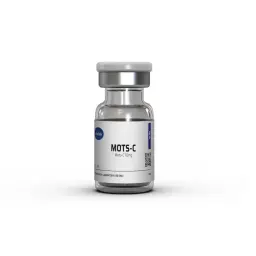
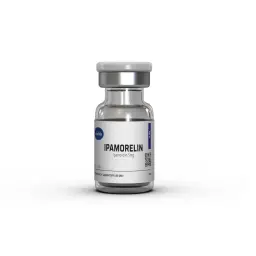
Axiolabs offers several research peptides with distinct mechanisms. Ipamorelin is a ghrelin receptor agonist that stimulates GH release through a different pathway, while MOTS-c is a mitochondrial-derived peptide targeting metabolic regulation. TB 500 contains a thymosin beta 4 fragment with actin-binding properties.
Sermorelin's GHRH receptor mechanism distinguishes it from ghrelin-based secretagogues like Ipamorelin. In research discussions, the two are sometimes referenced together for complementary effects on GH release, though no human studies have evaluated the combination.
The information below is provided for educational reference only. Sermorelin is a research peptide with no currently approved human product for self-administration. Non-medical use falls outside approved indications.
In clinical research settings, sermorelin has been administered at doses ranging from 1 mcg/kg for diagnostic testing to higher doses in therapeutic contexts. In non-medical bodybuilding and anti-aging contexts, community-reported protocols typically reference 200–300 mcg per injection, administered once daily at bedtime to coincide with the natural nocturnal GH surge.
| Use Case | Common Reference Range | Frequency |
|---|---|---|
| Diagnostic (clinical) | 1 mcg/kg | Single dose for testing |
| Research protocol (non-medical) | 200–300 mcg | Once daily, bedtime |
| Cycle length (user-reported) | 8–12 weeks on | Followed by 4 weeks off |
These non-medical ranges represent community-reported practices and are not derived from controlled clinical trials for performance enhancement. Individual GH response to GHRH stimulation varies based on age, baseline pituitary function, and other factors.
In non-medical research discussions, sermorelin is sometimes referenced in combination with ghrelin receptor agonists such as Ipamorelin, targeting both the GHRH and ghrelin pathways for potentially synergistic GH release. This approach is described in online self-administration protocols but has not been validated in controlled human studies.
Cycling protocols of 8–12 weeks on followed by rest periods are commonly referenced in community discussions. A narrative review of performance-enhancing peptides highlights the uncertainty surrounding dosing, stacking practices, and product composition in unregulated supply chains.
Reported side effects in clinical and community settings include injection site reactions, headache, flushing, and transient dizziness. Because sermorelin stimulates endogenous GH release through physiological feedback mechanisms, the risk of supraphysiologic GH exposure may be lower than with direct GH administration, though this does not eliminate potential risks.
The narrative review on GH-IGF1 axis peptides notes that reported adverse effects span endocrine and metabolic disturbances, fluid retention syndromes, musculoskeletal symptoms, and injection-site reactions, with uncertainty surrounding long-term use.
Sermorelin has no currently approved human therapeutic use for self-administration. Any information about non-medical use is derived from user-reported practices and is not validated by controlled clinical research. This information does not constitute medical advice.
Sermorelin has a history of clinical use but is no longer commercially available for prescription use. Safety data from prior clinical applications is limited, and non-medical use introduces additional uncertainties.
Sermorelin was previously approved as Geref for diagnostic and therapeutic use in pediatric growth hormone deficiency. The product was discontinued for commercial reasons rather than safety or effectiveness concerns. However, this does not mean that non-medical use is without risk.
A narrative review on performance-enhancing peptides notes that GHRH analogues are marketed as "research compounds" and self-administered without regulatory oversight, with uncertainty surrounding product composition, dose, and stacking practices.
Non-medical use of sermorelin falls outside approved indications and carries unknown risks. Product purity does not establish that non-medical use is safe or appropriate for an individual.
Reported adverse effects with sermorelin include injection site reactions, headache, flushing, and transient dizziness. The narrative review on GH-IGF1 axis peptides describes a broader range of reported adverse effects associated with this class of compounds, including endocrine and metabolic disturbances, prolactin and cortisol elevations, appetite changes, dysglycaemia, fluid retention syndromes, musculoskeletal symptoms, and injection-site reactions.
The review also highlights biologically plausible but unproven mitogenic concerns with agents that modulate the GH-IGF1 axis.
No formal contraindications exist for sermorelin because no currently approved product exists. Precautionary considerations based on the compound's mechanisms include active malignancy or high cancer risk, uncontrolled diabetes or insulin resistance, pregnancy or breastfeeding, and pituitary disorders.
Competitive athletes should be aware that sermorelin is prohibited by the World Anti-Doping Agency as a growth hormone-releasing hormone analog. Its use by athletes subject to anti-doping testing constitutes a doping violation.
Because sermorelin has no currently approved human therapeutic use, no standardized monitoring protocols exist for non-medical use. Research or non-medical use should be accompanied by awareness of the lack of established safety parameters. In clinical contexts, IGF-1 and GH levels may be monitored to assess response and safety.
Store the lyophilized powder under conditions appropriate for research peptides. Inspect the vial before use and do not use a product that appears damaged or compromised.
Keep all research compounds out of the reach of children.
Sermorelin 5 mg is supplied through the official Axiolabs distribution chain and shipped in original manufacturer packaging with discreet, privacy-focused handling.
The outer shipping package remains discreet, with privacy-focused handling and no unnecessary external product details. Products are supplied through the official Axiolabs distribution chain.
To verify your Sermorelin 5 mg product, use the security code on the vial label and cross-check it on the Axiolabs official site. Official Axiolabs presentation and original packaging help reinforce product legitimacy and buyer confidence.
For complete delivery details, tracking policy, and reshipment terms, please see our Shipping Info page.
Proper storage conditions help preserve peptide stability and overall product integrity throughout shelf life.
Store the lyophilized powder in a cool, dry place away from direct light. For long-term storage of lyophilized research peptides, refrigeration or freezing is commonly recommended to preserve stability. Once reconstituted, peptide solutions typically require refrigerated storage at 2–8°C and should be protected from light.
Keep the vial in its original packaging until use. Inspect the powder before reconstitution and avoid use if it appears discolored, clumped, or if the vial or seal is compromised.
Keep out of reach of children. Follow proper handling practices when working with research compounds.
Answers to common questions about Sermorelin 5 mg, the Sermorelin peptide, and its research applications.
Sermorelin 5 mg contains the GHRH analog sermorelin. Historically, it was approved as Geref for diagnosing growth hormone deficiency in children. In non-medical bodybuilding and anti-aging contexts, it is commonly referenced for supporting natural GH production, though such use falls outside approved indications and product safety in unregulated supply chains is uncertain.
There is no established human dosing schedule for non-medical sermorelin use. In community discussions, protocols commonly reference 200–300 mcg per injection, administered once daily at bedtime to coincide with the natural nocturnal GH surge. These figures represent user-reported practices and are not derived from controlled clinical trials for performance enhancement.
Sermorelin is a peptide and does not suppress endogenous testosterone production in the way anabolic steroids do. Post-cycle therapy is not applicable in the context of hormonal recovery. Research protocols typically include rest periods following active cycles, though this is based on community practice rather than clinical evidence.
Sermorelin is a GHRH receptor agonist that stimulates the pituitary gland to release growth hormone in a pulsatile, physiological manner. Unlike direct GH administration, sermorelin works through the body's own regulatory feedback mechanisms, which may reduce the risk of supraphysiologic GH exposure.
No established timeline exists for sermorelin's effects in non-medical contexts. GH release occurs acutely after injection, but meaningful changes in body composition or recovery would require sustained use over weeks to months. Clinical studies have evaluated sermorelin for diagnostic purposes rather than performance outcomes.
There is no universally established "best" GHRH analog, and sermorelin has not been validated in completed human trials for performance outcomes. Its distinguishing characteristic is its clinical history as an FDA-approved diagnostic agent and its physiological mechanism of stimulating endogenous GH release.
Sermorelin and Ipamorelin work through different receptors. Sermorelin is a GHRH receptor agonist, while ipamorelin is a ghrelin receptor agonist. In non-medical research discussions, the two are sometimes referenced together for potentially complementary effects on GH release, though no human studies have evaluated the combination.
Sermorelin and MOTS-c have fundamentally different mechanisms. Sermorelin is a GHRH analog that stimulates GH release from the pituitary, while MOTS-c is a mitochondrial-derived peptide that activates AMPK and regulates metabolic pathways. They are investigated in different research contexts.
Without established human dosing for non-medical use, no microgram amount can be classified as appropriate or excessive. Sermorelin 5 mg is labeled at 5 mg of lyophilized powder per vial. In non-medical research discussions, 200–300 mcg per injection is commonly referenced, but this does not establish validated dosing guidance.
Sermorelin 5 mg is labeled at 5 mg of sermorelin peptide per vial. It is supplied as a lyophilized powder in a 2 mL vial manufactured by Axiolabs.
Yes. Sermorelin is prohibited by the World Anti-Doping Agency as a growth hormone-releasing hormone analog. Its use by athletes subject to anti-doping testing constitutes a doping violation.