


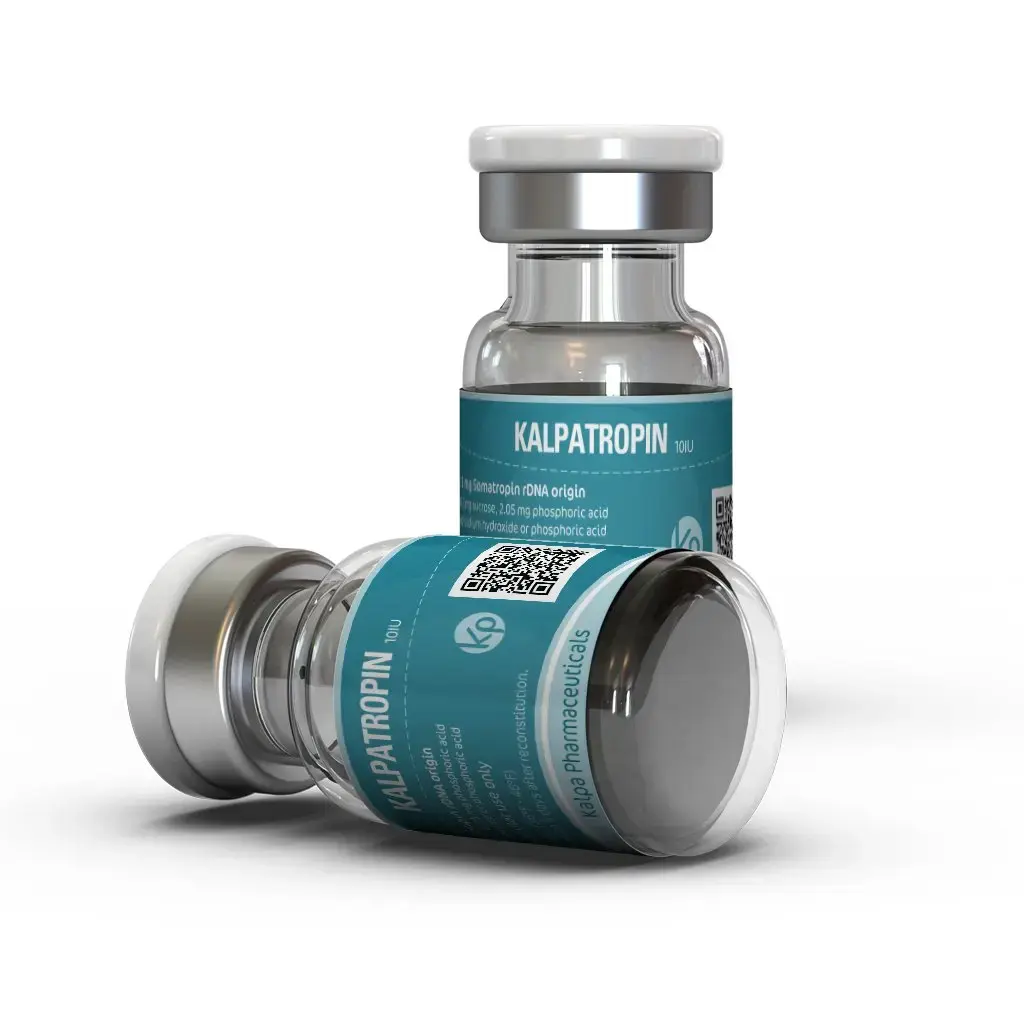
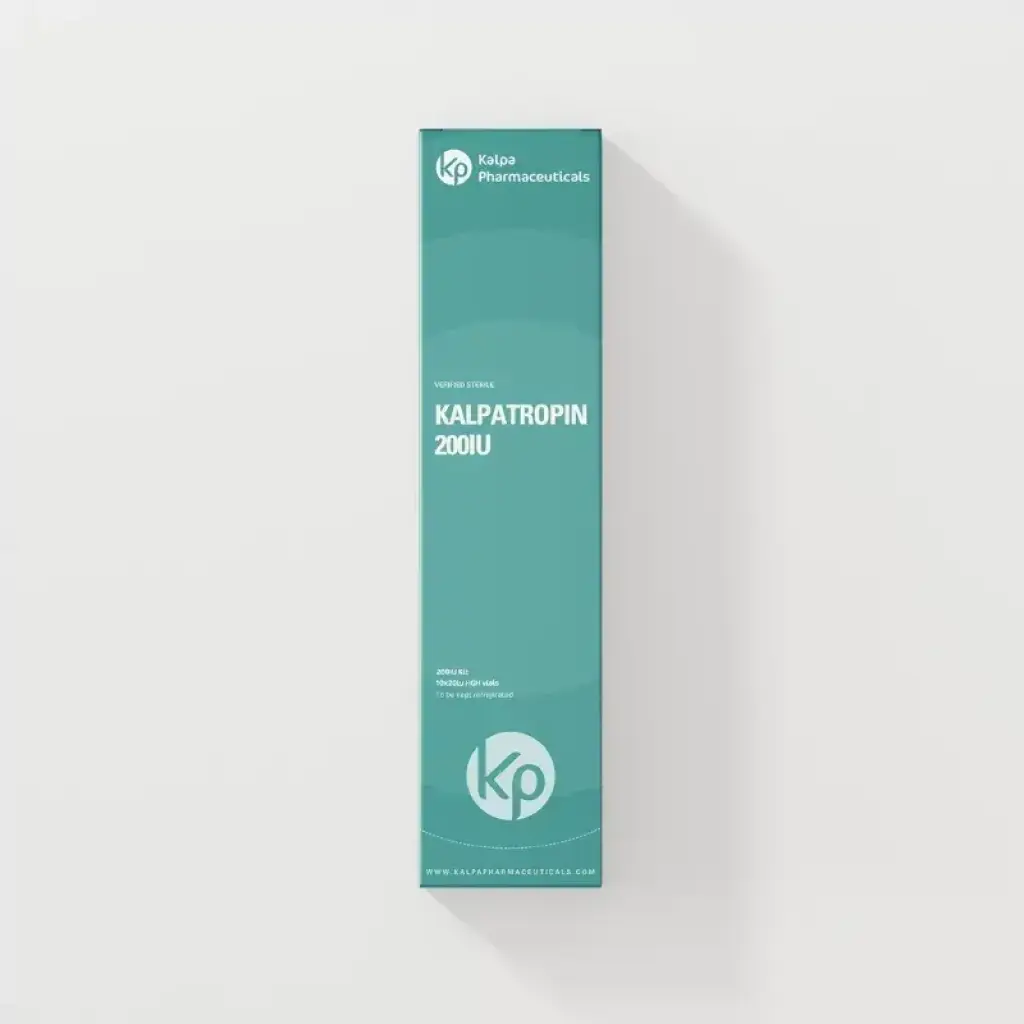
Kalpatropin HGH is a lyophilized powder somatropin formulation manufactured by Kalpa Pharmaceuticals and available in 10 IU or 20 IU vials (10 x 2 mL vials per kit).
Kalpatropin HGH contains somatropin, a recombinant human growth hormone that is structurally identical to the growth hormone produced by the human pituitary gland. Somatropin binds to growth hormone receptors in the liver and peripheral tissues, triggering the synthesis of insulin-like growth factor 1 (IGF-1), which mediates many of its anabolic effects including increased protein synthesis and lipolysis. In adults, somatropin maintains lean body mass and bone density.
Somatropin is an FDA-approved human pharmaceutical product marketed under several brand names including Humatrope, Genotropin, Norditropin, and others. In medically supervised contexts, it is used for growth hormone deficiency in children and adults, as well as specific growth-related conditions. In non-medical bodybuilding settings, somatropin is commonly referenced for its effects on body composition, fat loss, and recovery, though such use falls outside approved medical indications.
Somatropin supports processes involved in protein synthesis, lipolysis, and connective tissue health. When used at supraphysiologic levels for physique or performance enhancement, the potential for adverse effects also increases and such use falls outside approved medical indications.
Kalpatropin HGH is supplied as a lyophilized powder that requires reconstitution with bacteriostatic water before administration. This formulation is designed to preserve the stability of the somatropin peptide until it is ready for use.
Somatropin is a recombinant human growth hormone designed to be identical to endogenous pituitary growth hormone. Its mechanism of action and physiological effects distinguish it from anabolic steroids and other performance compounds.
Somatropin is a 191-amino acid polypeptide hormone that is structurally identical to the growth hormone secreted by the human anterior pituitary gland. It binds to growth hormone receptors in the liver and peripheral tissues, triggering the synthesis of insulin-like growth factor 1 (IGF-1), which mediates many of its anabolic effects including increased protein synthesis and lipolysis. In adults, somatropin maintains lean body mass and bone density.
The subcutaneous half-life of somatropin is approximately 3 hours in growth hormone-deficient adults. The observed difference from the intravenous half-life is due to slow absorption from the subcutaneous injection site. IGF-1 effects persist for approximately 24 hours after administration.
These characteristics explain why somatropin is commonly referenced in non-medical bodybuilding settings for its effects on body composition, recovery, and connective tissue support.
Somatropin has a subcutaneous half-life of approximately 3 hours, while its downstream IGF-1 effects persist for approximately 24 hours. This profile is why it is typically referenced as being administered once daily.
Kalpa Pharmaceuticals offers several peptide and hormone formulations. The main practical distinction between these preparations involves the compound's mechanism of action and intended use context.
Unlike anabolic steroids such as Testoxyl Cypionate 250 or Nandroxyl 250, somatropin is not an androgen and works through the growth hormone/IGF-1 pathway. For other peptide-based options in the Kalpa catalog, Ipamorelin 5 mg and Tesamorelin 5 mg are growth hormone secretagogues that stimulate endogenous GH release rather than providing exogenous somatropin.
The information below is provided for educational reference only. Somatropin is a prescription hormone; medical use requires appropriate diagnosis, clinical supervision and ongoing monitoring. Non-medical use falls outside approved indications.
In medically supervised settings, somatropin dosing is individualized by a clinician based on the specific indication, body weight, and clinical response. In non-medical bodybuilding settings, somatropin is commonly referenced in the range of 2–4 IU per day for men, though such use falls outside approved medical indications. Some experienced users reference higher ranges, but these are typically associated with increased side effect risk.
| Use Case | Common Reference Range | Injection Frequency |
|---|---|---|
| Medical GH deficiency (adult) | Individualized by clinician | Once daily subcutaneous |
| Non-medical bodybuilding | 2–4 IU per day | Once daily subcutaneous |
| Advanced (experienced users) | Higher ranges sometimes referenced | Once daily, sometimes split |
In non-medical bodybuilding contexts, somatropin is frequently referenced as a compound that is stacked alongside anabolic steroids or used during specific phases. Because somatropin works through the growth hormone/IGF-1 pathway rather than the androgen receptor, it is sometimes referenced in combination with compounds such as Testoxyl Cypionate 250 or Trenboxyl Acetate during cutting phases. Somatropin may also be referenced alongside insulin or thyroid hormones in advanced protocols, though such combinations carry additional risks.
Cycle structure, duration and support compounds should be considered in the context of individual experience, health status and bloodwork where possible.
Somatropin can cause fluid retention, joint pain, and carpal tunnel syndrome, particularly at higher doses. These effects are often dose-dependent and may resolve with dose reduction. Somatropin can also affect glucose metabolism and may unmask or worsen glucose intolerance and diabetes mellitus.
Somatropin therapy can affect thyroid function, and hypothyroidism may occur or worsen after initiation. Periodic thyroid function tests are recommended. Somatropin can also affect adrenal function, and patients with known hypoadrenalism may require glucocorticoid dose adjustments. Aromatase inhibitors such as Arimixyl are not relevant to somatropin use as it does not aromatize.
Post-cycle therapy is primarily referenced in the context of anabolic steroid cycles, which suppress endogenous testosterone production. Somatropin does not suppress the hypothalamic-pituitary-gonadal axis in the same way and is not typically the primary driver for PCT protocols.
However, when somatropin is used as part of a broader cycle that includes anabolic steroids, PCT protocols such as those involving Clomixyl or Nolvaxyl would be relevant to the steroid component. PCT protocols vary based on cycle length, compounds used and individual factors.
Dosing strategies, support compounds and recovery protocols should be adjusted based on experience level and bloodwork where possible. The information above is for educational reference and does not constitute medical advice.
Somatropin is a prescription hormone that can affect growth, metabolism, and multiple organ systems. Medical use requires appropriate diagnosis, clinical supervision and ongoing monitoring.
Somatropin is an FDA-approved human pharmaceutical product with specific approved indications including growth hormone deficiency in children and adults. Clinical use requires diagnosis by a qualified healthcare professional and ongoing monitoring.
Use of somatropin at supraphysiologic levels for bodybuilding or performance enhancement falls outside approved indications and can increase exposure to growth hormone-related adverse effects.
Higher-than-physiologic somatropin exposure can carry additional health risks including fluid retention, joint pain, carpal tunnel syndrome, and effects on glucose metabolism. Product concentration and verification do not establish that non-medical use is safe or appropriate for an individual.
Somatropin therapy can cause fluid retention resulting in swelling particularly in the hands and feet, and arthralgia resulting in musculoskeletal discomfort. Carpal tunnel syndrome may occur and may require dose reduction or discontinuation. These effects are often dose-dependent and may resolve spontaneously or with dose adjustment.
Somatropin can affect glucose metabolism and may cause hyperglycemia or unmask glucose intolerance and diabetes mellitus. Blood glucose should be monitored in patients with risk factors for glucose intolerance.
Somatropin can affect thyroid function, and hypothyroidism may occur or worsen after initiation of therapy. Periodic thyroid function tests are recommended. Somatropin can also affect adrenal function, and patients with known hypoadrenalism may require glucocorticoid dose adjustments.
Other potential adverse reactions reported in adult and pediatric patients include upper respiratory infection, fever, pharyngitis, headache, otitis media, edema, arthralgia, paresthesia, myalgia, flu syndrome, and impaired glucose tolerance.
Somatropin therapy is not appropriate for everyone. Medical guidelines identify circumstances in which treatment should be avoided or carefully evaluated, including active malignancy, acute critical illness, and certain other medical conditions.
In pediatric patients, somatropin therapy requires monitoring for slipped capital femoral epiphysis, progression of preexisting scoliosis, and other growth-related effects. In patients with Turner syndrome, monitoring for otitis media and cardiovascular disorders is recommended. Patients with Prader-Willi syndrome may be at increased risk for certain complications.
Existing medical conditions should be discussed with a qualified healthcare professional before somatropin therapy is considered.
Medically supervised somatropin therapy typically involves follow-up assessment to evaluate treatment response, adverse effects and relevant laboratory markers. Monitoring may include IGF-1 concentrations, thyroid function, blood glucose, and clinical assessment for fluid retention and joint effects.
For non-medical use of Kalpatropin HGH, such monitoring is not typically performed, which increases the risk of unrecognized adverse effects.
Lyophilized somatropin powder should be stored according to the manufacturer's instructions, typically under refrigeration. Reconstituted solution should be refrigerated and used within the specified timeframe.
Keep all medications and injectable products out of the reach of children. Follow the storage instructions provided with the product packaging.
Kalpatropin HGH is supplied through the official Kalpa Pharmaceuticals distribution chain and shipped in original manufacturer packaging with discreet, privacy-focused handling.
The outer shipping package remains discreet, with privacy-focused handling and no unnecessary external product details. Products are supplied through the official Kalpa Pharmaceuticals distribution chain.
To verify your Kalpatropin HGH product, use the security code on the vial label and cross-check it on the Kalpa official site. Official Kalpa Pharmaceuticals presentation, batch-linked lab proof, and original packaging help reinforce product legitimacy and buyer confidence.
For complete delivery details, tracking policy, and reshipment terms, please see our Shipping Info page.
Proper storage conditions help preserve formulation stability and overall product integrity throughout shelf life.
Lyophilized somatropin powder should be stored under refrigeration according to the manufacturer's instructions. Protect from excessive heat, moisture, and direct light. Maintaining stable conditions helps preserve the integrity of the peptide formulation.
Keep the vial in its original packaging until use. Do not freeze the reconstituted solution. Before administration, inspect the solution and avoid use if it appears cloudy, discolored, contains particulate matter, or if the vial or seal is compromised.
Keep out of reach of children. Follow proper handling and sterile injection practices when administering the product.
Answers to common questions about Kalpatropin HGH, somatropin, its mechanism, and how it compares to other preparations.
HGH stands for human growth hormone, which is the naturally occurring hormone produced by the pituitary gland. Somatropin is the recombinant form of human growth hormone, produced using recombinant DNA technology. Somatropin is structurally identical to endogenous human growth hormone and is used therapeutically to replace or supplement natural growth hormone.
Somatropin is contraindicated in patients with active malignancy, acute critical illness, or known hypersensitivity to somatropin or its excipients. It should not be used in patients with closed epiphyses for growth promotion.
Medical guidelines identify other circumstances in which treatment should be avoided or carefully evaluated. Existing medical conditions should be discussed with a qualified healthcare professional before somatropin therapy is considered.
Yes. Somatropin is recombinant human growth hormone that is structurally identical to the growth hormone produced by the human pituitary gland. It has replaced pituitary-derived growth hormone in therapeutic usage and is the standard form of HGH used in medical practice.
Somatropin's effects on body weight are complex. In clinical studies, somatropin treatment in adults with growth hormone deficiency resulted in decreased fat mass and increased lean body mass. However, somatropin can also cause fluid retention, which may contribute to temporary weight gain in some users.
Individual response varies based on dose, duration, and other factors. Weight changes should be discussed with a qualified healthcare professional.
Kalpatropin HGH contains somatropin, a recombinant human growth hormone. In medical practice, it is used for growth hormone deficiency and specific growth-related conditions. In non-medical bodybuilding settings it is commonly referenced for its effects on body composition and recovery, though such use falls outside approved medical indications.
Somatropin is typically referenced as being administered once daily via subcutaneous injection. In medically supervised therapy, dosing frequency and timing are individualized by a clinician based on the specific indication and clinical response.
Somatropin does not suppress the hypothalamic-pituitary-gonadal axis in the same way as anabolic steroids and is not typically the primary driver for PCT protocols. However, when somatropin is used as part of a broader cycle that includes anabolic steroids, PCT protocols such as those involving Clomixyl or Nolvaxyl would be relevant to the steroid component.
Somatropin binds to growth hormone receptors in the liver and peripheral tissues, triggering the synthesis of insulin-like growth factor 1 (IGF-1). IGF-1 mediates many of somatropin's anabolic effects including increased protein synthesis and lipolysis. In adults, somatropin maintains lean body mass and bone density.
Somatropin has a subcutaneous half-life of approximately 3 hours, while its downstream IGF-1 effects persist for approximately 24 hours. The time required to notice changes in body composition or other effects depends on the specific outcome being evaluated, dose, duration of use, and individual factors.
Somatropin is the standard form of recombinant human growth hormone used in medical practice. There are multiple FDA-approved somatropin products available, and the appropriate choice depends on the specific clinical circumstances and, where applicable, clinician guidance.
Kalpatropin HGH contains somatropin, which is exogenous recombinant human growth hormone. Ipamorelin 5 mg is a growth hormone secretagogue that stimulates the body's own release of growth hormone rather than providing exogenous hormone. These are different mechanisms with different applications.
The IU (international unit) strength of the vial does not by itself specify how much should be administered. Kalpatropin HGH is available in 10 IU and 20 IU vials, which are the amounts of somatropin per vial. The dose administered depends on the specific protocol and individual factors.
It is important to distinguish vial strength from administered dose. A 10 IU vial can be reconstituted and dosed according to the specific protocol being followed.
October 8, 2021
I ordered 5 kits of Kalpatropin HGH from Kalpa about 4 months ago - I've been running it consistently since, and have gathered enough information to write a brief review about it.
T/A was much shorter than expected. Took about 1.5weeks for 5 kits of HGH. Packaging was about as "stealth" as it gets for HGH kits.
After 4 months of usage, I can rate it as 15.4ng/mL. I have experienced all the sides associated with proper HGH, ranging from hand numbness, to better skin, to deeper sleep, to fat loss. I used this HGH in conjunction with Tren A, Test P, and EQ on a cutting cycle for three months, and managed to drop from about 16% to 7% bodyfat while maintaining all my strength and lean body mass. It was extremely effective. I will be ordering more of the Kalpatropin in shortly, and will write a review on them a short time after they arrive.