
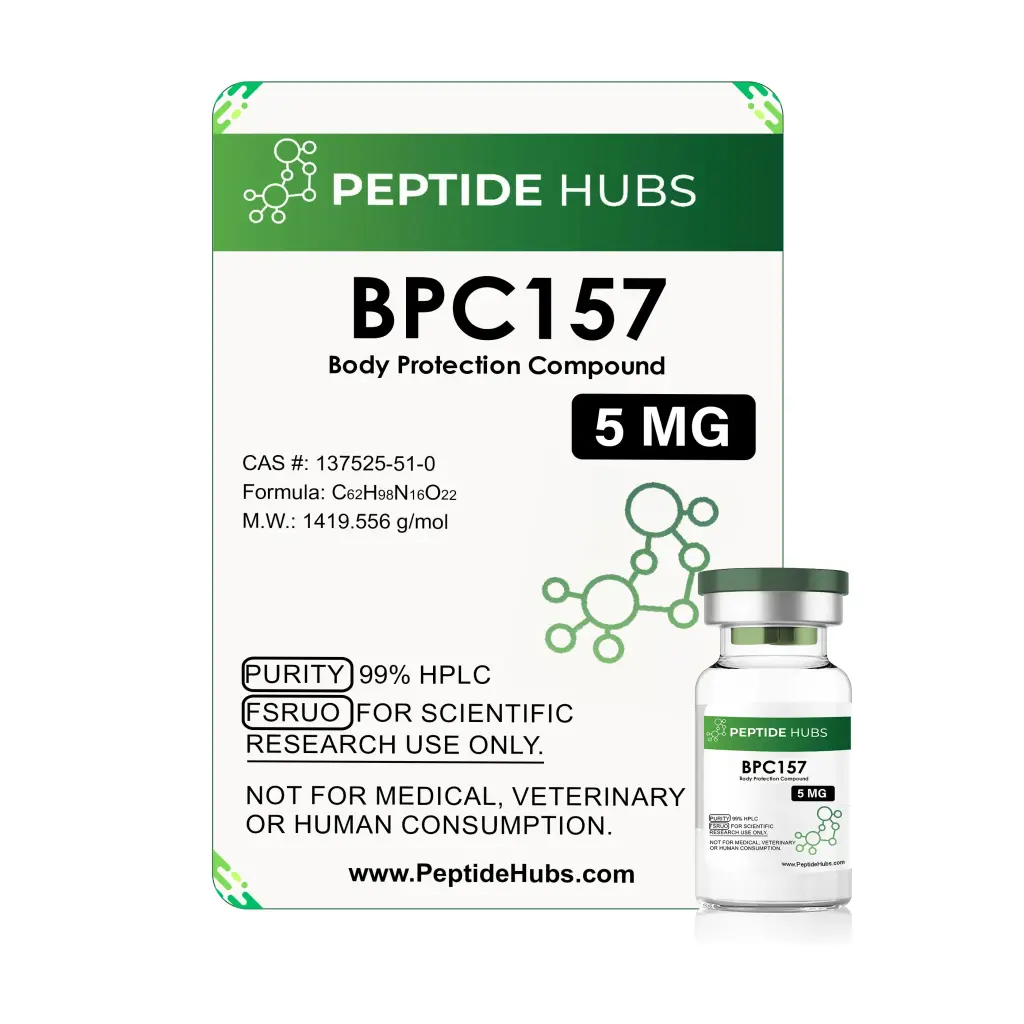
BPC 157 5 mg is a lyophilized pentadecapeptide research product manufactured by Peptide Hubs and supplied as a 5 mg/vial powder in a 2 mL vial.
BPC 157 5 mg contains the synthetic pentadecapeptide known as Body Protection Compound 157 (BPC-157), a 15-amino-acid sequence derived from a protective protein found in human gastric juice. The peptide has been studied extensively in preclinical models for its effects on tissue repair and recovery processes, with research suggesting it may enhance growth hormone receptor expression in tendon fibroblasts.
In preclinical research settings, BPC-157 has been observed to influence pathways associated with angiogenesis (new blood vessel formation), fibroblast activity, and cellular protection across various tissue types. These properties have generated interest in both academic research and non-medical bodybuilding communities, where it is commonly referenced for tendon, ligament, and muscle recovery support. However, BPC-157 is not FDA-approved for any human indication and carries a Category 2 bulk drug substance restriction.
Human clinical evidence for BPC-157 remains extremely limited. A 2026 review noted that only three uncontrolled pilot studies with a combined sample size of 30 participants have been reported, with no validated pharmacokinetics or long-term safety data. A Phase 2 clinical trial evaluating BPC-157 for acute hamstring muscle strain repair began in 2026, but results are not yet available.
BPC 157 5 mg is supplied as a lyophilized (freeze-dried) powder in a 2 mL vial. Reconstitution with an appropriate solvent is required before use in research or non-medical contexts.
BPC-157 is a stable gastric pentadecapeptide with the amino acid sequence GEPPPGKPADDAGLV and a molecular weight of approximately 1,419 Da.
BPC-157 belongs to a class of synthetic peptides investigated for cytoprotective and tissue-repair properties. Unlike classic anabolic steroids, it does not act through androgen receptor pathways; its proposed mechanisms involve modulation of angiogenesis, growth factor expression, and the nitric oxide system.
Preclinical research has demonstrated that BPC-157 can up-regulate growth hormone receptor expression in tendon fibroblasts, potentially potentiating the proliferative effects of growth hormone on healing tissue. The peptide has also been shown to activate VEGFR2-Akt-eNOS signaling, promoting angiogenesis in ischemic tissue models.
In non-medical bodybuilding contexts, BPC-157 is commonly referenced for localized soft-tissue recovery, particularly for tendon, ligament, and muscle injuries, though such use lacks rigorous clinical validation and falls outside approved indications.
BPC-157 is a synthetic 15-amino-acid fragment derived from a protective protein found in human gastric juice. This short sequence is the basis for its classification as a pentadecapeptide and distinguishes it from longer peptides such as TB-500.
Peptide Hubs offers a range of research peptides and performance compounds. Within this lineup, BPC-157 is often discussed alongside TB 500, another research peptide commonly referenced for recovery purposes, though the two have distinct amino acid sequences and mechanisms.
For those exploring peptide-based recovery protocols, GHK-CU represents a different approach, focusing on copper-binding peptide activity rather than BPC-157's angiogenic and cytoprotective pathways. For research requiring a reconstitution solution, Bacteriostatic Water is the standard diluent for preparing lyophilized peptides like BPC 157 5 mg.
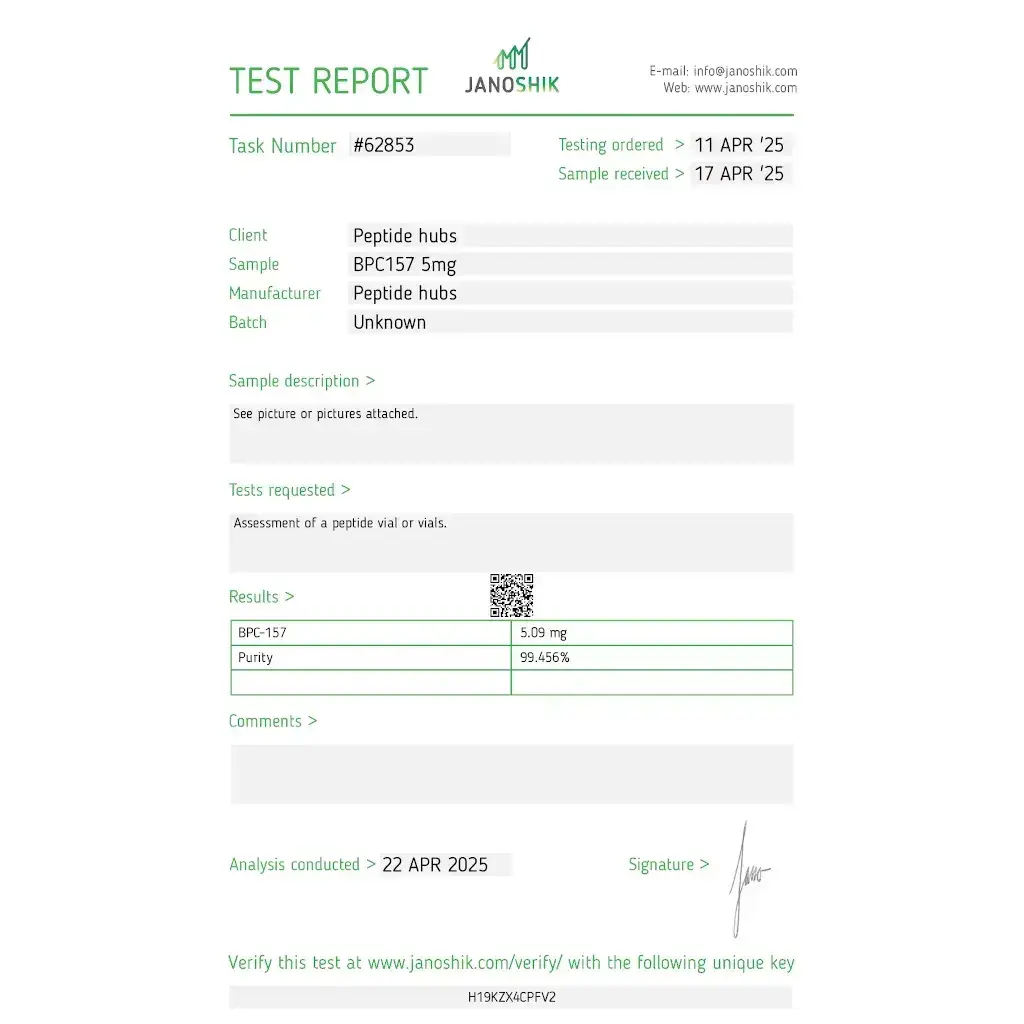
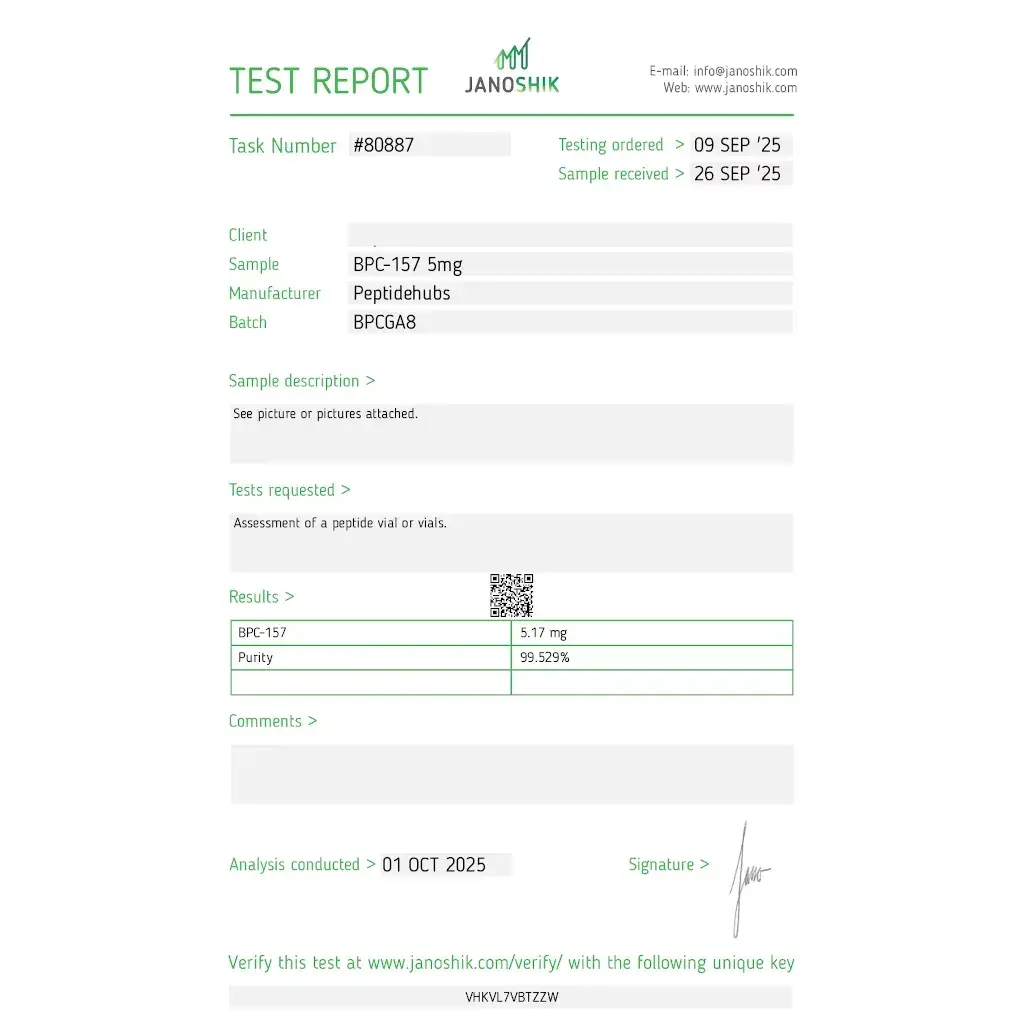
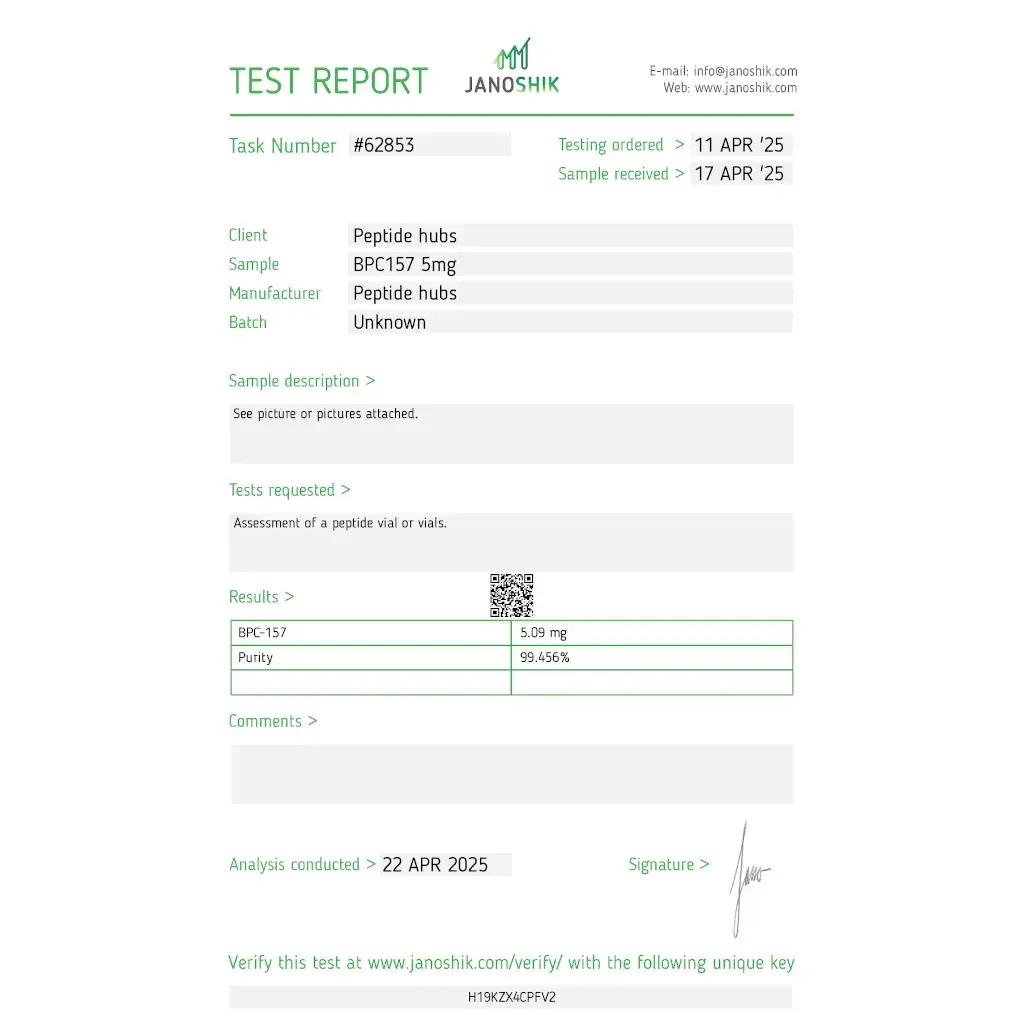
Published laboratory reports for BPC 157 5 mg are shown below with the test date, measured content, and batch number.
 View Report
 View Report
Laboratory results apply to the specific tested sample represented in each published report and should not be interpreted as a measurement of every vial or production batch.
The information below is provided for educational reference only. BPC-157 is not an FDA-approved human drug. Its use for performance, recovery, or any non-medical purpose falls outside approved indications, and no established human dosing regimen exists.
Because BPC-157 lacks human pharmacokinetic data and FDA approval, there is no medically established dosage range. In non-medical bodybuilding and research communities, reference ranges are derived from animal studies and anecdotal reports, with substantial uncertainty. Commonly referenced ranges in community discussions are 250–500 mcg per day for subcutaneous administration, with some protocols referencing up to 500 mcg twice daily for acute injuries.
| Use Case | Common Reference Range | Injection Frequency |
|---|---|---|
| General recovery support (non-medical) | 250 mcg | Once or twice daily |
| Acute injury protocol (non-medical) | 500 mcg | Once or twice daily |
| Combined with TB-500 (non-medical) | 250–500 mcg BPC-157 + TB-500 | Per individual protocol |
These ranges are community conventions, not evidence-based medical recommendations. No human dose-response relationship has been established, and individual response is unpredictable.
BPC 157 5 mg is supplied as a lyophilized powder and requires reconstitution before use. In non-medical contexts, bacteriostatic water is commonly used as the solvent. A 5 mg vial reconstituted with 2 mL of solvent yields a concentration of 2.5 mg/mL (2,500 mcg/mL), meaning a 250 mcg dose would require drawing 0.1 mL (10 units on a U-100 insulin syringe).
Reconstituted peptide should be stored refrigerated at 2-8°C and used within approximately four weeks. Lyophilized powder is more stable and should be kept under appropriate conditions.
In non-medical bodybuilding contexts, BPC-157 is frequently combined with TB 500 for recovery-focused protocols, as the two peptides are believed to address complementary aspects of tissue repair. Cycle lengths commonly referenced range from 4 to 6 weeks on, followed by 2 to 4 weeks off.
For those seeking to combine BPC 157 5 mg with growth hormone support, Ipamorelin is sometimes referenced in community protocols, though this represents a combination of different mechanisms rather than a validated synergistic stack.
No human pharmacokinetic or dose-response data exists for BPC-157. All dosage information is derived from animal research or community convention and should not be interpreted as medical guidance.
BPC-157 is not FDA-approved for human use. Safety data in humans is extremely limited, and non-medical use carries unknown risks.
BPC-157 has been evaluated by the FDA for inclusion on the 503A bulk drug substances list and was found not to meet the criteria for compounding, with the agency citing insufficient clinical safety information, inconsistent naming conventions, and lack of characterization data. In 2022, BPC-157 was added to the World Anti-Doping Agency Prohibited List under S0 (Non-Approved Substances).
There are no FDA-approved drug products containing BPC-157. Its status as a research peptide means it has not undergone the rigorous clinical trials required for human pharmaceutical approval.
BPC-157 is marketed in the United States as a research chemical, but it has not been established as safe or effective for any human indication. Non-medical use falls outside approved indications.
Human safety data for BPC-157 is minimal. Community-reported side effects include injection site reactions (redness, soreness, swelling), nausea (more common with oral dosing), dizziness, headache, and fatigue. These reports are anecdotal and not from controlled trials.
As a peptide administered parenterally, BPC-157 may pose immunogenicity risks. The FDA has noted potential for enhanced immunogenicity, along with minimal establishment of purity, efficacy, or safety. Theoretical concerns include angiogenic effects in the presence of undiagnosed tumors, though causation in humans is unproven.
Given the absence of human safety data, any consideration of BPC-157 use should involve consultation with a qualified healthcare professional. Individuals with active malignancy or a history of cancer should exercise particular caution due to the peptide's pro-angiogenic properties. Those taking anticoagulants or with bleeding disorders should also be cautious.
No established monitoring protocol exists for BPC-157. In research contexts, any adverse reactions should be documented and reported to appropriate authorities.
Lyophilized powder should be stored under conditions that preserve peptide stability. Protect from heat, moisture, and light. Once reconstituted, store refrigerated at 2-8°C and use within approximately four weeks. Keep out of reach of children.
BPC 157 5 mg is supplied through the official Peptide Hubs distribution chain and shipped in original manufacturer packaging with discreet handling.
The outer shipping package remains discreet, with privacy-focused handling. Products are supplied through the official Peptide Hubs distribution chain.
To verify your BPC 157 5 mg product, use the security code on the vial label and cross-check it on the Peptide Hubs official site. Original packaging and manufacturer presentation help reinforce product legitimacy.
For complete delivery details, tracking policy, and reshipment terms, please see our Shipping Info page.
Proper storage conditions help preserve peptide stability and integrity throughout shelf life.
Store lyophilized powder sealed and protected from light and moisture. For longer-term storage, refrigeration or freezing of the unreconstituted powder may be appropriate, though specific stability data for this product is limited.
Once reconstituted, store refrigerated at 2-8°C and use within approximately four weeks. Avoid repeated temperature fluctuations.
Keep out of reach of children. Follow proper handling practices.
Answers to common questions about BPC 157 5 mg, Pentadecapeptide, and research peptide handling.
BPC 157 5 mg is a research peptide studied in preclinical settings for its potential effects on tissue repair and recovery. In non-medical bodybuilding contexts, it is commonly referenced for tendon, ligament, and muscle recovery support, though such use falls outside approved indications and lacks rigorous clinical validation.
No established human dosing schedule exists. Community protocols commonly reference once or twice daily administration, but this is based on anecdotal convention rather than pharmacokinetic data.
BPC-157 does not suppress endogenous testosterone production and does not require post-cycle therapy in the way anabolic steroids do. However, any non-medical peptide use should be approached with caution given the absence of human safety data.
Pentadecapeptide refers to a peptide chain of fifteen amino acids. In the case of BPC-157, this specific sequence has been studied for effects on angiogenesis, growth hormone receptor expression, and cellular protection in animal models.
No human data establishes a timeline for effects. Preclinical research suggests some effects may occur within days in animal models, but translation to human timelines is speculative.
There is no universally “best” research peptide. BPC-157 is one of several peptides studied for recovery-related properties, each with distinct mechanisms. Human comparative data is essentially absent.
BPC-157 and TB-500 are different peptides with different amino acid sequences and proposed mechanisms. BPC-157 is a pentadecapeptide, while TB-500 is a fragment of thymosin beta-4. Both are commonly referenced in recovery contexts but are not interchangeable.
GHK-CU is a copper-binding tripeptide studied for skin and wound-healing applications, while BPC-157 is a larger peptide studied for broader tissue repair. They operate through different proposed pathways.
Without human dose-response data, it is impossible to characterize any amount as appropriate or excessive. Community protocols commonly reference 250–500 mcg per day, but this is convention, not evidence.
BPC 157 5 mg is labeled at 5 mg of pentadecapeptide per vial. It is supplied as a lyophilized powder in a 2 mL vial.
Yes. The latest published laboratory report dated October 1, 2025 measured BPC 157 5 mg at 5.17 mg, equivalent to 103.4% of its 5 mg label claim. The batch number is BPCGA8.
Store the lyophilized powder sealed and protected from light and moisture. Once reconstituted, refrigerate at 2-8°C and use within approximately four weeks.