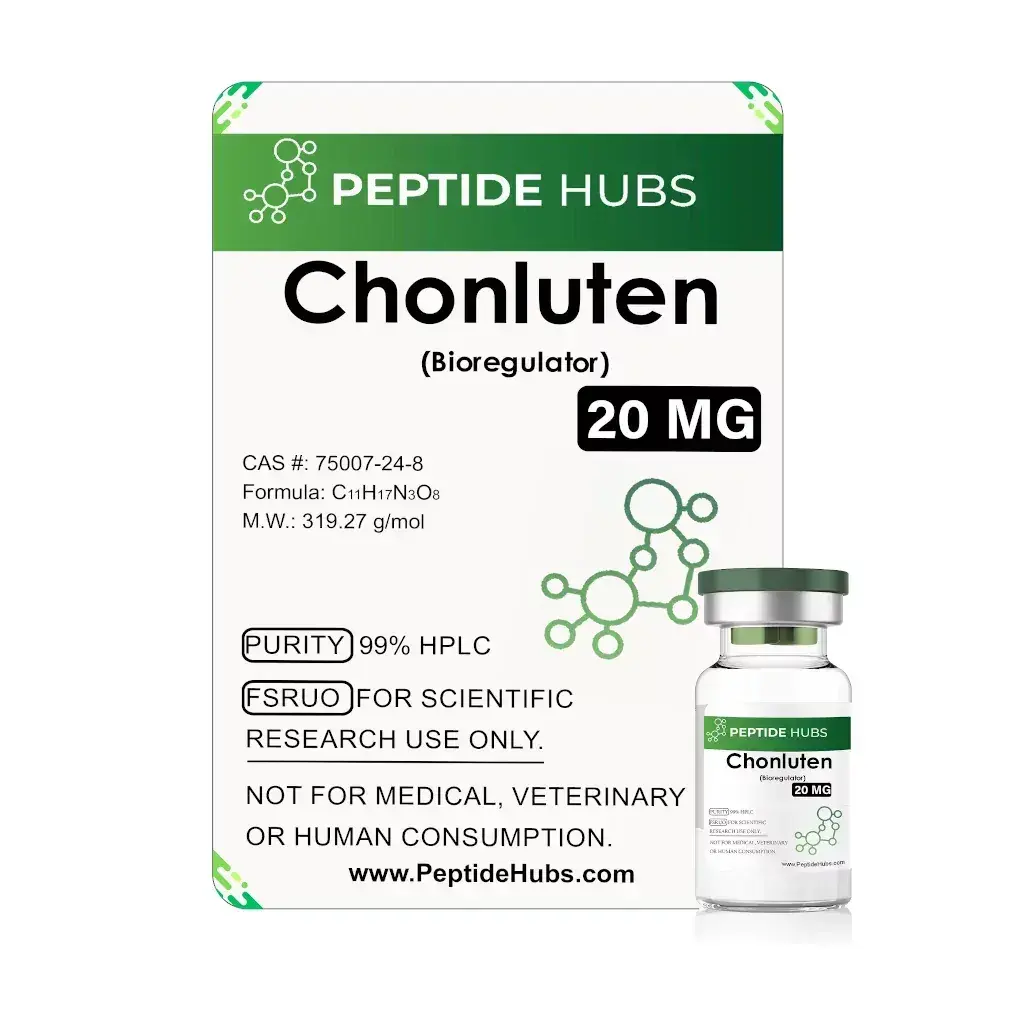
Chonluten 20 mg is a lyophilized tripeptide research product manufactured by Peptide Hubs and supplied as a 20 mg/vial powder in a 2 mL vial.
Chonluten 20 mg contains the synthetic tripeptide Glu-Asp-Gly (EDG), also known as T-34, a short peptide bioregulator developed at the Saint Petersburg Institute of Bioregulation and Gerontology. This peptide is classified as a bronchopulmonary bioregulator, derived from respiratory lung and bronchial epithelial tissue, with proposed tissue-specific effects on gene expression in the respiratory system.
Chonluten belongs to the Khavinson family of short-peptide bioregulators, which are proposed to interact with DNA and histones to epigenetically modulate tissue-relevant gene expression. Preclinical research suggests Chonluten may influence the expression of genes encoding antioxidant and anti-inflammatory proteins, including c-Fos, HSP70, and SOD. These proposed mechanisms are based primarily on in-vitro studies and have not been validated in controlled human trials.
Chonluten is not FDA-approved for any human indication and is sold strictly as a research chemical for laboratory use only. As of mid-2026, a PubMed search for "Chonluten" returns only one indexed record—a 2022 in-vitro study in the THP-1 human monocyte cell line. ClinicalTrials.gov lists no registered trials for this compound.
Chonluten 20 mg is supplied as a lyophilized (freeze-dried) powder in a 2 mL vial. Reconstitution with an appropriate solvent is required before use in research contexts.
Chonluten is a tripeptide with the amino acid sequence Glu-Asp-Gly and a molecular weight of approximately 319.27 g/mol. Its CAS number is 75007-24-8.
Chonluten belongs to the class of short-peptide bioregulators, which are synthetic peptides derived from tissue-specific proteins and proposed to act through epigenetic modulation of gene expression. Unlike longer peptides that bind cell-surface receptors, Chonluten is theorized to cross cell and nuclear membranes, interact with histones and specific DNA sequences, and influence transcription of tissue-relevant genes.
The proposed mechanism for Chonluten involves regulation of genes encoding antioxidant enzymes (such as SOD) and anti-inflammatory proteins. One in-vitro study using THP-1 monocytes demonstrated that Chonluten at 100 ng/mL reduced LPS-stimulated TNF and IL-6 expression and reduced monocyte adhesion to activated endothelial cells.
As a tripeptide, Chonluten faces significant pharmacokinetic challenges. Tripeptides are generally degraded within seconds to minutes in plasma by serum peptidases, and the EDG sequence lacks structural features (such as D-amino acids or protease-resistant residues) that would confer stability. No pharmacokinetic studies have been published for Chonluten, and the chain from administration to nuclear entry in bronchial epithelial cells remains uncharacterized.
Chonluten is distinguished by its very short sequence (three amino acids) and proposed epigenetic mechanism. This contrasts with longer peptides that act through receptor-mediated signaling. However, the bioregulator mechanism remains a hypothesis requiring independent validation.
Peptide Hubs offers a range of research peptides targeting different biological systems. Within this lineup, BPC 157 is commonly discussed alongside Chonluten for its tissue-repair properties, though BPC-157 is a larger pentadecapeptide with different proposed mechanisms.
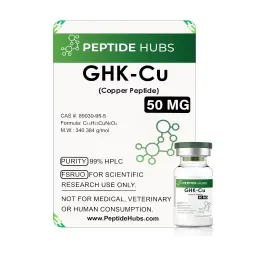
For research focused on inflammation and immune pathways rather than respiratory tissue, GHK-CU represents a different approach, acting as a copper-binding tripeptide with effects on collagen synthesis and wound healing. These peptides are not interchangeable and target distinct biological pathways.
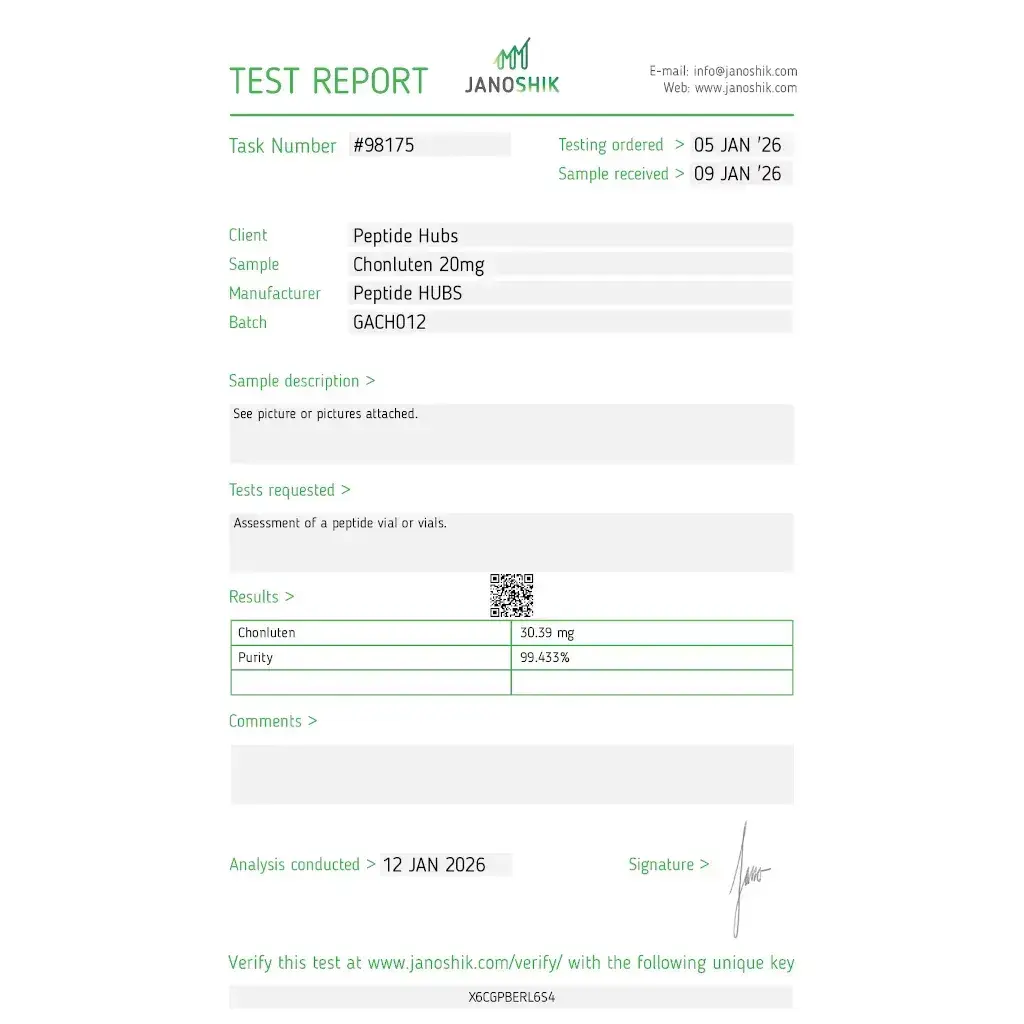
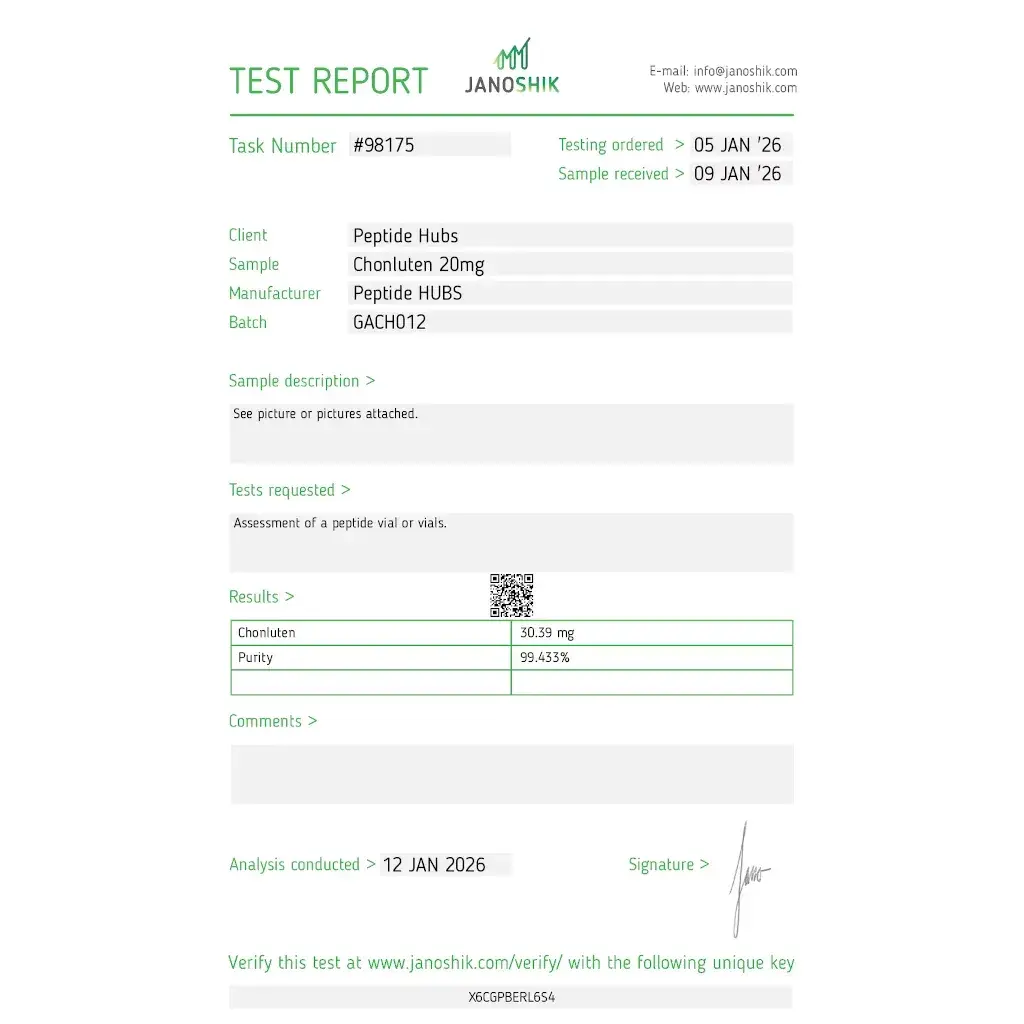
Published laboratory reports for Chonluten 20 mg are shown below with the test date, measured content, and batch number.
 View Report
Laboratory results apply to the specific tested sample represented in each published report and should not be interpreted as a measurement of every vial or production batch.
The information below is provided for educational reference only. Chonluten is not an FDA-approved human drug. Its use for any purpose outside laboratory research falls outside approved indications, and no established human dosing regimen exists.
Because Chonluten lacks human pharmacokinetic data and FDA approval, there is no medically established dosage range. Community protocols reference oral or sublingual administration of 10–20 mg daily for 10–20 consecutive days, sometimes repeated 2–3 times per year. Injectable research protocols reference 1–3 mg subcutaneously daily, based on body weight calculations of approximately 0.02–0.04 mg/kg.
| Use Case | Common Reference Range | Frequency |
|---|---|---|
| Oral capsule protocol (community) | 10–20 mg | Daily for 10–20 days |
| Subcutaneous research protocol | 1–3 mg | Daily, evening |
| Maintenance protocol | 10 mg | 2–3 cycles yearly |
These ranges are community conventions, not evidence-based medical recommendations. No human dose-response relationship has been established, and the pharmacokinetic profile of Chonluten remains uncharacterized.
Chonluten 20 mg is supplied as a lyophilized powder and requires reconstitution before use. A 20 mg vial reconstituted with 2 mL of solvent yields a concentration of 10 mg/mL. A 2 mg dose would require drawing 0.2 mL (20 units on a U-100 insulin syringe).
Reconstituted solution should be stored refrigerated at 2–8°C and used within approximately 28 days. Do not freeze the reconstituted solution, as freezing can denature peptides.
In non-medical research contexts, Chonluten is sometimes discussed alongside other Khavinson bioregulators, though no clinical evidence supports combinations. Cycle lengths commonly referenced range from 10 to 20 days, followed by rest periods of several weeks to months.
The proposed epigenetic mechanism suggests effects may persist after discontinuation, which is the rationale for spacing cycles. However, this hypothesis has not been validated in controlled studies.
No human safety or efficacy data exists for Chonluten. All dosage information is derived from community convention or theoretical calculations and should not be interpreted as medical guidance.
Chonluten is not FDA-approved for any human use. No toxicology studies, immunogenicity assessments, or safety data of any kind have been published for Chonluten in animals or humans.
Chonluten has not received FDA approval and is not recognized as Generally Recognized as Safe (GRAS). The FDA has issued warning letters stating that “Research Use Only” labeling does not shield sellers when website content establishes intended human use, in which case products are unapproved new drugs under the FD&C Act.
The absence of reported harm for an unstudied compound is not evidence of safety. Critical safety questions remain unanswered, including chronic administration effects, potential for aberrant gene expression, cancer risk assessment, reproductive and developmental toxicity, and immunogenicity.
Chonluten is sold strictly as a research chemical for laboratory use only. It is not intended for human consumption, medical treatment, or veterinary applications.
No adverse effects have been characterized for Chonluten in humans or animals. Theoretical concerns related to the Khavinson peptide class include potential for immunogenicity, peptide-related impurities, and unintended gene expression changes.
As a tripeptide, Chonluten faces rapid proteolytic degradation in plasma, and its pharmacokinetic profile is entirely uncharacterized.
Given the complete absence of safety data, any consideration of Chonluten use outside laboratory research should involve consultation with a qualified healthcare professional. The FDA has flagged immunogenicity and limited safety-related information as general concerns for compounded peptides.
No established monitoring protocol exists for Chonluten. In research contexts, any adverse reactions should be documented and reported to appropriate authorities.
Store lyophilized powder sealed and protected from light and moisture. Once reconstituted, store refrigerated at 2–8°C and use within approximately 28 days. Do not freeze reconstituted solution. Keep out of reach of children.
Chonluten 20 mg is supplied through the official Peptide Hubs distribution chain and shipped in original manufacturer packaging with discreet handling.
The outer shipping package remains discreet, with privacy-focused handling. Products are supplied through the official Peptide Hubs distribution chain.
To verify your Chonluten 20 mg product, use the security code on the vial label and cross-check it on the Peptide Hubs official site. Original packaging and manufacturer presentation help reinforce product legitimacy.
For complete delivery details, tracking policy, and reshipment terms, please see our Shipping Info page.
Proper storage conditions help preserve peptide stability and integrity throughout shelf life.
Store lyophilized powder sealed and protected from light and moisture. For longer-term storage, refrigeration or freezing of the unreconstituted powder may be appropriate, though specific stability data for this product is limited.
Once reconstituted, store refrigerated at 2–8°C and use within approximately 28 days. Do not freeze reconstituted solution, as freezing can denature peptides.
Keep out of reach of children. Follow proper handling practices.
Answers to common questions about Chonluten 20 mg, tripeptide bioregulators, and research compound handling.
Chonluten 20 mg is a research peptide studied in preclinical settings for its potential effects on respiratory tissue gene expression. It is classified as a bronchopulmonary bioregulator and is sold strictly for laboratory research use. It is not approved for any human indication.
No established human dosing schedule exists. Community protocols reference oral capsules of 10–20 mg daily for 10–20 days, or subcutaneous injections of 1–3 mg daily. These are conventions, not evidence-based recommendations.
Chonluten does not suppress endogenous testosterone production and does not require post-cycle therapy in the way anabolic steroids do. However, its complete lack of human safety data makes any non-medical use a serious concern.
Chonluten is a tripeptide proposed to act through epigenetic regulation of gene expression in respiratory tissue. In-vitro research suggests it may influence genes encoding antioxidant and anti-inflammatory proteins, but these mechanisms are not established in humans.
No human data establishes a timeline for effects. The proposed epigenetic mechanism suggests effects might accumulate over weeks, but this remains speculative.
There is no universally “best” bioregulator peptide. Chonluten has far less published research than other Khavinson peptides—a PubMed search returns only one indexed record, compared to roughly 132 for Epitalon.
Chonluten is a tripeptide bioregulator targeting respiratory tissue, while BPC 157 is a larger pentadecapeptide studied for tissue repair through angiogenic mechanisms. They have different sequences and proposed mechanisms.
Chonluten is a Glu-Asp-Gly tripeptide studied for respiratory gene regulation, while GHK-CU is a copper-binding tripeptide studied for collagen synthesis and wound healing. They target different tissues and biological pathways.
20 mg represents a full vial of Chonluten 20 mg. Community protocols reference daily doses of 10–20 mg orally, meaning a single vial would provide one to two days of oral dosing. Injectable protocols use much smaller amounts (1–3 mg).
Chonluten 20 mg is labeled at 20 mg of Chonluten per vial. It is supplied as a lyophilized powder in a 2 mL vial.
Yes. A published laboratory report dated January 12, 2026 measured Chonluten 20 mg at 30.39 mg, equivalent to 151.95% of its 20 mg label claim. The batch number is GACH012.
Store the lyophilized powder sealed and protected from light and moisture. Once reconstituted, refrigerate at 2–8°C and use within approximately 28 days. Do not freeze reconstituted solution.