HCG 5000 IU is a lyophilized injectable containing Human Chorionic Gonadotropin manufactured by Stealth Labs, supplied as 5000 IU/vial in a 2 mL vial.
HCG 5000 IU contains human chorionic gonadotropin, a glycoprotein hormone produced by the human placenta that is composed of alpha and beta subunits. The alpha subunit is essentially identical to the alpha subunits of pituitary luteinizing hormone (LH) and follicle-stimulating hormone (FSH), meaning HCG acts virtually identically to LH in the body.
In clinical practice, HCG is FDA-approved for specific indications: prepubertal cryptorchidism not due to anatomical obstruction, selected cases of hypogonadotropic hypogonadism in males, and induction of ovulation and pregnancy in anovulatory infertile women who have been appropriately pretreated with human menotropins. HCG is not approved for weight loss; the FDA has explicitly stated there is no substantial evidence that HCG increases weight loss beyond that resulting from caloric restriction.
HCG stimulates the interstitial cells (Leydig cells) of the testis to produce androgens and the corpus luteum of the ovary to produce progesterone. In non-medical bodybuilding contexts, HCG is sometimes referenced during or after testosterone cycles to help maintain testicular function, though such use falls outside approved indications and requires prescription. HCG has no known effect on fat mobilization, appetite, or body fat distribution.
HCG 5000 IU is supplied as a sterile lyophilized powder in a 2 mL glass vial. Reconstitution with bacteriostatic water is required before use. After reconstitution, the solution should be refrigerated and used within 30 days.
HCG is a glycoprotein hormone that mimics the action of luteinizing hormone (LH), stimulating gonadal steroid production.
HCG is a polypeptide hormone composed of alpha and beta subunits. The alpha subunit is essentially identical to the alpha subunits of LH and FSH, while the beta subunit confers hormonal specificity. This structural similarity means HCG has virtually identical action to pituitary LH, with a small degree of FSH activity as well.
HCG stimulates the interstitial cells (Leydig cells) of the testis to produce androgens and the corpus luteum of the ovary to produce progesterone. In males, androgen stimulation leads to the development of secondary sex characteristics and may stimulate testicular descent when no anatomical impediment is present.
During a normal menstrual cycle, LH participates with FSH in follicle development and the mid-cycle LH surge triggers ovulation. HCG can substitute for LH in this function. In pregnancy, HCG secreted by the placenta maintains the corpus luteum after LH secretion decreases.
HCG is FDA-approved only for specific medical indications: prepubertal cryptorchidism, hypogonadotropic hypogonadism in males, and induction of ovulation in infertile women pretreated with menotropins. HCG has not been demonstrated to be effective for weight loss, and there is no substantial evidence that it increases weight loss beyond caloric restriction.
Stealth Labs offers Somatropin 100 as a growth hormone product and Clomid as a non-steroidal ovulation stimulant commonly referenced in post-cycle therapy contexts. Unlike these compounds, HCG is a glycoprotein hormone that directly stimulates Leydig cells to produce testosterone, rather than acting on the pituitary or hypothalamus.
Compared to Tamoxifen, which modulates estrogen receptors, HCG works through a completely different mechanism—direct gonadotropin receptor stimulation. The primary distinction between HCG and these preparations is its injectable glycoprotein structure and its direct action on gonadal steroidogenesis.
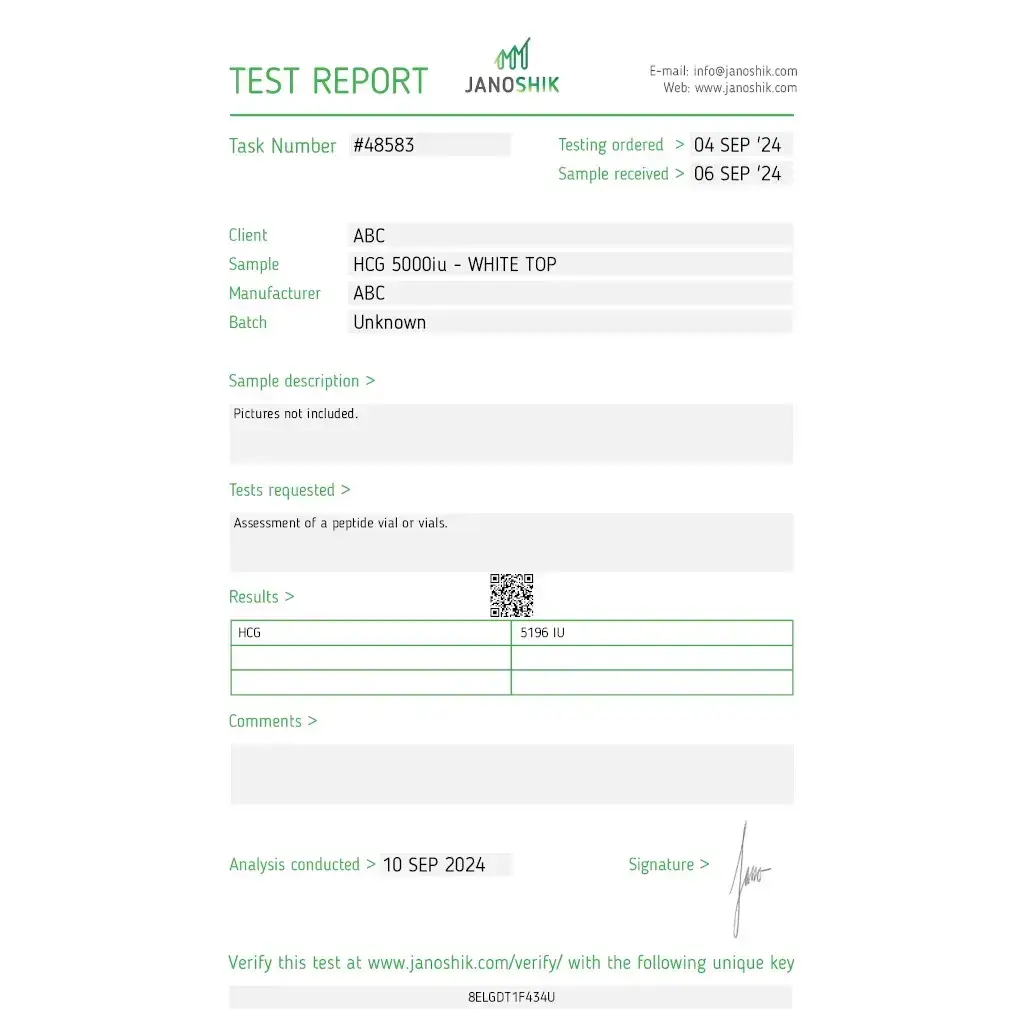
Published laboratory reports for HCG 5000 IU are shown below with the test date, measured concentration and percentage of the product's 5000 IU label claim.
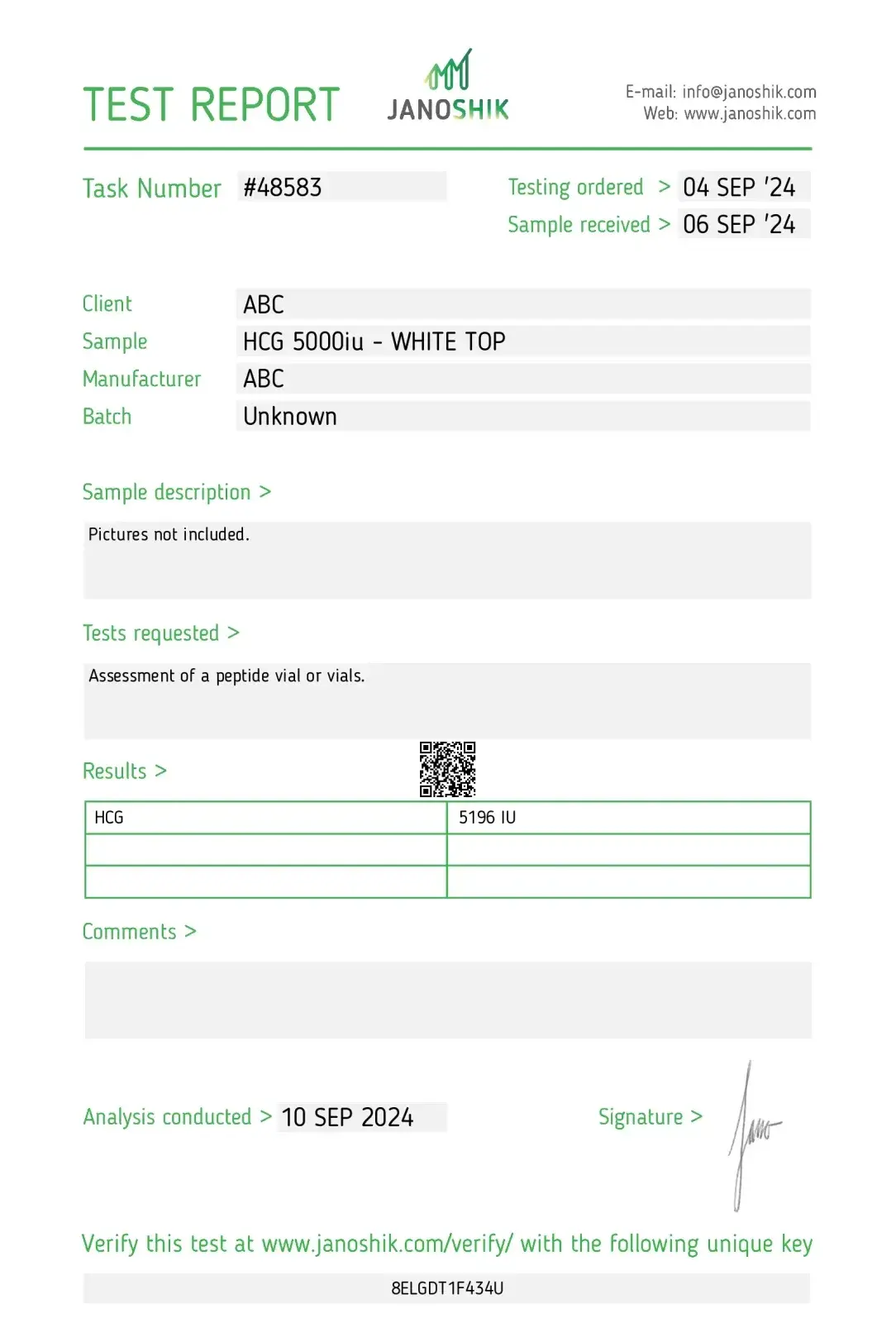 View Report
Laboratory results apply to the specific tested sample represented in each published report and should not be interpreted as a measurement of every vial or production batch.
The information below is provided for educational reference only. HCG is a prescription medication; medical use requires appropriate diagnosis, clinical supervision and ongoing monitoring. HCG is not approved for weight loss or athletic performance enhancement. Non-medical use falls outside approved indications.
FDA-approved dosing for HCG varies by indication. For prepubertal cryptorchidism, referenced regimens include 4,000 USP units three times weekly for three weeks, or 5,000 USP units every second day for four injections. For selected cases of hypogonadotropic hypogonadism in males, 500 to 1,000 USP units three times a week for three weeks is referenced, followed by the same dose twice a week for three weeks. In non-medical bodybuilding contexts, HCG is commonly referenced at 250–500 IU every other day or 2–3 times per week, though such use falls outside approved indications and lacks FDA-approved human dosing data.
| Use Case | Reference Range | Frequency |
|---|---|---|
| Cryptorchidism (medical) | 4,000–5,000 USP units | 3x weekly or every other day |
| Hypogonadotropic hypogonadism (medical) | 500–1,000 USP units | 3x weekly, then 2x weekly |
| Non-medical research reference | 250–500 IU | Every other day or 2–3x weekly |
HCG is supplied as a lyophilized powder requiring reconstitution with bacteriostatic water for injection. The recommended diluent is Bacteriostatic Water for Injection preserved with 0.9% benzyl alcohol. After reconstitution, the solution should be refrigerated and used within 30 days. Reconstitution should be performed gently by swirling rather than shaking to prevent denaturation.
For a 5,000 IU vial, reconstitution with 1 mL of diluent yields a concentration of 5,000 IU/mL. Reconstitution with 10 mL yields a concentration of 500 IU/mL for multiple-dose administration. The appropriate reconstitution volume depends on the intended dosing strategy.
Reported adverse reactions with HCG include headache, irritability, restlessness, depression, fatigue, edema, precocious puberty, gynecomastia, and pain at the injection site. Hypersensitivity reactions both localized and systemic have been reported, including erythema, urticaria, rash, angioedema, and dyspnea.
In women undergoing ovulation induction with HCG and menotropins, the principal serious adverse reactions include ovarian hyperstimulation syndrome, rupture of ovarian cysts with hemoperitoneum, multiple births, and arterial thromboembolism. HCG should be used with caution in patients with cardiac or renal disease, epilepsy, migraine, or asthma due to potential fluid retention.
HCG is not a standard component of post-cycle therapy. In non-medical bodybuilding contexts, some references suggest HCG may be used during a cycle or in the weeks immediately following the last testosterone injection, prior to starting SERM-based PCT. However, this use is not FDA-approved and lacks clinical validation. Agents such as Clomid or Tamoxifen are more commonly referenced for PCT purposes.
Dosing strategies and support protocols should be adjusted based on medical supervision and bloodwork where possible. The information above is for educational reference and does not constitute medical advice.
HCG is a prescription hormone that can affect gonadal, endocrine, and reproductive function. Medical use requires appropriate diagnosis, clinical supervision and ongoing monitoring.
HCG is FDA-approved for specific medical indications only: prepubertal cryptorchidism, selected cases of hypogonadotropic hypogonadism in males, and induction of ovulation in infertile women pretreated with menotropins. HCG is contraindicated in precocious puberty, prostatic carcinoma or other androgen-dependent neoplasm, and prior allergic reaction to HCG.
HCG has not been demonstrated to be effective adjunctive therapy in the treatment of obesity. There is no substantial evidence that it increases weight loss beyond that resulting from caloric restriction, causes a more attractive or "normal" distribution of fat, or decreases hunger and discomfort associated with calorie-restricted diets.
HCG is not approved for weight loss or athletic performance enhancement. Products sold for these purposes are not FDA-approved, and obtaining HCG without a prescription is illegal. Product concentration and laboratory verification do not establish that non-medical use is safe or appropriate.
Reported adverse reactions include headache, irritability, restlessness, depression, fatigue, edema, precocious puberty, gynecomastia, and pain at the injection site. Hypersensitivity reactions including erythema, urticaria, rash, angioedema, dyspnea and shortness of breath have been reported. Anaphylaxis has been reported with urinary-derived HCG products.
When used with menotropins for ovulation induction, serious adverse reactions include ovarian hyperstimulation syndrome, rupture of ovarian cysts with hemoperitoneum, multiple births, and arterial thromboembolism. HCG should be used with caution in patients with cardiac or renal disease, epilepsy, migraine or asthma.
HCG is contraindicated in precocious puberty, prostatic carcinoma or other androgen-dependent neoplasm, and prior allergic reaction to HCG. HCG may cause fetal harm when administered to a pregnant woman. Combined HCG/PMS therapy has been noted to induce external congenital anomalies in mice offspring in a dose-dependent manner, though extrapolation to humans has not been determined.
Induction of androgen secretion by HCG may induce precocious puberty in patients treated for cryptorchidism. Therapy should be discontinued if signs of precocious puberty occur. There have been sporadic reports of testicular tumors in otherwise healthy young men receiving HCG for secondary infertility, though a causative relationship has not been established.
Laboratory testing of the product itself is separate from clinical monitoring of the person using HCG. Product testing does not assess individual health status or suitability for use.
Lyophilized HCG powder should be stored at controlled room temperature or refrigerated, protected from light. After reconstitution with bacteriostatic water, the solution should be refrigerated and used within 30 days. Do not freeze reconstituted solution. Inspect the solution before use and do not use if it appears cloudy or contains particulate matter.
Keep all medications and injectable products out of the reach of children. Follow proper handling and sterile injection practices.
HCG 5000 IU is supplied through the official Stealth Labs distribution chain and shipped in original manufacturer packaging with discreet, privacy-focused handling.
The outer shipping package remains discreet, with privacy-focused handling and no unnecessary external product details. Products are supplied through the official Stealth Labs distribution chain.
To verify your HCG 5000 IU product, use the security code on the vial label and cross-check it on the Stealth Labs official site. Official Stealth Labs presentation, batch-linked lab proof, and original packaging help reinforce product legitimacy and buyer confidence.
For complete delivery details, tracking policy, and reshipment terms, please see our Shipping Info page.
Proper storage conditions help preserve hormone stability and overall product integrity throughout shelf life.
Lyophilized HCG powder should be stored at controlled room temperature or refrigerated, protected from light and moisture. After reconstitution with bacteriostatic water, the solution should be refrigerated at 2–8°C and used within 30 days. Do not freeze reconstituted solution.
Inspect the solution before use and do not use if it appears cloudy, discolored, or contains particulate matter. Keep out of reach of children. Follow proper handling and sterile injection practices when administering the product.
Answers to common questions about HCG 5000 IU, its approved indications, dosage, and laboratory testing.
HCG 5000 IU is FDA-approved for specific medical indications: prepubertal cryptorchidism not due to anatomical obstruction, selected cases of hypogonadotropic hypogonadism in males, and induction of ovulation and pregnancy in anovulatory infertile women who have been pretreated with human menotropins. HCG is not approved for weight loss or athletic performance enhancement.
FDA-approved dosing varies by indication. For cryptorchidism, 4,000–5,000 USP units three times weekly or every other day is referenced. For hypogonadotropic hypogonadism in males, 500–1,000 USP units three times weekly is referenced. In non-medical bodybuilding contexts, 250–500 IU every other day is sometimes referenced, but this is not FDA-approved and lacks clinical validation.
HCG is not a standard component of post-cycle therapy. In non-medical bodybuilding contexts, some references suggest HCG may be used during a cycle or in the weeks following the last testosterone injection, prior to starting SERM-based PCT. However, this use is not FDA-approved. Agents such as Clomid or Tamoxifen are more commonly referenced for PCT purposes.
HCG acts virtually identically to pituitary luteinizing hormone (LH). It stimulates the interstitial cells (Leydig cells) of the testis to produce androgens and the corpus luteum of the ovary to produce progesterone. In males, this leads to androgen production and may stimulate testicular descent when no anatomical impediment is present.
The time required for HCG to produce effects depends on the indication and individual factors. For testicular descent in cryptorchidism, response may be observed within weeks of starting therapy, though in most cases the response is temporary. For androgen production, the effects are mediated through Leydig cell stimulation and depend on the dosing regimen.
There is no single treatment that is universally best. HCG is FDA-approved for selected cases of hypogonadotropic hypogonadism in males. Other treatments such as testosterone replacement therapy may be more appropriate for different types of hypogonadism. The appropriate choice depends on the specific diagnosis and should be determined by a qualified healthcare professional.
HCG and testosterone are different compounds with distinct mechanisms. HCG is a glycoprotein hormone that stimulates Leydig cells to produce testosterone endogenously, while Testosterone Enanthate directly provides exogenous testosterone. HCG acts upstream of testosterone production, whereas exogenous testosterone bypasses the body's own production pathway.
HCG is a glycoprotein hormone that directly stimulates Leydig cells to produce testosterone. Clomid is a selective estrogen receptor modulator that acts on the hypothalamus and pituitary to increase gonadotropin secretion. These are fundamentally different mechanisms of action.
5000 IU is the total vial content, not a single dose. The appropriate dose depends on the medical indication and is determined by a physician. For cryptorchidism, 4,000–5,000 USP units per injection is referenced. It is important to distinguish a vial content from a dose; the 5000 IU label indicates the total hormone content per vial.
HCG 5000 IU is labeled at 5000 IU of Human Chorionic Gonadotropin per vial. It is supplied as a lyophilized powder in a 2 mL vial.
Yes. A published laboratory report dated September 10, 2024 measured HCG 5000 IU at 5196 IU, equivalent to 103.92% of its 5000 IU label claim. The complete report can be viewed in the Lab Reports tab. Laboratory results apply to the tested sample represented by the individual report.
No. The FDA has explicitly stated that HCG has not been demonstrated to be effective adjunctive therapy in the treatment of obesity. There is no substantial evidence that it increases weight loss beyond that resulting from caloric restriction, causes a more attractive or "normal" distribution of fat, or decreases hunger and discomfort associated with calorie-restricted diets. HCG is not approved for weight loss.
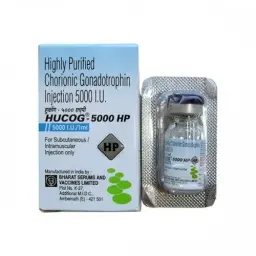
Drug Class: Natural Hormone
Active Substance: Pre-mixed Human Chorionic Gonadotropin 5000IU
Active Life: -
Average Dose: -
Liver Toxicity: No
Aromatization Rate: No
Anabolic Rate: Not a steroid
Androgenic Rate: Not a steroid
This Price Is Per amp (1 mL Each)
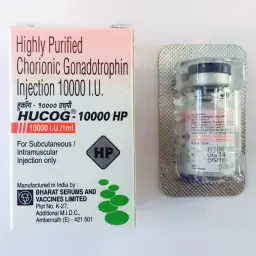
Drug Class: Natural Hormone
Active Substance: Pre-mixed Human Chorionic Gonadotropin 10000IU
Active Life: -
Average Dose: -
Liver Toxicity: No
Aromatization Rate: No
Anabolic Rate: Not a steroid
Androgenic Rate: Not a steroid
This Price Is Per amp (1 mL Each)
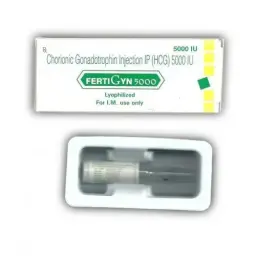
Drug Class: Natural Hormone
Active Substance: Human Chorionic Gonadotropin 5000IU
Active Life: -
Average Dose: -
Liver Toxicity: No
Aromatization Rate: No
Anabolic Rate: Not a steroid
Androgenic Rate: Not a steroid
This Price Is Per amp (1 mL Each)

Deca-Testosterone Cycle:
- Testoxyl Enanthate 250 x 2 Vials
- Nandroxyl 250 x 2 Vials
- Dianoxyl 10 x 200 Tablets
- Clomixyl x 100 Tablets
- Nolvaxyl x 100 Tablets
- HCG 5000 IU x 2 mL Vial
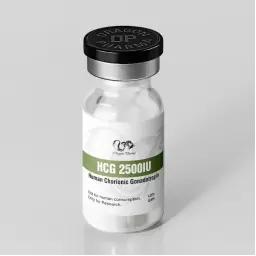
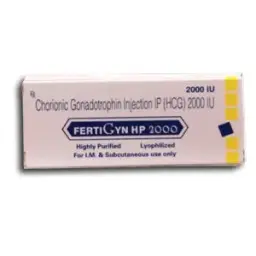
Drug Class: Natural Hormone
Active Substance: Human Chorionic Gonadotropin 2000IU
Active Life: -
Average Dose: -
Liver Toxicity: No
Aromatization Rate: No
Anabolic Rate: Not a steroid
Androgenic Rate: Not a steroid
This Price Is Per 2 ml (1 mL Each)