Proviron 50 mg is an oral tablet containing mesterolone manufactured by Stealth Labs, supplied as 50 mg per tablet in a 100-tablet package.
Proviron 50 mg contains mesterolone, a synthetic oral androgen derived from dihydrotestosterone (DHT) with a methyl group at the C-1 position . It is approved in some countries for the treatment of male hypogonadism and male infertility associated with hypogonadism, but it is not FDA-approved for human use in the United States and is not approved for athletic performance enhancement . Official Bayer product information explicitly states: "Androgens are not suitable for enhancing muscular development in healthy individuals or for increasing physical ability" .
Mesterolone has a high affinity for sex hormone-binding globulin (SHBG), which displaces testosterone from SHBG and increases free testosterone levels . Unlike testosterone and most other androgens, mesterolone is not metabolized to estrogenic compounds, which may explain why it does not significantly suppress gonadotropin release at usual therapeutic doses . Clinical studies have evaluated mesterolone for male infertility, with doses of 100–150 mg/day for 12 months showing improvements in sperm concentration and motility in men with idiopathic oligospermia .
Mesterolone is not a 17-alpha-alkylated steroid, and hepatic tolerance is reported to be better than other orally active androgens . However, rare cases of benign and malignant liver tumors have been reported after use of hormonal substances such as mesterolone, and in isolated cases these tumors have caused life-threatening intra-abdominal hemorrhage . As a research chemical product sold outside the pharmaceutical supply chain, this formulation has not undergone FDA review for purity, sterility, or actual content.
Proviron 50 mg is supplied as oral tablets for research applications. Mesterolone is rapidly absorbed after oral ingestion, reaching peak serum levels in approximately 1.6 hours with a terminal half-life of 12–13 hours .
Mesterolone is an oral DHT-derived androgen with weak androgenic properties and a unique profile of not aromatizing to estrogen.
Mesterolone is a methylated derivative of dihydrotestosterone (DHT) with weak androgenic properties, administered orally . The presence of a methyl group at the C-1 position, unlike testosterone and other androgens used for androgen replacement, means mesterolone is not metabolized to estrogen . This structural difference may explain the observation that in healthy men at usual therapeutic doses, mesterolone does not significantly depress gonadotropin release from the pituitary, and spermatogenesis is not impaired .
Mesterolone is rapidly absorbed after oral administration, with a mean Cmax of 3.1 ng/mL after 1.6 hours following a 25 mg dose. The absolute bioavailability is approximately 3% of the oral dose . It is bound to serum proteins at 98%, with 40% bound to albumin and 58% to SHBG . The drug is rapidly metabolized, with a terminal half-life of 12–13 hours .
Approved indications in some countries include androgen replacement for male hypogonadism and treatment of male infertility associated with hypogonadism . In non-medical bodybuilding contexts, mesterolone is commonly referenced at 25–100 mg daily, though such use falls outside approved indications and is not supported by the manufacturer.
Mesterolone is not FDA-approved for human use in the United States. It is approved in some countries for male hypogonadism and infertility . Official product information states it is not suitable for enhancing muscular development or increasing physical ability in healthy individuals .
Stealth Labs offers Anavar 50 as another oral compound commonly referenced in bodybuilding contexts. Unlike mesterolone, oxandrolone is an anabolic steroid with FDA approval for specific medical indications. Mesterolone is an androgen with weak anabolic activity, and its approved indications differ.
Compared to Masteron Propionate (drostanolone propionate), another DHT-derived compound, mesterolone is orally active and has a different pharmacokinetic profile. Both are DHT derivatives, but they have distinct clinical and non-medical uses.
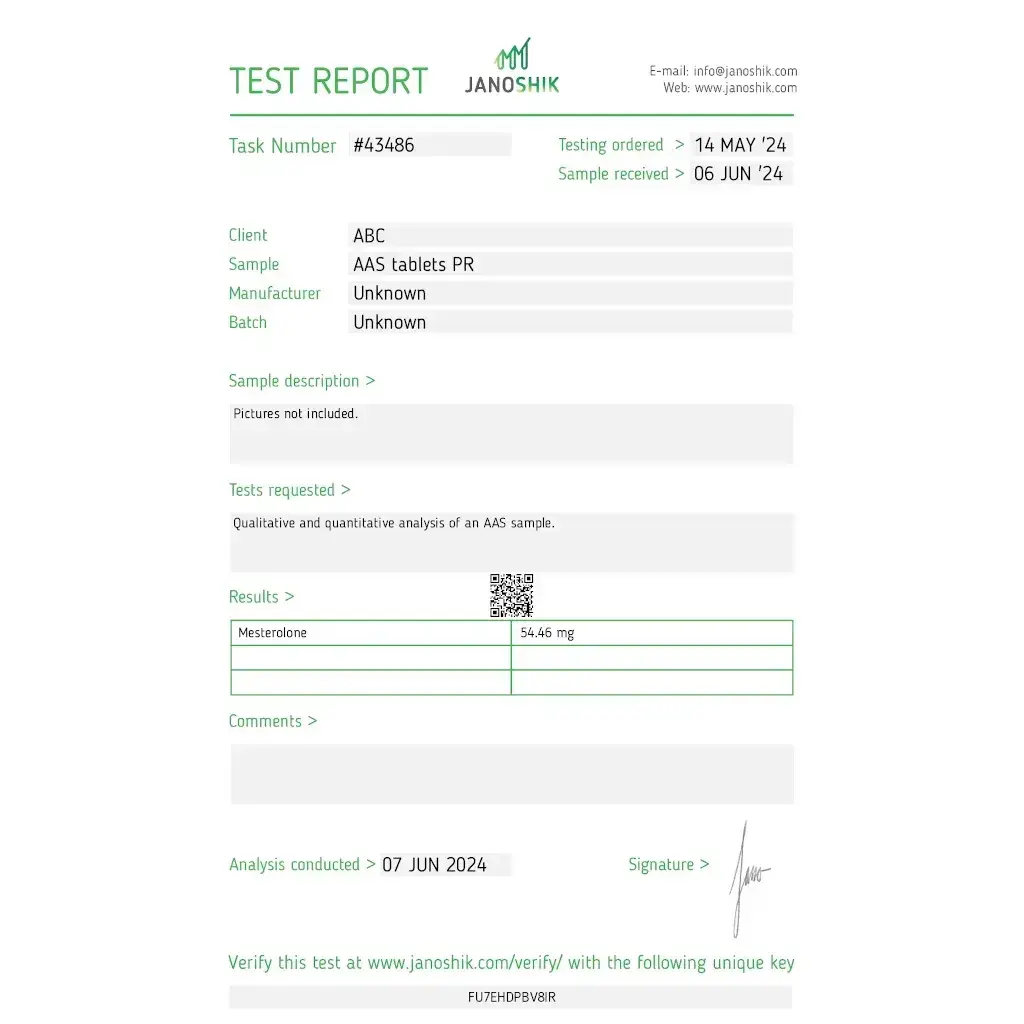
Published laboratory reports for Proviron 50 mg are shown below with the test date, measured concentration and percentage of the product's 50 mg label claim.
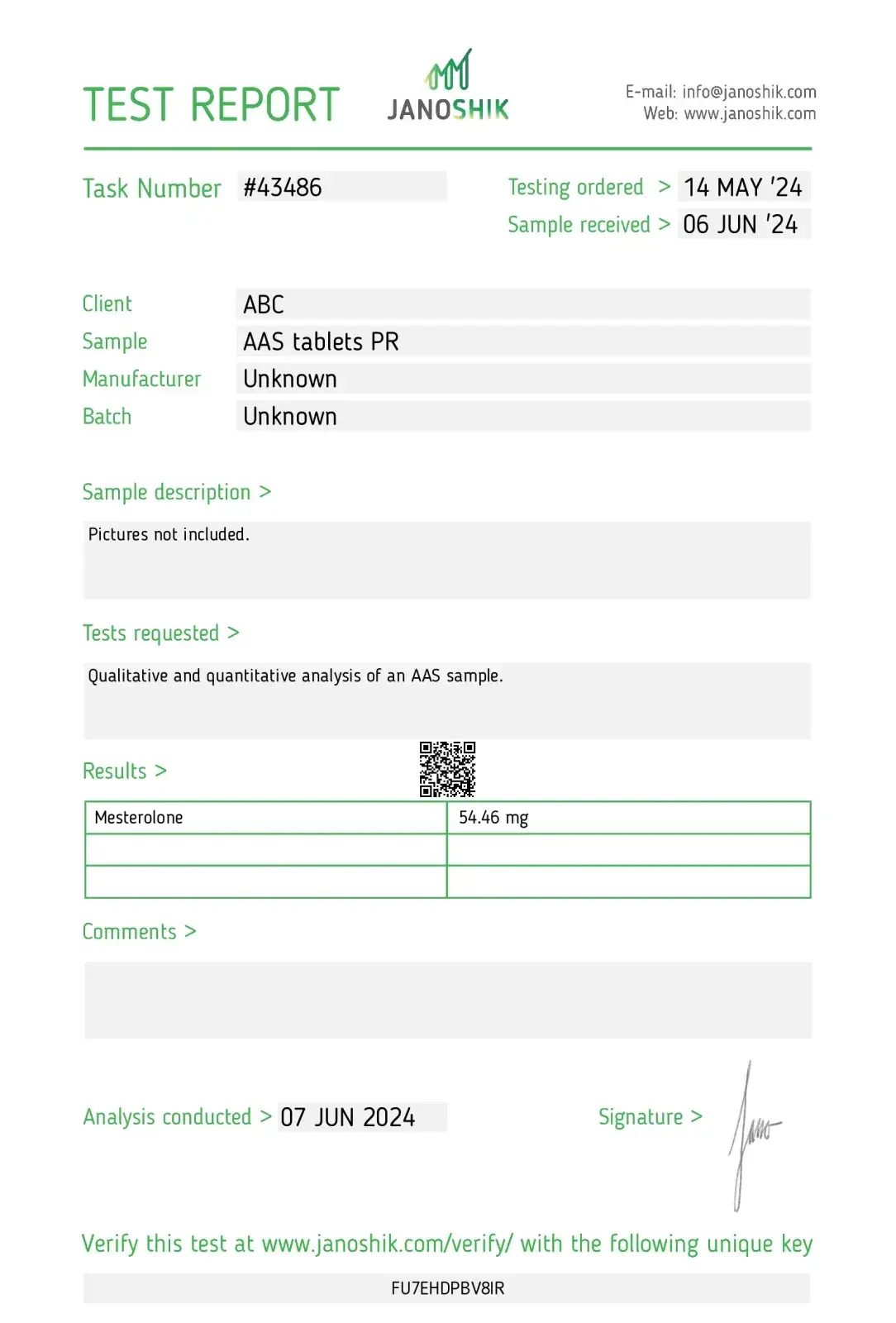 View Report
Laboratory results apply to the specific tested sample represented in each published report and should not be interpreted as a measurement of every vial or production batch.
The information below is provided for educational reference only. Mesterolone is a prescription medication in countries where it is approved; medical use requires appropriate diagnosis, clinical supervision and ongoing monitoring. This research chemical product is not for human use, and non-medical use falls outside approved indications.
Approved dosing for mesterolone in countries where it is available varies by indication. For declining physical activity and potency disturbances, initial dosing is often 25 mg three times daily, with maintenance at 25 mg once or twice daily . For hypogonadism, 25 mg three to four times daily for several months is referenced, with maintenance at 25 mg two to three times daily . For oligozoospermia, 25 mg two to three times daily for a 90-day spermatogenesis cycle is referenced . Common reference ranges for mesterolone in non-medical bodybuilding contexts are not well characterized in publicly available bodybuilding resources.
| Use Case | Reference Range | Frequency |
|---|---|---|
| Hypogonadism (medical) | 75–100 mg daily (initial) | Divided doses |
| Oligozoospermia (medical) | 50–75 mg daily | Divided doses, 90 days |
| Non-medical reference | 25–100 mg daily | Divided doses |
In non-medical bodybuilding contexts, mesterolone is sometimes referenced in combination with other compounds, particularly during cutting phases or as an adjunct to testosterone. However, mesterolone is not FDA-approved for human use in the United States, and no clinical data exists to support any combination for performance enhancement. Official product information states that androgens are not suitable for enhancing muscular development in healthy individuals .
Mesterolone has been subject to abuse, typically in combination with other anabolic androgenic steroids. Abuse of mesterolone and other anabolic androgenic steroids carries serious health risks, including cardiovascular events (in some cases with fatal outcome), hepatic and/or psychiatric events, and dependence .
Rare cases of benign and malignant liver tumors have been reported after use of hormonal substances such as mesterolone. In isolated cases, these tumors have caused life-threatening intra-abdominal hemorrhage. If severe upper abdominal pain, hepatomegaly, or signs of intra-abdominal hemorrhage occur, the possibility of a liver tumor should be considered in the differential diagnosis .
Priapism (frequent or persistent erections) may occur. In some cases, dose reduction or treatment interruption is necessary to prevent penile injury . Prostate examinations should be carried out prophylactically during treatment, as androgens may accelerate the development of subclinical prostate cancer or benign prostatic hyperplasia .
Mesterolone is reported not to inhibit gonadotropin secretion or spermatogenesis at usual therapeutic doses, unlike other androgens . This means post-cycle therapy may not be necessary for mesterolone alone in the same way it is for suppressive compounds. However, in non-medical contexts where mesterolone is used alongside other anabolic steroids, any PCT protocol would be determined by the other compounds used, not by mesterolone.
Dosing strategies, support compounds and recovery protocols should be adjusted based on medical supervision and bloodwork where possible. The information above is for educational reference and does not constitute medical advice. This research chemical is not for human use.
Mesterolone is a prescription androgen in countries where it is approved. It is not FDA-approved for human use in the United States. This research chemical product is not FDA-regulated and is not for human use.
Official product information states that androgens are not suitable for enhancing muscular development in healthy individuals or for increasing physical ability . Mesterolone is contraindicated in patients with carcinoma of the prostate, previous or existing liver tumors, breast cancer, and hypercalcemia . It should only be used by male patients; use in women is contraindicated .
Mesterolone has been subject to abuse, typically in combination with other anabolic androgenic steroids. Abuse carries serious health risks, including cardiovascular events (in some cases with fatal outcome), hepatic and/or psychiatric events, and dependence. Abuse should be discouraged .
This product is sold as a research chemical and is not approved for human use. Products sold online under the name Proviron through research compound vendors are not FDA-regulated, have no verified manufacturing standards, and carry unknown contamination, dosing, and safety risks. Mesterolone is not legally available in the United States.
Rare cases of benign and malignant liver tumors have been observed after the use of hormonal substances such as mesterolone. In isolated cases, these tumors have led to life-threatening intra-abdominal hemorrhage. Severe upper abdominal pain, hepatomegaly, or signs of intra-abdominal hemorrhage should prompt consideration of a liver tumor in the differential diagnosis .
Priapism (frequent or persistent erections) may occur; dose reduction or treatment interruption may be necessary to prevent penile injury . Other potential effects include oily skin, acne, male pattern baldness, body or facial hair growth, headache, fluid retention, breast enlargement, depression or aggression, liver tumors, and prostate cancer .
Androgens may decrease thyroxine-binding globulin levels, resulting in decreased total T4 serum levels and increased resin uptake of T3 and T4. Free thyroid hormone levels remain unchanged, however, and there is no clinical evidence of thyroid dysfunction .
Regular examinations of the prostate should be carried out prophylactically during treatment . In older men, urinary obstruction may be precipitated by androgen therapy . Caution is advised in patients with conditions aggravated by fluid overload from sodium or fluid retention, such as cardiovascular disorders, renal impairment, hypertension, epilepsy, or migraine .
Use in puberty may cause premature closure of the epiphyses and stop linear growth . Diabetes mellitus, androgen-sensitive polycythemia, or sleep apnea may be exacerbated . Androgens are considered unsafe in patients with porphyria .
Prostate disease should be excluded prior to commencement, and regular examinations of the prostate should be carried out prophylactically. Monitoring of hepatic function is recommended . In rare cases, benign and malignant liver tumors have been reported, so liver function should be monitored if therapy is prolonged .
Laboratory testing of the product itself, such as the published potency report shown in the Lab Reports tab, is separate from clinical monitoring of the person using the medication. Product testing does not assess individual health status or suitability for use.
Store at room temperature (15–30°C) in the original packaging, protected from excessive heat, moisture, and direct light. Keep out of reach of children.
Proviron 50 mg is supplied through the official Stealth Labs distribution chain and shipped in original manufacturer packaging with discreet, privacy-focused handling.
The outer shipping package remains discreet, with privacy-focused handling and no unnecessary external product details. Products are supplied through the official Stealth Labs distribution chain.
To verify your Proviron 50 mg product, use the security code on the package label and cross-check it on the Stealth Labs official site. Official Stealth Labs presentation, batch-linked lab proof, and original packaging help reinforce product legitimacy and buyer confidence.
For complete delivery details, tracking policy, and reshipment terms, please see our Shipping Info page.
Proper storage conditions help preserve tablet stability and overall product integrity throughout shelf life.
Store at room temperature (15–30°C) in the original packaging, protected from excessive heat, moisture, and direct light. Keep the container tightly closed when not in use.
Do not use if tablets appear discolored, crumbled, or otherwise abnormal. Keep out of reach of children.
Answers to common questions about Proviron 50 mg, its research status, clinical data, and laboratory testing.
Proviron 50 mg contains mesterolone, which is approved in some countries for the treatment of male hypogonadism and male infertility associated with hypogonadism. It is not FDA-approved for human use in the United States and is not approved for athletic performance enhancement. Official product information states it is not suitable for enhancing muscular development in healthy individuals.
Approved dosing varies by indication. For hypogonadism, 25 mg three to four times daily for several months is referenced, with maintenance at 25 mg two to three times daily. For oligozoospermia, 25 mg two to three times daily for a 90-day cycle is referenced. No dosing recommendation can be made for this research chemical product, as it is not FDA-approved for human use.
Mesterolone is reported not to inhibit gonadotropin secretion or spermatogenesis at usual therapeutic doses, unlike other androgens. This means post-cycle therapy may not be necessary for mesterolone alone. However, in non-medical contexts where mesterolone is used alongside other anabolic steroids, any PCT protocol would be determined by the other compounds used.
Mesterolone is an oral androgen with high affinity for sex hormone-binding globulin (SHBG), which displaces testosterone from SHBG and increases free testosterone levels. It is not metabolized to estrogenic compounds. In clinical settings, it is used for androgen replacement in hypogonadism and to improve sperm count and quality in male infertility associated with hypogonadism.
Mesterolone is rapidly absorbed after oral administration, with peak serum levels reached in approximately 1.6 hours and a terminal half-life of 12–13 hours. Clinical effects on symptoms of androgen deficiency may be noticed within weeks, while effects on spermatogenesis in infertility treatment are typically assessed over a 90-day cycle.
There is no single androgen that is universally best. Mesterolone has a unique profile: it is orally active, does not aromatize to estrogen, and is reported not to suppress gonadotropins at usual doses. However, it is not FDA-approved for human use in the United States, and official product information states it is not suitable for enhancing muscular development in healthy individuals.
Proviron (mesterolone) is an androgen with weak anabolic activity, while Anavar (oxandrolone) is an anabolic steroid with stronger anabolic effects. Both are orally active, but they have different approved indications and side effect profiles. Mesterolone is not FDA-approved for human use in the United States; oxandrolone is FDA-approved for specific medical indications.
Proviron (mesterolone) and Masteron (drostanolone) are both DHT-derived compounds, but mesterolone is orally active while drostanolone is typically injectable. They have different pharmacokinetic profiles and clinical uses. Neither is FDA-approved for human use in the United States.
A milligram amount cannot be classified as appropriate or excessive without considering the medical indication, individual response, and other factors. Approved dosing for hypogonadism is 75–100 mg daily initially, with maintenance at 50–75 mg daily. It is also important to distinguish a dose from a product's tablet strength. Proviron 50 mg indicates 50 mg per tablet; that strength does not by itself specify how much should be taken.
Proviron 50 mg is labeled at 50 mg of mesterolone per tablet. It is supplied as oral tablets in a 100-tablet package.
Yes. A published laboratory report dated June 7, 2024 measured Proviron 50 mg at 54.46 mg, equivalent to 108.92% of its 50 mg label claim. The complete report can be viewed in the Lab Reports tab. Laboratory results apply to the tested sample represented by the individual report.
In non-medical bodybuilding contexts, mesterolone is sometimes referenced in combination with other compounds. However, mesterolone is not FDA-approved for human use in the United States, and no clinical data exists to support any combination for performance enhancement. Official product information states that androgens are not suitable for enhancing muscular development in healthy individuals.