Turinabol 50 mg is an oral tablet containing 4-Chlorodehydromethyltestosterone manufactured by Stealth Labs, supplied as 50 mg per tablet in a 100-tablet package.
Turinabol 50 mg contains 4-Chlorodehydromethyltestosterone (also known as dehydrochloromethyltestosterone, DHCMT, or Oral Turinabol), a 17-alpha-alkylated anabolic-androgenic steroid. It is not FDA-approved for human use and is classified as a Schedule III controlled substance in the United States. The compound was originally developed by the East German pharmaceutical company Jenapharm in the 1960s and marketed as Oral-Turinabol, but production was discontinued in 1994.
4-Chlorodehydromethyltestosterone binds to the androgen receptor, modulating gene expression related to protein synthesis, muscle growth, and metabolism. It is the 4-chloro-substituted derivative of metandienone (Dianabol), with a chlorine atom at the C-4 position and a double bond between C-1 and C-2 that enhances anabolic properties while reducing androgenic effects. The 17-alpha-alkylation allows oral bioavailability but contributes to hepatotoxicity. It does not aromatize to estrogen, which is why it is commonly associated with lean, dry gains rather than water retention.
4-Chlorodehydromethyltestosterone is banned by the World Anti-Doping Agency (WADA) under class S1 (Anabolic Androgenic Steroids) and is prohibited at all times in sport. Its unique long-term metabolite, DHCMT M3 (4α-chloro-18-nor-17β-hydroxymethyl-17α-methyl-5α-androst-13-en-3α-ol), is detectable in urine for weeks to months after administration and is used by WADA-accredited laboratories for retrospective detection. This metabolite was responsible for numerous positive retests from the 2008 Beijing and 2012 London Olympic Games. As a research chemical product sold outside the pharmaceutical supply chain, this formulation has not undergone FDA review for purity, sterility, or actual content.
Turinabol 50 mg is supplied as oral tablets for research applications. The 17-alpha-alkylated structure allows oral administration but is associated with hepatotoxicity, including cholestatic jaundice and hepatic adenomas with prolonged use.
4-Chlorodehydromethyltestosterone is a 17-alpha-alkylated oral anabolic steroid with a relatively low androgenic rating and no aromatization to estrogen.
4-Chlorodehydromethyltestosterone is a synthetic anabolic-androgenic steroid derived from testosterone, with a chlorine atom at the C-4 position and a double bond between C-1 and C-2. These structural modifications enhance anabolic properties while reducing androgenic effects. On a scale where testosterone has an androgenic rating of 100, 4-Chlorodehydromethyltestosterone has an androgenic rating of approximately 6 and an anabolic rating of 53. Its elimination half-life is approximately 16 hours, allowing for once- or twice-daily dosing.
The compound was developed by Jenapharm in the 1960s and introduced for clinical use in 1965, primarily to support recovery after major surgeries. It was discontinued as a pharmaceutical in 1994 but remains one of the most commonly detected anabolic steroids in anti-doping statistics. It is banned by WADA at all times and is a Schedule III controlled substance in the United States.
In non-medical bodybuilding contexts, 4-Chlorodehydromethyltestosterone is commonly referenced at doses of 30–60 mg daily for 4–8 weeks. However, such use falls outside approved indications and carries significant health risks.
4-Chlorodehydromethyltestosterone is not FDA-approved for human use and is classified as a Schedule III controlled substance in the United States. It is banned by WADA under class S1 and is prohibited at all times in sport.
Stealth Labs offers Anavar 50 as another oral anabolic steroid (oxandrolone), which is FDA-approved for specific medical indications. Unlike 4-Chlorodehydromethyltestosterone, oxandrolone is not a controlled substance in the same schedule and has different clinical applications.
Compared to Danabol 50 (methandienone), 4-Chlorodehydromethyltestosterone is also a 17-alpha-alkylated oral steroid but does not aromatize and is associated with leaner gains. Both are associated with hepatotoxicity and are banned in sport.
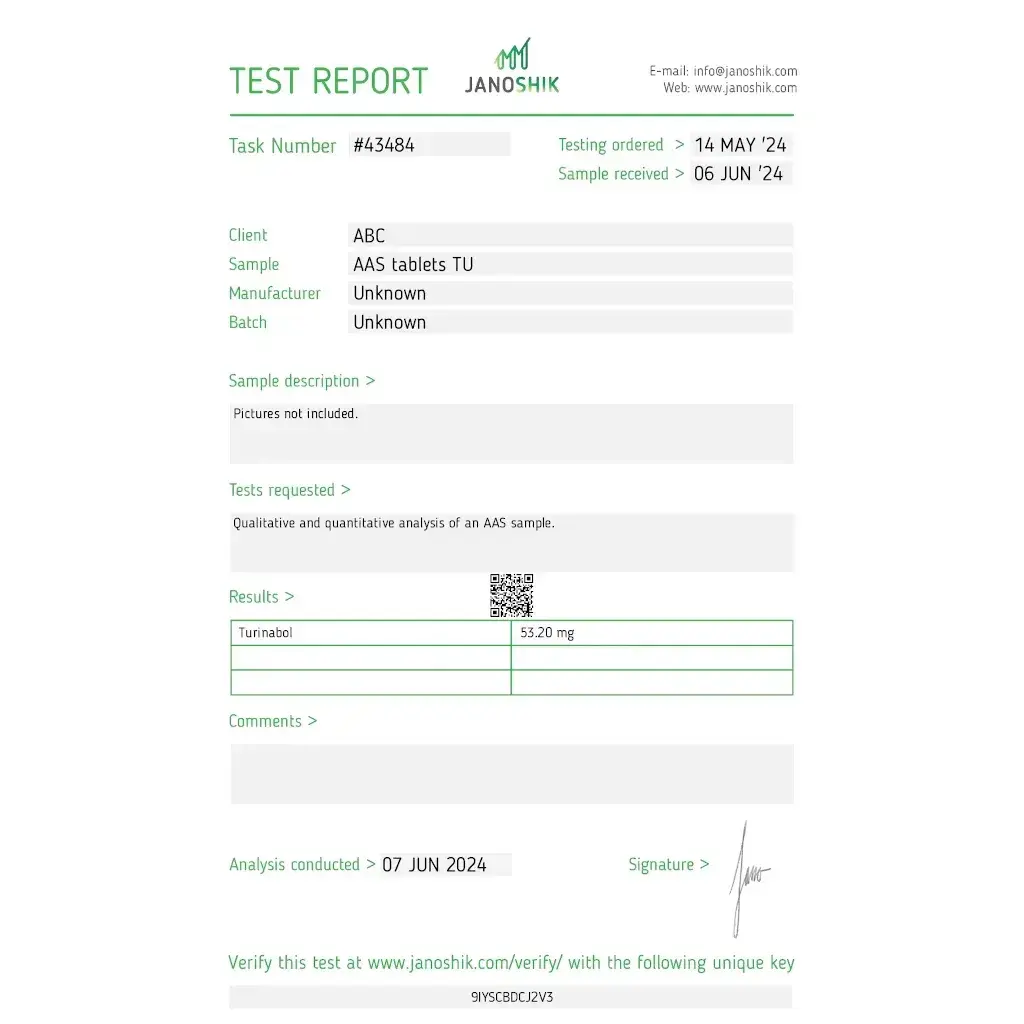
Published laboratory reports for Turinabol 50 mg are shown below with the test date, measured concentration and percentage of the product's 50 mg label claim.
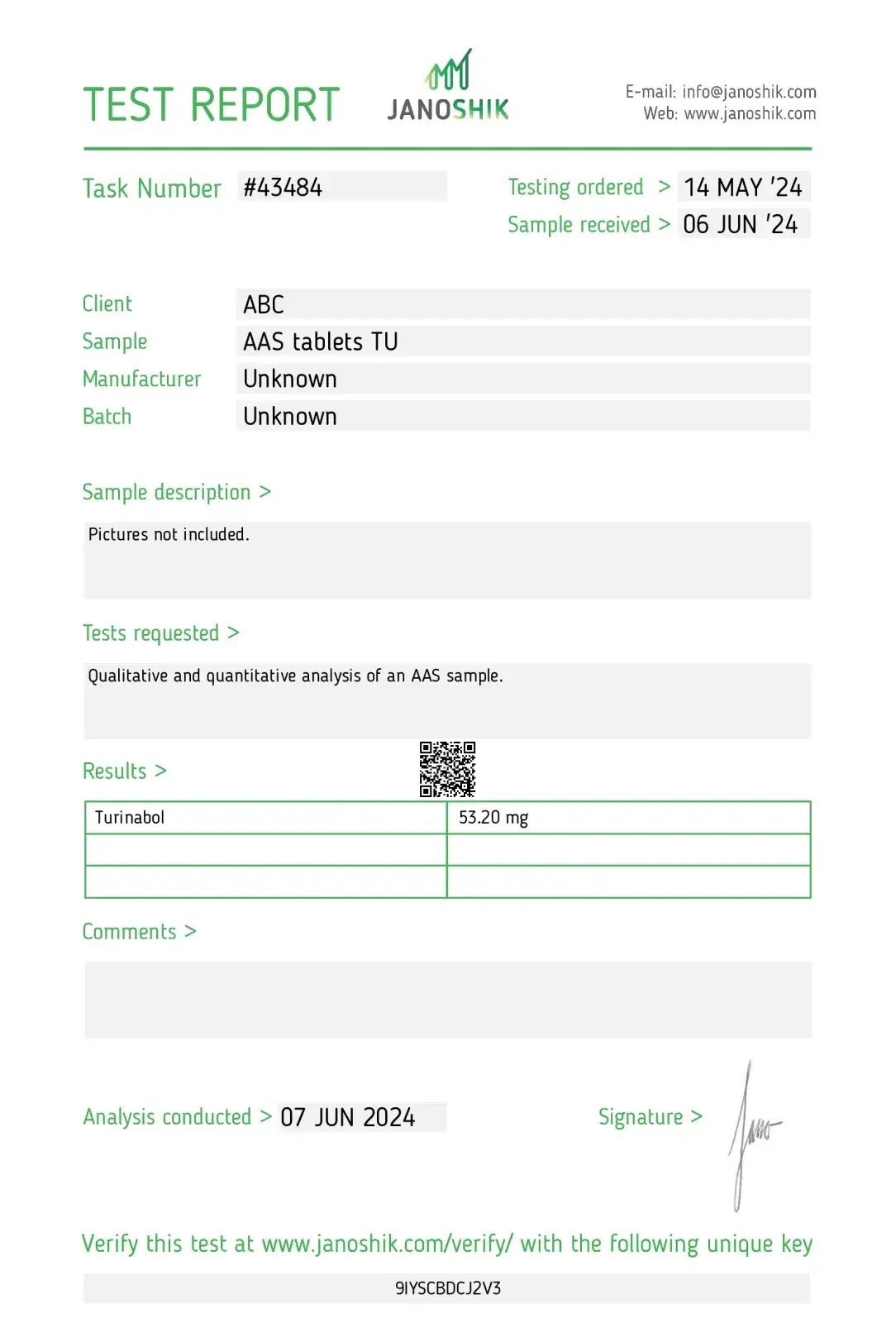 View Report
Laboratory results apply to the specific tested sample represented in each published report and should not be interpreted as a measurement of every vial or production batch.
The information below is provided for educational reference only. 4-Chlorodehydromethyltestosterone is not FDA-approved for human use and is a Schedule III controlled substance. This research chemical product is not for human use, and non-medical use falls outside approved indications.
Common reference ranges for 4-Chlorodehydromethyltestosterone in non-medical contexts are not well characterized in publicly available bodybuilding resources, and no FDA-approved human dosing information exists. Historical clinical dosing referenced up to 50 mg daily for recovery after surgery. In non-medical bodybuilding contexts, 4-Chlorodehydromethyltestosterone is commonly referenced at 30–60 mg daily for 4–8 weeks, with split dosing providing more stable blood levels. These figures are anecdotal and lack clinical validation for non-medical use.
| Use Case | Reference Range | Frequency |
|---|---|---|
| Historical clinical (discontinued) | Up to 50 mg daily | Divided doses |
| Non-medical conservative reference | 30–40 mg daily | Split into 2 doses |
| Non-medical standard reference | 40–60 mg daily | Split into 2 doses |
In non-medical bodybuilding contexts, 4-Chlorodehydromethyltestosterone is sometimes stacked with a testosterone base. A typical combination referenced is TRT-dose testosterone (100–200 mg/week) with 4-Chlorodehydromethyltestosterone at 30–60 mg daily. However, the compound is not FDA-approved for human use, and no clinical data exists to support any combination with other compounds.
Because 4-Chlorodehydromethyltestosterone is 17-alpha-alkylated, concurrent use with other oral 17-alpha-alkylated steroids increases hepatotoxicity risk. It is banned by WADA and is prohibited at all times in sport.
4-Chlorodehydromethyltestosterone is associated with hepatotoxicity due to its 17-alpha-alkylated structure. Rare but serious risks include cholestatic jaundice (yellowing of skin/eyes, dark urine, pale stools, severe itching), peliosis hepatis, and hepatic adenomas with prolonged use. Liver function tests should be monitored if use is considered.
Cardiovascular risks include adverse lipid changes, particularly reduced HDL cholesterol, and potential hematocrit elevation. Thrombotic events have been associated with anabolic steroid use, and the combined lipid/BP/hematocrit package raises clot risk.
Other potential adverse effects include suppression of natural testosterone production, acne, accelerated hair shedding in genetically predisposed individuals, and for women, virilization symptoms (voice deepening, clitoral sensitivity, body hair changes) which may be irreversible.
4-Chlorodehydromethyltestosterone suppresses endogenous testosterone production, and post-cycle therapy is commonly recommended in non-medical contexts. Because the compound has a short half-life (approximately 16 hours) and no ester to clear, standard SERM PCT can begin approximately 3 days after the last dose. A typical protocol referenced includes nolvadex 40/40/20/20 mg over 4 weeks, or clomid 50/50/25/25. Agents such as Clomid or Tamoxifen are commonly referenced for this purpose.
No human clinical data exists to support any specific dosing strategy for 4-Chlorodehydromethyltestosterone in non-clinical settings. The information above is for educational reference only and does not constitute medical advice. This research chemical is not for human use.
4-Chlorodehydromethyltestosterone is not FDA-approved for human use and is associated with serious hepatotoxicity, cardiovascular risks, and hormonal suppression. This research chemical product is not FDA-regulated and is not for human use.
4-Chlorodehydromethyltestosterone is not FDA-approved for human use and is classified as a Schedule III controlled substance in the United States. It was discontinued as a pharmaceutical in 1994. The compound is banned by WADA under class S1 (Anabolic Androgenic Steroids) and is prohibited at all times in sport.
It is not a prescription, a protocol, or encouragement to use. 4-Chlorodehydromethyltestosterone is a controlled anabolic steroid with real cardiovascular, hepatic, hormonal, and fertility risks, some not fully reversible.
This product is sold as a research chemical and is not approved for human use. Products sold online under the name Turinabol through research compound vendors are not FDA-regulated, have no verified manufacturing standards, and carry unknown contamination, dosing, and safety risks.
Hepatotoxicity is a primary concern due to the 17-alpha-alkylated structure. Rare but serious risks include cholestatic jaundice, peliosis hepatis, and hepatic adenomas with long-term use. Liver function tests should be monitored if use is considered.
Cardiovascular risks include adverse lipid changes (reduced HDL cholesterol) and potential hematocrit elevation. Thrombotic events have been associated with anabolic steroid use.
Other potential effects include suppression of natural testosterone production, acne, accelerated hair shedding in genetically predisposed individuals, and for women, virilization symptoms (voice deepening, clitoral sensitivity, body hair changes) which may be irreversible.
The unique long-term metabolite DHCMT M3 is detectable in urine for 40–50 days after a single 40 mg dose, making retrospective detection possible.
Hard contraindications include pre-existing elevated liver function tests, hepatic disease, or heavy alcohol use. Untreated hypertension or dyslipidemia should be addressed before considering any 17-alpha-alkylated oral. Pregnancy or pregnancy potential is an absolute contraindication due to androgenic teratogenic effects.
No monitoring parameters have been established for 4-Chlorodehydromethyltestosterone outside clinical trial settings. In community contexts, liver function tests, lipid profile, and hematocrit are commonly monitored. Laboratory testing of the product itself, such as the published potency report shown in the Lab Reports tab, is separate from any clinical monitoring. Product testing does not assess individual health status or suitability for use.
Oral tablets should be stored at controlled room temperature (15–25°C) in the original packaging, protected from excessive heat, moisture, and direct light. Keep out of reach of children.
4-Chlorodehydromethyltestosterone is a Schedule III controlled substance and should be handled and disposed of according to local regulations.
Turinabol 50 mg is supplied through the official Stealth Labs distribution chain and shipped in original manufacturer packaging with discreet, privacy-focused handling.
The outer shipping package remains discreet, with privacy-focused handling and no unnecessary external product details. Products are supplied through the official Stealth Labs distribution chain.
To verify your Turinabol 50 mg product, use the security code on the package label and cross-check it on the Stealth Labs official site. Official Stealth Labs presentation, batch-linked lab proof, and original packaging help reinforce product legitimacy and buyer confidence.
For complete delivery details, tracking policy, and reshipment terms, please see our Shipping Info page.
Proper storage conditions help preserve tablet stability and overall product integrity throughout shelf life.
Store at controlled room temperature (15–25°C) in the original packaging, protected from excessive heat, moisture, and direct light. Keep the container tightly closed when not in use.
Do not use if tablets appear discolored, crumbled, or otherwise abnormal. Keep out of reach of children. 4-Chlorodehydromethyltestosterone is a Schedule III controlled substance and should be handled and disposed of according to local regulations.
Answers to common questions about Turinabol 50 mg, its research status, clinical data, and laboratory testing.
Turinabol 50 mg contains 4-Chlorodehydromethyltestosterone, which is not FDA-approved for human use and is classified as a Schedule III controlled substance in the United States. It was historically developed by Jenapharm in the 1960s to support recovery after major surgeries but was discontinued as a pharmaceutical in 1994. In non-medical bodybuilding contexts, it is commonly referenced for lean muscle gains, though such use is prohibited in sport and carries significant health risks.
No FDA-approved human dosing exists for 4-Chlorodehydromethyltestosterone. Historical clinical dosing referenced up to 50 mg daily. In non-medical bodybuilding contexts, it is commonly referenced at 30–60 mg daily, split into two doses for more stable blood levels. These figures are anecdotal and lack clinical validation.
4-Chlorodehydromethyltestosterone suppresses endogenous testosterone production, and post-cycle therapy is commonly recommended in non-medical contexts. Because the compound has a short half-life (approximately 16 hours) and no ester to clear, standard SERM PCT can begin approximately 3 days after the last dose. A typical protocol referenced includes nolvadex 40/40/20/20 mg over 4 weeks, or clomid 50/50/25/25. Agents such as Clomid or Tamoxifen are commonly referenced for this purpose.
4-Chlorodehydromethyltestosterone binds to the androgen receptor, modulating gene expression related to protein synthesis, muscle growth, and metabolism. It is the 4-chloro-substituted derivative of metandienone (Dianabol), with structural modifications that enhance anabolic properties while reducing androgenic effects. It does not aromatize to estrogen, which is why it is commonly associated with lean, dry gains rather than water retention.
4-Chlorodehydromethyltestosterone has an elimination half-life of approximately 16 hours, allowing for once- or twice-daily dosing. In non-medical contexts, community reports suggest initial changes in strength and muscle hardness may be noticed within 1–2 weeks, with more pronounced effects by week 3–4. However, no controlled human trials have characterized the onset of effects for non-medical use.
There is no clinical evidence to establish 4-Chlorodehydromethyltestosterone as superior to other compounds for any indication. It is a controlled anabolic steroid with real cardiovascular, hepatic, hormonal, and fertility risks, some not fully reversible. It is not FDA-approved for human use and is banned in sport.
Turinabol (4-Chlorodehydromethyltestosterone) and Anavar (oxandrolone) are both oral anabolic steroids with relatively low androgenic ratings, but they have different structures and regulatory statuses. Oxandrolone is FDA-approved for specific medical indications; 4-Chlorodehydromethyltestosterone is not approved for human use and is a Schedule III controlled substance. Both are 17-alpha-alkylated and carry hepatotoxicity risks.
Turinabol (4-Chlorodehydromethyltestosterone) is the 4-chloro-substituted derivative of Danabol (methandienone). Unlike methandienone, 4-Chlorodehydromethyltestosterone does not aromatize to estrogen, which is why it is associated with leaner gains and less water retention. Both are 17-alpha-alkylated oral steroids, carry hepatotoxicity risks, and are banned in sport.
A milligram amount cannot be classified as appropriate or excessive without considering the medical indication, individual response, and other factors. Historical clinical dosing referenced up to 50 mg daily. In non-medical bodybuilding contexts, doses commonly referenced are 30–60 mg daily. It is also important to distinguish a dose from a product's tablet strength. Turinabol 50 mg indicates 50 mg per tablet; that strength does not by itself specify how much should be taken.
Turinabol 50 mg is labeled at 50 mg of 4-Chlorodehydromethyltestosterone per tablet. It is supplied as oral tablets in a 100-tablet package.
Yes. A published laboratory report dated June 7, 2024 measured Turinabol 50 mg at 53.20 mg, equivalent to 106.40% of its 50 mg label claim. The complete report can be viewed in the Lab Reports tab. Laboratory results apply to the tested sample represented by the individual report.
In non-medical bodybuilding contexts, 4-Chlorodehydromethyltestosterone is sometimes stacked with a testosterone base, such as TRT-dose testosterone (100–200 mg/week) with 30–60 mg daily. However, the compound is not FDA-approved for human use, and no clinical data exists to support any combination with other compounds. Because it is 17-alpha-alkylated, concurrent use with other oral 17-alpha-alkylated steroids increases hepatotoxicity risk.