Oxymetholone 50 mg is an oral tablet containing oxymetholone manufactured by Stealth Labs, supplied as 50 mg per tablet in a 100-tablet package.
Oxymetholone 50 mg contains oxymetholone, a 17-alpha-alkylated anabolic-androgenic steroid. It is FDA-approved for the treatment of anemias caused by deficient red cell production, including acquired aplastic anemia, congenital aplastic anemia, myelofibrosis, and hypoplastic anemias due to myelotoxic drugs. It is not approved for athletic performance enhancement or cosmetic weight gain.
Oxymetholone stimulates erythropoiesis and enhances the production and urinary excretion of erythropoietin in patients with anemias due to bone marrow failure. As an anabolic steroid, it promotes nitrogen retention and protein synthesis, which can help patients maintain body weight during severe illness. Common clinical dosing for anemia is 1 to 5 mg/kg daily, with the usual effective dosage being 1 to 2 mg/kg daily.
FDA labeling for oxymetholone includes black box warnings for peliosis hepatis (blood-filled cysts in the liver), liver cell tumors, and blood lipid changes associated with increased risk of atherosclerosis. A published case report documented hepatocellular adenomas and peliosis hepatis in a 27-year-old male with aplastic anemia who received oxymetholone 100 mg/day for approximately 12 months. As a research chemical product sold outside the pharmaceutical supply chain, this formulation has not undergone FDA review for purity, sterility, or actual content.
Oxymetholone 50 mg is supplied as oral tablets. The 17-alpha-alkylated structure allows oral administration but is associated with hepatotoxicity, including peliosis hepatis and liver cell tumors.
Oxymetholone is a 17-alpha-alkylated anabolic steroid with potent anabolic and erythropoietic effects, FDA-approved only for specific anemia indications.
Oxymetholone is a 17-alpha-alkyl derivative of testosterone. The 17-alpha-alkyl group decreases oxidation of the molecule, slowing its metabolism and allowing for oral administration. It stimulates erythropoiesis and enhances erythropoietin production in patients with bone marrow failure. The plasma half-life is approximately 8–9 hours.
FDA-approved indications are limited to anemias caused by deficient red cell production: acquired aplastic anemia, congenital aplastic anemia, myelofibrosis, and hypoplastic anemias due to myelotoxic drugs. Response often is not immediate; a minimum trial of 3 to 6 months is recommended.
In non-medical bodybuilding contexts, oxymetholone is commonly referenced at doses of 25–100 mg daily for 4–6 weeks. However, such use falls outside approved indications and carries significant hepatotoxicity risks.
Oxymetholone is FDA-approved only for anemias caused by deficient red cell production. It is not approved for weight gain for cosmetic reasons or to develop muscle mass in otherwise healthy patients. It is banned by WADA under S1.1 (Anabolic Androgenic Steroids) and is prohibited at all times in sport.
Stealth Labs offers Anavar 50 as another oral anabolic steroid (oxandrolone), which is FDA-approved for different medical indications. Unlike oxymetholone, oxandrolone is not associated with the same degree of water retention or the same black box warnings for peliosis hepatis.
Compared to Danabol 50 (methandienone), oxymetholone is also a 17-alpha-alkylated oral steroid but has distinct clinical indications for anemia. Both carry hepatotoxicity risks and are not approved for non-medical use.
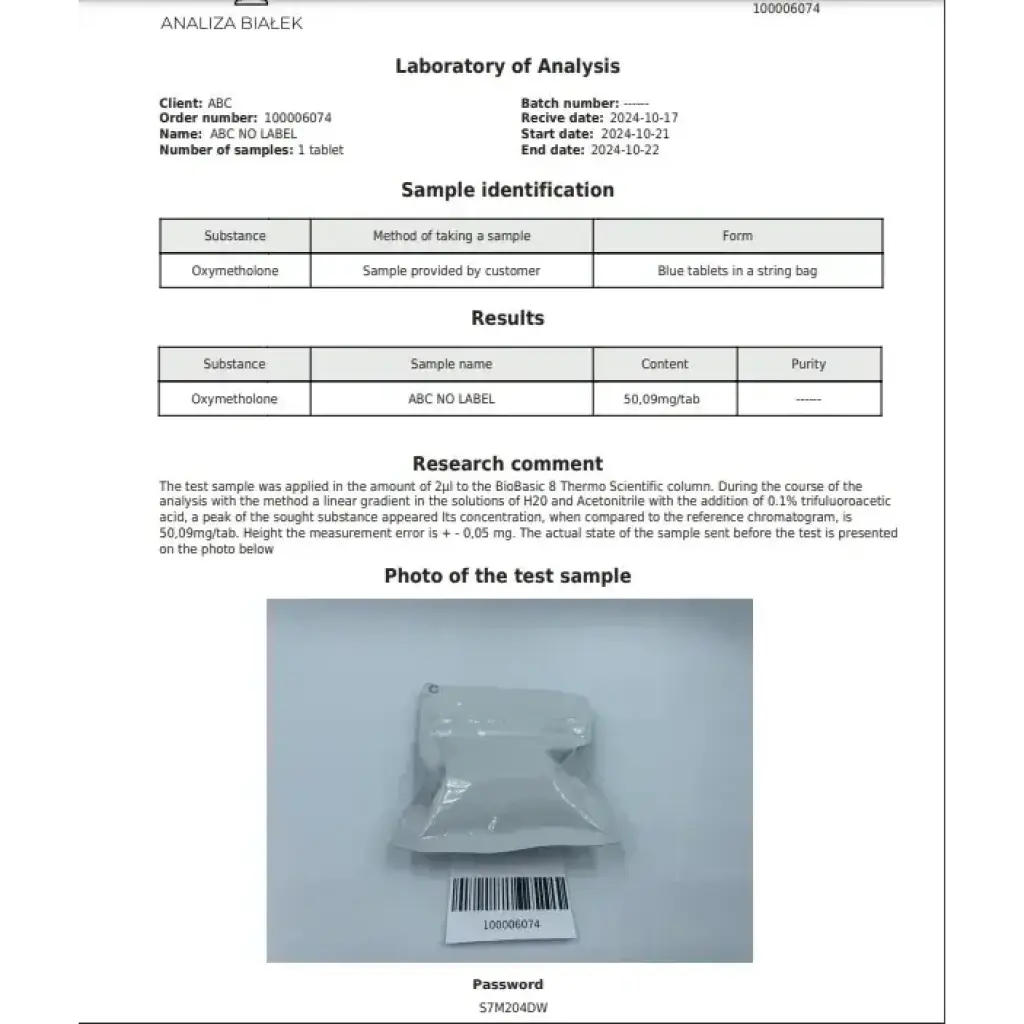
Published laboratory reports for Oxymetholone 50 mg are shown below with the test date, measured concentration and percentage of the product's 50 mg label claim.
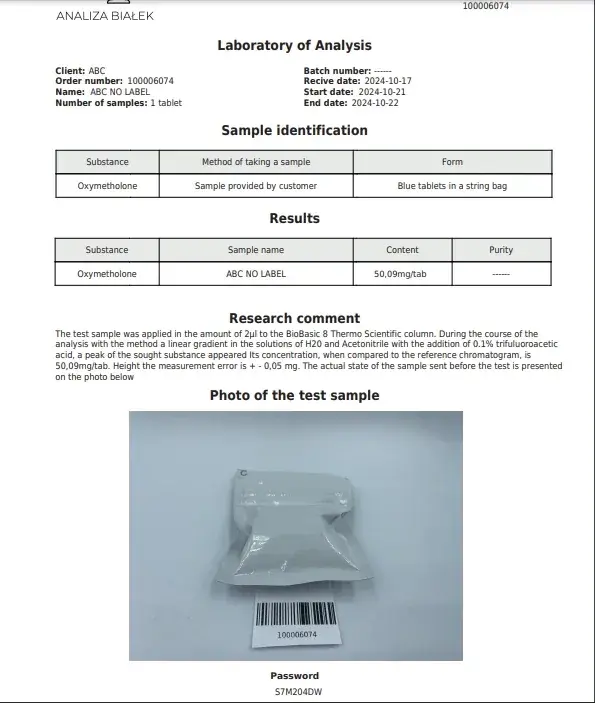 View Report
Laboratory results apply to the specific tested sample represented in each published report and should not be interpreted as a measurement of every vial or production batch.
The information below is provided for educational reference only. Oxymetholone is a prescription medication; medical use requires appropriate diagnosis, clinical supervision and ongoing monitoring. This research chemical product is not for human use, and non-medical use falls outside approved indications.
FDA-approved dosing for oxymetholone is 1 to 5 mg/kg daily for anemia, with the usual effective dosage being 1 to 2 mg/kg daily. Response often is not immediate; a minimum trial of 3 to 6 months is recommended. In non-medical bodybuilding contexts, oxymetholone is commonly referenced at 25–50 mg daily for beginners, 50–100 mg daily for intermediate users, and 100–150 mg daily for advanced users, with cycles typically lasting 4–8 weeks. These figures are anecdotal and lack clinical validation for non-medical use.
| Use Case | Reference Range | Frequency |
|---|---|---|
| Anemia (FDA-approved) | 1–5 mg/kg daily | Once daily or divided |
| Non-medical beginner reference | 25–50 mg daily | Split doses |
| Non-medical intermediate reference | 50–100 mg daily | Split doses |
In non-medical bodybuilding contexts, oxymetholone is sometimes stacked with injectable testosterone or other anabolic compounds. However, oxymetholone is not FDA-approved for non-medical use, and no clinical data exists to support any combination with other compounds. Because oxymetholone is 17-alpha-alkylated, concurrent use with other oral 17-alpha-alkylated steroids increases hepatotoxicity risk.
Oxymetholone is banned by WADA and is prohibited at all times in sport. A Therapeutic Use Exemption would not be granted for oxymetholone.
FDA labeling for oxymetholone includes black box warnings for peliosis hepatis, liver cell tumors, and blood lipid changes. Peliosis hepatis is a condition in which liver and sometimes splenic tissue is replaced with blood-filled cysts, which can be associated with liver failure. Liver cell tumors are most often benign and androgen-dependent, but fatal malignant tumors have been reported.
A published case report documented hepatocellular adenomas and peliosis hepatis in a 27-year-old male with aplastic anemia who received oxymetholone 100 mg/day for approximately 12 months. Liver function tests should be obtained periodically. Serum lipids and high-density lipoprotein cholesterol should be determined periodically.
Other adverse effects include virilization in women (deepening of voice, hirsutism, acne), which may be irreversible, and increased risk of tendon rupture from rapid muscle mass increase.
Oxymetholone suppresses endogenous testosterone production, and post-cycle therapy is commonly recommended in non-medical contexts. Agents such as Clomid or Tamoxifen are commonly referenced for this purpose. Given oxymetholone's short half-life of 8–9 hours, PCT can begin within 2–3 days of the last dose. A typical PCT protocol referenced in bodybuilding contexts includes Clomid 50 mg/day or Nolvadex 20 mg/day for 4 weeks.
Dosing strategies, support compounds and recovery protocols should be adjusted based on medical supervision and bloodwork where possible. The information above is for educational reference and does not constitute medical advice. This research chemical is not for human use.
Oxymetholone is an FDA-approved prescription medication with black box warnings for serious hepatotoxicity and cardiovascular risks. This research chemical product is not FDA-regulated and is not for human use.
FDA labeling for oxymetholone includes black box warnings for peliosis hepatis (blood-filled cysts in the liver that can lead to life-threatening liver failure or intra-abdominal hemorrhage), liver cell tumors (most often benign and androgen-dependent, but fatal malignant tumors have been reported), and blood lipid changes associated with increased risk of atherosclerosis and coronary artery disease.
Anabolic steroids may cause suppression of clotting factors II, V, VII and X, and an increase in prothrombin time. Clinically significant pharmacokinetic and pharmacodynamic interactions between anabolic steroids and warfarin have been reported in healthy volunteers.
This product is sold as a research chemical and is not approved for human use. Products sold online under the name Oxymetholone through research compound vendors are not FDA-regulated, have no verified manufacturing standards, and carry unknown contamination, dosing, and safety risks. Oxymetholone is legally available only by prescription for approved medical indications.
Hepatotoxicity is a primary concern. A two-year carcinogenicity study in rats given oxymetholone orally found increased incidences of lung alveolar/bronchiolar adenoma and hepatocellular adenoma in female rats at doses of 30 mg/kg/day and 100 mg/kg/day. There are rare reports of hepatocellular carcinoma in patients receiving long-term therapy with androgens in high doses.
Virilization in women may occur, including deepening of the voice, hirsutism, acne, and menstrual irregularities. Some virilizing changes are irreversible even after prompt discontinuance of therapy. Therapy must be discontinued when mild virilism is first detected.
Other potential effects include edema, increased blood pressure, acne, and changes in libido. Geriatric patients treated with androgens may be at increased risk of developing prostatic hypertrophy.
Oxymetholone should be used very cautiously in children and only by specialists who are aware of the effects on bone maturation. Periodic x-ray examinations of bone age should be made during treatment of prepubertal patients.
Women with disseminated breast carcinoma should have frequent determination of urine and serum calcium levels during therapy. Patients with significant liver disease should not use this medication.
Because of the hepatotoxicity associated with 17-alpha-alkylated androgens, liver function tests should be obtained periodically. Serum lipids and high-density lipoprotein cholesterol should be determined periodically. Hemoglobin and hematocrit should be checked periodically for polycythemia in patients receiving high doses.
Laboratory testing of the product itself, such as the published potency report shown in the Lab Reports tab, is separate from clinical monitoring of the person using the medication. Product testing does not assess individual health status or suitability for use.
Oral tablets should be stored at controlled room temperature (15–25°C) in the original packaging, protected from excessive heat, moisture, and direct light. Keep out of reach of children.
Oxymetholone 50 mg is supplied through the official Stealth Labs distribution chain and shipped in original manufacturer packaging with discreet, privacy-focused handling.
The outer shipping package remains discreet, with privacy-focused handling and no unnecessary external product details. Products are supplied through the official Stealth Labs distribution chain.
To verify your Oxymetholone 50 mg product, use the security code on the package label and cross-check it on the Stealth Labs official site. Official Stealth Labs presentation, batch-linked lab proof, and original packaging help reinforce product legitimacy and buyer confidence.
For complete delivery details, tracking policy, and reshipment terms, please see our Shipping Info page.
Proper storage conditions help preserve tablet stability and overall product integrity throughout shelf life.
Store at controlled room temperature (15–25°C) in the original packaging, protected from excessive heat, moisture, and direct light. Keep the container tightly closed when not in use.
Do not use if tablets appear discolored, crumbled, or otherwise abnormal. Keep out of reach of children.
Answers to common questions about Oxymetholone 50 mg, its research status, clinical data, and laboratory testing.
Oxymetholone 50 mg contains oxymetholone, which is FDA-approved for the treatment of anemias caused by deficient red cell production, including acquired aplastic anemia, congenital aplastic anemia, myelofibrosis, and hypoplastic anemias due to myelotoxic drugs. It is not approved for weight gain for cosmetic reasons or to develop muscle mass in otherwise healthy patients.
FDA-approved dosing is 1 to 5 mg/kg daily for anemia, with the usual effective dosage being 1 to 2 mg/kg daily. Response often is not immediate; a minimum trial of 3 to 6 months is recommended. In non-medical bodybuilding contexts, oxymetholone is commonly referenced at 25–100 mg daily for 4–8 weeks. No dosing recommendation can be made for this research chemical product, as it is not FDA-approved for human use in the form sold.
Oxymetholone suppresses endogenous testosterone production, and post-cycle therapy is commonly recommended in non-medical contexts. Agents such as Clomid or Tamoxifen are commonly referenced for this purpose. Given oxymetholone's short half-life of 8–9 hours, PCT can begin within 2–3 days of the last dose. A typical PCT protocol referenced in bodybuilding contexts includes Clomid 50 mg/day or Nolvadex 20 mg/day for 4 weeks.
Oxymetholone stimulates erythropoiesis and enhances erythropoietin production in patients with bone marrow failure. As an anabolic steroid, it promotes nitrogen retention and protein synthesis, which can help patients maintain body weight during severe illness. It is a 17-alpha-alkylated derivative of testosterone that can be administered orally.
For its FDA-approved anemia indication, response often is not immediate; a minimum trial of 3 to 6 months is recommended. The plasma half-life is approximately 8–9 hours. In non-medical contexts, community reports suggest initial changes in weight and strength may be noticed within 1–2 weeks, with more pronounced effects by week 3–4.
There is no clinical evidence to establish oxymetholone as superior to other compounds for non-medical use. Oxymetholone is considered highly potent and can lead to significant increase in muscle mass, but this quick increase can lead to tendon rupture from the increased load. It is associated with serious hepatotoxicity and cardiovascular risks, and is not FDA-approved for non-medical use.
Oxymetholone and Anavar (oxandrolone) are both oral anabolic steroids, but they have different FDA-approved indications and side effect profiles. Oxymetholone is approved for anemia and carries black box warnings for peliosis hepatis and liver cell tumors. Oxandrolone is approved for different indications and is not associated with the same black box warnings. Both are 17-alpha-alkylated and carry hepatotoxicity risks.
Oxymetholone and Danabol (methandienone) are both 17-alpha-alkylated oral anabolic steroids. Oxymetholone is FDA-approved for specific anemia indications, while methandienone is not FDA-approved for any human use in the United States. Both are associated with significant hepatotoxicity and are banned in sport.
A milligram amount cannot be classified as appropriate or excessive without considering the medical indication, individual response, and other factors. FDA-approved dosing for anemia is 1 to 5 mg/kg daily. It is also important to distinguish a dose from a product's tablet strength. Oxymetholone 50 mg indicates 50 mg per tablet; that strength does not by itself specify how much should be taken.
Oxymetholone 50 mg is labeled at 50 mg of oxymetholone per tablet. It is supplied as oral tablets in a 100-tablet package.
Yes. A published laboratory report dated October 22, 2024 measured Oxymetholone 50 mg at 50.09 mg, equivalent to 100.18% of its 50 mg label claim. The complete report can be viewed in the Lab Reports tab. Laboratory results apply to the tested sample represented by the individual report.
In non-medical bodybuilding contexts, oxymetholone is sometimes stacked with injectable testosterone or other anabolic compounds. However, oxymetholone is not FDA-approved for non-medical use, and no clinical data exists to support any combination with other compounds. Because oxymetholone is 17-alpha-alkylated, concurrent use with other oral 17-alpha-alkylated steroids increases hepatotoxicity risk.