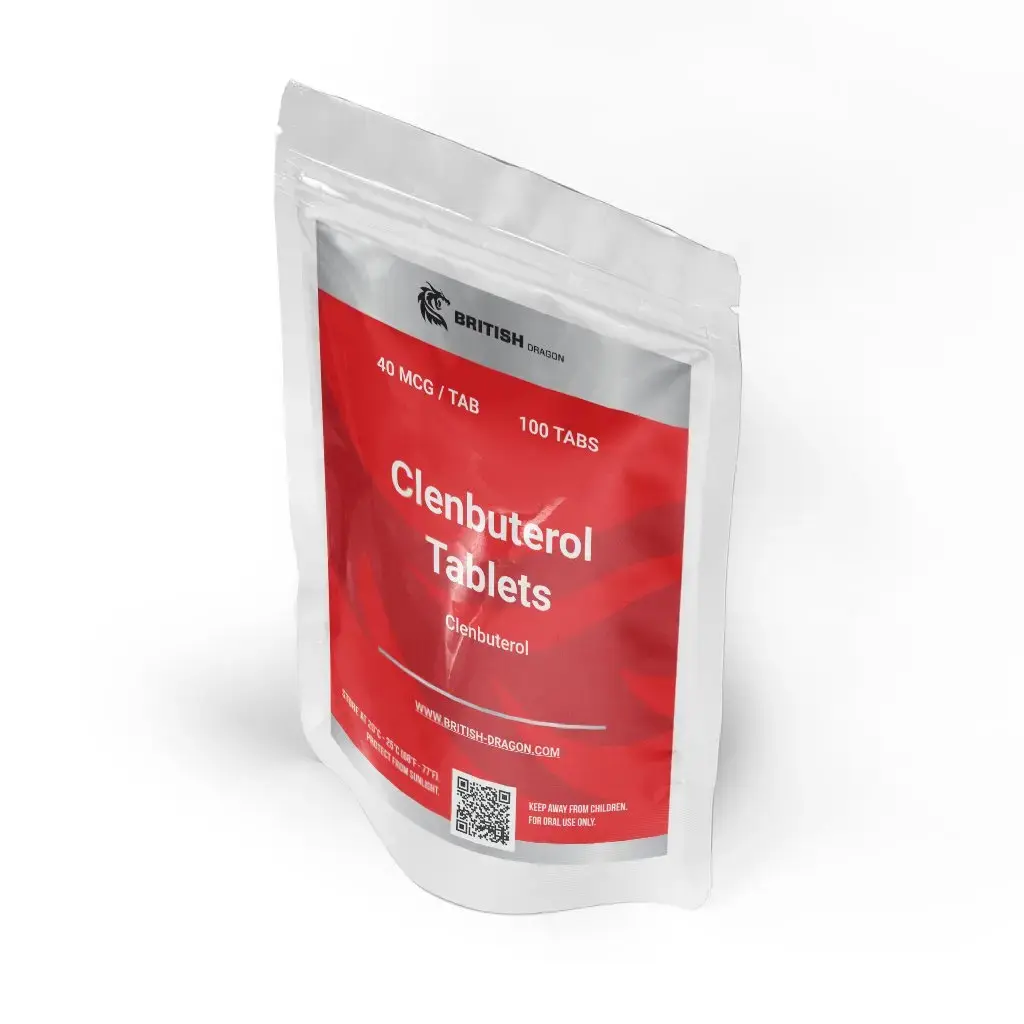
Clenbuterol 40 mcg is an oral beta-2 adrenergic agonist tablet manufactured by British Dragon and dosed at 40 mcg per tablet, supplied in packs of 100 tablets.
Clenbuterol 40 mcg contains clenbuterol hydrochloride, a selective beta-2 adrenergic agonist with bronchodilator and thermogenic properties. It is approved by the FDA for veterinary use in horses under the brand name Ventipulmin for the management of airway obstruction associated with chronic obstructive pulmonary disease.
In non-medical bodybuilding and fitness contexts, clenbuterol is commonly referenced for its purported fat-burning and lean mass-preserving effects during cutting phases. However, controlled human research demonstrates that clenbuterol at 80 mcg daily for 2 weeks produces only modest lean mass gain (0.91 kg) with no effect on fat mass, while reducing maximal oxygen uptake by 7% and exercise capacity by 4%.
Clenbuterol is not approved for human use in the United States and is prohibited by the World Anti-Doping Agency under section S1.2 (Other Anabolic Agents) at all times, both in-competition and out-of-competition. Such use falls outside approved indications and carries significant cardiovascular risks.
Clenbuterol hydrochloride is a selective beta-2 adrenergic agonist that produces bronchodilation and has been investigated for effects on muscle protein metabolism in preclinical research.
Clenbuterol works by selectively binding to beta-2 adrenergic receptors, which are found in smooth muscle of the airways, skeletal muscle, and adipose tissue. Activation of these receptors produces bronchodilation and may influence metabolic processes. The compound has a long duration of action compared to shorter-acting beta-2 agonists.
Preclinical research in animal models has explored clenbuterol's effects on muscle growth and body composition. Studies in rats, calves, and lambs have demonstrated increased muscle protein accretion and reduced fat deposition at certain doses. However, these effects have not been consistently replicated in controlled human trials.
A 2025 randomized controlled trial in healthy men using 80 mcg daily for 2 weeks demonstrated only modest lean mass gain (0.91 kg) with no fat mass reduction, alongside reduced cardiorespiratory fitness and rapid desensitization of beta-2 adrenergic signaling.
Clenbuterol is FDA-approved only for veterinary use in horses for the management of airway obstruction. It is not approved for human use in the United States, and there is no therapeutic use exemption available for athletes under WADA rules.
British Dragon offers several ancillary compounds used in non-medical bodybuilding contexts. T3 contains liothyronine, a thyroid hormone sometimes referenced alongside clenbuterol in cutting protocols. For post-cycle therapy, Clomiphene and Tamoxifen are commonly referenced for restoring endogenous testosterone production.
Clenbuterol's mechanism as a beta-2 agonist is distinct from thyroid hormones and selective estrogen receptor modulators. Its primary research applications have focused on bronchodilation and metabolic effects, though human data for performance outcomes remains limited.
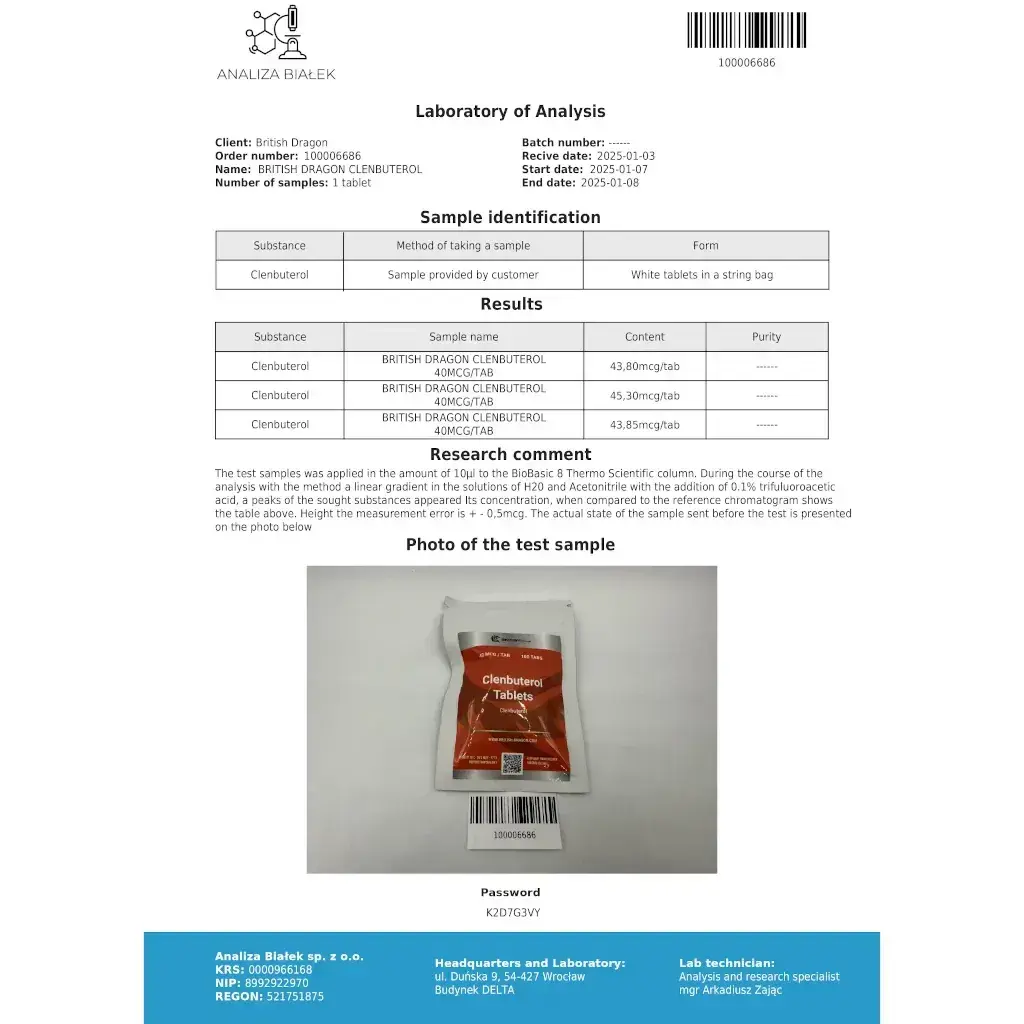
Published laboratory reports for Clenbuterol 40 mcg are shown below with the test date, measured result and percentage of the product's 40 mcg label claim.
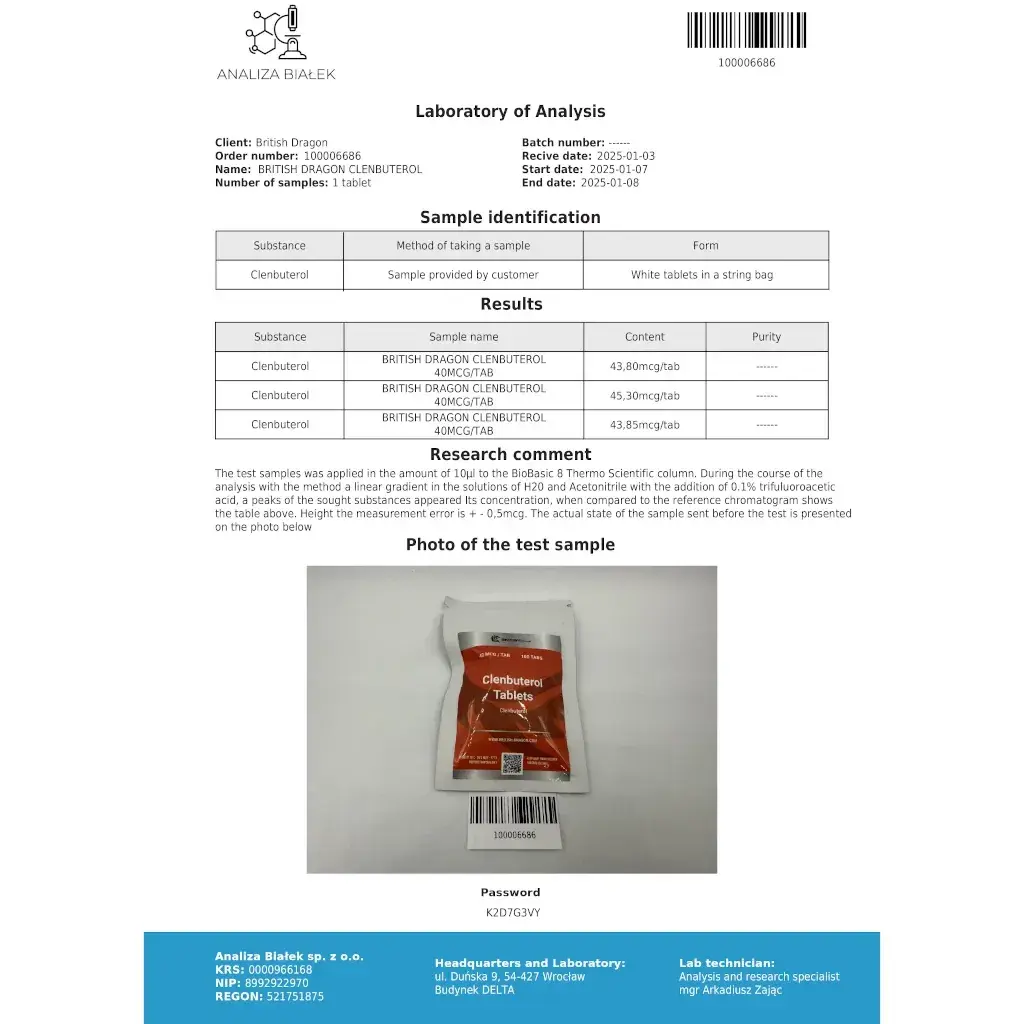 View Report
Laboratory results apply to the specific tested sample represented in each published report and should not be interpreted as a measurement of every tablet or production batch.
The information below is provided for educational reference only. Clenbuterol is not approved for human use in the United States; medical use is not applicable, and non-medical use falls outside approved indications.
Clenbuterol is approved only for veterinary use in horses, with an FDA-approved dosing regimen for equine chronic obstructive pulmonary disease starting at 0.8 mcg/kg orally twice daily. In non-medical human contexts, community-reported protocols typically reference doses ranging from 20 mcg to 120 mcg daily, with some reports of doses as high as 30 mg in misuse cases.
| Use Case | Common Reference Range | Frequency |
|---|---|---|
| Veterinary (horses, FDA-approved) | 0.8–3.2 mcg/kg | Twice daily |
| Non-medical human use (reported) | 20–120 mcg daily | Titrated over 2 weeks |
| Misuse (documented toxicity cases) | Up to 30 mg daily | Single or repeated ingestion |
These non-medical ranges represent community-reported practices and are not derived from controlled clinical trials for performance enhancement. A 2025 human trial demonstrated that 80 mcg daily for 2 weeks reduced exercise capacity and maximal oxygen uptake, indicating that clenbuterol impairs rather than improves athletic performance.
In non-medical bodybuilding contexts, clenbuterol is sometimes referenced alongside T3 in cutting protocols, though this combination compounds cardiovascular risk. Community protocols often reference 2-week cycles to mitigate receptor desensitization, followed by 2 weeks off or substitution with other compounds.
Controlled research demonstrates that beta-2 adrenergic signaling desensitizes rapidly during clenbuterol use, with the anabolic signaling response attenuating during just a 2-week cycle. This means any initial effects diminish quickly, requiring dose escalation that further increases toxicity risk.
Clenbuterol misuse causes severe cardiovascular adverse events, including supraventricular tachycardia, atrial fibrillation, myocardial injury, myocarditis, and myocardial infarction. Other serious effects include hypokalemia (potassium as low as 2.0 mmol/L), hyperglycemia, muscle tremors, and nervousness.
A 2025 randomized controlled trial demonstrated that clenbuterol at 80 mcg daily reduced maximal oxygen uptake by 7% and exercise capacity by 4%, while repressing muscle oxidative capacity. These findings directly contradict the purported performance-enhancing effects that drive non-medical use.
Clenbuterol has no approved human dosing. Any information about non-medical use is derived from user-reported practices and is not validated by controlled clinical research. This information does not constitute medical advice.
Clenbuterol is not approved for human use and carries significant cardiovascular risks. It is prohibited by WADA at all times and has no therapeutic use exemption.
Clenbuterol is FDA-approved only for veterinary use in horses for the management of airway obstruction. There is no legitimate medical indication for clenbuterol in human medicine, and it is not approved for human use in the United States.
Historical small studies explored clenbuterol in muscular dystrophy and post-prostatectomy incontinence, but these remain experimental with no established dosing protocols or regulatory approval. Any consideration of clenbuterol use in humans should be redirected to approved alternatives for the specific condition in question.
Non-medical use of clenbuterol falls outside approved indications and carries significant cardiovascular risks. Product purity does not establish that non-medical use is safe or appropriate for an individual.
Clenbuterol misuse causes severe cardiovascular adverse events. Documented complications include supraventricular tachycardia, atrial fibrillation, myocardial injury, myocarditis, myocardial infarction, cardiomyopathy, chest pain, and hypotension. A case report documented troponin elevation to 5.39 µg/L and severe hypokalemia (2.0 mmol/L) in a 23-year-old male who ingested 5000 mcg.
Other serious effects include hepatomegaly, hyperglycemia, muscle tremors, nervousness, and agitation. The 2025 RCT demonstrated that clenbuterol reduced maximal oxygen uptake by 7% and exercise capacity by 4%, while repressing muscle oxidative capacity.
Beta-2 adrenergic signaling desensitizes rapidly during clenbuterol use, with the anabolic signaling response attenuating during just a 2-week cycle. This means any initial effects diminish quickly, requiring dose escalation that further increases toxicity risk.
Clenbuterol should not be used in individuals with cardiovascular disease, hypertension, arrhythmias, or hyperthyroidism. The veterinary label states that VENTIPULMIN Syrup should not be used in horses suspected of having cardiovascular impairment because tachycardia may occur.
Competitive athletes should be aware that clenbuterol is prohibited by the World Anti-Doping Agency under section S1.2 (Other Anabolic Agents) at all times, both in-competition and out-of-competition. There is no threshold below which clenbuterol is not prohibited, and no therapeutic use exemption is available.
Because clenbuterol has no approved human therapeutic use, no standardized monitoring protocols exist for non-medical use. In documented toxicity cases, monitoring includes cardiac enzymes (troponin), electrolytes (particularly potassium), blood glucose, and lactate. Treatment of toxicity requires supportive care with intravenous fluids, beta-blockers, benzodiazepines for agitation, and aggressive potassium replacement.
Store tablets in a cool, dry place in the original packaging. Keep out of reach of children. Inspect tablets before use and do not use if they appear damaged or compromised.
Clenbuterol 40 mcg is supplied through the official British Dragon distribution chain and shipped in original manufacturer packaging with discreet, privacy-focused handling.
The outer shipping package remains discreet, with privacy-focused handling and no unnecessary external product details. Products are supplied through the official British Dragon distribution chain.
To verify your Clenbuterol 40 mcg product, use the security code on the packaging and cross-check it on the British Dragon official site. Official British Dragon presentation and original packaging help reinforce product legitimacy and buyer confidence.
For complete delivery details, tracking policy, and reshipment terms, please see our Shipping Info page.
Proper storage conditions help preserve tablet stability and overall product integrity throughout shelf life.
Store at controlled room temperature (15–25°C) in a cool, dry place, away from direct light and moisture. Keep tablets in their original blister packaging or container until use to protect from humidity.
Inspect tablets before use and do not use if they appear discolored, cracked, or otherwise compromised. Keep out of reach of children.
Answers to common questions about Clenbuterol 40 mcg, the Clenbuterol Hydrochloride compound, and its applications.
Clenbuterol 40 mcg contains the beta-2 agonist clenbuterol hydrochloride. It is FDA-approved only for veterinary use in horses for the management of airway obstruction. In non-medical bodybuilding contexts, it is commonly referenced for purported fat-burning effects, though controlled research shows no fat mass reduction and reduced exercise capacity at 80 mcg daily.
There is no approved human dosing schedule for clenbuterol. In non-medical contexts, community-reported protocols typically reference doses of 20–120 mcg daily, titrated over 2 weeks. The FDA-approved veterinary dose for horses starts at 0.8 mcg/kg twice daily. A 2025 human trial used 80 mcg daily for 2 weeks.
Clenbuterol is not an anabolic steroid and does not suppress endogenous testosterone production. Post-cycle therapy is not applicable to clenbuterol in the context of hormonal recovery. In non-medical settings, PCT protocols typically involve Clomiphene or Tamoxifen after anabolic steroid cycles.
Clenbuterol is a selective beta-2 adrenergic agonist that produces bronchodilation. It binds to beta-2 receptors in smooth muscle of the airways, skeletal muscle, and adipose tissue. Preclinical research explored effects on muscle growth and fat reduction, but controlled human trials have not demonstrated meaningful performance or fat-loss benefits.
Bronchodilation occurs rapidly after administration, but beta-2 adrenergic signaling desensitizes within 2 weeks of continuous use. A 2025 human trial demonstrated that any initial anabolic signaling response attenuates during a 2-week cycle, meaning effects diminish quickly and require dose escalation that increases toxicity risk.
No major obesity management guidelines include clenbuterol as a recommended pharmacotherapy option. A 2025 randomized controlled trial demonstrated no fat mass reduction with clenbuterol at 80 mcg daily for 2 weeks, while maximal oxygen uptake decreased by 7% and exercise capacity decreased by 4%.
Clenbuterol and T3 have different mechanisms. Clenbuterol is a beta-2 adrenergic agonist, while T3 contains liothyronine, a thyroid hormone. In non-medical cutting protocols, the two are sometimes referenced together, though this combination compounds cardiovascular risk.
Clenbuterol and Anastrozole have entirely different mechanisms and applications. Clenbuterol is a beta-2 agonist referenced for purported metabolic effects, while anastrozole is an aromatase inhibitor used to manage estrogenic side effects from aromatizing steroids. They are not interchangeable.
Clenbuterol 40 mcg is labeled at 40 mcg of clenbuterol hydrochloride per tablet. In non-medical contexts, 40 mcg is commonly referenced as a starting dose in community protocols. A 2025 human trial used 80 mcg daily, which is double this tablet strength, and demonstrated reduced exercise capacity.
Clenbuterol 40 mcg is labeled at 40 mcg of clenbuterol hydrochloride per tablet. It is supplied as oral tablets in packs of 100 tablets manufactured by British Dragon.
Yes. A published laboratory report dated January 08, 2025 measured Clenbuterol 40 mcg at 45.30 mcg, equivalent to 113.25% of its 40 mcg label claim. The complete report can be viewed in the Lab Reports tab.

Lean Mass Cycle 2 (10 Weeks):
- Primoxyl 100 x 3 Vials
- Testoxyl Propionate 100 x 4 Vials
- Stanoxyl Depot x 2 Vials
- Oxandroxyl x 150 Tablets
- Clenbutaxyl x 100 Tablets
- Nolvaxyl x 100 Tablets
- HCG x 2 Vials

Drug Class: Beta-2 Adrenergic Agonist
Active Substance: Clenbuterol Hydrochloride
Strength: 40 mcg/tablet
Amount: 100 tablets
Active Life: 36–48 hours
Average Dose: 20–120 mcg/day
Liver Toxicity: None
Aromatization Rate: None
Anabolic Rate: Not anabolic
Androgenic Rate: None
Manufacturer: Stealth Labs
Laboratory Test: View Result
Shipped Without Label!