 View Report
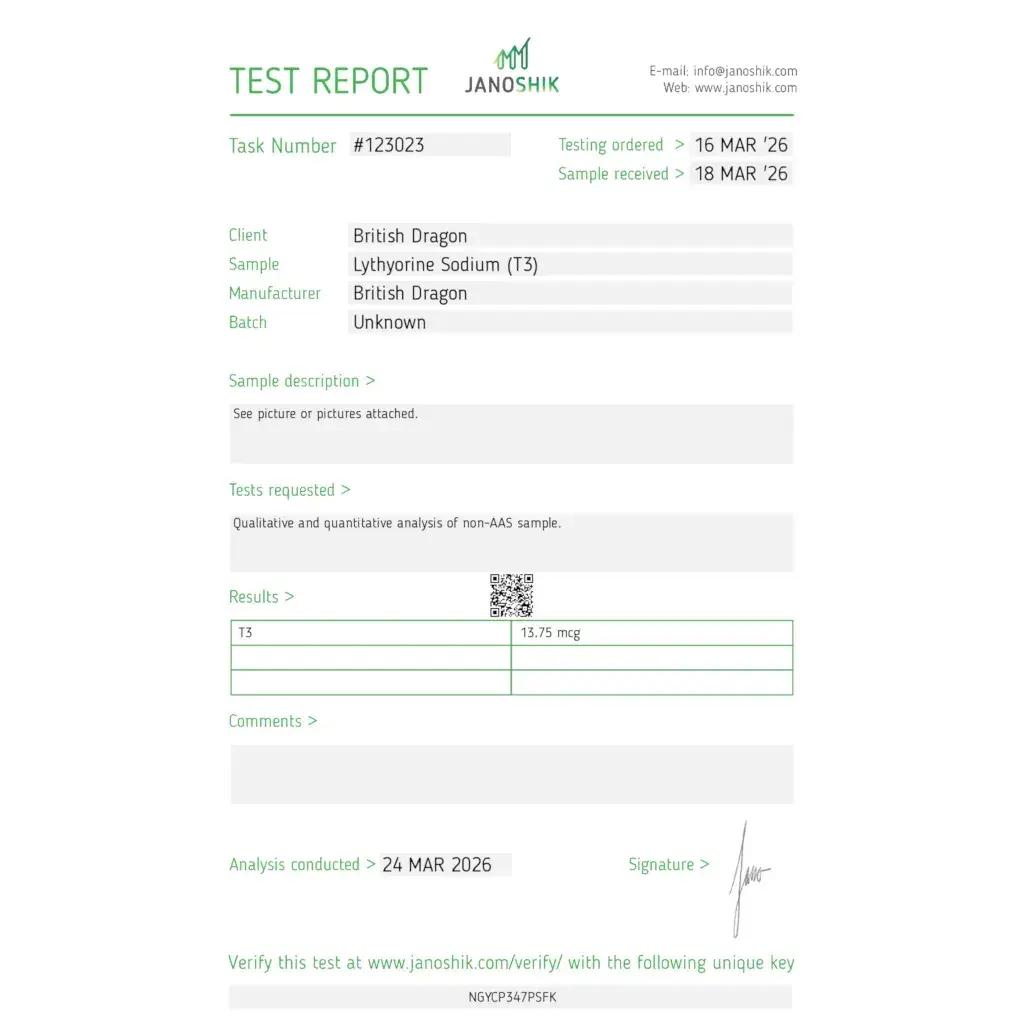
March 24, 2026
Measured Result 13.75 mcg 55.00% of label claim
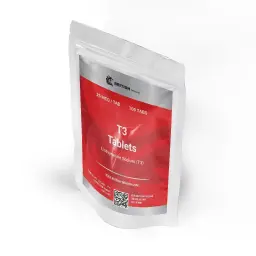
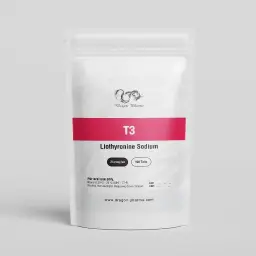
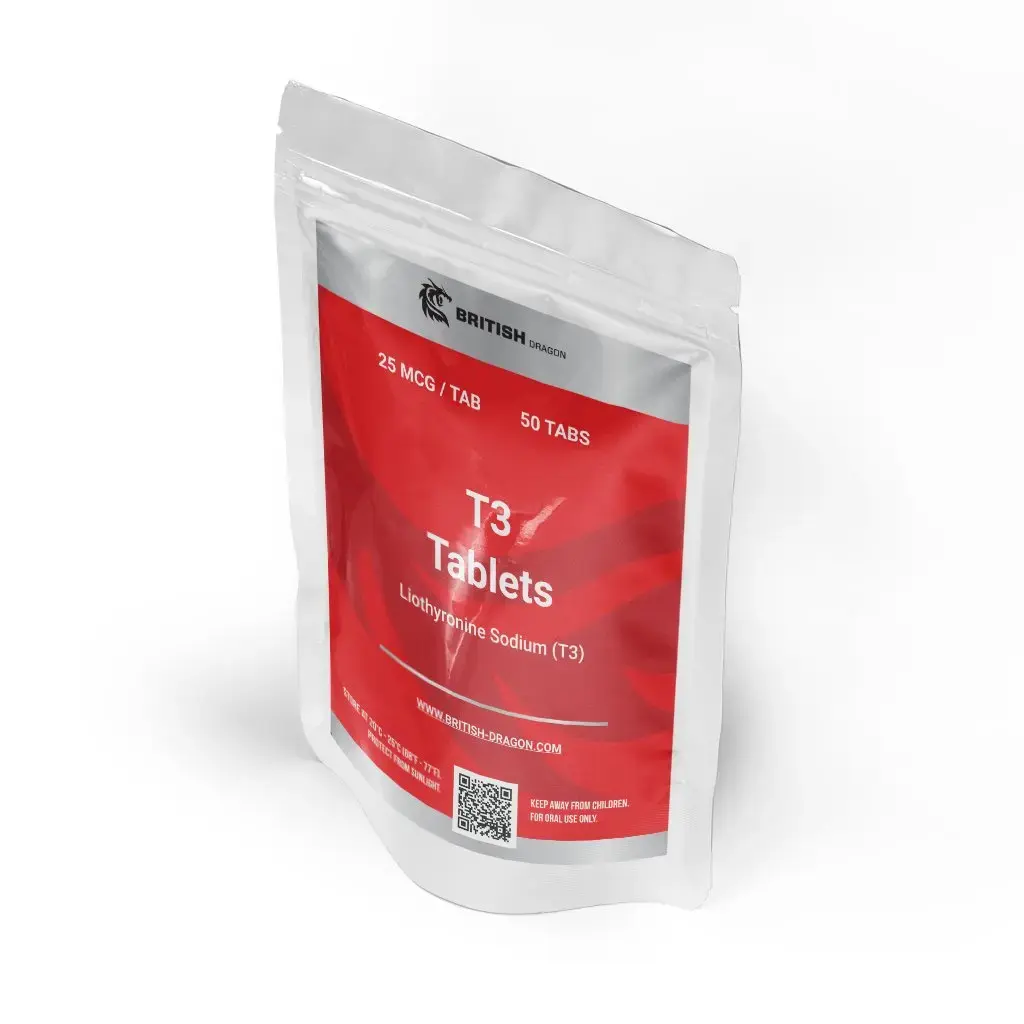
T3 25 mcg is an oral liothyronine sodium tablet manufactured by British Dragon and dosed at 25 mcg per tablet, supplied in packs of 50 or 100 tablets.
T3 25 mcg contains liothyronine sodium, a synthetic form of the thyroid hormone triiodothyronine (T3). Liothyronine is FDA-approved for replacement therapy in primary, secondary, and tertiary congenital or acquired hypothyroidism, as an adjunct to surgery and radioiodine therapy in the management of well-differentiated thyroid cancer, and as a diagnostic agent in thyroid suppression tests. The recommended starting dosage for adults with hypothyroidism is 25 mcg orally once daily, with increases of 25 mcg daily every 1 to 2 weeks as needed, and a usual maintenance dose of 25 mcg to 75 mcg once daily.
Liothyronine is identical to the naturally occurring thyroid hormone T3 and has a rapid onset of action and short duration compared to levothyroxine (T4). The FDA label includes a boxed warning that thyroid hormones, including liothyronine, should not be used for the treatment of obesity or for weight loss, and that doses beyond the range of daily hormonal requirements may produce serious or even life-threatening manifestations of toxicity.
In non-medical bodybuilding and fitness contexts, liothyronine is sometimes referenced during cutting phases for its metabolic-stimulating properties. Community discussions frequently reference doses of 25 mcg daily, with some users describing titration to 37.5 mcg after a week. However, this use falls outside approved indications, and the FDA explicitly warns against using thyroid hormones for weight loss. The clinical evidence for liothyronine's efficacy in this context is limited, and its use carries risks including cardiac stress, bone mineral density loss, and suppression of endogenous thyroid function.
Liothyronine sodium is a synthetic form of the thyroid hormone triiodothyronine (T3), FDA-approved for hypothyroidism replacement and thyroid cancer management.
Liothyronine sodium is the synthetic sodium salt of L-triiodothyronine (T3), a hormone normally produced by the thyroid gland. It is identical to the naturally occurring hormone and acts on nuclear thyroid hormone receptors to regulate gene expression, influencing metabolic rate, protein synthesis, and oxygen consumption in nearly every tissue of the body.
Liothyronine has a rapid onset of action and a short duration compared to levothyroxine (T4), which requires peripheral conversion to T3. This pharmacokinetic profile makes liothyronine useful in clinical settings where rapid correction of hypothyroidism is needed, but also means that T3 levels fluctuate significantly with once-daily dosing. A review in Nature Reviews Endocrinology discusses the ongoing debate regarding liothyronine use and misuse in hypothyroidism, noting that while some patients may benefit from combination therapy, careful patient selection and monitoring are essential.
In non-medical bodybuilding contexts, liothyronine is referenced as a metabolic stimulant during cutting cycles. A forum discussion from 2026 describes a user considering 25 mcg daily with potential titration to 37.5 mcg, while another participant noted that 25 mcg is "probably also best used with 100 t4, because an imbalance of t3 and t4 can create a backwards pathway, which is catabolic". Another thread on off-season use described 25 mcg T3 alongside HGH, with one commenter stating "T3 in off season? If your worried about your thyroid use t4, t3 is overkill".
Liothyronine is FDA-approved for hypothyroidism replacement, TSH suppression in thyroid cancer, and thyroid suppression testing. The FDA label includes a boxed warning that it should not be used for obesity or weight loss.
British Dragon offers several ancillary compounds used in non-medical bodybuilding contexts. Clenbuterol is a beta-2 agonist referenced for purported metabolic effects, while T3 contains liothyronine. For managing estrogenic side effects, Anastrozole is an aromatase inhibitor. For post-cycle therapy, Clomiphene and Tamoxifen are commonly referenced.
Liothyronine's distinguishing characteristic among these compounds is its direct action on thyroid hormone receptors and its profound effect on metabolic rate. Unlike clenbuterol, which acts on beta-adrenergic receptors, liothyronine exerts its effects through nuclear hormone receptor signaling, influencing gene transcription across multiple tissues.
Published laboratory reports for T3 25 mcg are shown below with the test date, measured result and percentage of the product's 25 mcg label claim.
View Report
Laboratory results apply to the specific tested sample represented in each published report and should not be interpreted as a measurement of every tablet or production batch.
The information below is provided for educational reference only. Liothyronine is a prescription medication; medical use requires appropriate diagnosis, clinical supervision, and ongoing monitoring. Non-medical use falls outside approved indications.
In clinical practice for hypothyroidism, the recommended starting dosage for adults is 25 mcg orally once daily, with increases of 25 mcg daily every 1 to 2 weeks as needed. The usual maintenance dose is 25 mcg to 75 mcg once daily. For elderly patients or those with underlying cardiac disease, a lower starting dose of 5 mcg once daily with gradual titration is recommended. For thyroid suppression testing, the dose is 75 mcg to 100 mcg daily for 7 days. In non-medical bodybuilding contexts, community discussions reference 25 mcg daily, with some users describing titration to 37.5 mcg after a week.
| Use Case | Common Reference Range | Frequency |
|---|---|---|
| Clinical (hypothyroidism, adult) | 25–75 mcg | Once daily |
| Clinical (elderly/cardiac disease) | 5 mcg starting dose | Once daily, gradual titration |
| Clinical (thyroid suppression test) | 75–100 mcg | Daily for 7 days |
| Non-medical (reported) | 25 mcg, some titrate to 37.5 mcg | Daily |
These non-medical ranges represent community-reported practices and are not derived from controlled clinical trials for performance enhancement. The FDA boxed warning explicitly states that thyroid hormones should not be used for weight loss and that doses beyond the range of daily hormonal requirements may produce serious or life-threatening toxicity.
In non-medical bodybuilding contexts, liothyronine is sometimes referenced alongside compounds such as Clenbuterol during cutting phases. A forum discussion from 2026 describes a user asking whether to use clen and T3 together or sequentially, with another participant noting "I don't see an issue of using both t3 and clen".
In off-season contexts, some users discuss liothyronine alongside HGH, with one commenter stating "I'd used right and under certain circumstances then yes it is used often. Most top coaches and bodybuilders will use, alongside T4 in in the off season if seriously pushing things". However, another participant countered that T3 use during a bulk is "completely counterproductive to a bulk phase".
Liothyronine carries significant risks. The FDA label includes warnings for cardiac adverse reactions in the elderly and patients with underlying cardiovascular disease, including atrial fibrillation. Over-replacement can increase bone resorption and decrease bone mineral density. Therapy in patients with diabetes may worsen glycemic control and increase antidiabetic agent requirements.
In non-medical contexts, forum discussions reference concerns about muscle loss with T3 use, with one user stating "i dont wanna go high, bcs theres chance of muscle loss". Another forum participant warned that T3 is "a metabolic stimulant and you also have lots of the receptors in the heart as it is critical for regulating heart rate".
Liothyronine has approved dosing for specific medical indications. Any information about non-medical use is derived from user-reported practices and is not validated by controlled clinical research. This information does not constitute medical advice.
Liothyronine is a prescription thyroid hormone with a boxed warning against use for obesity or weight loss. It is contraindicated in uncorrected adrenal cortical insufficiency.
Liothyronine sodium has a boxed warning stating that thyroid hormones, including liothyronine, should not be used for the treatment of obesity or for weight loss. Doses beyond the range of daily hormonal requirements may produce serious or even life-threatening manifestations of toxicity, particularly when given in association with sympathomimetic amines.
Liothyronine is contraindicated in patients with uncorrected adrenal cortical insufficiency. Acute adrenal crisis may be precipitated in patients with concomitant adrenal insufficiency; replacement glucocorticoids should be administered prior to initiation of liothyronine treatment.
Non-medical use of liothyronine falls outside approved indications. The FDA explicitly warns against using thyroid hormones for weight loss. Product purity does not establish that non-medical use is safe or appropriate for an individual.
Cardiac adverse reactions, particularly in the elderly and in patients with underlying cardiovascular disease, include increased risk of atrial fibrillation. Liothyronine should be initiated at less than the full replacement dose in these populations.
Over-replacement with thyroid hormone can increase bone resorption and decrease bone mineral density. The lowest effective dose should be used. Therapy in patients with diabetes mellitus may worsen glycemic control and result in increased antidiabetic agent or insulin requirements.
Other potential effects include symptoms of hyperthyroidism such as nervousness, irritability, insomnia, tremors, palpitations, and weight loss. In non-medical contexts, concerns about muscle loss and cardiac stress are commonly referenced.
Liothyronine is not appropriate for everyone. Contraindications include uncorrected adrenal cortical insufficiency. Caution is advised in patients with cardiovascular disease, including angina, old myocardial infarction, arteriosclerosis, and hypertension.
Patients with adrenal cortical insufficiency, pituitary insufficiency, or diabetes should be carefully evaluated before liothyronine therapy is considered.
Adequacy of liothyronine therapy is determined with periodic monitoring of TSH and T3 levels as well as clinical status. In adult patients with primary hypothyroidism, serum TSH should be monitored periodically after initiation of therapy or any change in dose. To check the immediate response to therapy, measurement of total T3 may be most appropriate.
In patients on a stable and appropriate replacement dose, clinical and biochemical response should be evaluated every 6 to 12 months and whenever there is a change in clinical status.
Store tablets in a cool, dry place in the original packaging. Keep out of reach of children. Inspect tablets before use and do not use if they appear damaged or compromised.
T3 25 mcg is supplied through the official British Dragon distribution chain and shipped in original manufacturer packaging with discreet, privacy-focused handling.
The outer shipping package remains discreet, with privacy-focused handling and no unnecessary external product details. Products are supplied through the official British Dragon distribution chain.
To verify your T3 25 mcg product, use the security code on the packaging and cross-check it on the British Dragon official site. Official British Dragon presentation and original packaging help reinforce product legitimacy and buyer confidence.
For complete delivery details, tracking policy, and reshipment terms, please see our Shipping Info page.
Proper storage conditions help preserve tablet stability and overall product integrity throughout shelf life.
Store at controlled room temperature (15–25°C) in a cool, dry place, away from direct light and moisture. Keep tablets in their original packaging until use to protect from humidity.
Inspect tablets before use and do not use if they appear discolored, cracked, or otherwise compromised. Keep out of reach of children.
Answers to common questions about T3 25 mcg, the Liothyronine Sodium compound, and its applications.
T3 25 mcg contains liothyronine sodium, a synthetic thyroid hormone. In clinical medicine, it is FDA-approved for hypothyroidism replacement, TSH suppression in thyroid cancer, and thyroid suppression testing. In non-medical bodybuilding contexts, it is sometimes referenced during cutting phases, though the FDA explicitly warns against using thyroid hormones for weight loss.
The clinical starting dose for hypothyroidism is 25 mcg orally once daily, with increases of 25 mcg daily every 1 to 2 weeks as needed, and a usual maintenance dose of 25 mcg to 75 mcg once daily. In non-medical contexts, 25 mcg daily is commonly referenced, with some users describing titration to 37.5 mcg after a week.
Liothyronine is a thyroid hormone, not an anabolic steroid, and does not suppress endogenous testosterone production. Post-cycle therapy is not applicable to liothyronine in the context of hormonal recovery. However, liothyronine can suppress endogenous thyroid function, and thyroid hormone levels should be monitored during clinical use.
Liothyronine is identical to the naturally occurring thyroid hormone T3. It acts on nuclear thyroid hormone receptors to regulate gene expression, influencing metabolic rate, protein synthesis, and oxygen consumption in nearly every tissue of the body. It has a rapid onset of action and short duration compared to T4.
Liothyronine has a rapid onset of action and short duration compared to levothyroxine (T4). In clinical settings, the immediate response to therapy can be assessed by measuring total T3 levels. For non-medical contexts, forum discussions suggest that users may notice effects within days to weeks, though this is anecdotal.
There is no universally established "best" thyroid hormone, and treatment must be individualized. A review in Nature Reviews Endocrinology discusses the ongoing debate regarding liothyronine use and misuse in hypothyroidism, noting that while some patients may benefit from combination therapy, careful patient selection and monitoring are essential. Liothyronine has a shorter half-life than levothyroxine, which can be advantageous or disadvantageous depending on the clinical context.
T3 and Clenbuterol have entirely different mechanisms. Liothyronine is a thyroid hormone that acts on nuclear receptors to regulate metabolic rate, while clenbuterol is a beta-2 adrenergic agonist. In non-medical bodybuilding contexts, the two are sometimes referenced together, with one forum participant noting "I don't see an issue of using both t3 and clen". However, both compounds carry cardiovascular risks.
T3 and Anastrozole have entirely different mechanisms and applications. Liothyronine is a thyroid hormone used for hypothyroidism replacement, while anastrozole is an aromatase inhibitor used to manage estrogenic side effects from aromatizing steroids. They are not interchangeable.
T3 25 mcg is labeled at 25 mcg of liothyronine sodium per tablet. This is the standard clinical starting dose for adults with hypothyroidism. In non-medical contexts, 25 mcg is commonly referenced, though the FDA warns that doses beyond daily hormonal requirements may produce serious toxicity.
T3 25 mcg is labeled at 25 mcg of liothyronine sodium per tablet. It is supplied as oral tablets in packs of 50 or 100 tablets manufactured by British Dragon.
Yes. A published laboratory report dated March 24, 2026 measured T3 25 mcg at 13.75 mcg, equivalent to 55.00% of its 25 mcg label claim. The complete report can be viewed in the Lab Reports tab.