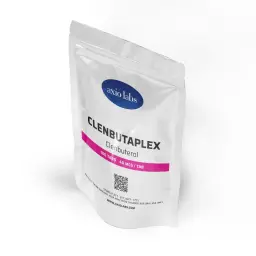
Clenbuterol 40 mcg is an oral tablet containing clenbuterol hydrochloride manufactured by Stealth Labs, supplied as 40 mcg per tablet in a 100-tablet package.
Clenbuterol 40 mcg contains clenbuterol hydrochloride, a long-acting beta-2 adrenergic agonist. It is not FDA-approved for human use in the United States. The FDA has only approved clenbuterol (as Ventipulmin Syrup) for use in horses to manage airway obstruction associated with chronic obstructive pulmonary disease. In some countries outside the US, clenbuterol has been available by prescription for asthma, but the FDA discontinued approval for human medicinal products containing clenbuterol in 2006.
Clenbuterol stimulates beta-2 adrenergic receptors, producing bronchodilation and increased metabolic rate. In research settings, oral clenbuterol at 40 mcg significantly increased maximal expiratory flow and improved vital capacity in human subjects. Its anabolic and lipolytic effects—increasing muscle mass and decreasing body fat—have made it a substance of abuse among athletes and bodybuilders, though such use is non-medical and prohibited. Clenbuterol is banned by the World Anti-Doping Agency under section S1.2 (Other Anabolic Agents) and is prohibited at all times in sport.
Clenbuterol carries significant cardiovascular risks. Case reports document myocardial injury, myocarditis, and non-ST-segment elevation myocardial infarction in young bodybuilders using clenbuterol for performance enhancement. Animal studies demonstrate that clenbuterol induces myocyte necrosis in cardiac and skeletal muscle at doses commonly abused by athletes. As a research chemical product sold outside the pharmaceutical supply chain, this formulation has not undergone FDA review for purity, sterility, or actual content.
Clenbuterol 40 mcg is supplied as oral tablets for research applications. The therapeutic dose range for asthma in countries where it was approved was 20–40 mcg daily.
Clenbuterol is a long-acting beta-2 adrenergic agonist with a half-life of approximately 35 hours, distinguishing it from shorter-acting beta-2 agonists used in asthma treatment.
Clenbuterol is a substituted phenylethanolamine with beta-2 sympathomimetic activity. It stimulates beta-2 adrenergic receptors in bronchial smooth muscle, producing bronchodilation. At higher doses, it also stimulates beta-1 receptors, which underlies its cardiotoxicity.
Pharmacokinetic studies demonstrate that after oral administration of 20 mcg, 40 mcg, and 80 mcg doses, peak plasma concentrations of 0.1 ng/mL, 0.2 ng/mL, and 0.35 ng/mL respectively are reached within 2–3 hours. The half-life is approximately 35 hours, and steady-state plasma concentrations are achieved by the fourth day of repeated dosing.
In non-medical bodybuilding contexts, clenbuterol is commonly referenced for its thermogenic and anabolic effects. The anabolic dose range referenced in athletic populations is 60–120 mcg daily for 6–12 weeks. However, the anabolic effects cannot be sustained chronically due to beta-2 adrenoceptor desensitization and downregulation.
Clenbuterol is not FDA-approved for human use in the United States. The FDA approved Ventipulmin Syrup for horses in 1998 for airway obstruction. Human medicinal products containing clenbuterol were discontinued in 2006. In 2018, FDA granted orphan drug designation for clenbuterol for ALS treatment, but this is not an approval.
Stealth Labs offers T3 as a thyroid hormone commonly referenced in cutting contexts, and Clenbuterol as the same active substance in a different presentation. Unlike T3, which acts on thyroid hormone receptors, clenbuterol acts on beta-2 adrenergic receptors and has no direct thyroid effects.
Compared to Anavar 50 (oxandrolone), which is an anabolic steroid with FDA approval for specific medical indications, clenbuterol is not approved for human use and carries distinct cardiovascular risks. Both are sold as research chemicals by Stealth Labs.
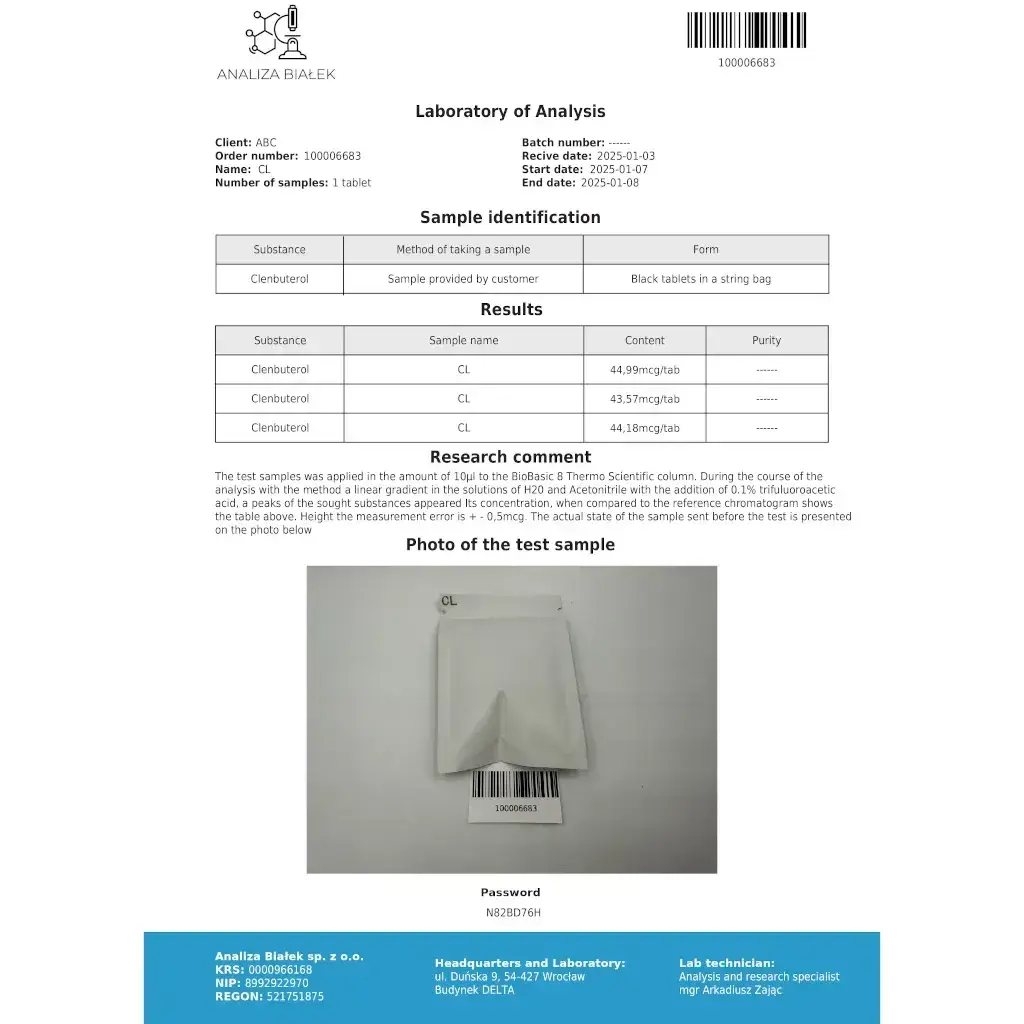
Published laboratory reports for Clenbuterol 40 mcg are shown below with the test date, measured concentration and percentage of the product's 40 mcg label claim.
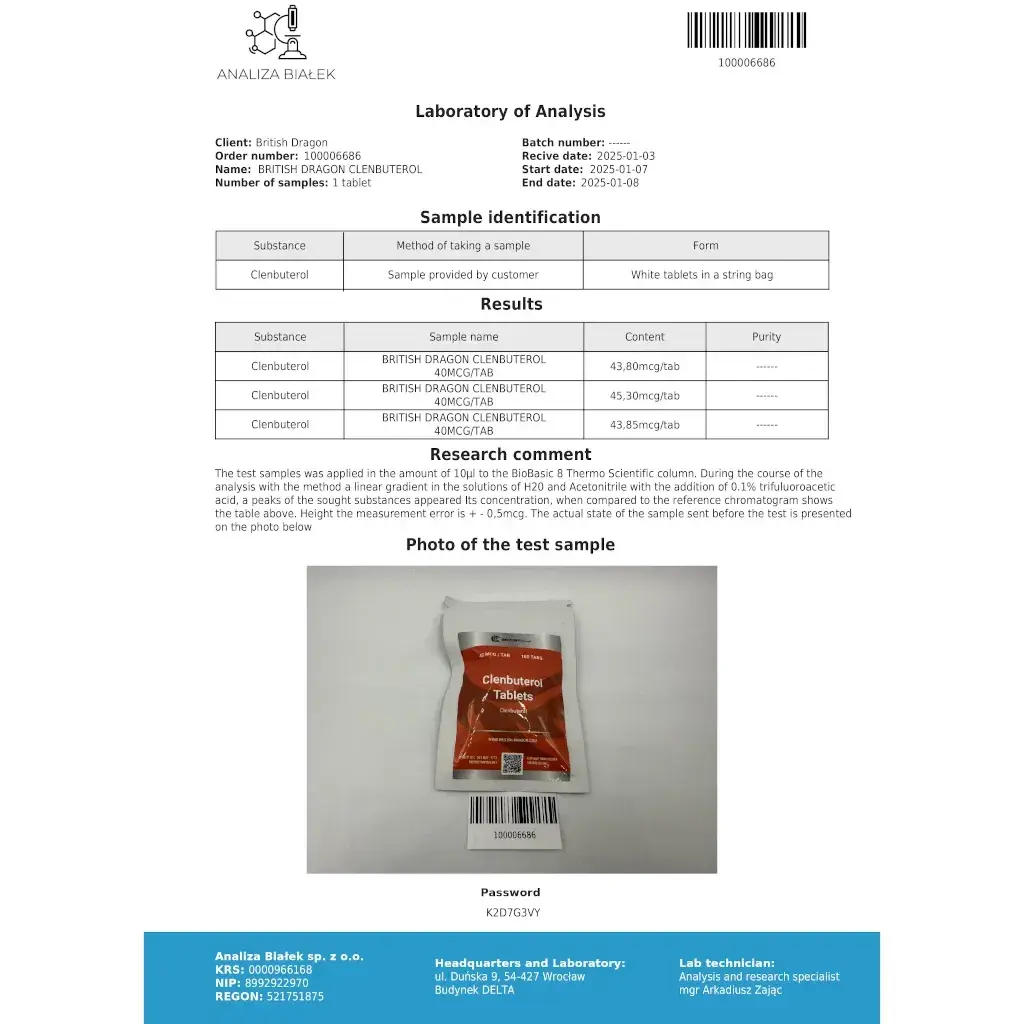 View Report
Laboratory results apply to the specific tested sample represented in each published report and should not be interpreted as a measurement of every vial or production batch.
The information below is provided for educational reference only. Clenbuterol is not FDA-approved for human use in the United States. This research chemical product is not for human use, and non-medical use falls outside approved indications.
Common reference ranges for clenbuterol in non-medical contexts are not well characterized in publicly available bodybuilding resources, and no FDA-approved human dosing information exists for the United States. In countries where clenbuterol was historically approved for asthma, therapeutic doses were 20–40 mcg daily. In non-medical bodybuilding contexts, clenbuterol is commonly referenced in the range of 40–120 mcg daily, with some sources citing an anabolic dose range of 60–120 mcg daily for 6–12 weeks. These figures are anecdotal and lack clinical validation for non-medical use.
| Use Case | Research Reference Range | Frequency |
|---|---|---|
| Historical asthma (non-US) | 20–40 mcg daily | Twice daily |
| Non-medical reference (anabolic) | 60–120 mcg daily | Split doses |
| Clinical human data (US) | None established | Not applicable |
In non-medical bodybuilding contexts, clenbuterol is sometimes stacked with T3 (liothyronine) during cutting phases. Community protocols often reference starting at 20 mcg twice daily and gradually increasing by 20 mcg every 1–3 weeks to a maximum of 120 mcg/day split into multiple doses. However, these protocols are not clinically validated and carry significant cardiovascular risks.
Clenbuterol's long half-life of approximately 35 hours allows for once or twice daily dosing, but accumulation can occur with repeated dosing, potentially leading to chronically elevated plasma levels.
Clenbuterol is associated with significant cardiovascular risks. Case reports document myocardial injury, myocarditis, and myocardial infarction in young bodybuilders using clenbuterol. Animal studies demonstrate that clenbuterol induces myocyte necrosis in cardiac and skeletal muscle at doses within the range commonly abused by athletes.
Common adverse effects include tachycardia, tremors, hypokalemia, muscle cramps, and cardiac arrhythmias. Beta-blockers such as nebivolol are sometimes referenced in community discussions to manage heart rate, but this does not eliminate the underlying risks. Clenbuterol is banned by WADA and is prohibited at all times in sport.
Clenbuterol is not a hormone and does not suppress endogenous testosterone production. No post-cycle therapy is applicable or necessary for clenbuterol alone. If clenbuterol is referenced alongside anabolic compounds in non-medical contexts, any PCT protocol would be determined by the other compounds, not by clenbuterol.
No human clinical data exists to support any specific dosing strategy for clenbuterol in non-clinical settings. The information above is for educational reference only and does not constitute medical advice. Clenbuterol is not FDA-approved for human use.
Clenbuterol is not FDA-approved for human use in the United States and is associated with serious cardiovascular risks. Its safety profile outside clinical trial settings is not characterized.
Clenbuterol is not FDA-approved for human use in the United States. The FDA discontinued approval for human medicinal products containing clenbuterol in 2006. The only FDA-approved product containing clenbuterol is Ventipulmin Syrup, indicated for horses with airway obstruction.
Clenbuterol is a prohibited substance in sport under WADA section S1.2 (Other Anabolic Agents) and is banned at all times. There is no threshold below which clenbuterol is not prohibited. Athletes who test positive may face sanctions, including long-term bans, even if the substance was ingested inadvertently through contaminated meat.
This product is sold as a research chemical and is not approved for human use. Products sold online under the name clenbuterol through research compound vendors are not FDA-regulated, have no verified manufacturing standards, and carry unknown contamination, dosing, and safety risks.
Clenbuterol is a potent sympathetic stimulant associated with significant cardiovascular adverse effects. Case reports document myocardial injury, myocarditis, and non-ST-segment elevation myocardial infarction in young adults using clenbuterol for weight loss or bodybuilding. A 21-year-old bodybuilder presented with sinus tachycardia, hypokalemia (potassium 3.1 mmol/L), and peak troponin of 863 ng/L after ingesting excessive clenbuterol.
Other commonly reported adverse effects include tachycardia, tremors, hypokalemia, muscle cramps, palpitations, nervousness, headache, and insomnia. Animal studies demonstrate that clenbuterol induces myocyte necrosis in cardiac and skeletal muscle at doses within the range commonly abused by athletes, with a single administration sufficient to induce 3.8% necrosis in the soleus muscle.
Chronic clenbuterol use is associated with beta-2 adrenoceptor desensitization and downregulation, which diminishes its effects over time and may lead users to escalate doses, increasing the risk of toxicity.
As clenbuterol is not approved for human use, there are no established contraindications in non-clinical settings. However, individuals with cardiovascular disease, arrhythmias, hypertension, or a history of myocardial infarction should avoid clenbuterol. The cardiotoxic effects observed in case reports and animal studies suggest that anyone with pre-existing cardiac conditions is at elevated risk.
No monitoring parameters have been established for clenbuterol outside clinical trial settings. In case reports, cardiac troponin, potassium, and electrocardiogram monitoring were used to assess myocardial injury. Laboratory testing of the product itself, such as the published potency report shown in the Lab Reports tab, is separate from any clinical monitoring. Product testing does not assess individual health status or suitability for use.
Oral tablets should be stored at controlled room temperature (15–25°C) in the original packaging, protected from excessive heat, moisture, and direct light. Keep out of reach of children.
Clenbuterol hydrochloride is classified as toxic if swallowed. Handle with appropriate precautions and dispose of unused product according to local regulations.
Clenbuterol 40 mcg is supplied through the official Stealth Labs distribution chain and shipped in original manufacturer packaging with discreet, privacy-focused handling.
The outer shipping package remains discreet, with privacy-focused handling and no unnecessary external product details. Products are supplied through the official Stealth Labs distribution chain.
To verify your Clenbuterol 40 mcg product, use the security code on the package label and cross-check it on the Stealth Labs official site. Official Stealth Labs presentation, batch-linked lab proof, and original packaging help reinforce product legitimacy and buyer confidence.
For complete delivery details, tracking policy, and reshipment terms, please see our Shipping Info page.
Proper storage conditions help preserve tablet stability and overall product integrity throughout shelf life.
Store at controlled room temperature (15–25°C) in the original packaging, protected from excessive heat, moisture, and direct light. Keep the container tightly closed when not in use.
Do not use if tablets appear discolored, crumbled, or otherwise abnormal. Keep out of reach of children. Clenbuterol hydrochloride is classified as toxic if swallowed and should be handled with appropriate precautions.
Answers to common questions about Clenbuterol 40 mcg, its research status, clinical data, and laboratory testing.
Clenbuterol 40 mcg is an oral tablet sold as a research chemical. Clenbuterol is not FDA-approved for human use in the United States. In countries where it was historically approved, it was used as a bronchodilator for asthma at doses of 20–40 mcg daily. In non-medical bodybuilding contexts, it is commonly referenced for its thermogenic and anabolic properties, though such use is prohibited in sport and carries significant cardiovascular risks.
No FDA-approved human dosing exists for clenbuterol in the United States. In countries where it was historically approved for asthma, therapeutic doses were 20–40 mcg daily, often divided into two doses. In non-medical bodybuilding contexts, clenbuterol is commonly referenced in the range of 40–120 mcg daily, with some protocols starting at 20 mcg twice daily and gradually increasing. These figures are anecdotal and lack clinical validation.
Clenbuterol is not a hormone and does not suppress endogenous testosterone production. No post-cycle therapy is applicable or necessary for clenbuterol alone. If clenbuterol is referenced alongside anabolic compounds in non-medical contexts, any PCT protocol would be determined by the other compounds, not by clenbuterol.
Clenbuterol is a beta-2 adrenergic agonist that stimulates beta-2 receptors, producing bronchodilation and increased metabolic rate. In research settings, oral clenbuterol at 40 mcg significantly increased maximal expiratory flow and improved vital capacity in human subjects. At higher doses, it also stimulates beta-1 receptors, which underlies its cardiotoxicity.
After oral administration, clenbuterol reaches peak plasma concentrations within 2–3 hours, and pharmacological effects persist for approximately 6 hours. The half-life is approximately 35 hours, and steady-state plasma concentrations are achieved by the fourth day of repeated dosing. In non-medical contexts, community reports suggest initial metabolic effects may be noticed within days, but the time required to notice effects depends on the individual and the specific outcome being evaluated.
There is no single compound that is universally best. Clenbuterol has thermogenic effects, but its anabolic effects in healthy humans are weak, and it carries significant cardiovascular risks. Evidence suggests clenbuterol does not improve and may even impair aerobic performance in athletes. Non-medical use falls outside approved indications and is prohibited in sport.
Clenbuterol is a beta-2 adrenergic agonist that stimulates metabolic rate through adrenergic receptors, while T3 (liothyronine) is a thyroid hormone that directly increases metabolic rate through thyroid hormone receptors. They have different mechanisms of action and different risk profiles. T3 is FDA-approved for hypothyroidism; clenbuterol is not approved for human use in the US.
Clenbuterol is a beta-2 agonist, while Anavar (oxandrolone) is an anabolic steroid. They have fundamentally different mechanisms of action. Oxandrolone is FDA-approved for specific medical indications; clenbuterol is not approved for human use in the US and is associated with significant cardiovascular risks.
A microgram amount cannot be classified as appropriate or excessive without considering the context. The historical therapeutic dose range for asthma in countries where clenbuterol was approved was 20–40 mcg daily. In non-medical bodybuilding contexts, doses commonly referenced are 40–120 mcg daily. It is important to distinguish a dose from a product's tablet strength. Clenbuterol 40 mcg indicates 40 mcg per tablet; that strength does not by itself specify how much should be taken.
Clenbuterol 40 mcg is labeled at 40 mcg of clenbuterol hydrochloride per tablet. It is supplied as oral tablets in a 100-tablet package.
Yes. A published laboratory report dated January 8, 2025 measured Clenbuterol 40 mcg at 44.99 mcg, equivalent to 112.48% of its 40 mcg label claim. The complete report can be viewed in the Lab Reports tab. Laboratory results apply to the tested sample represented by the individual report.
In non-medical bodybuilding contexts, clenbuterol is sometimes stacked with T3 during cutting phases. However, clenbuterol is not FDA-approved for human use, and no clinical data exists to support any combination with other compounds. Stacking decisions should consider individual experience and health status.

Lean Mass Cycle 2 (10 Weeks):
- Primoxyl 100 x 3 Vials
- Testoxyl Propionate 100 x 4 Vials
- Stanoxyl Depot x 2 Vials
- Oxandroxyl x 150 Tablets
- Clenbutaxyl x 100 Tablets
- Nolvaxyl x 100 Tablets
- HCG x 2 Vials