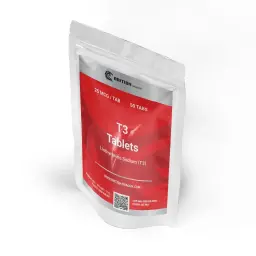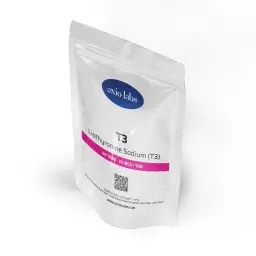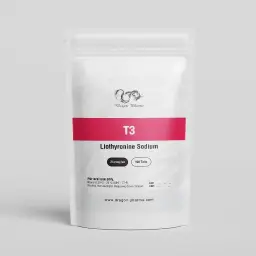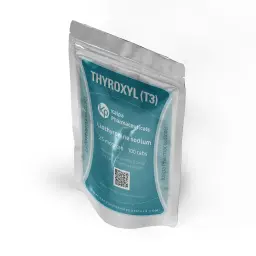
Liothyronine (T3) 50 mcg is an oral liothyronine sodium tablet manufactured by Stealth Labs and dosed at 50 mcg per tablet in a 100-tablet pack.
Liothyronine (T3) 50 mcg contains liothyronine sodium, a synthetic form of the thyroid hormone triiodothyronine (T3). In medical practice, liothyronine is FDA-approved for the treatment of hypothyroidism and as a diagnostic agent in thyroid suppression tests. In non-medical bodybuilding settings, liothyronine is commonly referenced for its metabolic rate-increasing properties, particularly during cutting phases where accelerated fat loss is a goal.
Liothyronine works by entering cells and binding to thyroid hormone receptors in the nucleus, where it activates gene transcription and protein synthesis. This hormonal activity increases basal metabolic rate, enhances lipolysis, and influences carbohydrate and protein metabolism. Unlike levothyroxine (T4), liothyronine does not require peripheral conversion and exerts its effects more rapidly.
While liothyronine's medical applications are well established, its use for physique or performance enhancement falls outside approved medical indications. Non-medical use should be considered in the context of potential adverse effects, including cardiac stress, muscle catabolism, and suppression of endogenous thyroid function.
Liothyronine sodium is a synthetic form of triiodothyronine (T3), one of the two primary thyroid hormones produced by the thyroid gland. Its rapid onset and potent metabolic effects distinguish it from levothyroxine (T4) and make it a compound with specific clinical applications.
Liothyronine is chemically identical to the T3 hormone naturally produced by the thyroid gland. While the thyroid secretes primarily T4, approximately 80% of circulating T3 is derived from peripheral conversion of T4 in tissues such as the liver and kidneys. Liothyronine provides T3 directly, bypassing this conversion step.
After oral administration, liothyronine is almost completely absorbed within 4 hours. Peak serum T3 levels occur approximately 2–4 hours after dosing, and the hormone has a relatively short half-life compared to T4. This rapid onset and clearance mean that liothyronine levels fluctuate more significantly with once-daily dosing than T4 levels do.
Liothyronine's metabolic effects include increased basal metabolic rate, enhanced protein synthesis, and mobilization of fat stores. These effects form the basis for its medical use in hypothyroidism and its non-medical use in bodybuilding for fat loss purposes.
Liothyronine has a more rapid onset of action than levothyroxine, with metabolic effects appearing within hours rather than days. However, its shorter half-life means that once-daily dosing produces significant peaks and troughs in serum T3 levels, a characteristic that distinguishes it from T4-based therapies.
Stealth Labs offers a range of products that may be referenced alongside liothyronine in performance-related contexts. While liothyronine is a thyroid hormone, other products serve entirely different physiological roles.
For those seeking an alternative product in the thyroid hormone category, T3 by Stealth Labs is the standard-strength liothyronine preparation. In the context of cutting and metabolic support, Clenbuterol is a beta-2 agonist commonly referenced for its thermogenic properties. These products operate through distinct mechanisms and are not substitutes for one another.
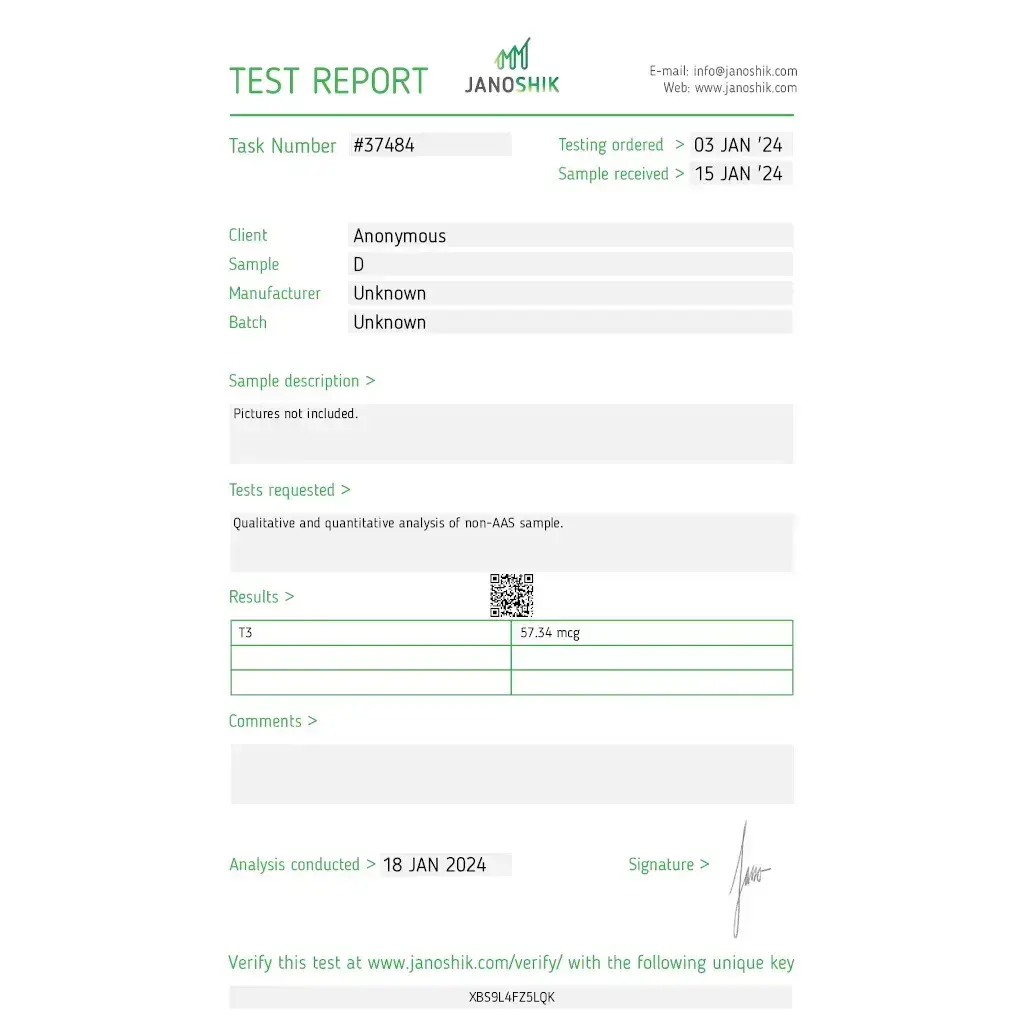
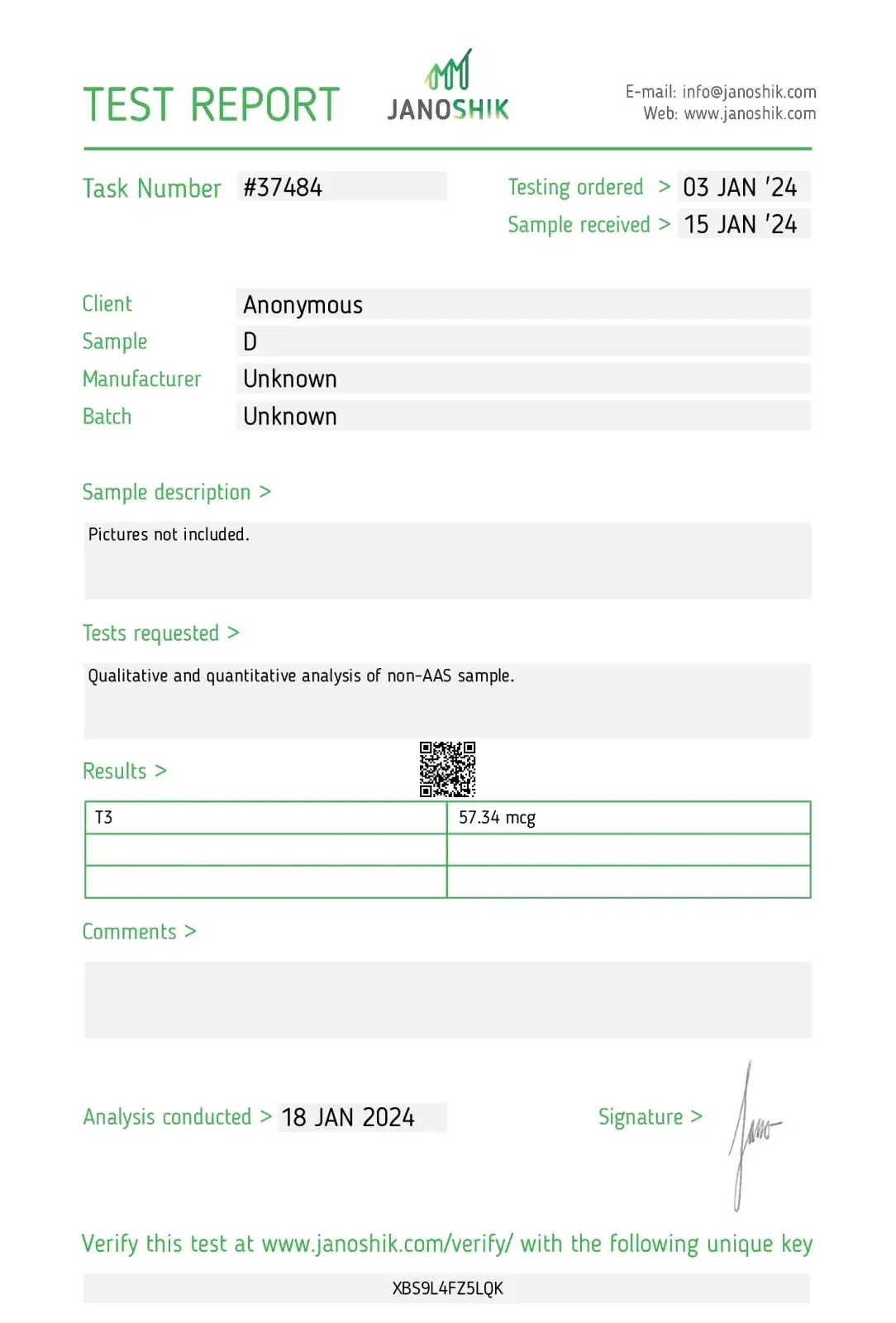
Published laboratory reports for Liothyronine (T3) 50 mcg are shown below with the test date, measured content and percentage of the product's 50 mcg label claim.
 View Report
Laboratory results apply to the specific tested sample represented in each published report and should not be interpreted as a measurement of every tablet or production batch.
The information below is provided for educational reference only. Liothyronine is a prescription medication; medical use requires appropriate diagnosis, clinical supervision and ongoing monitoring. Non-medical use falls outside approved indications.
In medically supervised settings, liothyronine dosing for hypothyroidism typically begins at 25 mcg daily, with maintenance doses commonly ranging from 25 to 75 mcg daily. For elderly patients or those with cardiovascular disease, lower starting doses of 5 mcg daily are recommended. In non-medical bodybuilding contexts, liothyronine is commonly referenced at dosages of 25–75 mcg per day, often with a gradual titration approach.
| Use Case | Common Reference Range | Frequency |
|---|---|---|
| Medical (hypothyroidism, starting) | 25 mcg | Once daily |
| Medical (hypothyroidism, maintenance) | 25–75 mcg | Once daily |
| Non-medical (bodybuilding) | 25–75 mcg | Once daily or split |
In non-medical bodybuilding contexts, liothyronine is sometimes referenced during cutting phases to support metabolic rate and fat loss. It may be discussed alongside compounds such as Clenbuterol, though such combinations fall outside approved medical use and increase the potential for adverse effects.
Cycle structure and support protocols should be considered in the context of individual experience, health status and bloodwork where possible. Liothyronine is not typically included in post-cycle therapy protocols.
Liothyronine is associated with several potential side effects that should be considered. Overtreatment or excessive dosing can produce symptoms of hyperthyroidism, including cardiac arrhythmias, increased heart rate, tremors, anxiety, and heat intolerance.
Liothyronine has a narrow therapeutic index, and both over- and undertreatment carry risks. For individuals using liothyronine in non-medical contexts, monitoring for signs of thyroid hormone excess and being aware of potential drug interactions is important.
Liothyronine does not require a traditional post-cycle therapy in the same manner as anabolic steroids. However, abrupt discontinuation after prolonged use may be associated with temporary suppression of endogenous thyroid function. A gradual taper is commonly referenced in non-medical contexts to support recovery of natural thyroid hormone production.
Dosing strategies and support protocols should be adjusted based on experience level and bloodwork where possible. The information above is for educational reference and does not constitute medical advice.
Liothyronine is a prescription medication with a well-documented safety profile established through decades of clinical use. Medical liothyronine therapy requires appropriate diagnosis, clinical supervision and ongoing monitoring.
Liothyronine has a narrow therapeutic index, meaning that there is a relatively small difference between therapeutic and excessive doses. Overtreatment can produce serious manifestations of thyrotoxicosis, including cardiac arrhythmias, angina, and in severe cases, life-threatening complications.
Liothyronine is contraindicated in patients with uncorrected adrenal insufficiency, as thyroid hormone increases metabolic clearance of glucocorticoids and may precipitate an acute adrenal crisis.
Liothyronine's approved indications are limited to hypothyroidism replacement therapy and diagnostic thyroid suppression testing. Use for bodybuilding, weight loss, or performance enhancement falls outside approved medical indications and has been associated with serious cardiac harm. Product potency verification does not establish that non-medical use is safe.
Excessive liothyronine exposure can produce symptoms of hyperthyroidism, including palpitations, tachycardia, cardiac arrhythmias, angina, tremors, nervousness, insomnia, heat intolerance, and excessive sweating. Musculoskeletal effects may include muscle weakness and cramps.
Severe thyrotoxicosis from liothyronine has been documented in non-medical contexts, with one case report describing wide complex tachycardia, chest pain, and borderline left ventricle dysfunction in an individual who consumed liothyronine-containing tablets presented as a weight loss supplement.
Liothyronine therapy is not appropriate for everyone. Medical evaluation should consider cardiovascular status, as thyroid hormone can increase heart rate and cardiac contractility, potentially precipitating angina or arrhythmias in susceptible individuals.
Adrenal insufficiency must be ruled out or treated before liothyronine initiation. Elderly patients and those with underlying cardiovascular disease require lower starting doses and careful monitoring.
Medically supervised liothyronine therapy typically involves periodic assessment of serum TSH and T3 levels to evaluate treatment adequacy and detect over- or undertreatment. Clinical monitoring for signs of thyroid hormone excess is also essential.
Laboratory testing of the product itself, such as the published potency report shown in the Lab Reports tab, is separate from clinical monitoring of the person using liothyronine.
Store in the original packaging, protected from excessive heat, moisture and direct light. Keep all medications out of the reach of children. Follow the storage instructions provided with the product packaging.
Liothyronine (T3) 50 mcg is supplied through the official Stealth Labs distribution chain and shipped in original manufacturer packaging with discreet, privacy-focused handling.
The outer shipping package remains discreet, with privacy-focused handling and no unnecessary external product details. Products are supplied through the official Stealth Labs distribution chain.
To verify your Liothyronine (T3) 50 mcg product, use the security code on the product packaging and cross-check it on the Stealth Labs official site. Official Stealth Labs presentation, batch-linked lab proof, and original packaging help reinforce product legitimacy and buyer confidence.
For complete delivery details, tracking policy, and reshipment terms, please see our Shipping Info page.
Proper storage conditions help preserve product integrity and ensure the tablets remain suitable for their intended use throughout their shelf life.
Store liothyronine tablets in a cool, dry place away from direct sunlight and excessive heat. Keep the tablets in their original packaging until use to protect them from moisture and contamination.
Do not store in areas subject to temperature extremes, such as bathrooms or near kitchen appliances. Keep out of reach of children and pets.
Answers to common questions about Liothyronine (T3) 50 mcg, liothyronine sodium, its mechanisms, dosage considerations and laboratory testing.
Liothyronine (T3) 50 mcg contains liothyronine sodium, a synthetic thyroid hormone. In medical practice, it is FDA-approved for hypothyroidism replacement therapy and as a diagnostic agent in thyroid suppression tests. In non-medical bodybuilding settings, it is commonly referenced for its metabolic rate-increasing properties during cutting phases, though such use falls outside approved medical indications.
In medical settings, liothyronine is typically administered once daily, with dosing individualized based on patient response and laboratory findings. In non-medical contexts, liothyronine is commonly referenced at 25–75 mcg per day, sometimes split into multiple doses to smooth out serum level fluctuations.
Liothyronine does not require traditional post-cycle therapy in the same manner as anabolic steroids. However, abrupt discontinuation after prolonged use may be associated with temporary thyroid suppression. A gradual taper is commonly referenced in non-medical contexts to support recovery of natural thyroid function.
Liothyronine sodium is a synthetic form of triiodothyronine (T3), a thyroid hormone that regulates metabolic rate, protein synthesis, and carbohydrate and fat metabolism. It binds to thyroid hormone receptors in cell nuclei, activating gene transcription and influencing nearly every cell in the body. Its rapid onset distinguishes it from levothyroxine (T4), which requires peripheral conversion.
Liothyronine has a rapid onset of action, with peak serum T3 levels occurring approximately 2–4 hours after oral administration. Metabolic effects can appear within hours, though clinical response in hypothyroidism may take days to weeks to fully manifest. This rapid action contrasts with levothyroxine, which may take several weeks to reach full effect.
There is no single thyroid hormone preparation that is universally best. Levothyroxine (T4) is the standard of care for hypothyroidism due to its steady blood levels and long half-life. Liothyronine (T3) has a more rapid onset but produces more significant serum level fluctuations with once-daily dosing. The appropriate choice depends on the clinical context and individual factors.
Liothyronine (T3) and levothyroxine (T4) are both thyroid hormones, but they differ in onset, duration, and need for conversion. T4 requires conversion to T3 in peripheral tissues to become active, while T3 is directly active. Liothyronine has a faster onset but shorter half-life, producing more significant serum level fluctuations than levothyroxine.
Liothyronine and Clenbuterol operate through entirely different mechanisms. Liothyronine is a thyroid hormone that increases metabolic rate through thyroid hormone receptor activation. Clenbuterol is a beta-2 adrenergic agonist that stimulates thermogenesis through a different pathway. Both are referenced in non-medical cutting contexts but are not interchangeable.
In medical contexts, 50 mcg is within the usual maintenance range for hypothyroidism (25–75 mcg daily), though it represents the higher end of that range. The 50 mcg strength provides a single-tablet option for individuals requiring that dose. However, liothyronine has a narrow therapeutic index, and any dose should be evaluated in the context of individual clinical factors.
Liothyronine (T3) 50 mcg is labeled at 50 mcg of liothyronine sodium per tablet. It is supplied as 100 oral tablets per package, giving 5,000 mcg of total labeled content.
Yes. A published laboratory report dated January 18, 2024 measured Liothyronine (T3) 50 mcg at 57.34 mcg per tablet, equivalent to 114.68% of its 50 mcg label claim. The complete report can be viewed in the Lab Reports tab. Laboratory results apply to the tested sample represented by the individual report.