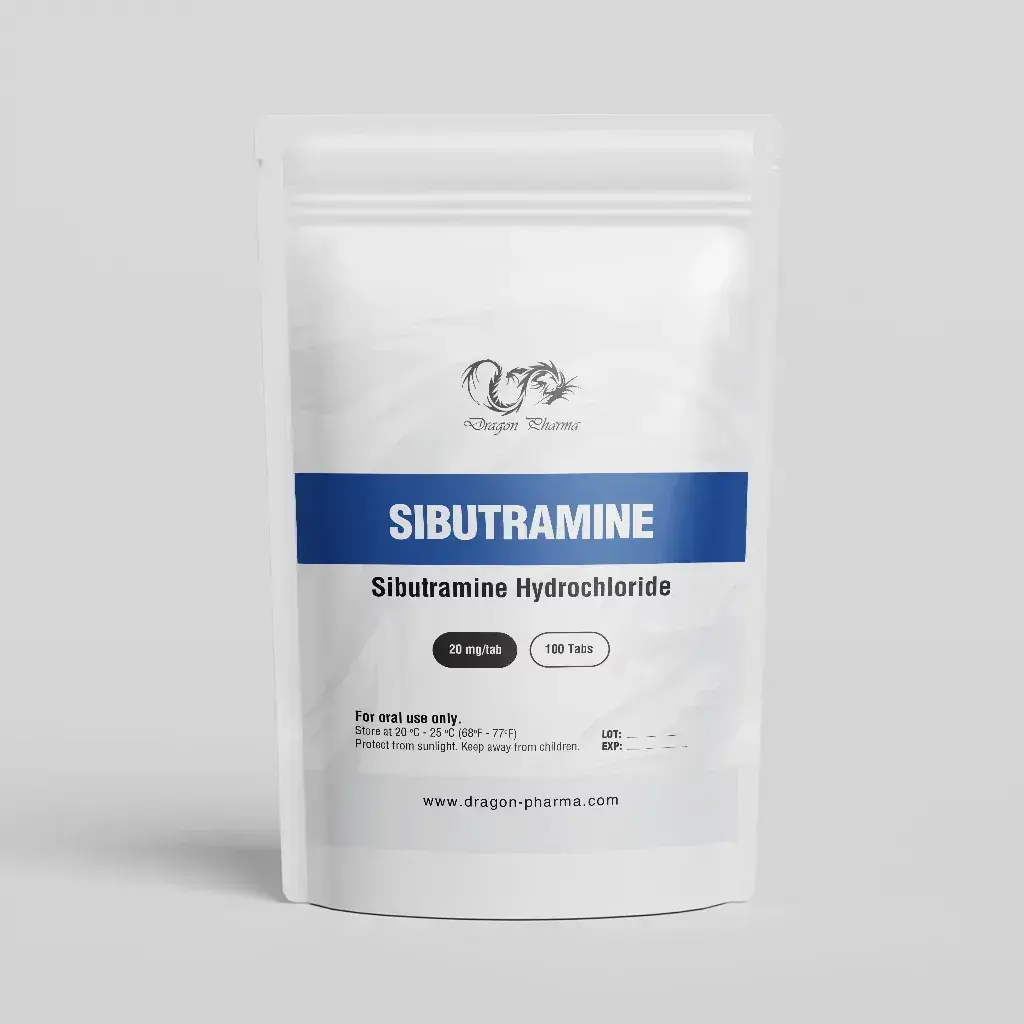
Sibutramine 20 mg is an oral sibutramine tablet manufactured by Dragon Pharma, dosed at 20 mg per tablet in a 100-tablet package.
Sibutramine 20 mg contains sibutramine, a centrally acting serotonin-norepinephrine reuptake inhibitor (SNRI) that was formerly approved for the treatment of obesity. Sibutramine works by inhibiting the reuptake of norepinephrine, serotonin, and to a lesser extent dopamine at the neuronal synapse, which promotes a sense of satiety and reduces food intake. The parent compound is a prodrug with weak activity; its therapeutic effects are primarily mediated by its active metabolites M1 (N-desmethyl sibutramine) and M2 (N-didesmethyl sibutramine).
Sibutramine was approved by the FDA in 1997 for weight management but was voluntarily withdrawn from the U.S. and Canadian markets in October 2010 following data from the Sibutramine Cardiovascular Outcomes Trial (SCOUT), which demonstrated an increased risk of cardiovascular events including nonfatal myocardial infarction and nonfatal stroke. The drug remains a Schedule IV controlled substance due to its stimulant-like properties. In non-medical bodybuilding contexts, sibutramine is occasionally referenced for appetite suppression during cutting phases, though such use falls outside approved indications and carries significant cardiovascular risks.
At its peak, sibutramine was available in 5 mg, 10 mg, and 15 mg capsule strengths under the brand name Meridia. The 20 mg strength of Sibutramine 20 mg exceeds the maximum formerly approved clinical dose of 15 mg daily, and no clinical safety data exists for this dose level. The recommended starting dose was 10 mg daily, with titration to 15 mg daily if tolerated and if weight loss was inadequate.
Sibutramine 20 mg is supplied as an oral tablet containing 20 mg of sibutramine per tablet. Oral administration allows for convenient once-daily dosing.
Sibutramine is a centrally acting serotonin-norepinephrine reuptake inhibitor that was formerly used for weight management before being withdrawn due to cardiovascular safety concerns.
Sibutramine belongs to the class of monoamine reuptake inhibitors. Its pharmacological action is primarily mediated by its active metabolites M1 and M2, which inhibit the reuptake of norepinephrine, serotonin, and to a lesser degree dopamine at the neuronal synapse. By increasing synaptic concentrations of these neurotransmitters, sibutramine enhances satiety and reduces food intake. Data from animal studies also suggest sibutramine may increase energy expenditure through thermogenic effects, though this has not been confirmed in humans.
The pharmacokinetics of sibutramine involve rapid absorption from the gastrointestinal tract (Tmax of 1.2 hours) and extensive first-pass metabolism in the liver to form the active metabolites M1 and M2. Peak plasma concentrations of M1 and M2 are reached within 3 to 4 hours. The elimination half-lives of M1 and M2 are approximately 14 and 16 hours, respectively, and steady-state concentrations are reached within four days of dosing.
Clinical trials demonstrated that sibutramine produced weight loss of approximately 3 to 5 kg greater than placebo at 24 weeks, with weight loss maintained to 52 weeks at doses of 10 and 15 mg. However, the SCOUT trial found that over a mean 3.4 years of treatment, the incidence of major adverse cardiovascular events (MACE) was 11.4% in patients randomized to sibutramine compared to 10% in the placebo group (HR 1.16).
Sibutramine's active metabolites M1 and M2 have elimination half-lives of approximately 14 and 16 hours, respectively. This supports once-daily dosing regimens that were used in clinical practice.
Dragon Pharma offers a range of compounds relevant to fat loss and appetite management. Sibutramine 20 mg is positioned as an anorectic agent, complementing other products used during cutting phases.
For alternative appetite suppression and thermogenic approaches, Dragon Pharma offers Clenbuterol, which is a beta-2 agonist commonly referenced in bodybuilding contexts. For thyroid hormone support during cutting, T3 and T4 are also available. For stimulant-based fat loss approaches, Salbutamol is an additional option.
The information below is provided for educational reference only. Sibutramine was withdrawn from the U.S. market in 2010 and is no longer approved for medical use. Non-medical use falls outside any approved indications and carries significant health risks.
When sibutramine was available medically, the recommended starting dose was 10 mg once daily, with titration to 15 mg daily if tolerated and if weight loss was inadequate after 4 weeks. The maximum approved dose was 15 mg daily. The 20 mg strength of Sibutramine 20 mg exceeds the maximum formerly approved clinical dose, and no safety or efficacy data exists for this dose level in humans. In non-medical bodybuilding contexts, sibutramine has been referenced for appetite suppression, though such use is not supported by clinical evidence at these doses.
| Use Case | Former Medical Reference Range | Frequency |
|---|---|---|
| Former medical (weight management) | 10–15 mg | Once daily |
| Starting dose (formerly approved) | 10 mg | Once daily |
| Maximum former clinical dose | 15 mg | Once daily |
Sibutramine 20 mg exceeds the maximum formerly approved clinical dose of 15 mg daily. No clinical safety data exists for this dose level.
Sibutramine is not an anabolic compound and is not stacked for muscle-building purposes. In non-medical bodybuilding contexts, it has been occasionally referenced during cutting phases for appetite suppression. Dragon Pharma offers Clenbuterol as an alternative compound commonly discussed for fat loss, and T3 for thyroid hormone support during cutting.
Because sibutramine affects cardiovascular parameters and was withdrawn due to cardiovascular safety concerns, combining it with other stimulants or compounds that increase heart rate or blood pressure would be expected to compound risks. Cycle structure and support compounds should be considered in the context of individual experience, health status, and bloodwork where possible.
In clinical trials, the most common adverse events associated with sibutramine were headache (30.3%), dry mouth (17.2%), anorexia (13.0%), constipation (11.5%), and insomnia (10.7%). Cardiovascular effects included tachycardia (2.6%), vasodilation (2.4%), hypertension/increased blood pressure (2.1%), and palpitation (2.0%).
Sibutramine produces mean increases in systolic and diastolic blood pressure of 1 to 3 mm Hg and mean increases in pulse rate of 4 to 5 beats per minute relative to placebo. These effects were similar in normotensive and hypertensive patients. The drug was withdrawn due to an increased risk of major adverse cardiovascular events, including nonfatal myocardial infarction and nonfatal stroke.
Sibutramine is not part of standard post-cycle therapy protocols, which focus on restoring endogenous testosterone production. PCT compounds such as Clomid and Nolvadex address the hypothalamic-pituitary-gonadal axis rather than appetite regulation. Sibutramine's role was historically limited to weight management.
Dosing strategies and support protocols should be adjusted based on experience level and bloodwork where possible. The information above is for educational reference and does not constitute medical advice. Sibutramine has been withdrawn from the market and is not approved for human use.
Sibutramine is a withdrawn medication that was associated with serious cardiovascular risks. It is no longer approved for human use in the United States or Canada.
Sibutramine was voluntarily withdrawn from the U.S. and Canadian markets in October 2010 following data from the SCOUT trial demonstrating an increased risk of cardiovascular events. The drug is no longer approved for any medical use. It remains a Schedule IV controlled substance in the United States due to its potential for abuse.
Sibutramine was removed from the market in 2010 for safety reasons. The FDA has warned that products containing sibutramine pose a significant risk to consumers, particularly those with a history of coronary artery disease, congestive heart failure, arrhythmias, or stroke. Non-medical use of this compound is not approved and carries serious health risks.
The SCOUT trial found that over a mean 3.4 years of treatment, the incidence of major adverse cardiovascular events (nonfatal myocardial infarction, nonfatal stroke, cardiovascular death, or resuscitated cardiac arrest) was 11.4% in patients randomized to sibutramine compared to 10% in the placebo group. The hazard ratios for nonfatal myocardial infarction and nonfatal stroke were 1.28 and 1.36, respectively.
Common adverse effects reported in clinical trials included headache (30.3%), dry mouth (17.2%), anorexia (13.0%), constipation (11.5%), insomnia (10.7%), and dizziness (7.0%). Cardiovascular effects included tachycardia (2.6%), hypertension/increased blood pressure (2.1%), and palpitation (2.0%).
Sibutramine was contraindicated in patients with a history of coronary artery disease, stroke, transient ischemic attack, heart arrhythmias, congestive heart failure, peripheral arterial disease, or uncontrolled hypertension. It was also contraindicated in patients taking monoamine oxidase inhibitors (MAOIs) or other centrally acting weight loss agents.
Sibutramine was contraindicated in patients with uncontrolled or poorly controlled hypertension, known or suspected heart disease, history of stroke, or eating disorders such as anorexia nervosa or bulimia nervosa. It was also contraindicated in patients over age 65 and in those taking MAOIs. Individuals with liver or kidney problems, glaucoma, seizures, or bleeding disorders were advised to consult a healthcare professional before use.
When sibutramine was available medically, regular monitoring of blood pressure and heart rate was required. The medication guide instructed patients to have their blood pressure checked before starting and regularly during treatment, and to contact their doctor if blood pressure increased or if symptoms of high blood pressure such as headache, dizziness, or blurred vision occurred.
Keep the product securely stored and protected from conditions that could compromise the tablets or packaging. Inspect the product before use and do not use if it appears damaged or otherwise abnormal. Keep all medications out of the reach of children. Given that sibutramine is a controlled substance, appropriate security measures should be observed.
Sibutramine 20 mg is supplied through the official Dragon Pharma distribution chain and shipped in original manufacturer packaging with discreet, privacy-focused handling.
The outer shipping package remains discreet, with privacy-focused handling and no unnecessary external product details. Products are supplied through the official Dragon Pharma distribution chain.
To verify your Sibutramine 20 mg product, use the security code on the packaging and cross-check it on the Dragon Pharma official site. Official Dragon Pharma presentation and original packaging help reinforce product legitimacy and buyer confidence.
Proper storage conditions help preserve tablet integrity and stability throughout shelf life.
Store in a cool, dry place at controlled room temperature (15–25°C). Protect from excessive heat, moisture, and direct light. Keep the tablets in their original packaging until use.
Do not use if the packaging appears damaged or if the tablets show signs of deterioration. Keep out of reach of children. Given that sibutramine is a controlled substance, appropriate security measures should be observed.
Answers to common questions about Sibutramine 20 mg, sibutramine, anorectic agents, product strength and safety considerations.
Sibutramine 20 mg contains sibutramine, an SNRI that was formerly approved for weight management. It was used to help obese patients lose weight by reducing appetite and promoting satiety. Sibutramine was withdrawn from the market in 2010 due to cardiovascular safety concerns and is no longer approved for medical use.
When sibutramine was available medically, it was typically taken once daily. The recommended starting dose was 10 mg daily, with titration to 15 mg daily if needed. The 20 mg strength of Sibutramine 20 mg exceeds the maximum formerly approved clinical dose, and no safety data exists for this dose level.
Sibutramine inhibits the reuptake of norepinephrine, serotonin, and to a lesser extent dopamine at the neuronal synapse. This increases synaptic concentrations of these neurotransmitters, which promotes a sense of satiety and reduces food intake. Its effects are primarily mediated by its active metabolites M1 and M2.
Following oral administration, sibutramine's active metabolites reach peak plasma concentrations within 3 to 4 hours. Steady-state concentrations are reached within four days of daily dosing. Clinical weight loss effects typically become apparent over weeks to months of consistent use.
There is no single appetite suppressant that is universally best. Sibutramine was effective for weight loss but was withdrawn due to cardiovascular risks. Other options like Clenbuterol work through different mechanisms. The appropriate choice depends on individual goals and circumstances, and sibutramine is no longer approved for human use.
Sibutramine and Clenbuterol work through different mechanisms. Sibutramine is an SNRI that suppresses appetite through central nervous system action, while clenbuterol is a beta-2 agonist that stimulates thermogenesis and metabolic rate. Both carry cardiovascular risks, though sibutramine was withdrawn specifically due to increased cardiovascular events.
Sibutramine and T3 work through completely different mechanisms. Sibutramine reduces appetite by affecting neurotransmitter reuptake in the brain, while T3 is a thyroid hormone that increases metabolic rate. They were sometimes referenced together in weight management contexts, though sibutramine is no longer available due to safety concerns.
Yes. The maximum formerly approved clinical dose of sibutramine was 15 mg daily. The 20 mg strength of Sibutramine 20 mg exceeds this maximum, and no clinical safety or efficacy data exists for this dose level. Higher doses would be expected to increase the risk of cardiovascular and other adverse effects.
Sibutramine 20 mg is labeled at 20 mg of sibutramine per tablet. It is supplied in a 100-tablet package, giving 2,000 mg of total labeled sibutramine content. This strength exceeds the maximum formerly approved clinical dose of 15 mg daily.
Yes. Sibutramine was withdrawn from the market in 2010 after the SCOUT trial demonstrated an increased risk of major adverse cardiovascular events, including nonfatal myocardial infarction and nonfatal stroke. The drug produces mean increases in blood pressure and pulse rate compared to placebo. Individuals with a history of cardiovascular disease are at particularly high risk.
No. Sibutramine was voluntarily withdrawn from the U.S. and Canadian markets in October 2010 due to cardiovascular safety concerns. It is no longer approved for human use in these countries. The FDA has warned that products containing sibutramine pose a significant risk to consumers.