
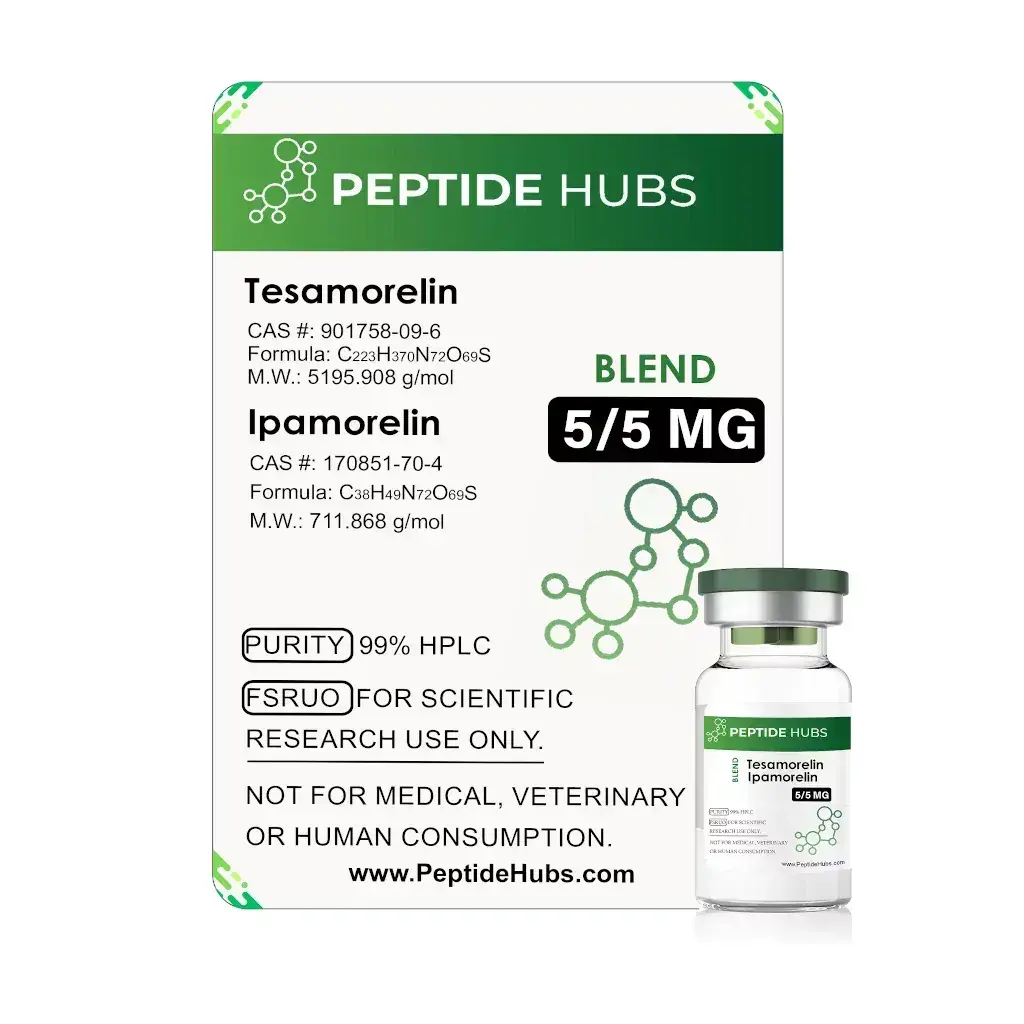
Tesamorelin/Ipamorelin is a lyophilized research peptide blend manufactured by Peptide Hubs and supplied in a 2 mL vial containing 5 mg of Tesamorelin and 5 mg of Ipamorelin.
Tesamorelin/Ipamorelin combines two synthetic peptides that stimulate endogenous growth hormone secretion through distinct but complementary receptor pathways. Tesamorelin is a stabilized GHRH analogue, while Ipamorelin is a selective ghrelin receptor agonist. Together, they are commonly referenced in non-medical bodybuilding research contexts for their potential synergistic effect on pulsatile GH release.
Tesamorelin is FDA-approved for the reduction of excess abdominal fat in HIV-infected adult patients with lipodystrophy under the brand name EGRIFTA. Clinical trials have demonstrated significant reductions in visceral adipose tissue and increases in lean body mass. Ipamorelin is a selective growth hormone secretagogue first characterized in 1998, known for releasing GH without meaningfully elevating cortisol or prolactin levels.
This blend is not FDA-approved for any non-medical use, and the combination for general body composition or recovery applications is off-label. The rationale for combining these peptides is mechanistic: activating both the GHRH receptor and the ghrelin receptor produces a larger, more physiologic GH pulse than either compound alone.
Tesamorelin/Ipamorelin is supplied as a lyophilized powder, a freeze-dried format designed to preserve peptide integrity during storage. Reconstitution is required before research use.
This product combines a stabilized GHRH analogue with a selective ghrelin receptor agonist. Tesamorelin has a mean elimination half-life of 26–38 minutes, while Ipamorelin acts through a distinct receptor pathway to stimulate GH release.
Tesamorelin binds to GHRH receptors on pituitary somatotroph cells, stimulating GH synthesis and pulsatile release. Its trans-3-hexenoic acid modification blocks DPP-IV cleavage, extending its half-life compared to endogenous GHRH. Clinical trials have shown reductions in visceral adipose tissue of 11–18% versus placebo in HIV lipodystrophy patients.
Ipamorelin selectively activates the ghrelin receptor (GHS-R1a) to trigger GH release. Unlike older secretagogues such as GHRP-2 and GHRP-6, Ipamorelin does not meaningfully raise cortisol or prolactin levels, making it a cleaner option for GH stimulation research.
The combination of GHRH receptor and ghrelin receptor activation is understood to produce a synergistic effect on GH release, with research on GHRH plus secretagogue pairings describing roughly 2–3× greater GH release than either compound alone while keeping the release pulsatile and physiologic.
Tesamorelin/Ipamorelin pairs GHRH receptor agonism with selective ghrelin receptor agonism, targeting two independent switches on the same GH-release machinery. This dual-pathway approach distinguishes the blend from single-mechanism GH secretagogues.
Peptide Hubs offers Tesamorelin/Ipamorelin as a pre-formulated blend, as well as each peptide separately as Tesamorelin 5 mg and Ipamorelin 5 mg. For research involving GHRH analogues with different half-life profiles, Sermorelin 5 mg represents a shorter-acting alternative.
A blend of CJC-1295 No DAC and Ipamorelin is also available as CJC-1295/Ipamorelin 10 mg for researchers comparing GHRH analogue and ghrelin agonist combinations.
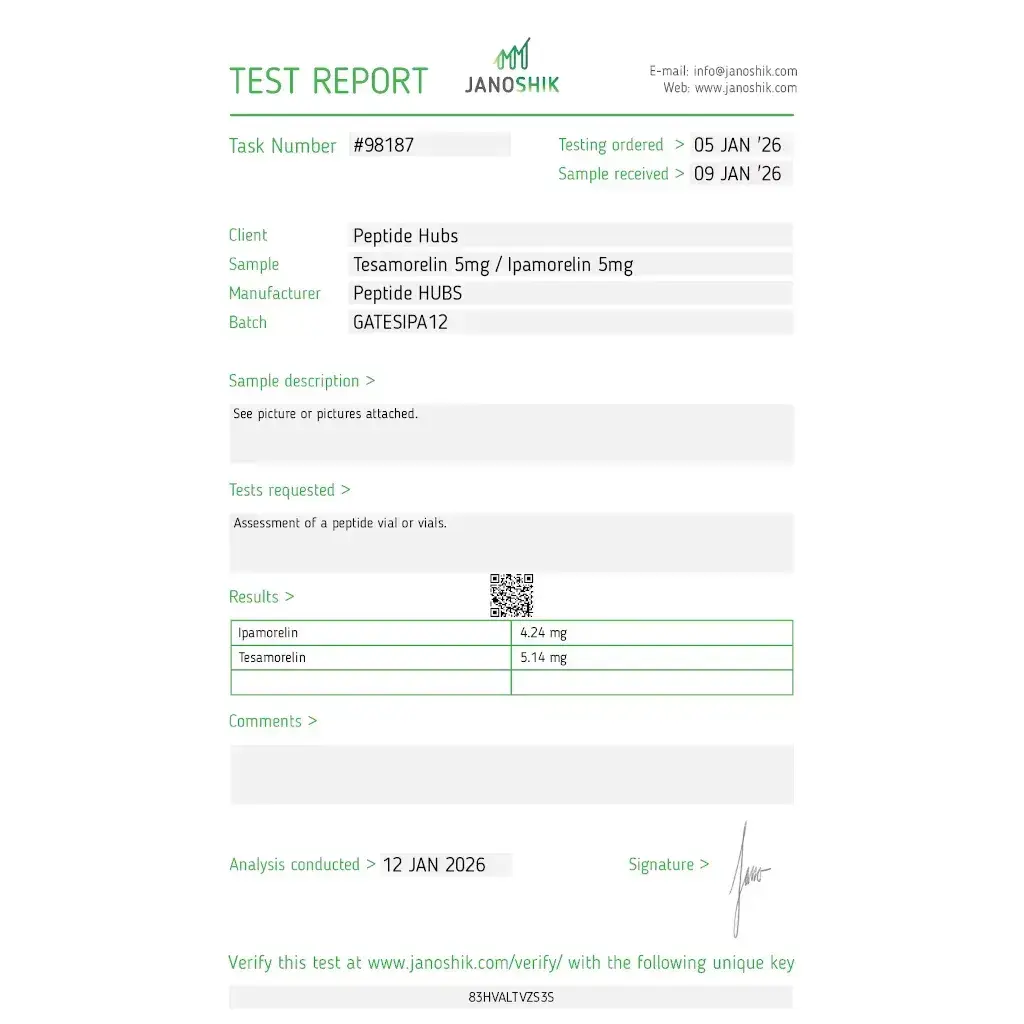
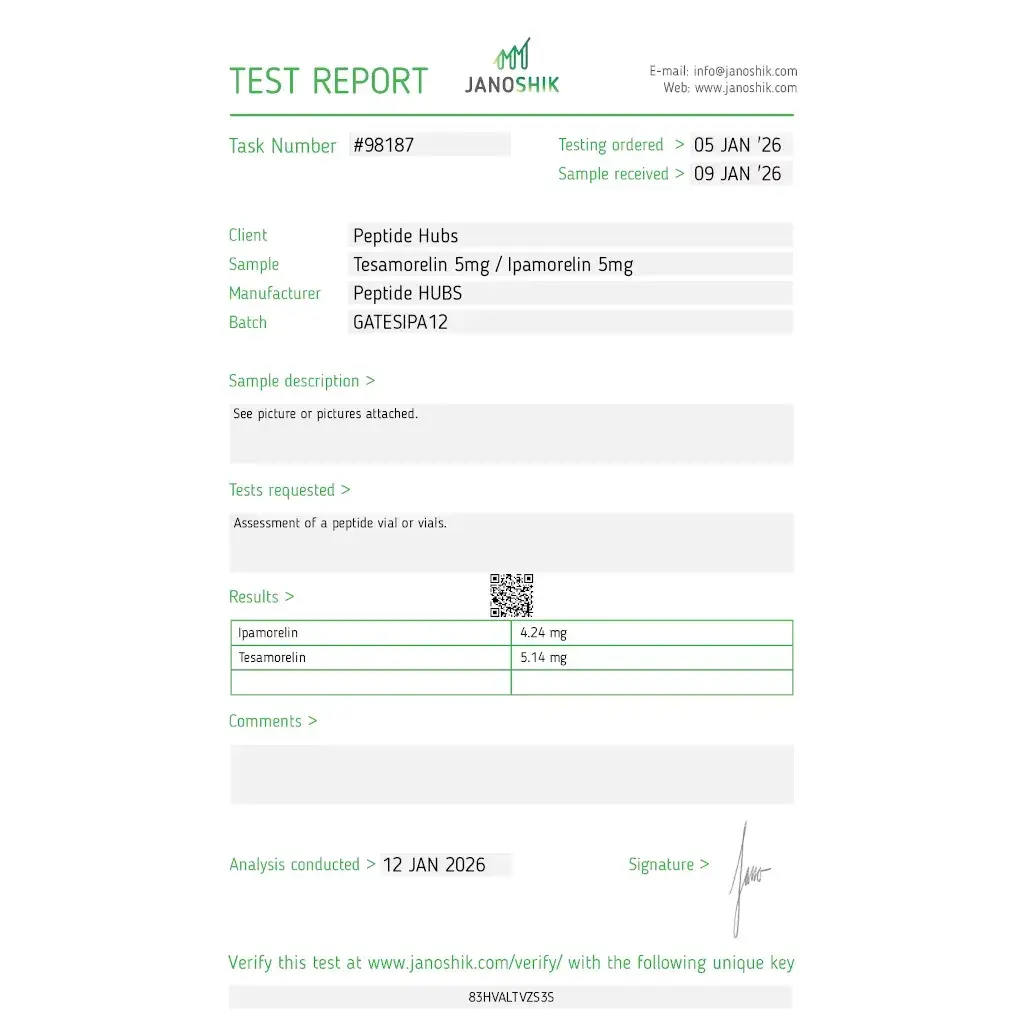
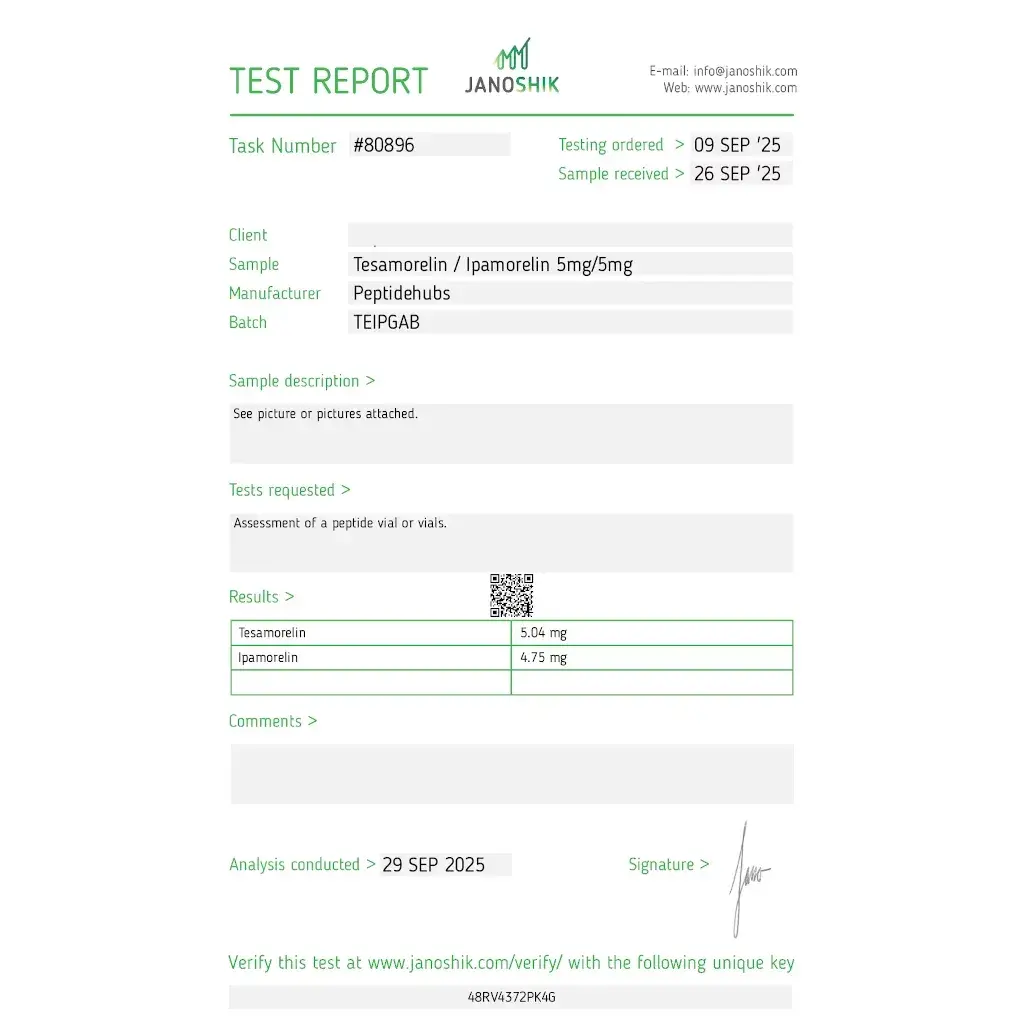
Published laboratory reports for Tesamorelin/Ipamorelin by Peptide Hubs are shown below with the test date, measured content for each component, and percentage of the product's 5 mg per-peptide label claim.
 View Report
 View Report
Laboratory results apply to the specific tested sample represented in each published report and should not be interpreted as a measurement of every vial or production batch.
The information below is provided for educational reference only. Tesamorelin is FDA-approved for HIV-associated lipodystrophy; Ipamorelin is not FDA-approved for any indication. The blend is not approved for any use. Medical use requires appropriate diagnosis, clinical supervision and ongoing monitoring. Non-medical use falls outside approved indications.
In the FDA-approved clinical context for HIV-associated lipodystrophy, Tesamorelin is administered at 1.28–1.4 mg subcutaneously once daily depending on the formulation. Ipamorelin has no established human dose; non-medical protocols commonly reference 100–300 mcg per injection, 1–2 times daily.
| Use Case | Common Reference Range | Injection Frequency |
|---|---|---|
| Tesamorelin (FDA-approved) | 1.28–1.4 mg / day | Once daily subcutaneous |
| Ipamorelin (non-medical) | 100–300 mcg / dose | 1–2 times daily |
| Blend research (non-medical) | Protocol-dependent | Once daily, typically evening |
Note: The specific combination for general body composition or recovery in healthy adults is largely off-label and not backed by large human trials.
In non-medical research contexts, Tesamorelin/Ipamorelin is used as a pre-formulated blend to simplify administration. Common cycle patterns referenced include 5 days on / 2 days off over 8–12 week periods. Timing protocols suggest dosing on an empty stomach, approximately 2 hours after the last meal and 30–60 minutes before sleep to align with the natural nocturnal GH pulse.
For researchers who prefer to adjust the ratio of each peptide independently, separate preparations of Tesamorelin 5 mg and Ipamorelin 5 mg are also available.
Tesamorelin has been associated with injection site reactions (erythema, pruritus, pain, irritation, bruising), arthralgia, myalgia, paresthesia, and peripheral edema in clinical trials. Fluid retention and increases in glucose intolerance have been reported, with periodic blood sugar monitoring recommended. Ipamorelin has a more selective profile and does not meaningfully raise cortisol or prolactin levels.
Post-cycle therapy is not applicable to Tesamorelin/Ipamorelin, as neither peptide suppresses endogenous testosterone production or alters the hypothalamic-pituitary-gonadal axis. Both act on the GH-IGF-1 axis through GHRH and ghrelin receptor stimulation without direct androgenic effects.
Research peptide protocols should be based on published study designs and appropriate institutional oversight. The information above is for educational reference and does not constitute medical advice or a recommendation for use.
Tesamorelin is FDA-approved for HIV-associated lipodystrophy but is not indicated for weight loss management and has a weight-neutral effect. Ipamorelin is not FDA-approved for any indication. The combination of these peptides is not approved for any use.
Tesamorelin stimulates endogenous GH secretion, which increases IGF-1 levels. Elevated IGF-1 is associated with theoretical risks including promotion of pre-existing malignancies. Active malignancy is a contraindication. The impact and safety of Tesamorelin on cardiovascular health has not been studied.
Ipamorelin selectively stimulates GH release through ghrelin receptor activation. Nonclinical studies have reported that ghrelin receptor agonists may modulate reward-processing brain regions, though clinical relevance remains uncertain.
Tesamorelin/Ipamorelin is not approved for human use outside its specific FDA indication. Non-medical use of research peptides falls outside approved indications and carries unknown risks. Purchasing or using injectable peptides without a prescription may be illegal depending on jurisdiction.
Common adverse reactions reported for Tesamorelin in clinical trials include injection site reactions (erythema, pruritus, pain, irritation, bruising), arthralgia, myalgia, paresthesia, peripheral edema, and pain in legs and arms. Increases in glucose intolerance and diabetes risk have been observed, with an intent-to-treat hazard ratio of 3.3 for developing HbA1c ≥ 6.5% relative to placebo.
Serious allergic reactions including rash, urticaria, facial or throat swelling, and shortness of breath have been reported. Ipamorelin's selective profile reduces the risk of cortisol and prolactin elevation seen with older GH secretagogues.
Tesamorelin is contraindicated in patients with pituitary gland tumors, pituitary surgery, or other pituitary problems; active cancer; and known hypersensitivity to Tesamorelin. It is not recommended for pregnant or breastfeeding individuals. Patients with diabetes, kidney or liver problems, or a history of cancer should discuss these conditions with a healthcare professional before use.
Clinical use of Tesamorelin typically involves periodic monitoring of IGF-1 levels and blood sugar. During clinical trials, patients were monitored every three months, with 47.4% of Tesamorelin-treated patients having IGF-1 SDS greater than 2 after 26 weeks. Injection sites should be rotated to reduce the risk of injection site reactions.
Keep the vial securely stored and protected from conditions that could compromise the product. Inspect the vial before use and do not use a product that appears damaged or compromised.
Keep all medications and injectable products out of the reach of children. Follow the storage instructions provided with the product packaging.
Tesamorelin/Ipamorelin is supplied through the Peptide Hubs distribution chain and shipped with discreet, privacy-focused handling.
The outer shipping package remains discreet, with privacy-focused handling. Products are supplied through the official Peptide Hubs distribution chain.
To verify your Tesamorelin/Ipamorelin product, use the security code on the vial label and cross-check it on the Peptide Hubs official site. Original packaging and batch-linked laboratory documentation help reinforce product legitimacy.
For complete delivery details, tracking policy, and reshipment terms, please see our Shipping Info page.
Proper storage conditions help preserve peptide integrity and stability throughout the product's shelf life.
Store the lyophilized powder refrigerated at 2–8°C and protected from light. Keep the vial in its original packaging until use.
After reconstitution, the FDA labeling for EGRIFTA SV indicates that the reconstituted solution should be used immediately and not frozen or refrigerated. For research applications, follow the reconstitution instructions provided with the product.
Reconstituted Tesamorelin/Ipamorelin solution should be clear and colorless. Cloudiness or visible particulates indicate degradation and the vial should be discarded.
Answers to common questions about Tesamorelin/Ipamorelin, the Tesamorelin and Ipamorelin peptides, laboratory testing, and research applications.
Tesamorelin/Ipamorelin is a research peptide blend supplied as lyophilized powder. Tesamorelin is FDA-approved for the reduction of excess abdominal fat in HIV-infected patients with lipodystrophy. Ipamorelin is a selective GH secretagogue studied for GH release without cortisol or prolactin elevation. The blend is commonly referenced in non-medical research contexts for GH pulse applications.
In the FDA-approved clinical context, Tesamorelin is administered subcutaneously once daily at 1.28–1.4 mg. Non-medical protocols for the blend commonly reference once-daily evening dosing on an empty stomach, often using a 5 days on / 2 days off schedule.
No. Post-cycle therapy is not applicable to Tesamorelin/Ipamorelin, as neither peptide suppresses endogenous testosterone production or alters the hypothalamic-pituitary-gonadal axis. Both act on the GH-IGF-1 axis through GHRH and ghrelin receptor stimulation without direct androgenic effects.
Tesamorelin is a stabilized GHRH analogue that binds to GHRH receptors on pituitary somatotroph cells, stimulating endogenous GH synthesis and pulsatile secretion. Clinical trials have demonstrated significant reductions in visceral adipose tissue and increases in lean body mass in HIV lipodystrophy patients.
In clinical trials, visceral fat changes with Tesamorelin typically appear by 12 weeks, with continued improvement observed at 26 weeks. Peak plasma concentration is reached approximately 0.15 hours after subcutaneous administration.
Tesamorelin is FDA-approved for HIV-associated lipodystrophy under the brand name EGRIFTA. Ipamorelin is not FDA-approved for any indication. The combination of these peptides is not approved for any use, and body composition applications are off-label.
Tesamorelin and Ipamorelin act through different mechanisms. Tesamorelin is a GHRH receptor agonist, while Ipamorelin is a selective ghrelin receptor agonist. Both stimulate GH release but via complementary pathways, which is why they are sometimes combined in research contexts.
Both blends combine a GHRH analogue with Ipamorelin, but use different GHRH analogues. Tesamorelin has FDA approval for visceral fat reduction, while CJC-1295 No DAC is a modified GHRH with a different half-life profile. CJC-1295/Ipamorelin 10 mg is available from Peptide Hubs.
A 10 mg vial of Tesamorelin/Ipamorelin provides 5 mg of each peptide. At FDA-approved Tesamorelin doses of 1.28–1.4 mg daily, a 5 mg quantity provides approximately 3–4 days of material, though non-medical blend protocols may use different ratios.
Tesamorelin/Ipamorelin by Peptide Hubs is labeled at 10 mg total per vial, comprising 5 mg of Tesamorelin and 5 mg of Ipamorelin. The product is supplied as lyophilized powder in a 2 mL vial.
Yes. The latest published laboratory report dated January 12, 2026 measured Tesamorelin/Ipamorelin at 5.14 mg Tesamorelin and 4.24 mg Ipamorelin, equivalent to 102.8% and 84.8% of the respective 5 mg label claims. An earlier report from September 29, 2025 is also available in the Lab Reports tab.
Lyophilized peptides are typically reconstituted with bacteriostatic water or sterile saline. Bacteriostatic Water is commonly used for peptide reconstitution to maintain sterility over multiple draws. For a 10 mg total vial, adding 2 mL of diluent yields a concentration of 5 mg per mL total peptide.