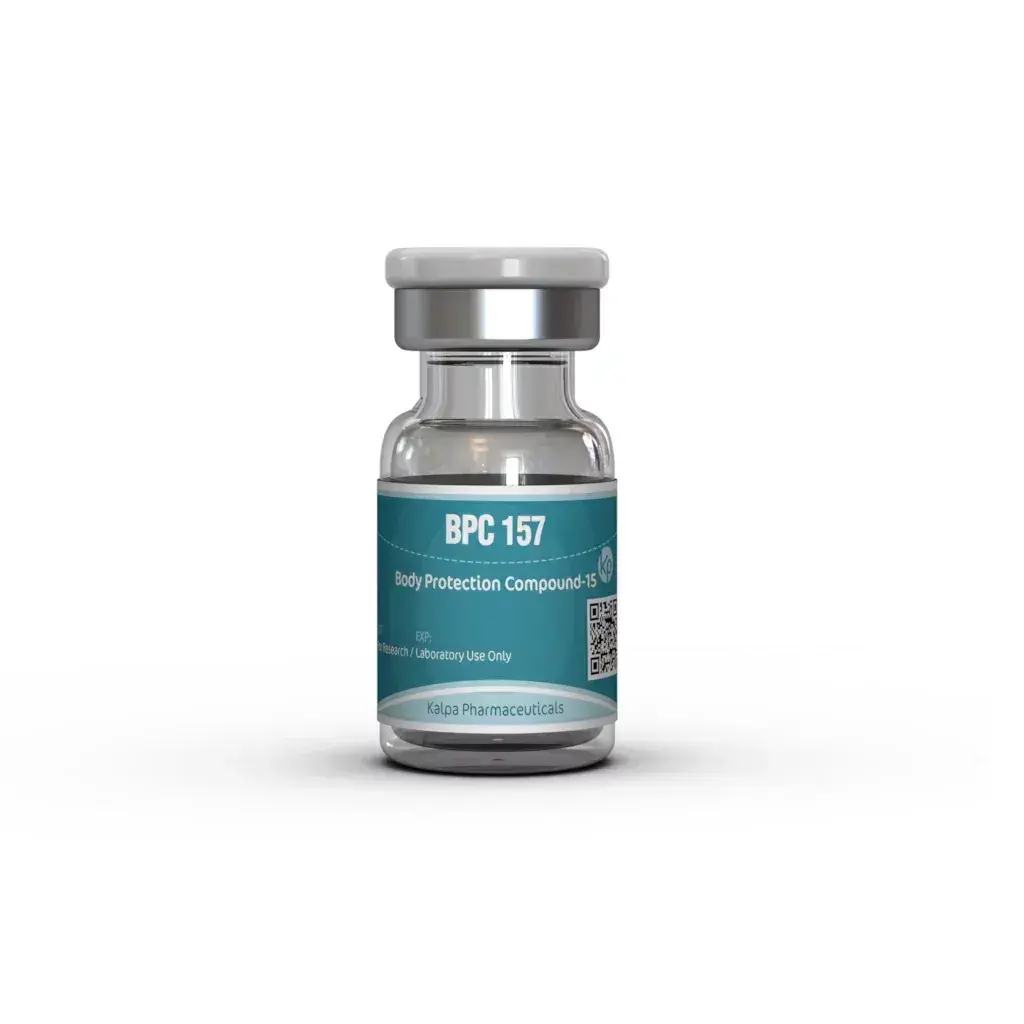
BPC 157 5 mg is a lyophilized pentadecapeptide formulation manufactured by Kalpa Pharmaceuticals and supplied in a 2 mL vial at 5 mg/vial.
BPC 157 5 mg contains BPC-157 (Body Protection Compound 157), a synthetic pentadecapeptide composed of 15 amino acids with the sequence GEPPPGKPADDAGLV. The peptide was originally isolated from human gastric juice protein fractions and has been studied for its cytoprotective and regenerative properties across multiple organ systems. Its unusual stability in gastric juice and its demonstrated activity via oral, parenteral, and topical routes have made it a subject of extensive preclinical research.
BPC-157 is not currently an FDA-approved human pharmaceutical product. It has been classified as a Category 2 bulk drug substance, meaning it cannot be compounded by licensed pharmacies due to insufficient evidence on whether it would cause harm to humans. In July 2026, an FDA advisory panel voted to recommend BPC-157 to be added to the list of bulk substances that compounding pharmacies are permitted to use, though this does not mean BPC-157 has been approved by the FDA.
In research and non-medical contexts, BPC-157 is commonly referenced for its potential effects on tissue repair, including musculoskeletal soft tissue healing, angiogenesis, and gastrointestinal mucosal integrity. Preclinical data from animal models consistently support these effects, though human clinical evidence remains sparse. When used outside approved research contexts, the potential for adverse effects exists and such use falls outside approved medical indications.
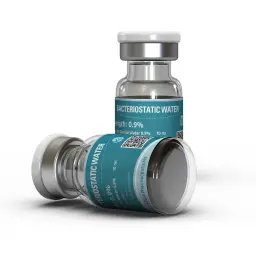
BPC 157 5 mg is supplied as a lyophilized powder that requires reconstitution with an appropriate diluent such as Bacteriostatic Water before use. This formulation is designed to preserve the stability of the peptide until it is ready for use.
BPC-157 is a synthetic pentadecapeptide with reported cytoprotective and regenerative properties. Its mechanism of action and research applications distinguish it from anabolic steroids and other performance compounds.
BPC-157 is a 15-amino acid peptide with the sequence GEPPPGKPADDAGLV. The N-terminal polyproline cluster (positions 3-5) confers resistance to pepsin and gastric proteolysis via a polyproline II helix. Lysine at position 7 is the sole charged residue at physiological pH, and the Asp10-Asp11 junction represents the principal hydrolytic and succinimide formation risk.
Preclinical research has demonstrated that BPC-157 promotes angiogenesis, accelerates wound healing, and enhances healing of musculoskeletal soft tissues including tendons and ligaments. Studies have shown that BPC-157 improves tendon-to-bone integration even in the presence of corticosteroids, and that it restores muscle function and integrity after traumatic injuries. The peptide has also been studied for its effects on gastrointestinal mucosal integrity and inflammatory bowel conditions.
These characteristics explain why BPC-157 is commonly referenced in research and non-medical contexts for its potential tissue repair properties. It is not a compound with established human clinical efficacy.
BPC-157 has extensive animal data with well over 100 preclinical studies, but only a handful of small human trials, none of which would meet the standard for drug approval. The FDA has noted that there is insufficient clinical safety information to characterize the safety profile of BPC-157.
Kalpa Pharmaceuticals offers several peptide and research formulations. The main practical distinction between these preparations involves the compound's mechanism and intended research or educational context.
Unlike anabolic steroids such as Testoxyl Cypionate 250 or Trenboxyl Acetate, BPC-157 is not an androgen and works through pathways related to angiogenesis and tissue repair rather than androgen receptor activation. For other peptide-based options in the Kalpa catalog, TB 500 5 mg is a research peptide studied for tissue repair, GHK-CU 50 mg is a copper peptide studied for matrix remodeling, and Ipamorelin 5 mg is a growth hormone secretagogue.
The information below is provided for educational and research reference only. BPC-157 is not an FDA-approved human pharmaceutical product and is classified as a Category 2 bulk drug substance. Non-medical use falls outside approved indications.
In research and non-medical contexts, BPC-157 is commonly referenced in the range of 200–500 mcg per injection, administered once or twice daily, though such use falls outside approved medical indications. These ranges are derived from self-reported protocols and animal study extrapolations, not from controlled human clinical trials. No human clinical trial has established an evidence-based dose.
| Use Case | Common Reference Range | Injection Frequency |
|---|---|---|
| Non-medical tissue repair | 200–500 mcg per injection | Once or twice daily |
| Acute injury support | Typically higher end of range | Daily |
| Chronic condition support | Typically lower end of range | Daily |
BPC 157 5 mg is supplied as a lyophilized powder that requires reconstitution with an appropriate diluent such as Bacteriostatic Water before use. The volume of diluent used determines the final concentration of the reconstituted solution. A common approach is adding 2 mL of bacteriostatic water to a 5 mg vial, producing a concentration of 2.5 mg/mL.
Reconstitution should involve adding the diluent slowly down the side of the vial rather than directly onto the powder, followed by gentle swirling rather than shaking. Once reconstituted, the solution should be stored under refrigeration and used within the recommended timeframe, typically up to 30 days when bacteriostatic water is used.
Published data on BPC-157 side effects in humans is limited. A pilot study involving two healthy adults who received intravenous BPC-157 infusions up to 20 mg reported that the treatment was well tolerated, with no adverse events or clinically meaningful changes observed in vital signs, electrocardiograms, or laboratory biomarkers. Adverse events in the FDA Adverse Event Reporting System for BPC-157 included injection site reaction, shortness of breath, and diffuse hyperpigmentation and gingival darkening, though it is unclear whether these were attributable to BPC-157.
The FDA has noted that the safety profile of compounded drug products containing BPC-157 can be negatively impacted by factors including product formulation, peptide concentration, and storage conditions favoring the generation of product-related impurities and peptide aggregates capable of inducing immunogenic responses. Aromatase inhibitors such as Arimixyl are not relevant to BPC-157 use as it does not affect the aromatase pathway.
Post-cycle therapy is not applicable to BPC-157, as it is not a compound that suppresses the hypothalamic-pituitary-gonadal axis. It is a research peptide studied for tissue repair and regenerative properties. When BPC-157 is used as part of a broader research protocol that includes anabolic compounds, standard PCT protocols such as those involving Clomixyl or Nolvaxyl would be relevant to those compounds, not to BPC-157 itself.
Research protocols, reconstitution procedures and handling practices should be adjusted based on the specific context and the guidelines provided with the product. The information above is for educational reference and does not constitute medical advice.
BPC-157 is a research peptide that has been studied primarily in animal models. Its safety profile in humans is not well characterized, and long-term safety data is lacking.
BPC-157 is not an FDA-approved human pharmaceutical product. It has been classified as a Category 2 bulk drug substance, meaning there is insufficient evidence on whether it would cause harm to humans. In July 2026, an FDA advisory panel voted to recommend BPC-157 to be added to the 503A Bulks List, which would allow licensed compounding pharmacies to use it as an ingredient in prescribed compounded products under certain conditions, though this does not constitute FDA approval.
The FDA has stated that there is insufficient clinical safety information to characterize the safety profile of BPC-157. Use of BPC-157 outside approved research contexts falls outside approved indications.
The FDA has expressed concern about the potential for immunogenicity of BPC-157 when formulated in injectable dosage forms due to the potential for aggregation as well as potential peptide-related impurities. Aggregates can impact the pharmacology of the peptide and are a risk factor for immunogenicity and for decreased pharmacotherapeutic effect.
Published human safety data on BPC-157 is limited. A pilot study involving two healthy adults who received intravenous BPC-157 infusions up to 20 mg reported no adverse events or clinically meaningful changes in vital signs, electrocardiograms, or laboratory biomarkers. Two studies that administered BPC-157 as a rectal enema to either healthy subjects or subjects with ulcerative colitis for a maximum of two weeks reported no serious adverse events, though the authors provided limited information on safety and associated safety monitoring.
Adverse events in the FDA Adverse Event Reporting System for BPC-157 included injection site reaction, shortness of breath, and diffuse hyperpigmentation and gingival darkening, though it is unclear whether these were attributable to BPC-157.
A white paper from the Institute for Safe Medication Practices and ECRI cites reports of serious adverse events associated with some peptides, including cardiac events, kidney dysfunction, melanoma, and infections. Previous testing of products sold through unregulated channels found purity levels ranging from 5% to 75%, with some samples containing arsenic and lead at levels exceeding safety limits for injectable drugs.
Individuals with known hypersensitivity to BPC-157 or related peptides should avoid its use. Patients on immunosuppressive therapy, those with active infections, or individuals with a history of severe allergic responses to injectable compounds should obtain provider clearance before considering BPC-157.
Because BPC-157 has pro-angiogenic properties, theoretical concerns exist regarding potential effects on tumor vascularization, though this has not been observed in animal studies at therapeutic doses. Individuals with a history of malignancy should discuss BPC-157 with a qualified healthcare provider.
Medically supervised peptide therapy typically involves follow-up assessment to evaluate treatment response, adverse effects, and relevant laboratory markers. For BPC-157, monitoring may include local injection site assessment and clinical evaluation for immunologic reactions.
For non-medical use of BPC 157 5 mg, such monitoring is not typically performed, which increases the risk of unrecognized adverse effects.
Lyophilized BPC-157 powder should be stored under refrigeration according to the manufacturer's instructions. For long-term storage, -20°C is recommended. Reconstituted solution should be refrigerated and used within the specified timeframe, typically up to 4 weeks when bacteriostatic water is used.
Keep all medications and research products out of the reach of children. Follow the storage instructions provided with the product packaging.
BPC 157 5 mg is supplied through the official Kalpa Pharmaceuticals distribution chain and shipped in original manufacturer packaging with discreet, privacy-focused handling.
The outer shipping package remains discreet, with privacy-focused handling and no unnecessary external product details. Products are supplied through the official Kalpa Pharmaceuticals distribution chain.
To verify your BPC 157 5 mg product, use the security code on the vial label and cross-check it on the Kalpa official site. Official Kalpa Pharmaceuticals presentation, batch-linked lab proof, and original packaging help reinforce product legitimacy and buyer confidence.
For complete delivery details, tracking policy, and reshipment terms, please see our Shipping Info page.
Proper storage conditions help preserve formulation stability and overall product integrity throughout shelf life.
Lyophilized BPC-157 powder should be stored under refrigeration according to the manufacturer's instructions. For long-term storage, -20°C is recommended. Protect from excessive heat, moisture, and direct light. Maintaining stable conditions helps preserve the integrity of the peptide formulation.
After reconstitution, store the solution under refrigeration and use within the recommended timeframe, typically up to 4 weeks when bacteriostatic water is used. Do not freeze the reconstituted solution. Before each use, inspect the solution and avoid use if it appears cloudy, discolored, contains particulate matter, or if the vial or seal is compromised.
Keep out of reach of children. Follow proper handling and sterile practices when using the product.
Answers to common questions about BPC 157 5 mg, the pentadecapeptide BPC-157, and its research and safety profile.
BPC-157 is a synthetic pentadecapeptide that has been studied for its cytoprotective and regenerative properties. Preclinical research has demonstrated that it promotes angiogenesis, accelerates wound healing, and enhances healing of musculoskeletal soft tissues including tendons and ligaments. Studies have shown that BPC-157 improves tendon-to-bone integration and restores muscle function after traumatic injuries.
However, the clinical evidence in humans remains sparse, and most research has been conducted in animal models. BPC-157 is not an FDA-approved human pharmaceutical product.
Published human safety data on BPC-157 is limited. A pilot study involving two healthy adults who received intravenous BPC-157 infusions up to 20 mg reported no adverse events. Adverse events in the FDA Adverse Event Reporting System for BPC-157 included injection site reaction, shortness of breath, and diffuse hyperpigmentation and gingival darkening, though it is unclear whether these were attributable to BPC-157.
The FDA has expressed concern about the potential for immunogenicity of BPC-157 when formulated in injectable dosage forms due to the potential for aggregation and peptide-related impurities. A white paper from patient safety groups cites reports of serious adverse events associated with some peptides, including cardiac events and kidney dysfunction.
In the limited human data available, BPC-157 has not been associated with liver toxicity. A pilot study involving two healthy adults who received intravenous BPC-157 infusions up to 20 mg reported no clinically meaningful changes in laboratory biomarkers assessing hepatic function.
However, comprehensive human safety data is lacking, and long-term effects on liver function have not been characterized through controlled clinical trials.
BPC 157 5 mg contains the research peptide BPC-157 in lyophilized powder form. It is supplied for research and educational purposes. In research contexts, BPC-157 has been studied for tissue repair, angiogenesis, and gastrointestinal mucosal integrity.
It is not an FDA-approved human pharmaceutical product and is not intended for human use outside approved research contexts.
Frequency of use depends on the specific research or non-medical context. In self-reported protocols, BPC-157 is commonly referenced as once or twice daily injections. However, no human clinical trial has established an evidence-based dosing schedule, and these frequencies are for educational reference only.
Post-cycle therapy is not applicable to BPC-157, as it is not a compound that suppresses the hypothalamic-pituitary-gonadal axis. It is a research peptide studied for tissue repair.
When BPC-157 is used as part of a broader research protocol that includes anabolic compounds, standard PCT protocols such as those involving Clomixyl or Nolvaxyl would be relevant to those compounds, not to BPC-157 itself.
BPC-157 is a synthetic pentadecapeptide originally isolated from gastric juice. It has been studied for its cytoprotective and regenerative properties, including promotion of angiogenesis, acceleration of wound healing, and enhancement of musculoskeletal soft tissue healing.
Preclinical data from animal models support these effects, but human clinical evidence remains sparse.
The time required to observe effects depends on the specific outcome being evaluated and the research context. In animal studies, healing effects have been observed over days to weeks depending on the injury model and outcome measures.
Human pharmacokinetic data is limited. A preliminary two-subject human pilot confirmed a plasma half-life of under 30 minutes, though prolonged biological effects lasting hours to days have been reported.
There is no single peptide that is universally best for healing. BPC-157 has been extensively studied in animal models for tissue repair, but human clinical evidence remains sparse. Other peptides such as TB 500 5 mg have also been studied for tissue repair through different mechanisms.
The appropriate choice depends on the specific research or clinical context.
BPC 157 5 mg contains the research peptide BPC-157, which is studied for tissue repair and angiogenesis through pathways related to growth factors and nitric oxide. GHK-CU 50 mg contains the copper peptide GHK-Cu, which is studied for matrix remodeling and tissue repair through copper-dependent signaling pathways.
These are different compounds with different research profiles.
The milligram strength of the vial (5 mg) refers to the total amount of BPC-157 in the vial, not the amount administered per dose. The dose administered depends on how the powder is reconstituted and the specific protocol being followed.
It is important to distinguish vial strength from administered dose. A 5 mg vial can be reconstituted with an appropriate volume of diluent to achieve the desired concentration for research or educational purposes.
BPC-157 has been classified as a Category 2 bulk drug substance, meaning it cannot be compounded by licensed pharmacies due to insufficient evidence on whether it would cause harm to humans. It is not an FDA-approved human pharmaceutical product and is not permitted to be compounded.
In July 2026, an FDA advisory panel voted to recommend BPC-157 to be added to the 503A Bulks List, which would allow licensed compounding pharmacies to use it as an ingredient in prescribed compounded products under certain conditions, though this does not constitute FDA approval. BPC-157 is also prohibited for use by athletes under WADA and USADA guidelines.