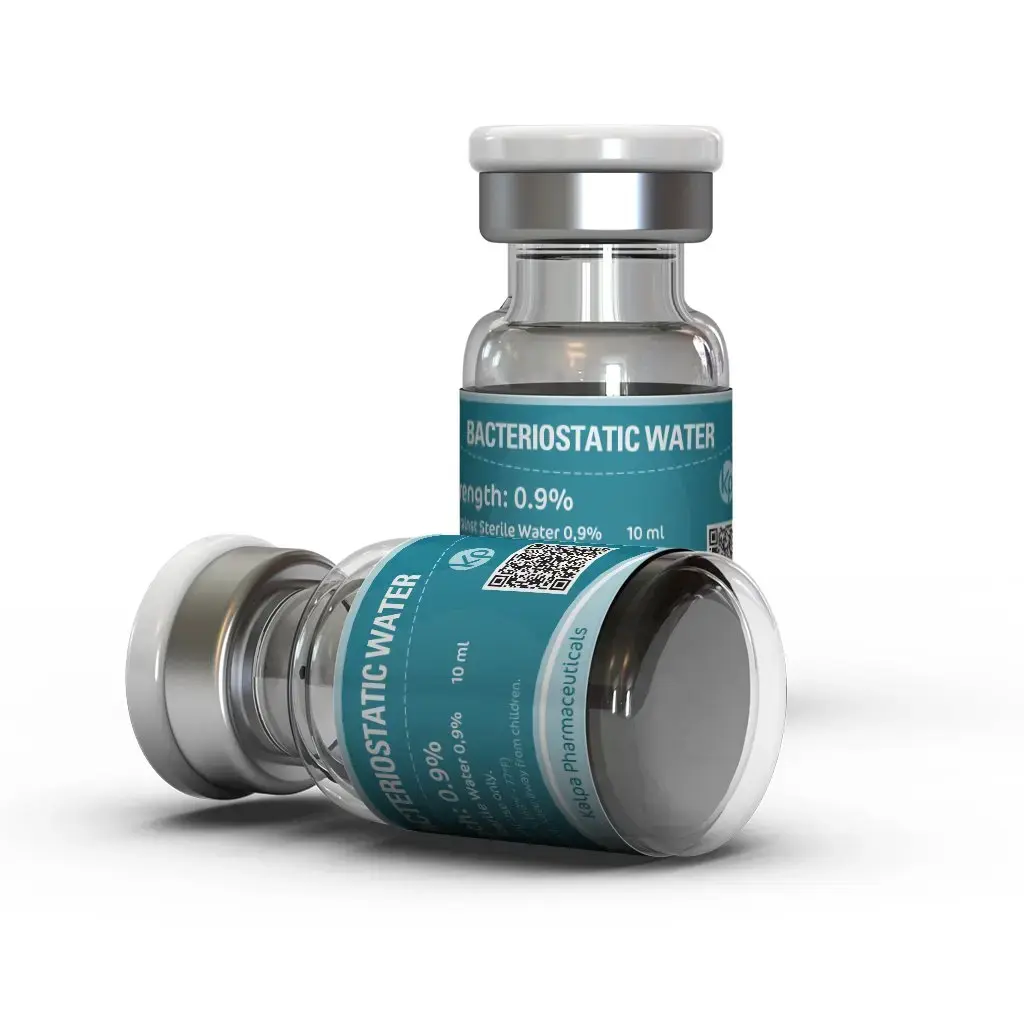
Bacteriostatic Water is a sterile water formulation containing 0.9% benzyl alcohol as a bacteriostatic preservative, manufactured by Kalpa Pharmaceuticals and supplied in a 10 mL vial.
Bacteriostatic Water is a sterile aqueous solution containing 0.9% benzyl alcohol as a bacteriostatic preservative. The benzyl alcohol inhibits the growth of bacteria, allowing the solution to be used for multiple withdrawals from the same vial over an extended period. This makes it distinct from sterile water for injection, which contains no preservative and is intended for single use only.
In pharmaceutical and research contexts, bacteriostatic water is used for the reconstitution of lyophilized (freeze-dried) powders, including peptides and proteins. When a lyophilized peptide such as Ipamorelin 5 mg or BPC 157 5 mg is reconstituted, the powder is dissolved in an appropriate volume of bacteriostatic water to create an injectable solution. The preservative allows the reconstituted solution to be stored refrigerated for a period of time without bacterial contamination.
Bacteriostatic water is not administered on its own and is not a therapeutic compound. Its role is to serve as a compatible diluent for reconstituting other pharmaceutical and research products. When used as intended, it facilitates the preparation of injectable solutions.
Bacteriostatic Water is sterile water containing 0.9% benzyl alcohol. The benzyl alcohol acts as a bacteriostatic preservative, preventing the growth of bacteria in the solution after the vial is first accessed.
Benzyl alcohol is a bacteriostatic preservative used in pharmaceutical solutions to inhibit bacterial growth. Its presence in bacteriostatic water distinguishes it from unpreserved sterile water for injection.
Benzyl alcohol is an aromatic alcohol that acts as a bacteriostatic agent at concentrations of approximately 0.9% in aqueous solutions. It inhibits the growth of bacteria and fungi by interfering with cell membrane function. Unlike bactericidal agents, bacteriostatic preservatives do not necessarily kill microorganisms but prevent their multiplication, which helps maintain the sterility of the solution over multiple uses.
The presence of benzyl alcohol allows bacteriostatic water to be used for multiple withdrawals from the same vial, typically over a period of up to 28 days when stored properly. This is a practical distinction from sterile water for injection, which contains no preservative and is intended for single use.
These characteristics explain why bacteriostatic water is commonly used in laboratory and clinical settings for the reconstitution of lyophilized powders that will be used over multiple sessions.
Bacteriostatic water with 0.9% benzyl alcohol is typically stable for up to 28 days after first puncture when stored under refrigeration. This multi-use capability is the defining characteristic that distinguishes it from unpreserved sterile water.
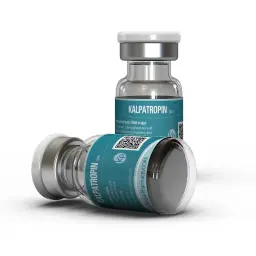
Kalpa Pharmaceuticals offers several peptide and hormone formulations that may require reconstitution with bacteriostatic water. These include lyophilized peptide products such as Ipamorelin 5 mg, Tesamorelin 5 mg, MOTS-c 10 mg, and GHK-CU 50 mg. It is also relevant for the reconstitution of Kalpatropin HGH, which is supplied as a lyophilized powder.
Bacteriostatic water is not a substitute for these compounds but is a necessary accessory for their preparation. The specific reconstitution volume depends on the product being reconstituted and the desired concentration.
The information below is provided for educational reference only. Bacteriostatic water is a reconstitution solution, not a therapeutic compound. It is not administered on its own. Reconstitution procedures should follow the instructions provided with the specific product being reconstituted.
The volume of bacteriostatic water used for reconstitution depends on the product being reconstituted and the desired final concentration. There is no single standard volume, as different products have different solubility characteristics and desired concentrations. The following table provides general reference ranges for common lyophilized peptide products.
| Product Type | Common Reconstitution Volume | Resulting Concentration |
|---|---|---|
| Small peptide (5 mg vial) | 1–2 mL | 2.5–5 mg/mL |
| Medium peptide (10 mg vial) | 2–3 mL | 3.3–5 mg/mL |
| Larger peptide (50 mg vial) | 3–5 mL | 10–16.7 mg/mL |
| HGH (10 IU vial) | 1–2 mL | 5–10 IU/mL |
When reconstituting a lyophilized powder with bacteriostatic water, the solution should be added slowly along the side of the vial rather than directly onto the powder. The vial should then be gently swirled, not shaken, to dissolve the powder. Shaking can damage delicate peptide structures. The reconstituted solution should be stored under refrigeration and used within the timeframe specified for the product.
Bacteriostatic water is compatible with most lyophilized peptides and proteins. However, some products may require sterile water for injection instead, particularly if the product is intended for single use or if the recipient has a known sensitivity to benzyl alcohol.
Once a lyophilized powder has been reconstituted with bacteriostatic water, the resulting solution should be stored under refrigeration, typically between 2°C and 8°C. The benzyl alcohol preservative allows the reconstituted solution to be used over a period of up to 28 days when stored properly, though individual product guidelines may specify shorter or longer periods.
Reconstituted solutions should be inspected before each use. If the solution appears cloudy, discolored, or contains particulate matter, it should be discarded. Aromatase inhibitors such as Arimixyl are not relevant to bacteriostatic water use, as it is not a therapeutic compound.
Post-cycle therapy is not applicable to bacteriostatic water, as it is not a compound that affects the hypothalamic-pituitary-gonadal axis. However, when bacteriostatic water is used to reconstitute compounds that are part of a cycle requiring PCT, such as certain peptides or hormones, standard PCT protocols may be relevant to those compounds. Agents such as Clomixyl or Nolvaxyl are commonly referenced for PCT in the context of anabolic steroid cycles.
Reconstitution procedures, storage conditions and use timelines should be adjusted based on the specific product being reconstituted and the guidelines provided with that product. The information above is for educational reference and does not constitute medical advice.
Benzyl alcohol is a pharmaceutical preservative that can cause adverse effects in certain individuals. Medical use of products containing benzyl alcohol requires appropriate consideration of individual factors.
Bacteriostatic water contains 0.9% benzyl alcohol as a preservative. Benzyl alcohol is generally well-tolerated at this concentration when used as intended for reconstitution of injectable products. However, certain populations may be more sensitive to benzyl alcohol.
Bacteriostatic water should not be used for reconstitution of products intended for administration to neonates, as benzyl alcohol has been associated with serious adverse events in this population. For other populations, the use of bacteriostatic water for reconstitution should follow the guidelines provided with the specific product.
Individuals with known hypersensitivity to benzyl alcohol should not use products containing this preservative. Symptoms of hypersensitivity may include skin reactions, respiratory symptoms, or other allergic responses. Product verification does not establish that non-medical use is safe or appropriate for an individual.
At the concentration used in bacteriostatic water, benzyl alcohol is generally well-tolerated when the solution is used for reconstitution and the resulting product is administered as intended. However, some individuals may experience local reactions at the injection site, including redness, swelling, or discomfort.
In neonates, benzyl alcohol has been associated with a potentially fatal condition known as gasping syndrome, which is why bacteriostatic water is not recommended for use in this population. Other populations with specific sensitivities should consult a qualified healthcare professional before using products containing benzyl alcohol.
Individuals with known hypersensitivity to benzyl alcohol or other components of bacteriostatic water should avoid its use. Individuals with certain medical conditions may also be advised against the use of products containing benzyl alcohol, and these should be discussed with a qualified healthcare professional.
Existing medical conditions and any known sensitivities should be discussed with a qualified healthcare professional before using bacteriostatic water for reconstitution.
Bacteriostatic water should be stored at controlled room temperature. Once the vial has been punctured, it should be stored under refrigeration and used within the timeframe specified for the product. The vial should be inspected before each use, and any solution that appears cloudy, discolored, or contains particulate matter should be discarded.
Proper aseptic technique should be used when withdrawing solution from the vial to maintain sterility. Keep out of reach of children.
Store at controlled room temperature before first use. After first puncture, store under refrigeration and use within the recommended period. Inspect before each use and discard if the solution appears abnormal.
Keep all medications and injectable products out of the reach of children. Follow the storage instructions provided with the product packaging.
Bacteriostatic Water is supplied through the official Kalpa Pharmaceuticals distribution chain and shipped in original manufacturer packaging with discreet, privacy-focused handling.
The outer shipping package remains discreet, with privacy-focused handling and no unnecessary external product details. Products are supplied through the official Kalpa Pharmaceuticals distribution chain.
To verify your Bacteriostatic Water product, use the security code on the vial label and cross-check it on the Kalpa official site. Official Kalpa Pharmaceuticals presentation, batch-linked lab proof, and original packaging help reinforce product legitimacy and buyer confidence.
For complete delivery details, tracking policy, and reshipment terms, please see our Shipping Info page.
Proper storage conditions help preserve formulation stability and overall product integrity throughout shelf life.
Store at controlled room temperature (15–25°C) before first use and protect from excessive heat, moisture, and direct light. Maintaining stable conditions helps preserve the integrity of the solution.
After first puncture, store the vial under refrigeration (2–8°C) and use within the recommended timeframe, typically up to 28 days. Do not freeze. Before each use, inspect the solution and avoid use if it appears cloudy, discolored, contains particulate matter, or if the vial or seal is compromised.
Keep out of reach of children. Follow proper handling and sterile withdrawal practices when using the product.
Answers to common questions about Bacteriostatic Water, its composition, and how it is used for reconstitution.
The volume of Bacteriostatic Water used for reconstitution depends on the product being reconstituted and the desired final concentration. There is no single standard volume. For a 5 mg peptide vial, 1–2 mL is commonly referenced. For a 10 mg peptide vial, 2–3 mL is commonly referenced.
The specific volume should be determined based on the product's instructions and the desired concentration for the intended use. Always follow the reconstitution guidelines provided with the specific product.
Bacteriostatic Water is used for the reconstitution of lyophilized (freeze-dried) powders, including peptides and proteins. It contains 0.9% benzyl alcohol as a preservative, which allows multiple withdrawals from the same vial over an extended period.
It is not administered on its own and is not a therapeutic compound. Its role is to serve as a compatible diluent for reconstituting other products.
Bacteriostatic Water contains 0.9% benzyl alcohol as a bacteriostatic preservative, which inhibits bacterial growth and allows multiple withdrawals from the same vial. Sterile water for injection contains no preservative and is intended for single use only.
The choice between the two depends on the intended use and the product being reconstituted. Some products may require sterile water for injection instead of bacteriostatic water.
Post-cycle therapy is not applicable to Bacteriostatic Water, as it is not a compound that affects the hypothalamic-pituitary-gonadal axis. It is a reconstitution solution used to prepare other products.
When Bacteriostatic Water is used to reconstitute compounds that are part of a cycle requiring PCT, standard PCT protocols may be relevant to those compounds.
Benzyl alcohol is a bacteriostatic preservative that inhibits the growth of bacteria and fungi in aqueous solutions. At a concentration of 0.9%, it prevents the multiplication of microorganisms, which allows the solution to be used for multiple withdrawals from the same vial over an extended period.
Unlike bactericidal agents, bacteriostatic preservatives do not necessarily kill microorganisms but prevent their multiplication.
After first puncture, Bacteriostatic Water should be stored under refrigeration and used within the recommended period, typically up to 28 days. The specific timeframe may vary based on storage conditions and handling practices.
Always inspect the solution before each use and discard if it appears cloudy, discolored, or contains particulate matter.
Yes, Bacteriostatic Water is commonly used for the reconstitution of lyophilized HGH products such as Kalpatropin HGH. The specific volume used depends on the HGH vial strength and the desired concentration.
Always follow the reconstitution guidelines provided with the specific HGH product.
No. Bacteriostatic Water contains 0.9% benzyl alcohol in sterile water, while saline contains 0.9% sodium chloride in sterile water. These are different solutions with different compositions and uses.
Bacteriostatic Water is used for reconstitution of lyophilized powders, while saline is used for different purposes. The choice between the two depends on the specific product being reconstituted.
Bacteriostatic Water is not intended to be injected on its own. It is a reconstitution solution used to prepare other products for injection. Administering Bacteriostatic Water alone would not provide any therapeutic benefit and would unnecessarily expose the individual to benzyl alcohol.
Bacteriostatic Water is sterile water containing 0.9% benzyl alcohol as a preservative, intended for reconstitution of pharmaceutical and research products. Distilled water is water that has been purified through distillation but is not necessarily sterile and does not contain a preservative.
Distilled water should not be used for reconstitution of injectable products. Bacteriostatic Water is the appropriate choice for this purpose.
Before first use, Bacteriostatic Water should be stored at controlled room temperature (15–25°C). After first puncture, it should be stored under refrigeration (2–8°C) and used within the recommended period, typically up to 28 days.
Do not freeze. Inspect the solution before each use and discard if it appears abnormal.
Benzyl alcohol at the concentration used in Bacteriostatic Water (0.9%) is generally well-tolerated when used as intended for reconstitution of injectable products. However, certain populations may be more sensitive to benzyl alcohol.
Bacteriostatic Water should not be used for reconstitution of products intended for administration to neonates, as benzyl alcohol has been associated with serious adverse events in this population. Individuals with known hypersensitivity to benzyl alcohol should avoid its use.