
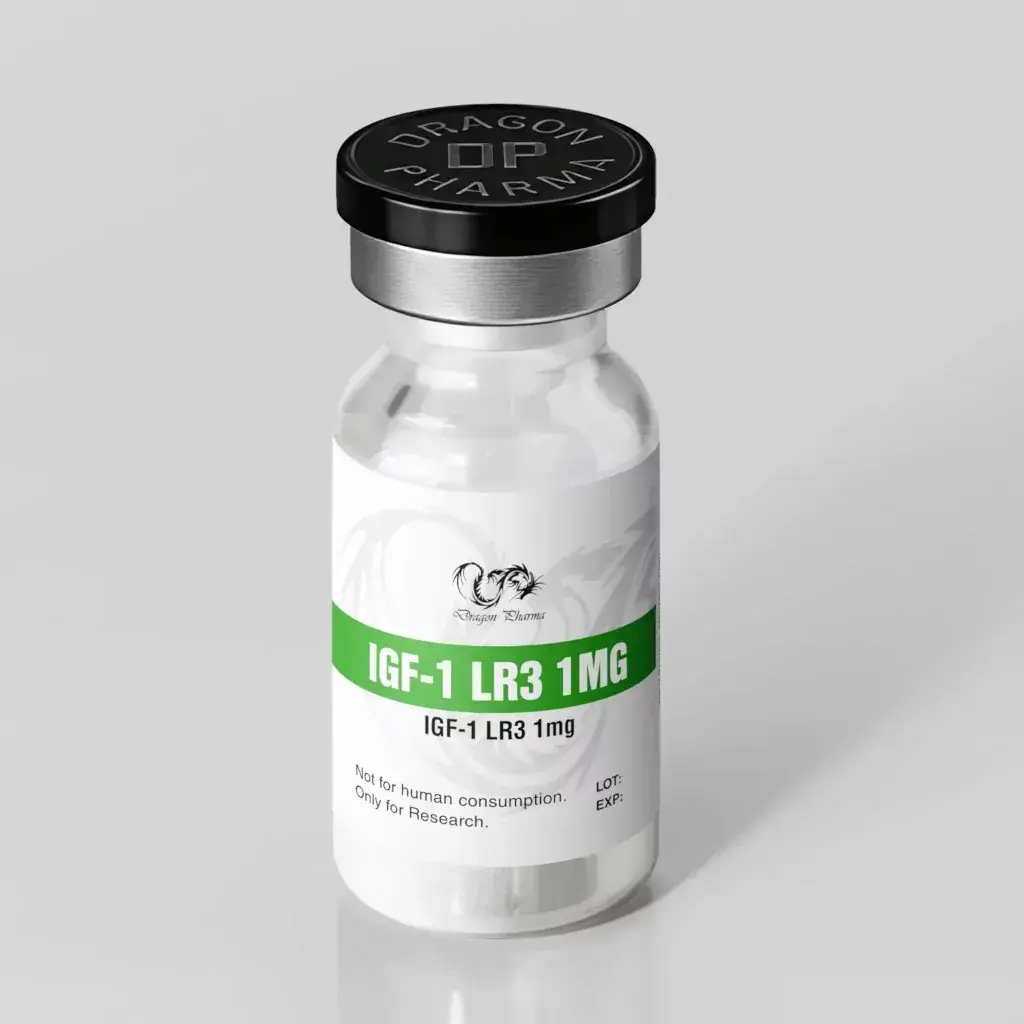
IGF-1 LR3 1 mg is a lyophilized powder research peptide manufactured by Dragon Pharma, containing 1 mg of Insulin-like Growth Factor 1 LR3 per 2 mL vial.
IGF-1 LR3 (Long R3 IGF-1) is an engineered analog of human insulin-like growth factor 1, modified with an arginine substitution at position 3 and a 13-amino acid N-terminal extension. These modifications reduce its binding affinity to IGF-binding proteins (IGFBPs) by over 100-fold compared to native IGF-1, keeping the peptide circulating in its active free form and dramatically extending its biological half-life.
In research settings, IGF-1 LR3 is widely used as a cell culture supplement due to its superior potency compared to native IGF-1. Animal studies have demonstrated its ability to stimulate intestinal epithelial proliferation and organ growth, with effects more pronounced than native IGF-1. It is not FDA-approved for any human use in the United States. In non-medical bodybuilding contexts, IGF-1 LR3 is commonly referenced for its direct IGF-1 receptor activity, which promotes cell proliferation, differentiation, and protein synthesis through the PI3K/AKT and MAPK pathways.
Compared to native IGF-1, LR3's extended half-life of approximately 20–30 hours allows for once-daily dosing rather than the frequent administration required for unmodified IGF-1. However, its potent growth factor signaling and reduced regulatory binding also mean greater systemic exposure to active peptide, which carries theoretical risks including hypoglycemia through insulin receptor cross-activation.
IGF-1 LR3 1 mg is supplied as a lyophilized (freeze-dried) powder in a 2 mL vial. This form requires reconstitution with a suitable solvent such as bacteriostatic water or acetic acid before use.
IGF-1 LR3 is a modified IGF-1 analog designed for extended activity and reduced interaction with IGF-binding proteins. Its profile is defined by direct IGF-1 receptor activation, long circulating half-life, and potent cell-proliferative signaling.
IGF-1 LR3 binds to the IGF-1 receptor with high affinity, activating downstream PI3K/AKT and MAPK signaling pathways that drive cell proliferation, differentiation, and protein synthesis. Unlike native IGF-1, LR3 has a dramatically reduced affinity for IGF-binding proteins, with clearance rates in rats measured at 9.19–9.84 mL/min/kg compared to 0.90–2.88 mL/min/kg for native IGF-1. This reduced binding keeps more of the peptide in its free, active form.
The extended half-life of 20–30 hours for LR3 (compared to 12–15 hours for native IGF-1) is a direct consequence of reduced IGFBP sequestration. This pharmacokinetic profile supports once-daily dosing in research and community protocols, though it also means sustained systemic exposure to a potent growth factor.
In animal studies, LR3 IGF-1 has demonstrated greater potency than native IGF-1 in stimulating intestinal epithelial proliferation, with increased crypt cell number and thymidine labeling indices after just three days of administration. These findings are consistent with its reduced clearance and enhanced bioavailability.
IGF-1 LR3’s terminal half-life of 20–30 hours is significantly longer than native IGF-1 due to its reduced affinity for IGF-binding proteins. This extended profile supports once-daily administration but also increases systemic exposure to the active peptide.
Dragon Pharma offers several peptide products that are commonly referenced alongside IGF-1 LR3 in research and bodybuilding contexts. Dragontropin HGH provides growth hormone, which acts upstream to stimulate endogenous IGF-1 production. GHRP-2 and Ipamorelin stimulate GH release through the ghrelin receptor, indirectly affecting the GH-IGF-1 axis. Hexarelin produces the strongest GH pulse among GHRPs, which may translate to downstream IGF-1 effects. For those interested in other growth factor peptides, IGF-1 LR3 is the primary IGF-1 analog product available.
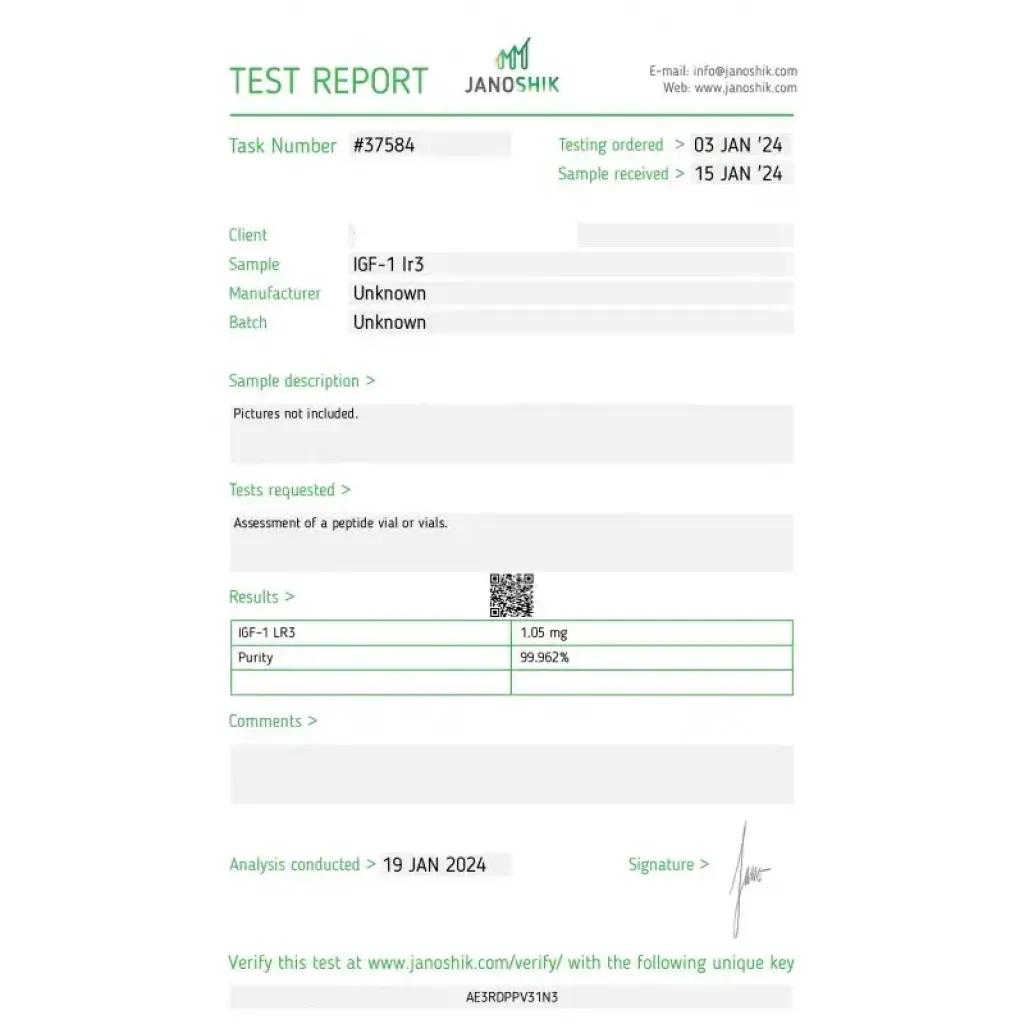
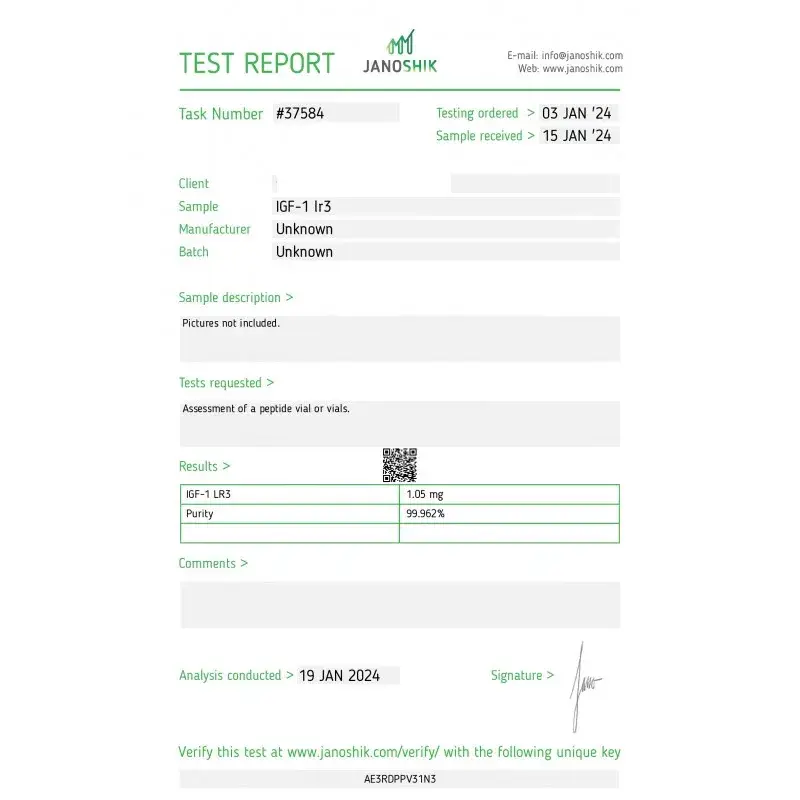
Published laboratory reports for IGF-1 LR3 1 mg are shown below with the test date, measured concentration, and percentage of the product's 1 mg label claim.
 View Report
Laboratory results apply to the specific tested sample represented in each published report and should not be interpreted as a measurement of every vial or production batch.
The information below is provided for educational reference only. IGF-1 LR3 is not FDA-approved for any human use in the United States. All use in non-medical contexts falls outside approved indications.
In research and community settings, IGF-1 LR3 is commonly referenced at microgram-level doses. Published research-context protocols most often cite 20–40 mcg per day for conservative use, with 40–80 mcg per day referenced for standard protocols and up to 120 mcg per day in advanced short blocks. Due to receptor downregulation concerns, cycle lengths are typically limited to 4–6 weeks.
| Use Case | Common Reference Range | Injection Frequency |
|---|---|---|
| Beginner / Conservative (non-medical) | 20–40 mcg/day | Once daily |
| Intermediate / Standard | 40–80 mcg/day | Once daily |
| Advanced short block | 80–120 mcg/day | Once daily |
| Research (cell culture reference) | 50–100 ng/mL | Continuous exposure |
IGF-1 LR3 is sometimes referenced alongside GH-axis compounds such as Dragontropin HGH or GH secretagogues like Ipamorelin in non-medical contexts, though stacking growth factor compounds increases complexity and risk. Some protocols also reference IGF-1 LR3 use during post-cycle recovery to support anabolic signaling when endogenous hormone production is suppressed.
Community protocols typically reference 4–6 week cycles followed by at least a 4-week break to allow receptor resensitization. Extending beyond 6 weeks is generally not recommended due to concerns about receptor desensitization and cumulative growth factor exposure.
IGF-1 LR3 shares structural homology with insulin and can activate insulin receptors, creating a risk of hypoglycemia particularly at higher doses. Consuming carbohydrates around the injection window is commonly referenced to manage blood sugar levels.
Other commonly referenced side effects include joint discomfort, fluid retention, and injection-site reactions. Because IGF-1 LR3 is a potent growth factor with reduced regulatory binding, sustained IGF-1 receptor activation carries theoretical oncogenic potential through cell proliferation and survival signaling.
IGF-1 LR3 does not suppress endogenous testosterone production and therefore does not typically require post-cycle therapy in the way anabolic steroids do. However, a break of at least 4 weeks after completing a cycle is commonly referenced to allow IGF-1 receptor resensitization.
Because IGF-1 LR3 acts on the IGF-1 receptor rather than the hypothalamic-pituitary-gonadal axis, PCT is generally not considered necessary after IGF-1 LR3 use alone.
Dosing strategies and cycle protocols should be adjusted based on individual factors. The information above is for educational reference and does not constitute medical advice.
IGF-1 LR3 is not FDA-approved for any human use in the United States. It is an engineered IGF-1 analog designed for research applications.
IGF-1 LR3 is a potent growth factor analog that activates the IGF-1 receptor with high affinity and has reduced binding to IGF-binding proteins compared to native IGF-1. It is not approved for therapeutic use in the United States. No human clinical trials have been conducted with IGF-1 LR3 specifically, and its pharmacological profile is inferred from in vitro work and studies of native IGF-1 and the FDA-approved recombinant IGF-1 (mecasermin).
Because IGF-1 LR3 has reduced IGFBP binding, it circulates in a more biologically active free form, which increases systemic exposure to growth factor signaling. This may amplify both intended effects and potential risks.
IGF-1 LR3 is not FDA-approved for human use. Any use outside of approved research applications falls outside approved indications. Product concentration and laboratory verification do not establish that non-medical use is safe or appropriate for an individual.
IGF-1 LR3 shares structural homology with insulin and can activate insulin receptors at higher concentrations, creating a risk of hypoglycemia. Symptoms may include dizziness, confusion, sweating, and rapid heartbeat.
Because IGF-1 is a growth factor that promotes cell proliferation and survival, sustained IGF-1 receptor activation carries theoretical oncogenic potential. The IGF-1 axis is associated with the risk of several cancers, and individuals with a history of cancer or at elevated cancer risk should exercise particular caution.
Other potential effects include joint discomfort, fluid retention, and injection-site reactions. No human safety data exist for IGF-1 LR3 specifically.
Individuals with a history of cancer, active malignancy, or conditions associated with increased cancer risk should avoid IGF-1 LR3. Because of the hypoglycemic potential, individuals with diabetes or glucose metabolism disorders should exercise particular caution.
The long-term effects of chronic IGF-1 LR3 use have not been established. WADA prohibits IGF-1 LR3 as a growth factor peptide.
In research settings where IGF-1 LR3 is used, monitoring focuses on cell proliferation and receptor activation endpoints. In non-medical contexts, individuals commonly reference periodic bloodwork to monitor glucose levels and other markers, though the appropriate monitoring protocol for non-medical IGF-1 LR3 use is not established.
Laboratory testing of the product itself, such as the published potency report shown in the Lab Reports tab, is separate from any monitoring of the individual.
Lyophilized IGF-1 LR3 should be stored at -20°C for long-term storage, protected from light and moisture. After reconstitution, store refrigerated at 2–8°C and use within 2–4 weeks. Avoid repeated freeze-thaw cycles.
Keep all peptides and injectable products out of the reach of children. Follow the storage instructions provided with the product packaging.
IGF-1 LR3 1 mg by Dragon Pharma is supplied through the official distribution chain and shipped in original manufacturer packaging with discreet, privacy-focused handling.
The outer shipping package remains discreet, with privacy-focused handling and no unnecessary external product details. Products are supplied through the official Dragon Pharma distribution chain.
To verify your IGF-1 LR3 1 mg product, use the security code on the vial label and cross-check it on the Dragon Pharma official site. Official presentation, batch-linked lab proof, and original packaging help reinforce product legitimacy and buyer confidence.
For complete delivery details, tracking policy, and reshipment terms, please see our Shipping Info page.
Proper storage conditions help preserve peptide stability and overall product integrity throughout shelf life.
Store the lyophilized (dry) powder tightly sealed in its original container, protected from light, and kept at -20°C for long-term storage. Brief handling at refrigerated or ambient conditions is acceptable provided the container is allowed to equilibrate to room temperature before opening to prevent moisture uptake.
IGF-1 LR3 is a fragile peptide susceptible to degradation. After reconstitution, store aliquots refrigerated at 2–8°C and use within 2–4 weeks. Acetic acid (0.6%) is sometimes referenced as a reconstitution solvent for enhanced stability compared to bacteriostatic water alone. Avoid repeated freeze-thaw cycles.
Keep out of reach of children. Follow proper handling and sterile technique when administering the product.
Answers to common questions about IGF-1 LR3 1 mg, its mechanism, product strength, and laboratory testing.
IGF-1 LR3 1 mg contains an engineered IGF-1 analog used in research settings as a cell culture supplement and for studying IGF-1 receptor signaling. In non-medical bodybuilding contexts, it is commonly referenced for its direct IGF-1 receptor activity, though such use falls outside approved indications.
Because of its extended half-life of approximately 20–30 hours, IGF-1 LR3 is typically referenced as being administered once daily. Community protocols commonly reference doses of 20–80 mcg per day, with cycle lengths limited to 4–6 weeks due to receptor downregulation concerns.
IGF-1 LR3 does not suppress endogenous testosterone production because it acts on the IGF-1 receptor rather than the hypothalamic-pituitary-gonadal axis. Post-cycle therapy is therefore generally not considered necessary after IGF-1 LR3 use alone. A break of at least 4 weeks is commonly referenced to allow receptor resensitization.
IGF-1 LR3 activates the IGF-1 receptor with high affinity, driving cell proliferation, differentiation, and protein synthesis through PI3K/AKT and MAPK signaling pathways. Its reduced binding to IGF-binding proteins keeps more peptide in the active free form and extends its half-life compared to native IGF-1.
IGF-1 LR3 has an extended half-life of 20–30 hours, meaning a single dose provides sustained receptor activation over that period. Effects on downstream signaling begin shortly after administration, but cumulative effects on recovery or physique would develop over days to weeks of consistent use.
There is no single growth factor peptide that is universally best. IGF-1 LR3 provides direct IGF-1 receptor activation with an extended half-life, while Dragontropin HGH acts upstream on the GH-IGF-1 axis and GH secretagogues like Ipamorelin stimulate endogenous GH release. The appropriate choice depends on individual goals and risk tolerance.
IGF-1 LR3 is an engineered analog with an arginine substitution at position 3 and a 13-amino acid N-terminal extension that reduces its binding to IGF-binding proteins by over 100-fold. This modification extends its half-life to 20–30 hours compared to 12–15 hours for native IGF-1 and increases its potency in cell culture and animal models.
IGF-1 LR3 is a modified IGF-1 analog that activates the IGF-1 receptor for sustained growth signaling. MGF (Mechano Growth Factor) is a different splice variant of the IGF-1 gene that acts primarily through IGF-1R-independent mechanisms to activate satellite cells. MGF has an extremely short half-life of minutes, while IGF-1 LR3 circulates for hours.
20 mcg is commonly referenced as a conservative starting dose for IGF-1 LR3 in community protocols. Research-context protocols reference ranges of 20–40 mcg per day for conservative use and up to 120 mcg per day in advanced short blocks. The 1 mg vial contains 1,000 mcg total, providing 25–50 doses at these levels.
IGF-1 LR3 1 mg is labeled at 1 mg of IGF-1 LR3 per vial. It is supplied as a lyophilized powder in a 2 mL vial, requiring reconstitution before use.
Yes. A published laboratory report dated January 19, 2024 measured IGF-1 LR3 1 mg at 1.05 mg, equivalent to 105% of its 1 mg label claim.
The complete report can be viewed in the Lab Reports tab. Laboratory results apply to the tested sample represented by the individual report and should not be interpreted as a measurement of every vial.
Lyophilized IGF-1 LR3 is typically reconstituted with a suitable solvent such as Bacteriostatic Water or 0.6% acetic acid. The volume of solvent added determines the concentration of the resulting solution. Proper sterile technique should be used during reconstitution.