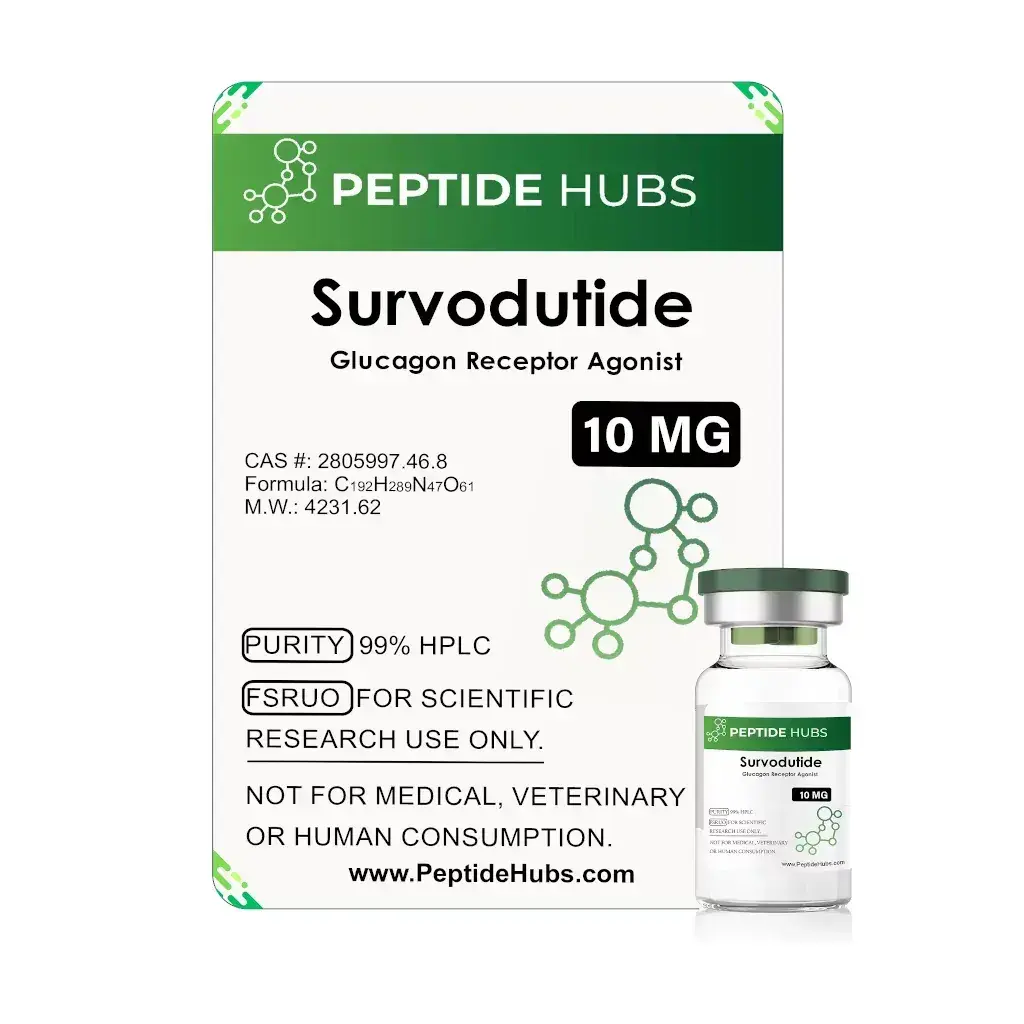
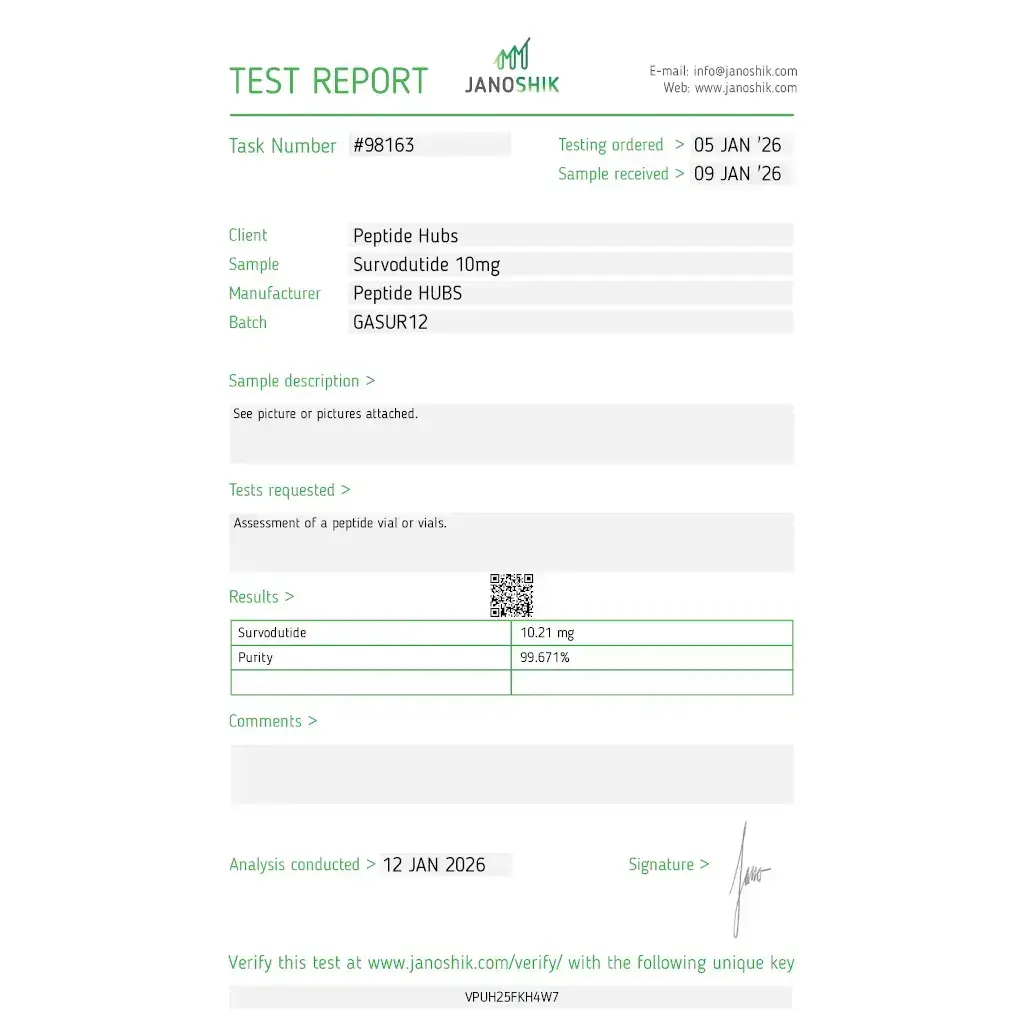
Survodutide 10 mg is a lyophilized research peptide manufactured by Peptide Hubs and supplied in a 2 mL vial containing 10 mg of Survodutide.
Survodutide 10 mg contains Survodutide, also known as BI 456906, a synthetic 29-amino-acid peptide engineered as a dual agonist of the glucagon receptor (GCGR) and glucagon-like peptide-1 receptor (GLP-1R). This dual mechanism is designed to influence metabolic pathways through both appetite regulation and energy expenditure.
In clinical research, Survodutide has been studied extensively for obesity and metabolic dysfunction-associated steatohepatitis (MASH). Phase 3 trial results published in the New England Journal of Medicine demonstrated that Survodutide achieved mean body weight reductions of up to 13.0% at 76 weeks in adults with obesity without diabetes. The compound is licensed to Boehringer Ingelheim from Zealand Pharma for global development and commercialization.
In non-medical bodybuilding contexts, Survodutide is commonly referenced as a cutting-phase research peptide, though such use falls outside approved indications. Its dual glucagon activity distinguishes it from GLP-1-only agonists, with potential effects on hepatic fat and energy expenditure that are of interest in advanced body recomposition research.
Survodutide 10 mg is supplied as a lyophilized powder, a freeze-dried format designed to preserve peptide integrity during storage. Reconstitution is required before research use.
Survodutide is a synthetic peptide with the molecular formula C192H289N47O61 and a molecular weight of approximately 4231.63. It incorporates structural modifications including a non-coded amino acid at position 2 and a C18 fatty acid moiety for extended half-life through albumin binding.
Survodutide acts as an agonist at both the glucagon receptor (GCGR) and GLP-1 receptor (GLP-1R), with time-resolved assays demonstrating equipotent cAMP responses of 2-3 pM for both receptors in the absence of human serum albumin. In the presence of albumin, the potency shift confirms an 8-fold higher potency on GLP-1R over GCGR.
The peptide exhibits biased agonism at GCGR, with reduced β-arrestin recruitment (54%) and receptor internalization (81%) compared to endogenous glucagon, suggesting lower receptor desensitization and potentially prolonged GCGR effects. This differentiated pharmacology may contribute to sustained therapeutic effects.
Preclinical research indicates that Survodutide acts through circumventricular organs in the brain to activate neuronal regions associated with appetite regulation, with GLP-1R-dependent effects on food intake and GCGR-mediated effects on energy expenditure.
Survodutide combines GLP-1 receptor-mediated appetite suppression with glucagon receptor-mediated energy expenditure effects, delivered via a half-life extension technology enabling once-weekly dosing.
Peptide Hubs offers Survodutide in a 10 mg lyophilized powder format, providing a research-scale quantity suitable for titration protocols. The 10 mg vial is commonly referenced in non-medical research contexts for extended protocols requiring gradual dose escalation.
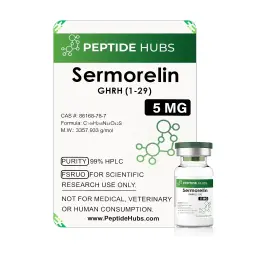
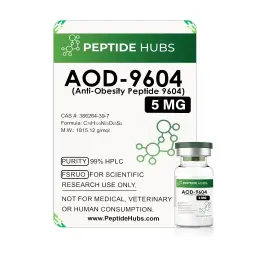
Related metabolic research peptides from Peptide Hubs include Cagrilintide 10 mg, an amylin analogue studied for appetite regulation, and AOD 9604 5 mg, a growth hormone fragment investigated for fat metabolism. For general peptide research support, Bacteriostatic Water is commonly used for reconstitution.
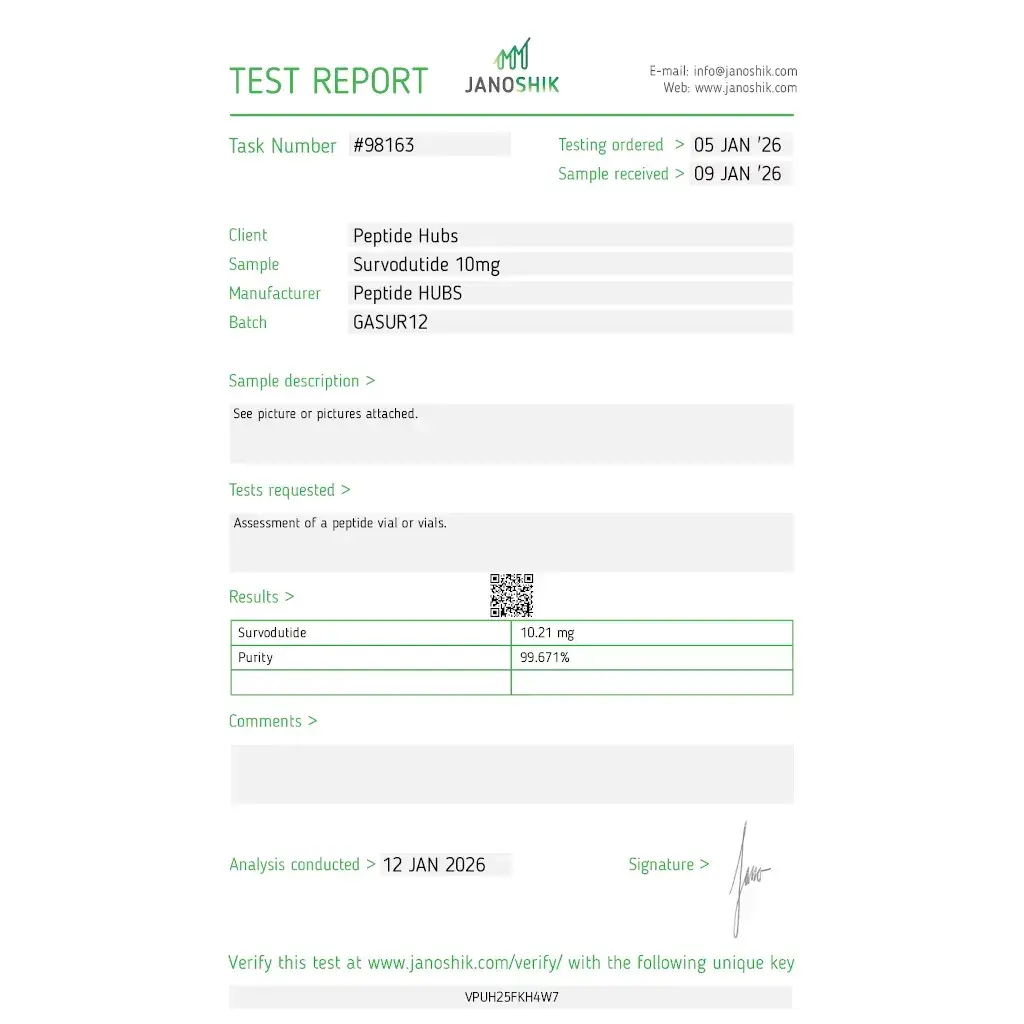
Published laboratory reports for Survodutide 10 mg by Peptide Hubs are shown below with the test date, measured content, and percentage of the product's 10 mg label claim.
 View Report
Laboratory results apply to the specific tested sample represented in each published report and should not be interpreted as a measurement of every vial or production batch.
The information below is provided for educational reference only. Survodutide is an investigational compound in Phase 3 clinical trials and is not FDA-approved for any indication; medical use requires clinical supervision. Non-medical use falls outside approved indications.
In clinical trials, Survodutide has been studied at doses up to 6.0 mg per week via subcutaneous injection, with dose escalation over 24 weeks. In non-medical bodybuilding research contexts, Survodutide is commonly referenced with slow titration, beginning at 0.3 mg weekly and escalating gradually to 1.0–2.0 mg weekly for most research protocols.
| Use Case | Common Reference Range | Injection Frequency |
|---|---|---|
| Clinical trial (obesity) | 3.6–6.0 mg / week | Once weekly subcutaneous |
| Bodybuilding research (non-medical) | 0.3–2.0 mg / week | Once weekly, gradual titration |
| Maintenance (non-medical) | 1.0–1.5 mg / week | Once weekly |
Note: Clinical trial protocols use much higher doses than those commonly referenced in non-medical research contexts. Slow titration is emphasized due to gastrointestinal effects.
In non-medical research contexts, Survodutide is sometimes referenced in combination with GH secretagogues such as CJC-1295/Ipamorelin 10 mg or healing peptides like BPC 157 5 mg to support muscle preservation during aggressive fat loss. Stacking is generally recommended only after establishing tolerance at a stable dose.
Cycle lengths referenced in research contexts typically range from 24 to 48 weeks for meaningful results.
Gastrointestinal effects are the most common adverse events reported in clinical trials, occurring in approximately 80–90% of participants at higher doses, though typically mild to moderate. Nausea, vomiting, diarrhea, and constipation are commonly reported during dose escalation. Slow titration and holding at each dose step for extended periods may help manage tolerability.
Post-cycle therapy is not applicable to Survodutide, as the peptide does not suppress endogenous testosterone production or alter the hypothalamic-pituitary-gonadal axis. Survodutide acts on metabolic pathways through GLP-1 and glucagon receptor signaling without direct androgenic effects.
Research peptide protocols should be based on published study designs and appropriate institutional oversight. The information above is for educational reference and does not constitute medical advice or a recommendation for use.
Survodutide is an investigational dual GCGR/GLP-1R agonist in Phase 3 clinical trials for obesity and MASH. It is not FDA-approved for any indication; safety data continue to be collected through ongoing clinical research.
In the Phase 3 SYNCHRONIZE-1 trial, the most common adverse events were gastrointestinal symptoms, occurring in 80.9% of participants in the 3.6 mg group and 89.7% in the 6.0 mg group, compared to 47.9% with placebo. These events were typically mild to moderate and consistent with other GLP-1 receptor agonist medications.
Survodutide has not been evaluated for use in pregnancy, breastfeeding, or pediatric populations. Individuals with a history of pancreatitis, severe gastrointestinal disease, or certain endocrine conditions should exercise particular caution.
Survodutide is an investigational compound not approved for any human use outside of clinical trials. Non-medical use of research peptides falls outside approved indications and carries unknown risks. Purchasing or using injectable Survodutide without appropriate authorization may be illegal depending on jurisdiction.
Gastrointestinal effects including nausea, vomiting, diarrhea, and constipation are the most commonly reported adverse events in clinical trials. These effects track dose escalation and typically resolve within 1–2 weeks at each new dose step.
Decreased appetite is a therapeutic mechanism but carries a risk of under-eating protein and losing lean mass during rapid fat loss if not carefully managed. Injection site reactions may occur with subcutaneous administration.
Survodutide has not been evaluated for use in pregnancy, breastfeeding, or pediatric populations. Individuals with active malignancy, a history of pancreatitis, severe gastrointestinal disease, or type 1 diabetes should exercise particular caution. The exclusion criteria for Phase 3 trials included uncontrolled hypertension and certain other medical conditions.
Research use of Survodutide should be conducted under appropriate institutional oversight with defined protocols for monitoring and adverse event reporting. Clinical monitoring parameters for non-medical Survodutide use have not been established beyond those used in clinical trial settings.
Keep the vial securely stored and protected from conditions that could compromise the product. Inspect the vial before use and do not use a product that appears damaged or compromised.
Keep all medications and injectable products out of the reach of children. Follow the storage instructions provided with the product packaging.
Survodutide 10 mg is supplied through the Peptide Hubs distribution chain and shipped with discreet, privacy-focused handling.
The outer shipping package remains discreet, with privacy-focused handling. Products are supplied through the official Peptide Hubs distribution chain.
To verify your Survodutide 10 mg product, use the security code on the vial label and cross-check it on the Peptide Hubs official site. Original packaging and batch-linked laboratory documentation help reinforce product legitimacy.
For complete delivery details, tracking policy, and reshipment terms, please see our Shipping Info page.
Proper storage conditions help preserve peptide integrity and stability throughout the product's shelf life.
Store the lyophilized powder refrigerated at 2–8°C and protected from light. Keep the vial in its original packaging until use.
After reconstitution, store the solution refrigerated at 2–8°C and use within 28 days. Do not freeze reconstituted solution.
Reconstituted Survodutide solution should be clear and colorless. Cloudiness or visible particulates indicate degradation and the vial should be discarded.
Answers to common questions about Survodutide 10 mg, the Survodutide peptide, laboratory testing, and research applications.
Survodutide 10 mg is a research peptide supplied as lyophilized powder. Survodutide is an investigational dual GCGR/GLP-1R agonist being studied in Phase 3 clinical trials for obesity and MASH. In non-medical bodybuilding research contexts, it is studied for fat loss applications, though such use falls outside approved indications.
Survodutide is administered via once-weekly subcutaneous injection in clinical trials. In non-medical research contexts, the same weekly frequency is commonly referenced, with slow titration beginning at 0.3 mg weekly.
No. Post-cycle therapy is not applicable to Survodutide, as the peptide does not suppress endogenous testosterone production or alter the hypothalamic-pituitary-gonadal axis. Survodutide acts on metabolic pathways through GLP-1 and glucagon receptor signaling without direct androgenic effects.
Survodutide is a dual agonist of the glucagon receptor and GLP-1 receptor, designed to influence metabolic pathways through both appetite regulation and energy expenditure. It acts through circumventricular organs in the brain to activate neuronal regions associated with appetite regulation.
In clinical trials, Survodutide was studied over 76 weeks with primary efficacy endpoints assessed at that time point. In non-medical research contexts, meaningful changes are typically referenced over a 6-month minimum commitment, with gradual titration over the first several weeks.
There is no single GLP-1 receptor agonist that is universally best. Survodutide distinguishes itself through dual GCGR/GLP-1R agonism, which may offer additional effects on energy expenditure and hepatic fat compared to GLP-1-only agonists. The appropriate choice depends on research goals and tolerability.
Survodutide and Tirzepatide are both dual agonists but target different receptor combinations. Survodutide activates GLP-1 and glucagon receptors, while Tirzepatide activates GLP-1 and GIP receptors. Survodutide's glucagon component may contribute to greater effects on visceral and hepatic fat.
Survodutide and Semaglutide differ in their receptor targets. Semaglutide is a GLP-1 receptor agonist, while Survodutide is a dual GCGR/GLP-1R agonist. The addition of glucagon receptor activity in Survodutide may provide additional metabolic effects beyond GLP-1 agonism alone.
A 10 mg vial of Survodutide is a research-scale quantity. Clinical trials have used doses up to 6.0 mg per week, while non-medical research protocols commonly reference 0.3–2.0 mg weekly. A 10 mg vial therefore provides sufficient material for multiple weeks of research at commonly referenced doses.
Survodutide 10 mg by Peptide Hubs is labeled at 10 mg per vial. The product is supplied as lyophilized powder in a 2 mL vial.
Yes. A published laboratory report dated January 12, 2026 measured Survodutide 10 mg at 10.21 mg, equivalent to 102.10% of its 10 mg label claim. The complete report with batch number GASUR12 can be viewed in the Lab Reports tab.
Lyophilized peptides are typically reconstituted with bacteriostatic water or sterile saline. Bacteriostatic Water is commonly used for peptide reconstitution to maintain sterility over multiple draws. For a 10 mg vial, adding 2 mL of diluent yields a concentration of 5 mg per mL.